Should You Fight Health Insurer Denials for Unrecognized Cutting-Edge Treatments?
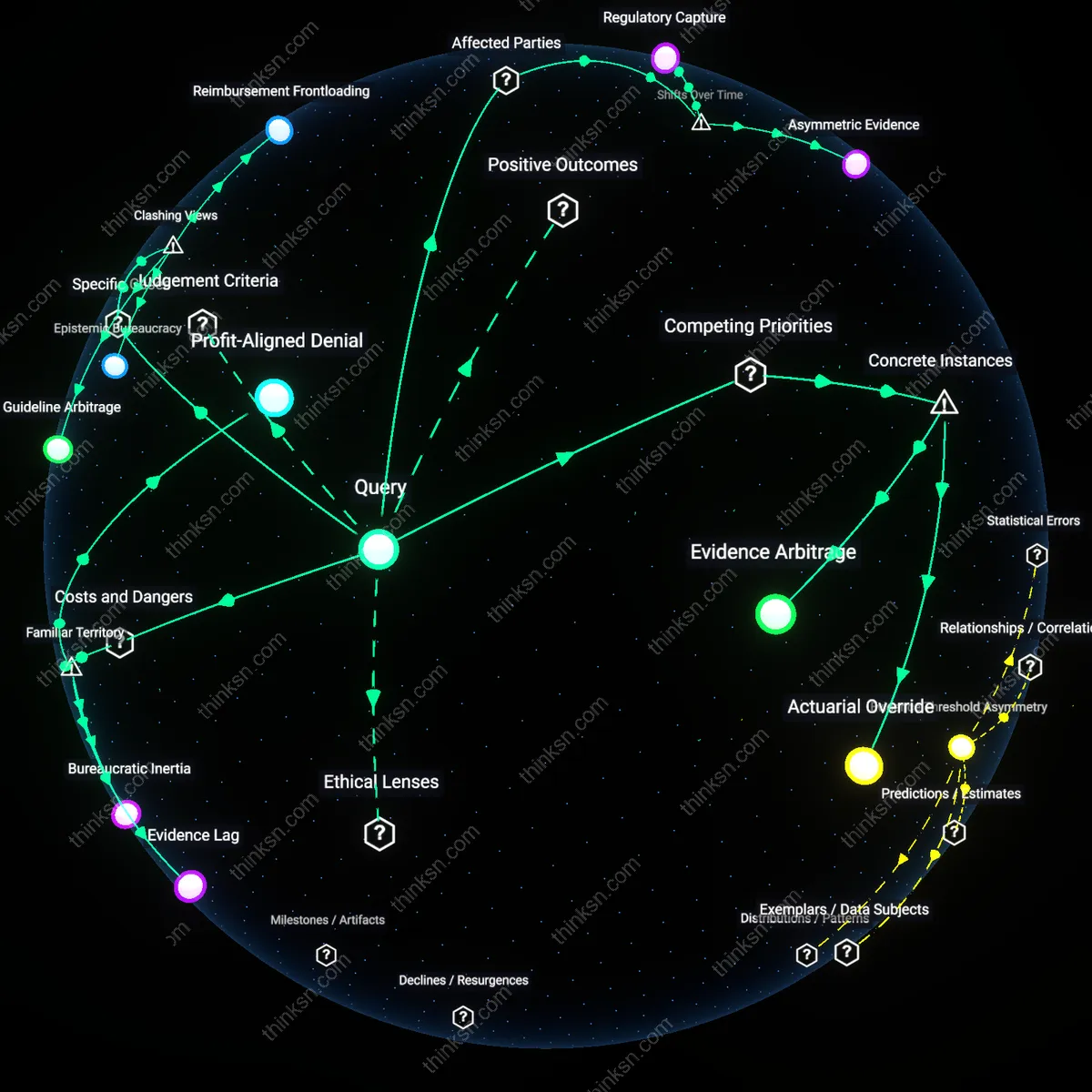
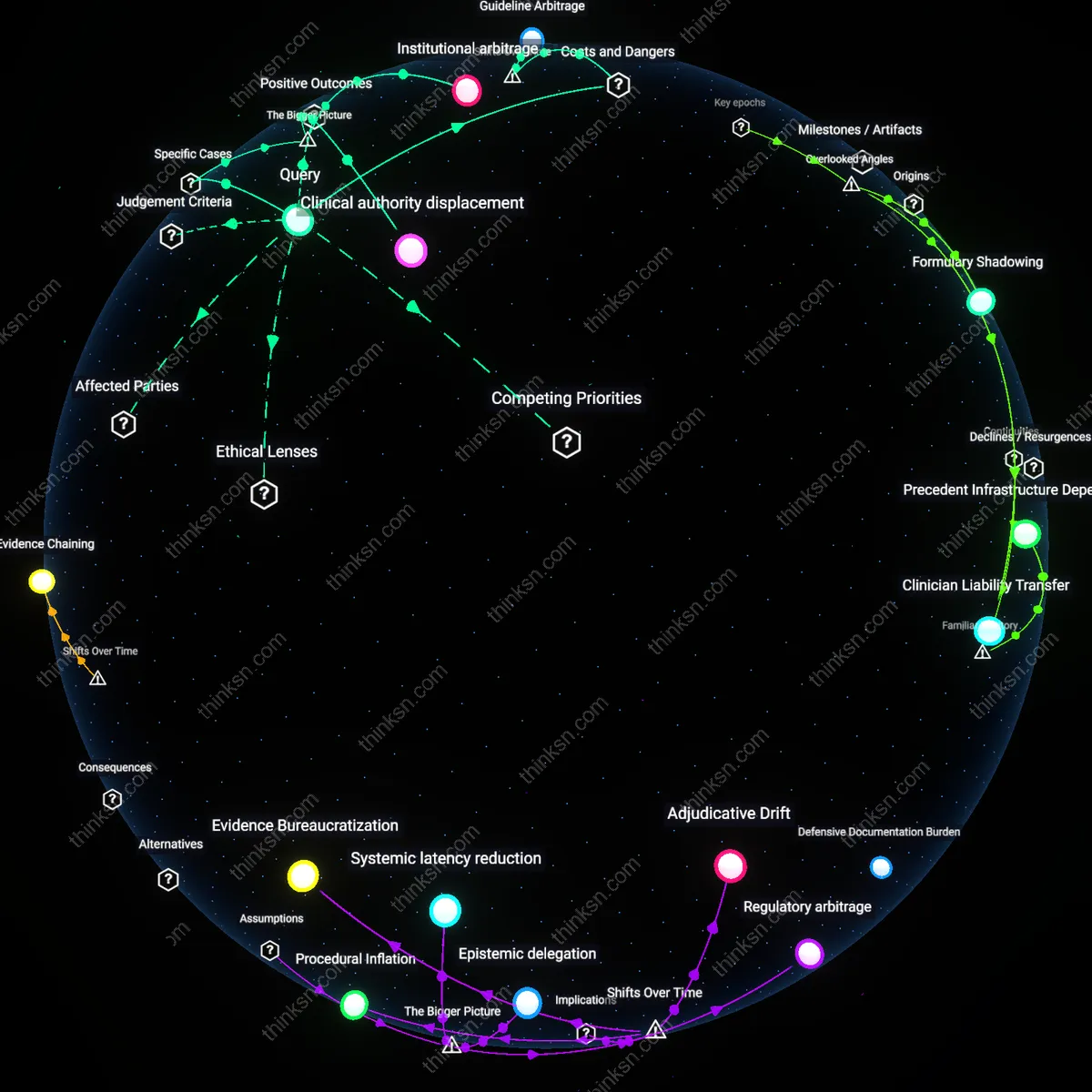
Analysis reveals 6 key thematic connections.
Key Findings
Litigation Drift
Challenge denials only when precedent-setting cases have recently shifted payer liability exposure, because since the 2010s, rising patient lawsuits over denied off-label therapies have recalibrated insurers' risk calculus; as courts increasingly recognize care delays as material harm, insurers quietly settle borderline cases to avoid record-setting damages—making legal forum selection and judicial district trends a hidden determinant in appeal strategy, a shift from purely clinical appeals to strategic litigation signaling.
Guideline Arbitrage
Assess the therapy’s position in the pipeline of guideline adoption, because since 2015, the rise of accelerated FDA approvals without concurrent CMS coverage has created a temporary zone where therapies are clinically accessible but not institutionally reimbursable; in this window, insurers deny based on guideline absence, yet hospitals that absorb upfront costs gain first-mover data for future reimbursement leverage—revealing a new risk asymmetry where providers, not payers, now incubate evidentiary legitimacy at immense financial risk.
Evidence Debt
Factor in the accumulating cost of producing 'acceptable' evidence after 2020, when major payers aligned coverage strictly with RCT outcomes, because therapies emerging from real-world data or compassionate use now require retrofitted trials to gain approval—shifting the burden of evidence generation onto patients and providers who must fund 'validation' studies post-denial, turning the appeal process into a de facto tollbooth for evidentiary capitalism where denial becomes a profit-preserving feedback loop.
Institutional arbitrage
Insurers deny coverage for novel therapies not in guidelines to avoid setting cost precedents, forcing patients to initiate appeals that test payer thresholds—seen in UnitedHealthcare’s denial of sotagliflozin for heart failure, where internal medical policies lag behind clinical trial data. The mechanism operates through insurers’ actuarial control systems, which penalize early adoption of therapies lacking consensus reimbursement codes, making resistance a structural feature of risk-bearing health plans. This reveals how payer-led cost containment creates a delayed feedback loop between innovation and access, turning individual appeals into de facto regulatory probes.
Clinical authority displacement
When insurers reject therapies absent from guidelines, treating physicians at academic medical centers—like those at MD Anderson Cancer Center contesting CAR-T cell therapy denials—must redirect clinical judgment into administrative advocacy to overturn decisions. This shift reroutes medical expertise through insurance appeals processes, where the physician’s role becomes one of justifying deviations from protocol rather than applying patient-specific knowledge. The systemic consequence is a silent transfer of clinical judgment from clinician to insurance medical directors, who apply population-level criteria to individual cases, distorting therapeutic agency.
Regulatory time lag
Patients seeking access to therapies like CRISPR-based exa-cel for sickle cell disease face denials because guideline bodies such as the American Society of Hematology cannot update recommendations faster than FDA approval or real-world safety monitoring permits, even when trial outcomes are positive. The delay creates a window where proven therapies are excluded from coverage not due to ineffectiveness but procedural inertia in evidence synthesis, during which payers exploit the absence of endorsement to resist claims. This exposes a systemic vulnerability where innovation outpaces institutional validation cycles, making denial appeals a necessary bridge across regulatory time gaps.