Do Rejected Antidepressants Reveal Flaws in Insurers Clinical Reviews?
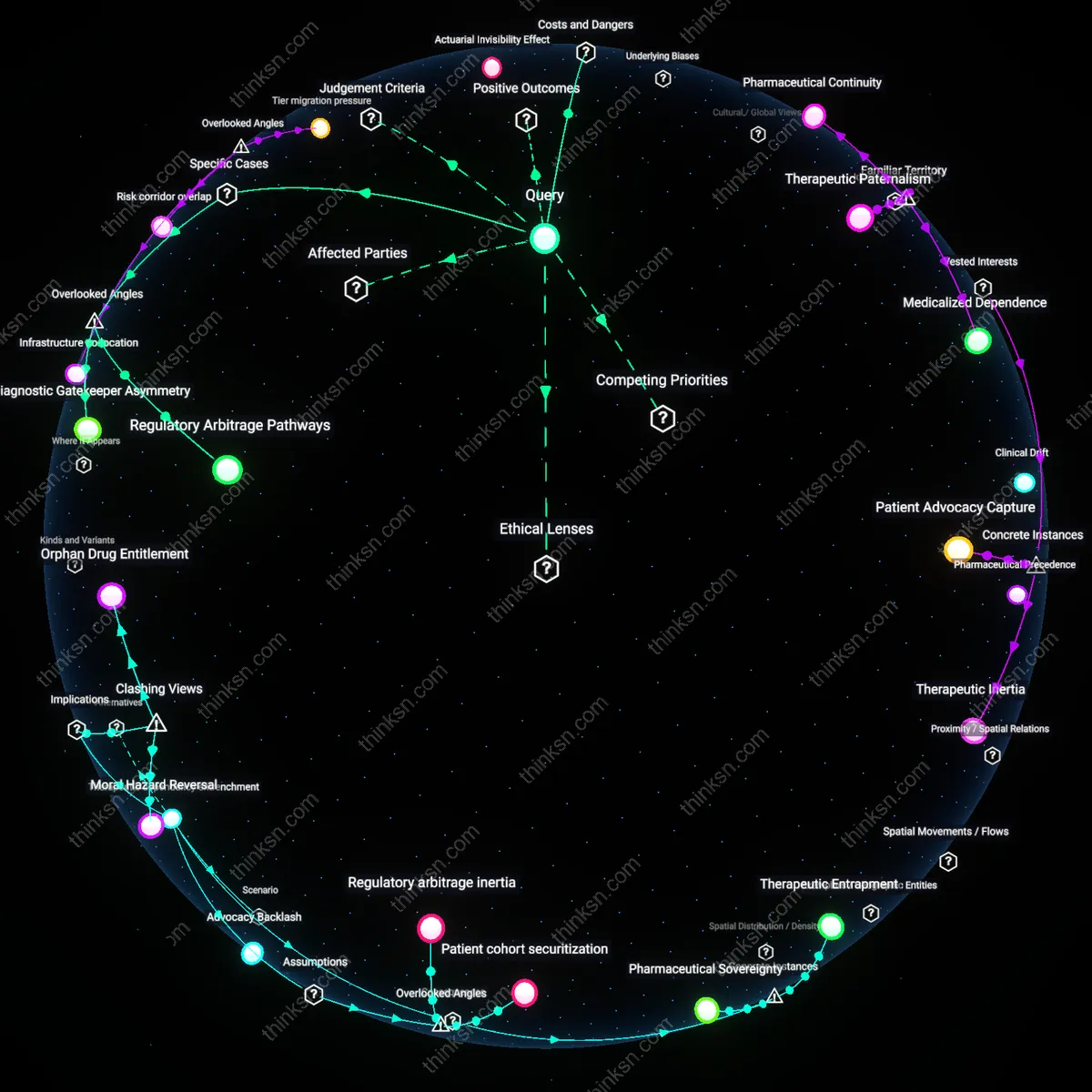
Analysis reveals 11 key thematic connections.
Key Findings
Protocol Override
An internal appeal reveals that the insurer’s clinical review process is designed to resist therapeutic nuance by institutionalizing formulary compliance as a higher procedural priority than individualized psychiatric judgment, where medical directors—often generalists without specialized training in mental health—routinely defer to algorithmic prior authorization rules rather than engage with prescriber rationale; this exposes a systemic substitution of administrative consistency for clinical contingency, challenging the intuitive belief that clinical reviews serve as neutral validations of medical necessity by showing they often function as enforcement mechanisms for cost-containment logic.
Epistemic Asymmetry
An internal appeal exposes that the insurer’s clinical review process treats psychiatric prescribing as a negotiable opinion rather than a clinically grounded decision, privileging retrospective audit frameworks over real-time therapeutic alliance, where pharmacoeconomic benchmarks outweigh longitudinal patient response data known only to the treating psychiatrist; this inversion—positioning remote reviewers as epistemic authorities over frontline clinicians—reveals that the process is less about evaluating clinical merit and more about redistributing medical authority to insulate utilization management from accountability to treatment context.
Formulary Inflexibility
An internal appeal at UnitedHealthcare in 2021, contesting the denial of vortioxetine for a treatment-resistant depression case, revealed that the plan’s clinical review was bound by a static formulary updated only annually, preventing timely incorporation of FDA-label expansions or new meta-analyses; this inflexibility meant the review team could not override tiered drug classifications even when new evidence justified exceptions, exposing how administrative time cycles can override clinical judgment. This rigidity is significant because it demonstrates that the insurer’s process is not dynamically responsive to evolving science, making clinical decisions contingent on calendar-driven policy updates rather than patient-specific or current medical data.
Algorithmic Gatekeeping
During a 2019 appeal at Kaiser Permanente, a psychiatrist’s request for vilazodone was denied despite documented failure of three SSRIs, and the internal review record showed that the denial was triggered automatically by a prior authorization algorithm that required proof of failure of a fourth generic SSRI before approving any newer agent; the human reviewer did not reassess clinical nuance, indicating that the clinical review process functions as a secondary validation of algorithmic filters rather than an independent evaluation. This exposes the non-obvious reality that clinical oversight often rubber-stamps embedded computational rules, transforming medical judgment into a compliance check against pre-built clinical decision support logic.
Evidence Asymmetry
In a 2022 case at Blue Cross Blue Shield of Michigan, an internal appeal for levomilnacipran was approved only after the treating psychiatrist submitted a detailed therapeutic rationale, including pharmacogenetic testing showing CYP2D6 polymorphism affecting metabolism of prior drugs; the initial denial had occurred because the insurer’s clinical review relied solely on population-level trial data, ignoring individual biomarkers, revealing that the process systematically privileges generalized evidence over personalized clinical data. This asymmetry is critical because it shows the insurer’s model treats variability in patient biology as noise rather than signal, creating a structural bias against precision psychiatry.
Clinical Bypass Incentive
An internal appeal reveals that insurers apply formulary hierarchies not to ensure clinical rigor but to steer prescribers toward lower-cost alternatives, regardless of individual patient history; this occurs because pharmacy benefit managers (PBMs) contract with insurers to prioritize rebates from drug manufacturers, creating a financial architecture where medical necessity is systematically weighed against rebate capture. The appeal process, by requiring the psychiatrist to justify off-formulary use, functions as a feedback loop that reinforces the primacy of cost-shifting over clinical discretion, exposing how reimbursement logic reshapes treatment pathways. What is underappreciated is that the appeal does not correct the initial decision but ratifies the system’s embedded cost-control mechanism by forcing clinicians to perform administrative labor that substitutes for genuine therapeutic judgment.
Deferred Clinical Authority
An internal appeal uncovers that the insurer’s clinical review process delegates medical decision-making to post-hoc adjudication by in-house medical directors who lack longitudinal patient contact, turning psychiatric treatment into a compliance contest between prescribing physicians and non-treating reviewers operating under actuarial benchmarks. This shift transfers clinical risk from the insurer to the clinician, who must now produce documentation that maps subjective patient responses onto narrowly defined coverage criteria, privileging measurable symptom reduction over functional improvement. The systemic consequence is a distortion of clinical communication, where treatment narratives are reframed as audit-ready justifications—revealing how insurance governance reshapes professional judgment through procedural deferment rather than direct confrontation.
Evidence Floor Manipulation
An internal appeal exposes how insurers define 'medically necessary' through internally developed criteria that selectively interpret clinical guidelines to set a minimal threshold for coverage, excluding newer antidepressants unless prior line failures are exhaustively documented—even when emerging evidence supports first-line use in specific subpopulations. This mechanism relies on lagging evidence synthesis, where insurer review protocols anchor to older meta-analyses while disregarding real-world effectiveness data or biomarker-informed prescribing strategies, effectively freezing innovation in clinical practice. The underappreciated dynamic is that the appeal does not assess medical appropriateness but tests alignment with a static, insurer-controlled epistemic standard—one that sustains cost containment by controlling the very definition of legitimate clinical evidence.
Formulary Hierarchy
Enforce strict alignment between prescribed medications and the insurer’s tiered formulary to prevent coverage denials for newer antidepressants. Clinical review teams at regional insurance hubs rely on formulary tiers to automate prior authorization outcomes, privileging lower-tier generics through embedded cost-containment logic in pharmacy benefit algorithms. What’s underappreciated is that internal appeals often expose how rigid tier classification—not clinical evidence—determines initial denials, even when psychiatrists document treatment resistance.
Step Therapy Gate
Mandate that patients fail two insurer-approved antidepressants before newer prescriptions are covered, revealing step therapy as the operational core of clinical review. Utilization management departments deploy step therapy protocols through standardized decision trees that override prescribing physician discretion, positioning cost control as a proxy for clinical appropriateness. The non-obvious insight is that appeals frequently succeed not by challenging medical rationale but by exposing procedural exceptions built into the gate, showing it was never purely clinical to begin with.
Peer-to-Peer Bottleneck
Require a live conversation between the prescribing psychiatrist and an insurer-employed psychiatrist before denying coverage, exposing peer-to-peer review as the de facto clinical validation layer. These calls—conducted through centralized telehealth hubs under time pressure—rarely reassess diagnosis but instead function as procedural safety valves to defer denial responsibility. What’s rarely acknowledged is that the appeal process reveals this interaction not as a medical consultation but as a performative checkpoint where adherence to process, not clinical depth, determines overturns.