Microbiome Therapies or Immunosuppressants for Ulcerative Colitis?
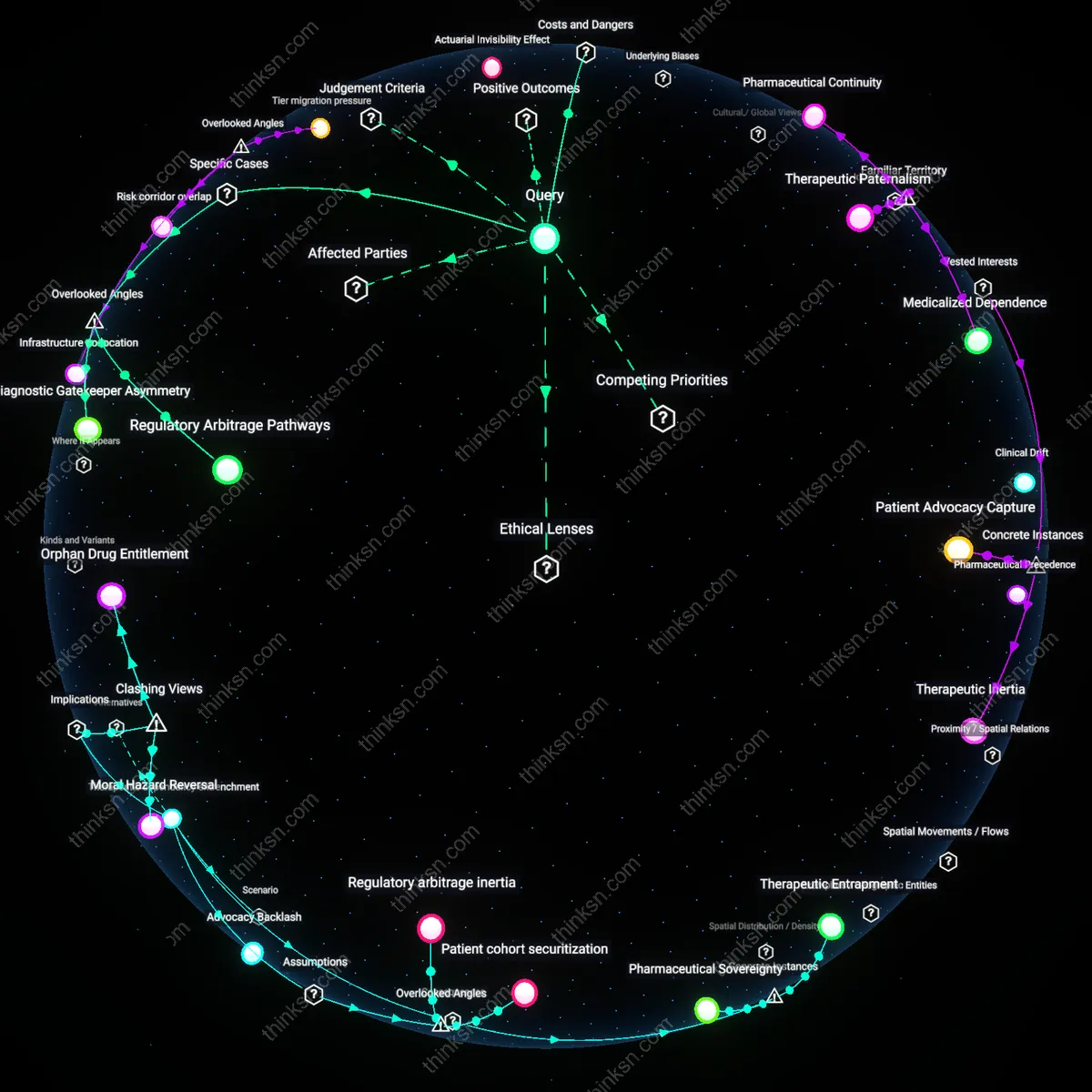
Analysis reveals 11 key thematic connections.
Key Findings
Therapeutic Trust Deficit
Patients with ulcerative colitis are increasingly exposed to emerging microbiome-based therapies not because of proven long-term efficacy, but due to a declining trust in long-standing immunosuppressant regimens that emerged in the post-biologics era (post-2010), where visible side effects and incomplete remission eroded patient confidence in traditional pharmaceutical management. This shift is driven by a coalition of patient advocacy groups, direct-to-consumer biotech firms, and digital health platforms that amplify narratives of 'natural' correction over chemical suppression, recasting therapeutic risk as a moral choice about bodily integrity rather than clinical outcome. The non-obvious consequence is that safety uncertainty is no longer a deterrent but a tolerated cost of regained agency—revealing how post-2010 disillusionment with chronic immunosuppression redefined risk tolerance as therapeutic allegiance.
Regulatory Futures Market
Regulatory agencies like the FDA and EMA have, since the 2016 breakthrough therapy designation for live biotherapeutic products, begun treating microbiome-based therapies not as drugs in the classical sense but as probabilistic interventions whose safety is evaluated through adaptive pathways rather than fixed endpoints, shifting the burden of long-term monitoring from pre-market approval to post-deployment surveillance. This transition enables pharmaceutical companies and academic spin-offs to commercialize microbiome therapies earlier, positioning patients as de facto participants in longitudinal safety trials disguised as treatment options, particularly in regions with fast-track approval regimes like the U.S. and Singapore. The underappreciated dynamic is that the regulatory timeline itself has become a therapeutic variable—where delay is reframed as denial of access, thus pressuring patients to accept uncertainty as a condition of progress.
Clinician Role Fracture
Gastroenterologists, once the sole arbiters of ulcerative colitis treatment, now face irreconcilable role conflicts after the 2020 surge in fecal microbiota transplantation (FMT) clinics operating outside academic medical centers, where commercial providers bypass traditional care pathways by marketing directly to patients via telehealth and social media. This splintering of authority transforms the clinician from gatekeeper of evidence-based therapy to risk counselor in a fragmented ecosystem, where their responsibility to warn about long-term immunosuppressant risks is undermined by their inability to control access to unproven microbiome interventions. The overlooked consequence is that medical temporality—the idea that treatment should be grounded in longitudinal evidence—has been replaced by consumer temporality, where immediacy overrides caution, fundamentally altering the physician’s ethical posture in the therapeutic decision.
Therapeutic Legibility
No, because regulatory and insurance infrastructures treat immunosuppressants as clinically legible interventions with codified billing codes, monitoring guidelines, and liability pathways, whereas microbiome therapies remain ambiguous in coverage and oversight. At community health systems like Kaiser Permanente or UPMC, treatment pathways depend on prior authorization and formulary placement, which favor FDA-approved immunosuppressants with decades of pharmacoeconomic data. The underappreciated factor is that physician autonomy in prescribing is constrained less by medical evidence than by institutional accounting logics—microbiome therapies, even when promising, fail not on efficacy but on bureaucratic integration, rendering them practically invisible in routine decision-making.
Agency Asymmetry
Yes, because patient advocacy networks such as those organized through IBD-specific platforms (e.g., Crohn’s & Colitis Foundation) increasingly frame microbiome interventions as expressions of bodily autonomy against institutional science. Individuals managing ulcerative colitis in high-income countries are exposed to direct-to-consumer probiotics, fecal microbiota transplant clinics, and clinical trial registries, creating a perception that deferring to immunosuppressants equates to surrendering self-determination. The non-obvious insight is that the appeal of microbiome therapies lies not in superior outcomes but in narrating illness as modifiable through personal microbial stewardship—a shift from passive drug recipient to active ecosystem curator.
Therapeutic trust asymmetry
Patients in the 2017 OpenBiome fecal microbiota transplantation trials for recurrent C. difficile favored microbiome-based interventions despite incomplete long-term safety data because the immediate threat of infection outweighed theoretical risks, revealing that patient risk assessment is contextually weighted by acute versus chronic danger—this demonstrates an ethical divergence grounded in utilitarian risk-benefit calculation, where immediate harm avoidance overrides precautionary principles, especially when existing immunosuppressants have failed, and illustrates how medical desperation recalibrates informed consent in experimental settings.
Regulatory lag effect
In France, the 2020 approval of the live biotherapeutic drug VE303—a defined bacterial consortium for C. difficile prevention—was fast-tracked under the EU’s adaptive licensing pathway, yet this framework excluded ulcerative colitis due to lack of disease-specific endpoints, exposing how liberalized innovation policies in one jurisdiction create differential access that ethically disadvantages patients with off-label needs under liberal egalitarian doctrines demanding equal opportunity, thereby revealing that regulatory categorization, not clinical evidence alone, governs therapeutic availability despite comparable microbiological rationale.
Pharmaceutical sovereignty
India’s 2022 National IBD Registry reported rising off-label use of microbiome modulators like rationally selected bacterial isolates from local donors in UC patients, driven by limited access to biologic immunosuppressants due to high import tariffs and patent barriers, which reframes the choice not as one of safety preference but of structural necessity under postcolonial health sovereignty ideologies—where therapeutic autonomy emerges from self-reliant biomedical production, and the ethical imperative shifts from risk avoidance to epistemic justice in knowledge-poor health systems.
Regulatory Arbitrage
Patients at the Hadassah Medical Center in Jerusalem have enrolled in fecal microbiota transplantation (FMT) trials not because of superior clinical outcomes but because Israeli health authorities classify FMT as a 'tissue transfer' rather than a drug, circumventing lengthy approval processes that delay biologic therapies—this regulatory end-run makes microbiome interventions accessible years before immunosuppressants like vedolizumab can be widely prescribed, reframing patient 'choice' as institutional workarounds rather than clinical preference, which reveals how regulatory categorization, not medical evidence, drives therapeutic adoption in border zones of gastroenterology.
Therapeutic Delay Discounting
In the U.S. Veterans Affairs system, patients with severe ulcerative colitis on long-term thiopurines are rejecting newer microbiome therapies despite availability, not due to safety concerns but because of a deeply institutionalized trust in decade-long remission data from anti-TNF programs at sites like the VA Puget Sound Health Care System—these patients systematically devalue the potential of novel therapies by applying a steep temporal discount to uncertain future benefits, treating immunosuppressants as 'known risks' even when evidence suggests comparable or higher long-term complications, exposing how medical inertia is not ignorance but a rational calculus of time-weighted risk in aging populations.
Clinical Relegation
At Addenbrooke’s Hospital in Cambridge, patients referred to the 'Microbiome Rescue Clinic' are those who have failed at least three immunosuppressant regimens and are deemed unsuitable for colectomy, making microbiota-based therapies not a first-line alternative but a last-resort holding action within a triage logic—here, emerging therapies absorb clinical failures rather than replace established ones, functioning as a safety valve for refractory cases, which inverts the narrative of innovation as progress and instead positions microbiome treatments as a repository for therapeutic abandonment.