What Happens to Miscarriage Rights When Abortion Is Banned Early?
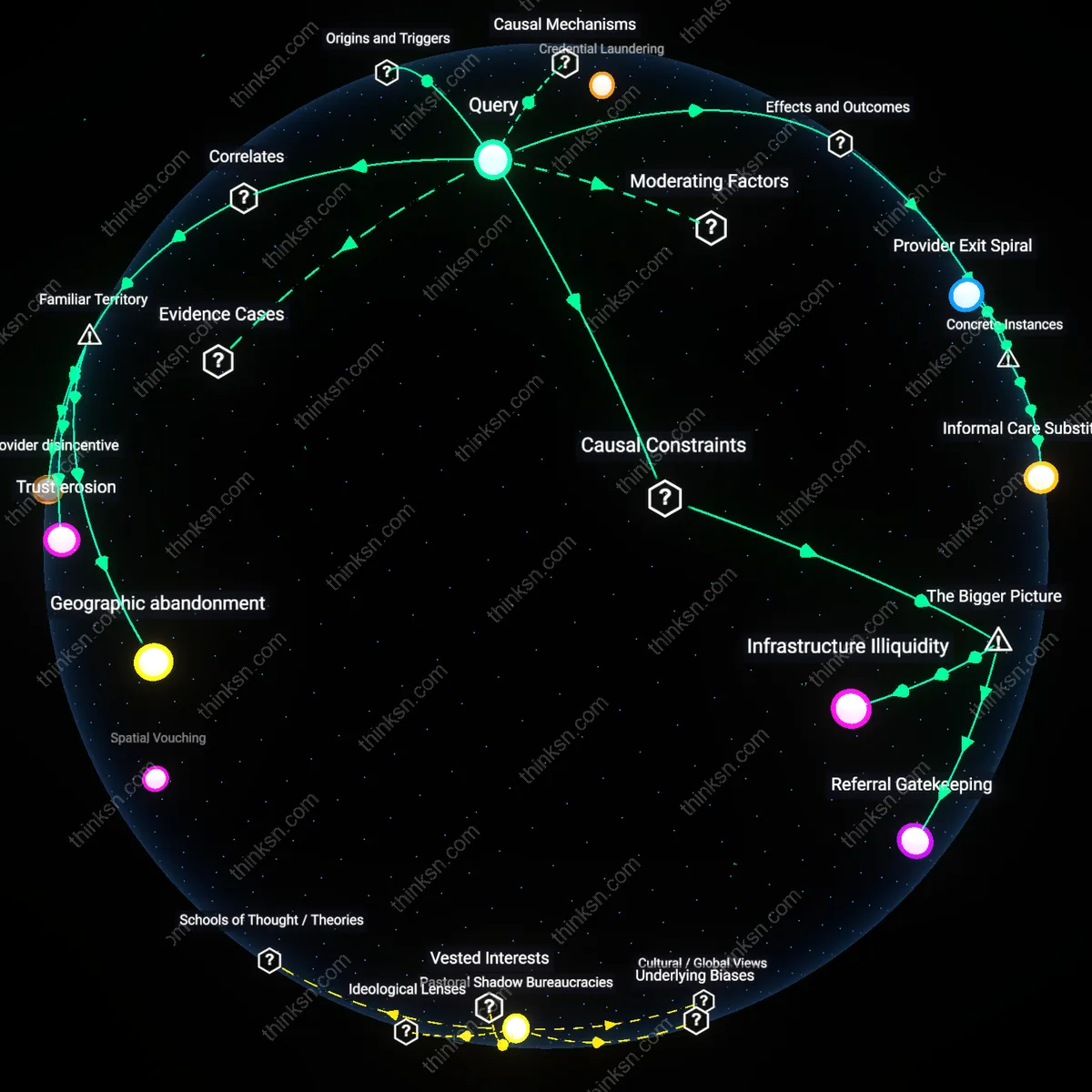
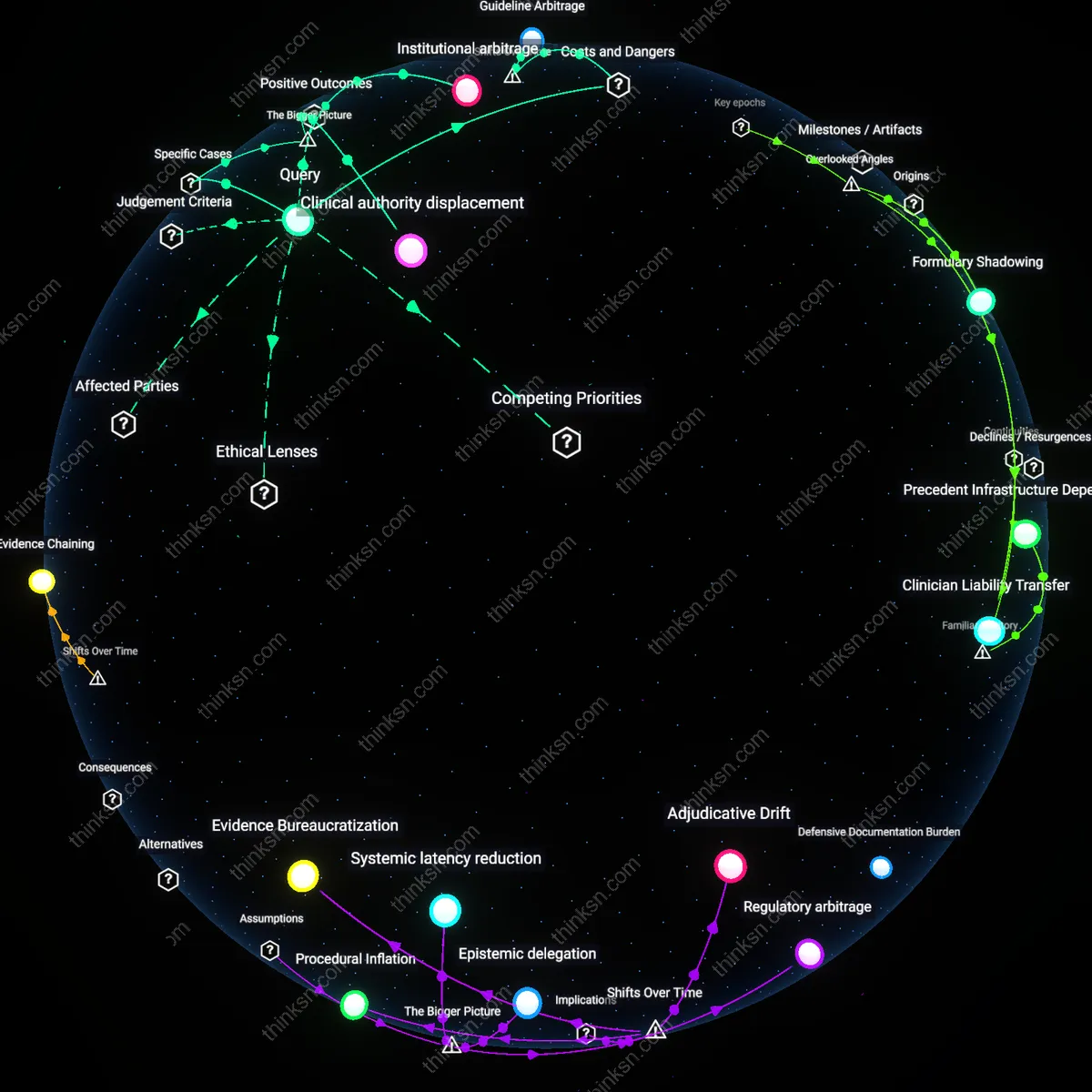
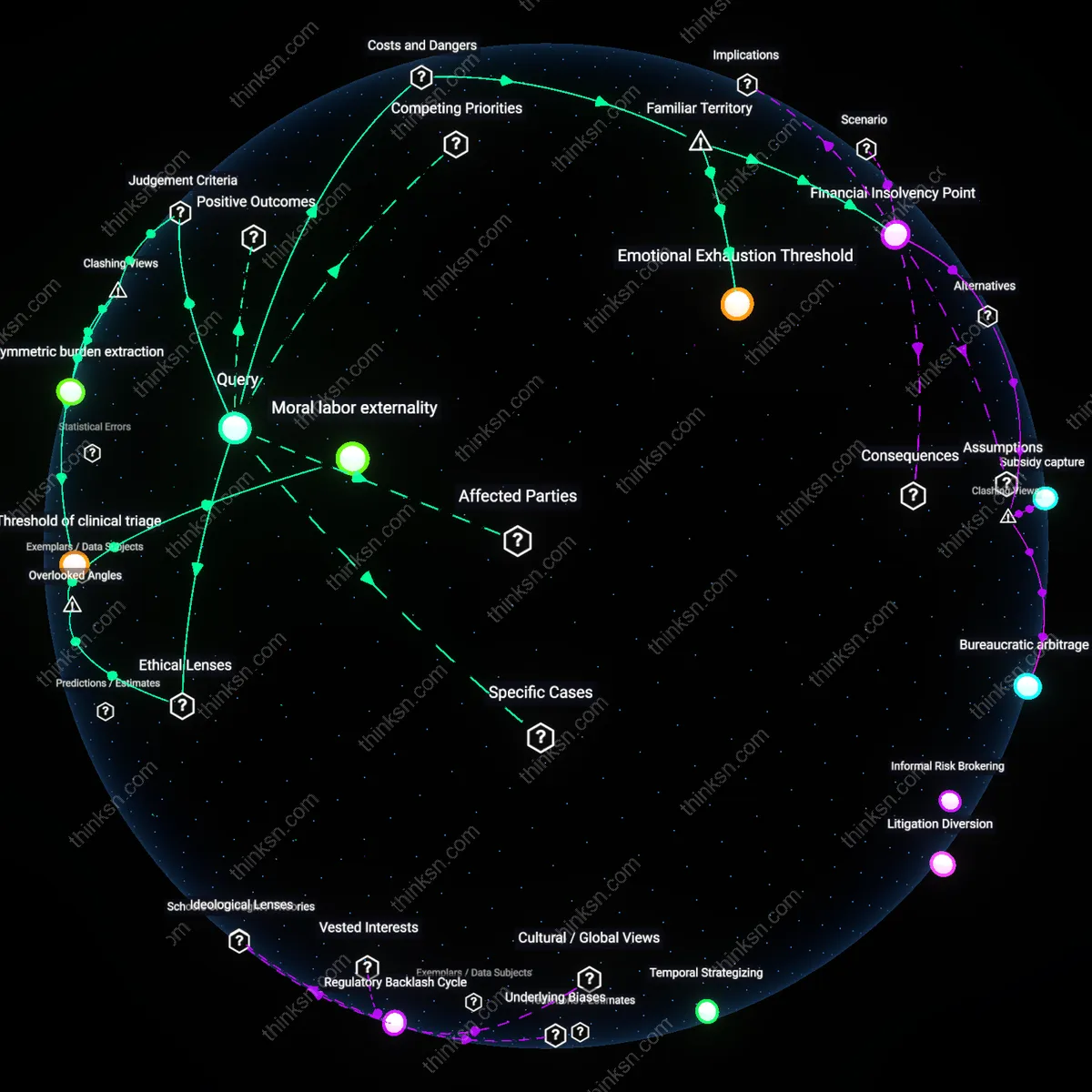
Analysis reveals 12 key thematic connections.
Key Findings
Legal chilling effect
A six-week abortion ban induces healthcare providers to delay or avoid treating early miscarriages due to fear of criminal prosecution, because the legal definition of pregnancy termination overlaps indistinctly with spontaneous loss in statute. Clinicians in states like Ohio and Texas must navigate prosecutorial discretion in cases where tissue expulsion precedes viability, creating hesitation even in clear miscarriage diagnoses. This mechanism operates through the erosion of medical autonomy under criminalized reproductive care, where the threat of legal action—not its execution—alters clinical behavior. What is underappreciated is how statutory ambiguity about intent and outcome can paralyze standard care, not because laws explicitly prohibit miscarriage treatment, but because the surrounding legal risk shifts the cost of error toward inaction.
Diagnostic acceleration pressure
A six-week abortion ban forces healthcare providers to accelerate diagnostic timelines for pregnancy outcomes, because legal permissibility hinges on gestational age estimates that are medically uncertain in early pregnancy. Ultrasound dating before seven weeks often carries a margin of error up to ten days, yet legal cutoffs are rigid, compelling clinicians to make irreversible treatment decisions based on imprecise data. This mechanism functions through the collision of bureaucratic temporality—legally defined weeks—with biological variability, particularly affecting patients with irregular cycles or later presentations. The overlooked dynamic is how legal time, enforced through strict gestational limits, actively distorts clinical judgment, converting probabilistic medical assessments into high-stakes legal gambles.
Bureaucratic documentation burden
A six-week abortion ban increases the administrative burden on healthcare providers to document evidence of miscarriage as a legal safeguard, because institutions must prove after the fact that interventions were not elective abortions. Hospitals in states such as Iowa now require extensive charting, including serial ultrasounds and hormone levels, not for clinical necessity but for legal defensibility. This shift channels medical practice into forensic documentation protocols, where the primary audience for medical records becomes potential investigators or prosecutors rather than care teams. The non-obvious consequence is that standardization of care gives way to defensive medicine, turning every early pregnancy encounter into a potential legal exhibit, thereby altering the core purpose of clinical documentation.
Legal Surveillance of Grief
A six-week abortion ban forces emergency rooms in states like Texas and Ohio to delay miscarriage treatment due to fear of criminal liability, triggering mandatory police reporting protocols for pregnancy loss; this transforms obstetric care into a de facto surveillance arm of law enforcement, where unexplained vaginal bleeding becomes a potential crime scene rather than a medical event. Providers must now navigate criminal statutes like fetal homicide laws, which were not designed for clinical use but are increasingly invoked, making diagnostic procedures like dilation and curettage legally perilous. The non-obvious consequence under familiar associations of 'women’s health' and 'abortion laws' is not just restricted access but the active reclassification of natural biological events as legally suspicious, embedding investigatory functions within intimate clinical interactions.
Diagnostic Time Compression
A six-week abortion ban collapses the diagnostic window for distinguishing miscarriage from elective termination, pressuring providers in clinics across the South to substitute definitive care with serial blood tests and ultrasounds to establish non-viability before intervention; this shifts clinical practice from therapeutic timelines to evidentiary ones, where medical necessity must be proven retroactively under threat of prosecution. Hospitals in states such as Florida and South Carolina now implement institutional review checklists and legal hold protocols for any first-trimester pregnancy loss, effectively turning OB-GYN departments into risk-averse documentation centers. The overlooked effect within public discourse—where 'miscarriage' and 'abortion' are emotionally distinct—is the erosion of clinical discretion in favor of defensive medicine, slowing care at the precise moment when urgency is highest.
Burden-Shifting to Patients
A six-week abortion ban places the onus on patients to prove the spontaneity of their miscarriage by demanding early prenatal engagement—like documented missed periods or prior ultrasounds—which many lack due to cycle irregularity or delayed testing, especially among low-income populations in rural Appalachia or the Delta. Providers in resource-limited settings must then treat ambiguous presentations as potential felonies unless patients can produce personal records that may not exist, effectively transferring legal risk onto individuals least equipped to bear it. The underappreciated reality beneath familiar moral binaries is not just provider caution but a systemic transference of evidentiary labor onto bodies in trauma, where the expectation of pre-loss documentation pathologizes normal reproductive variability and entrenches class-based disparities in criminal exposure.
Surveillance-by-Proxy
A six-week abortion ban induces healthcare providers to document early pregnancy loss with heightened scrutiny, increasing the statistical association between miscarriage reporting and potential legal investigation. This dynamic emerges not from explicit mandate but from defensive medicine practices in states like Texas and Ohio, where clinicians report ambiguous cases to avoid penalties, thereby transforming standard care into a de facto surveillance function. The non-obvious shift is that providers become inadvertent agents of legal monitoring, despite no formal duty to report, altering the patient-clinician relationship through anticipatory compliance. What changes is that miscarriage is no longer a purely clinical event but a condition subject to evidentiary framing, where omission of details could be misconstrued as obstruction.
Temporal Squeeze
A six-week abortion ban compresses the window in which a person can legally clarify the nature of pregnancy loss, making it statistically more likely that a miscarriage will overlap with the period when an abortion would be criminally suspect. This effect operates through the biological reality that many individuals do not recognize pregnancy until after five weeks, situating miscarriages within a legally precarious timeframe even when no termination was sought. The underappreciated mechanism is how time itself—rather than intent or action—becomes a determinant of legal exposure, particularly in rural clinics with limited access to timely diagnostics, forcing providers to navigate ambiguity without sufficient clinical data. This reframes the provider’s responsibility as one of temporal triage, where dating accuracy becomes a legal proxy for intentionality.
Evidence Cascades
In jurisdictions enforcing early abortion bans, healthcare providers begin collecting and preserving biological specimens from early miscarriages more systematically, creating a statistical link between routine care and evidence retention without a clear protocol for when such measures are required. This shift occurs because hospitals in states like Idaho and Oklahoma have adopted internal policies that treat all expelled tissue as potential legal evidence, altering standard pathology workflows to avoid liability. The overlooked dynamic is that forensic logic infiltrates obstetric practice not through legislation but via institutional risk management, transforming tissue disposal—a once mundane act—into a custody chain. This matters because it normalizes evidentiary collection in contexts where no crime occurred, setting precedents that could expand posthumous scrutiny of reproductive events.
Temporal Asymmetry
A six-week abortion ban forces medical providers to treat early miscarriages as potential criminal cases because gestational age limits are now legally compressed below the threshold of clinical detectability, collapsing the distinction between intentional termination and spontaneous loss. This occurs when state laws align reproductive legality with fertilization timelines rather than embryonic viability or clinical recognition, compelling clinicians to document all pregnancy expulsions with forensic rigor—despite the fact that most women cannot even confirm pregnancy by six weeks. The bottleneck is the mismatch between biological time (embryonic development, hCG detection, symptom onset) and legal time (fixed gestational cutoffs), which emerged decisively after the 2022 Dobbs decision, revealing a new regime where the absence of fetal tissue becomes evidentiary rather than medical.
Diagnostic Burden
Healthcare providers now bear investigatory responsibility for early pregnancy loss because the enforcement of six-week bans requires ruling out abortion in every miscarriage, shifting clinical practice from therapeutic care to legal compliance. This transition crystallized in states like Texas and Ohio post-2019, where near-total bans triggered mandatory reporting protocols and ultrasound verification for all uterine expulsions, effectively turning OB-GYNs into agents of state surveillance. The causal prerequisite is a legal environment in which intent cannot be proven without medical corroboration—so providers must generate that corroboration proactively, even when no suspicion exists. This shift from diagnosis as healing to diagnosis as alibi-production exposes the medicalization of criminal liability in reproductive governance.
Epistemic Threshold
The six-week ban renders early miscarriage legally invisible because the law demands evidence that cannot exist under normal biological conditions—specifically, verifiable proof of gestational age before most pregnancies are clinically discernible. Prior to the proliferation of pre-viability bans in the 2010s, miscarriages were managed as private medical events with deferred documentation; now, the requirement to prove a loss occurred after six weeks assumes knowledge and access that contradict the realities of delayed menstruation and hCG variability. The bottleneck is the necessity of retrospective dating via imaging or hormone assays, which only become reliable after week seven—meaning care must be delivered in a legal shadow zone where neither action nor inaction can be definitively justified. This temporal gap has produced a new category of reproductive uncertainty that law cannot resolve but still punishes.