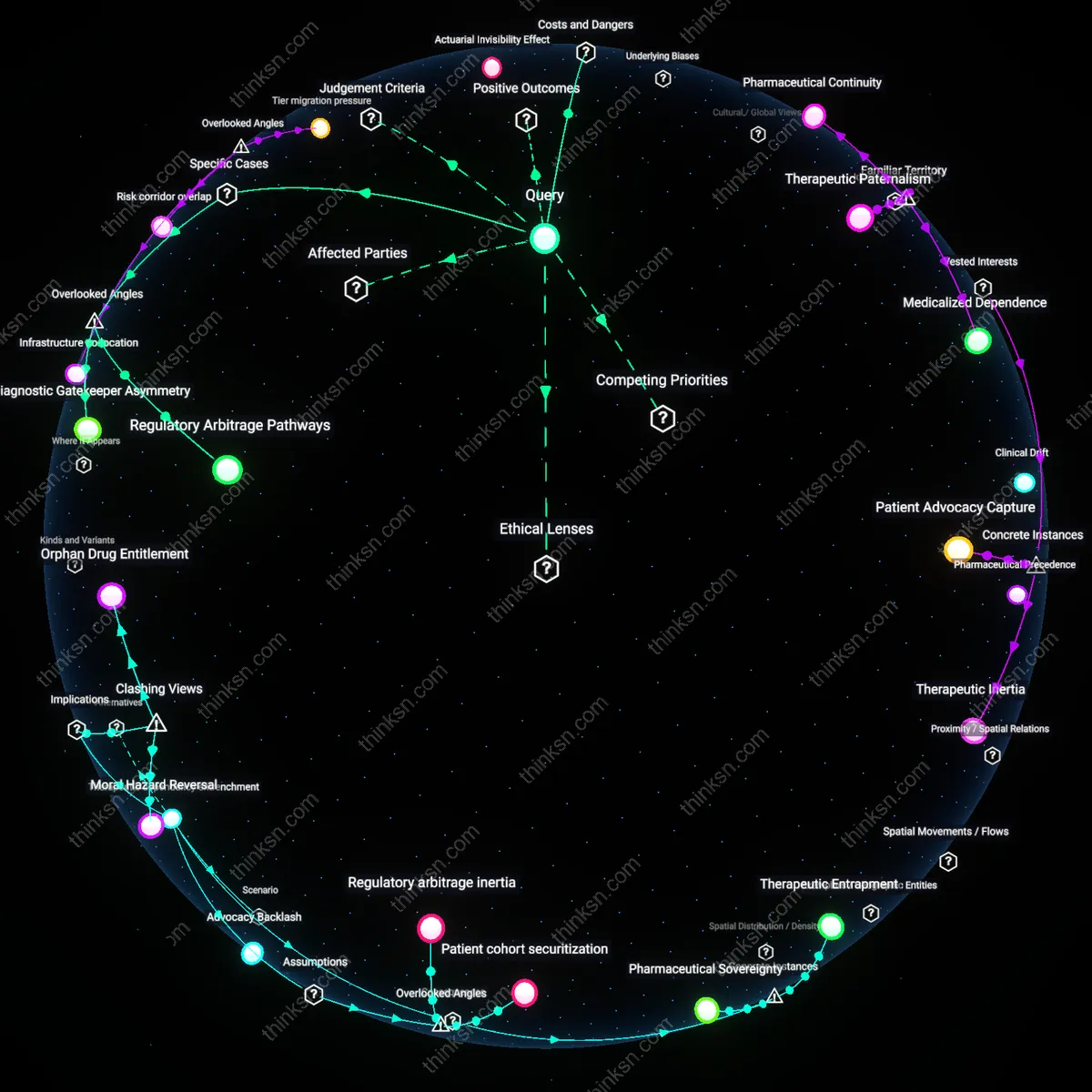
Off-Label Medication Denied: Specialist vs. Insurer, Patients Dilemma?
Analysis reveals 6 key thematic connections.
Key Findings
Regulatory Arbitrage Pathway
The patient should file a formal internal appeal with the insurer, leveraging the mandated review process under the Affordable Care Act’s external review rights, because insurers must justify medical necessity denials through clinical guidelines recognized by federal parity standards. This mechanism activates a binding administrative process in which state or federal reviewers—often physicians contracted by state insurance departments—can override insurer decisions if the standard of care in the relevant specialty supports off-label use, particularly for conditions like rare cancers or treatment-resistant psychiatric disorders. Few patients realize that the appeal creates a paper trail subject to oversight by the U.S. Department of Labor or state insurance commissioners, turning private coverage disputes into regulated compliance events. The leverage emerges not from clinical authority alone but from the insurer’s structural vulnerability to regulatory scrutiny when inconsistent with evidence-based exceptions.
Clinical Evidence Infrastructures
The patient should work with their prescribing physician to compile and submit a therapeutic rationale packet grounded in peer-reviewed clinical literature, FDA labeling allowances for off-label use, and institutional treatment guidelines from authoritative bodies like the National Comprehensive Cancer Network (NCCN). Insurers often reject off-label drugs by default but maintain carve-outs when physicians demonstrate published efficacy in specific contexts, especially in oncology or neurology where off-label prescribing is normative. This works because insurance utilization management systems rely on algorithmic rules tied to real-world clinical consensus; when physicians reframe the medication as part of an evidence-aligned regimen rather than an outlier, they reposition the drug within the insurer’s decision tree. The underappreciated dynamic is that payer policies are not static deniers but reactive infrastructures shaped by the volume and quality of clinical documentation they receive.
Pharmaceutical Access Ecosystem
The patient should enroll in a manufacturer-sponsored patient assistance program (PAP), which often provides off-label medications at low or no cost when coverage is denied, because pharmaceutical companies strategically absorb costs to maintain market presence and real-world usage data. These programs operate through dedicated hubs that coordinate logistics, prior authorizations, and even co-pay support, effectively bypassing insurance barriers while simultaneously generating observational data that can later justify broader coverage. The system functions because drug manufacturers have a vested interest in preserving physician prescribing autonomy and patient access, especially for high-cost biologics or orphan drug derivatives used in niche indications. The overlooked consequence is that private corporate subsidies, not public health systems, have become the de facto safety net for coverage gaps in specialty medicine.
Appeal Leverage
Initiate a formal insurance appeal with clinical documentation from the prescribing physician. This process invokes the insurer’s internal review mechanism, where medical necessity—substantiated by specialist notes, diagnostic results, and treatment history—can override formulary restrictions. The appeal leverages existing contractual obligations insurers have under state and federal parity laws, particularly when off-label use aligns with established clinical guidelines. What’s often overlooked is that most initial denials are administrative filters, not clinical judgments, making the appeal not just a formality but a structured opportunity to correct algorithmic gatekeeping.
Pharmacy Benefit Pathway
Engage the pharmacy benefit manager (PBM) directly through the medication’s manufacturer-sponsored patient assistance program. These programs, operated by biopharma firms in coordination with PBMs, often provide temporary free drug access while challenging coverage barriers. They function within the commercial reimbursement ecosystem, using co-pay cards and bridge supply kits to maintain treatment continuity. The underappreciated reality is that PBMs—not just insurers—hold operational influence over formulary enforcement and can create exceptions when drug access impacts patient outcomes metrics they are contractually bound to report.
Regulatory Advocacy Channel
File a complaint with the state insurance department to trigger external review of the denial. This action activates a legally mandated, independent review organization (IRO) when internal appeals fail, especially in cases involving off-label treatments with peer-recognized efficacy. The state regulator enforces compliance with medical standards and mental health parity, where applicable, creating binding pressure on insurers. What remains hidden in common understanding is that these regulatory bodies accumulate systemic data on denial patterns, allowing individual complaints to catalyze broader formulary reconsiderations beyond the single case.