Is Concealing Reproductive Health Choices from Work a Rational Defense Against Bias?
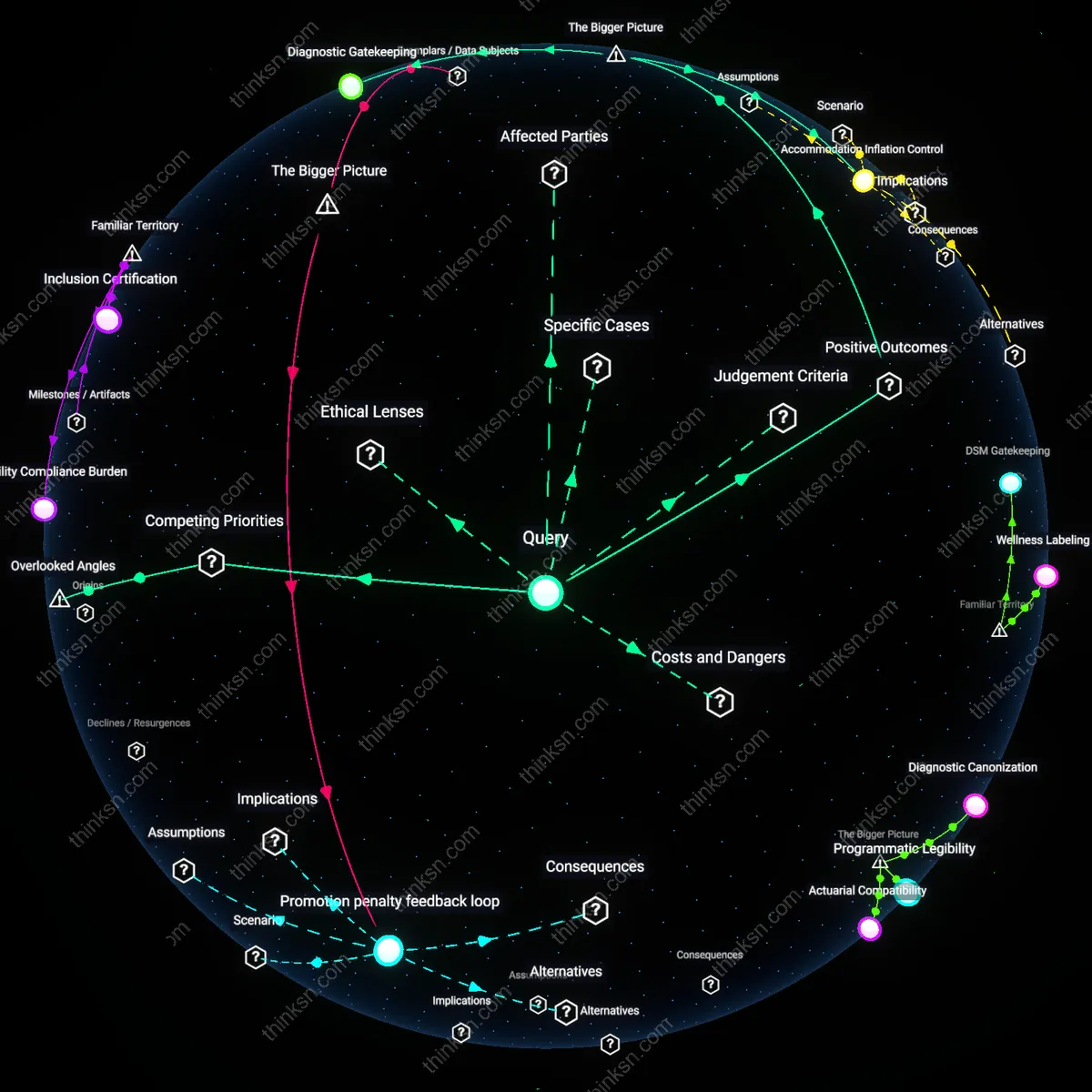
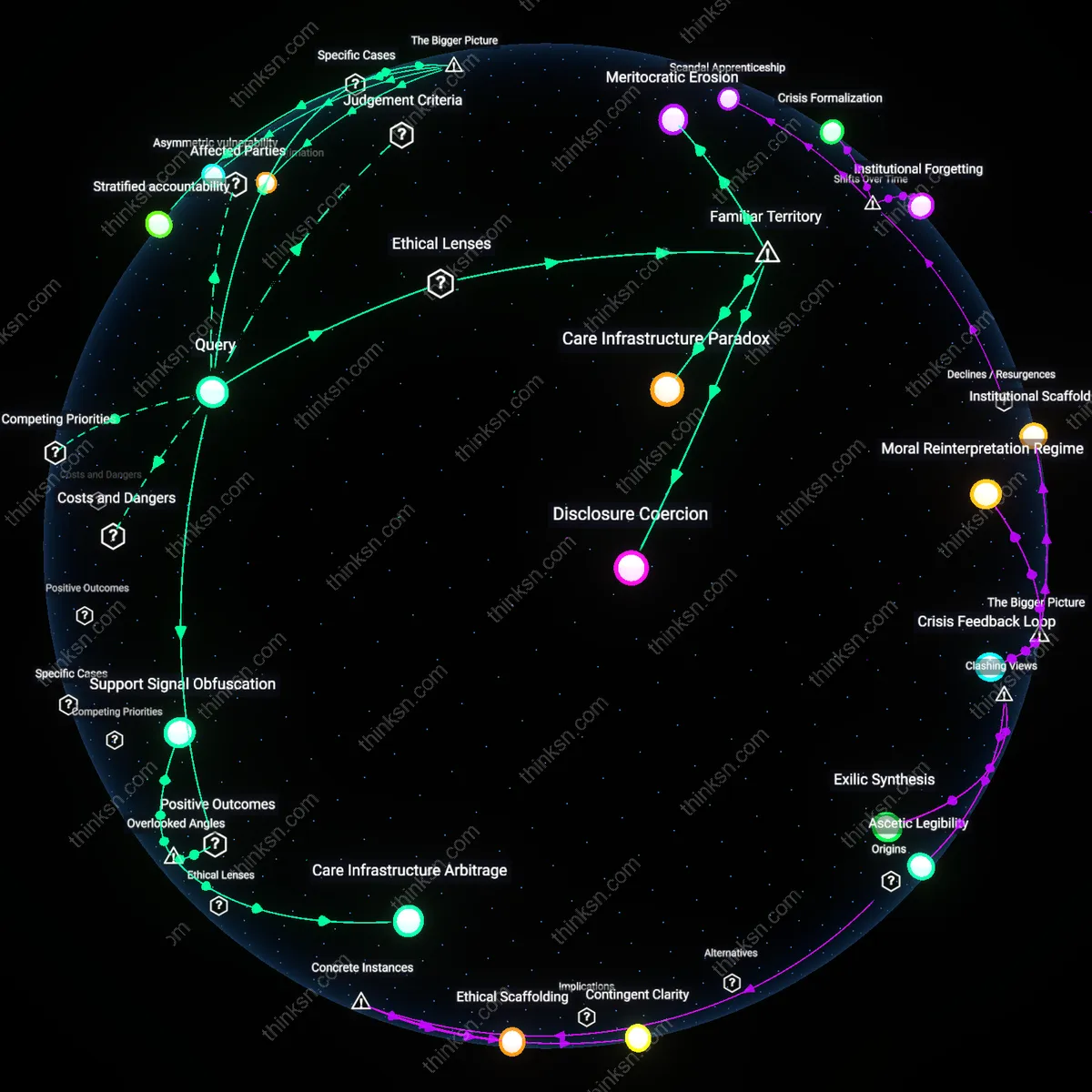
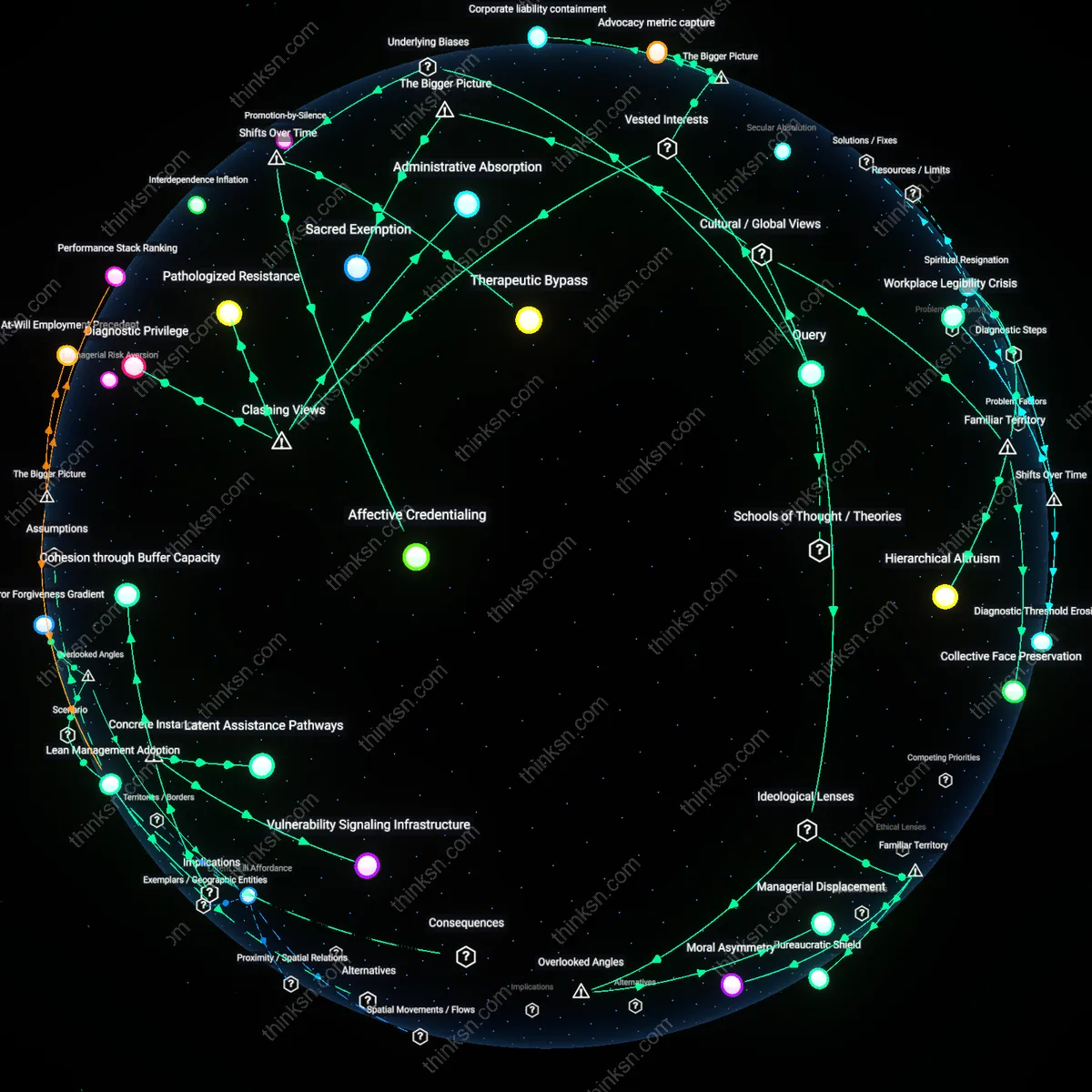
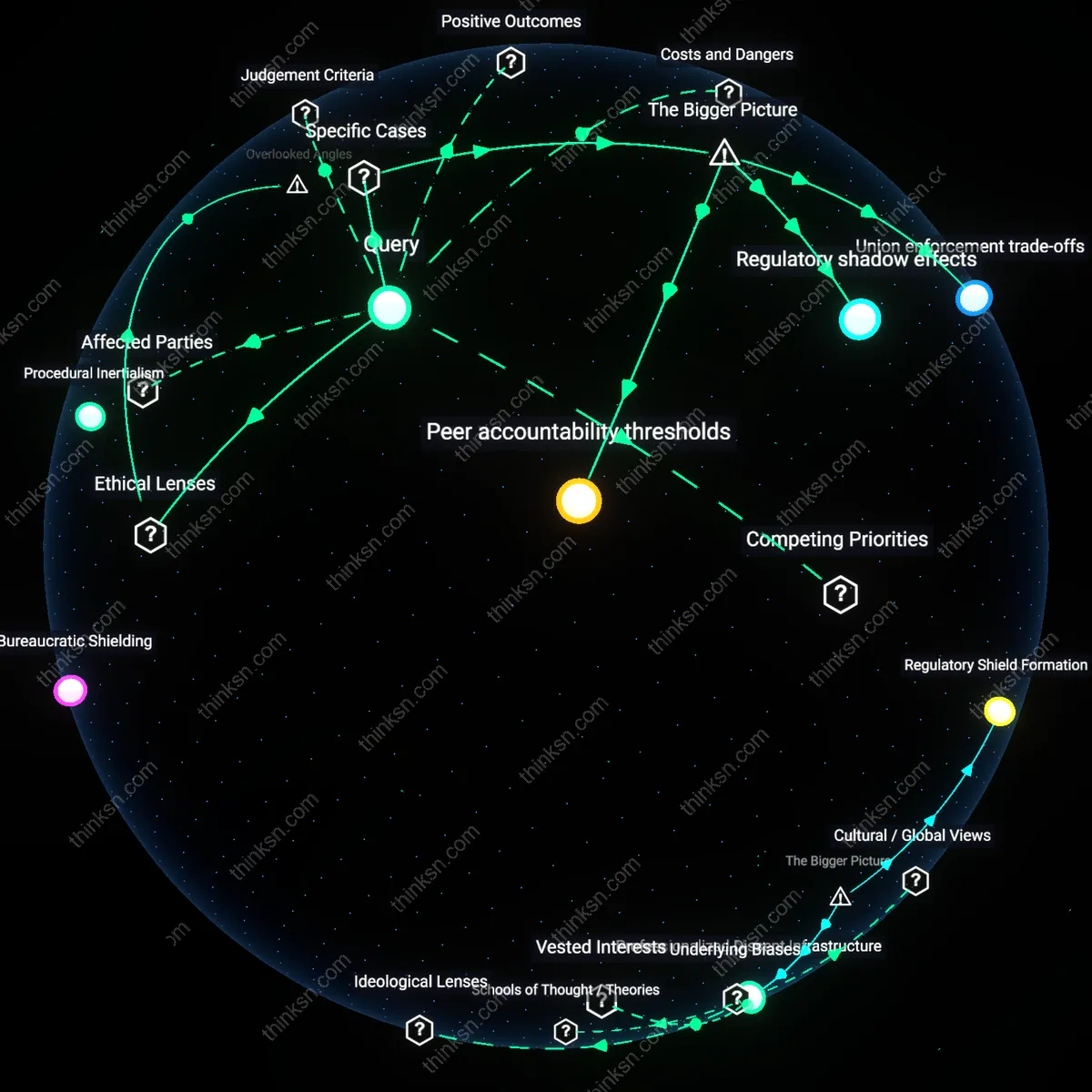
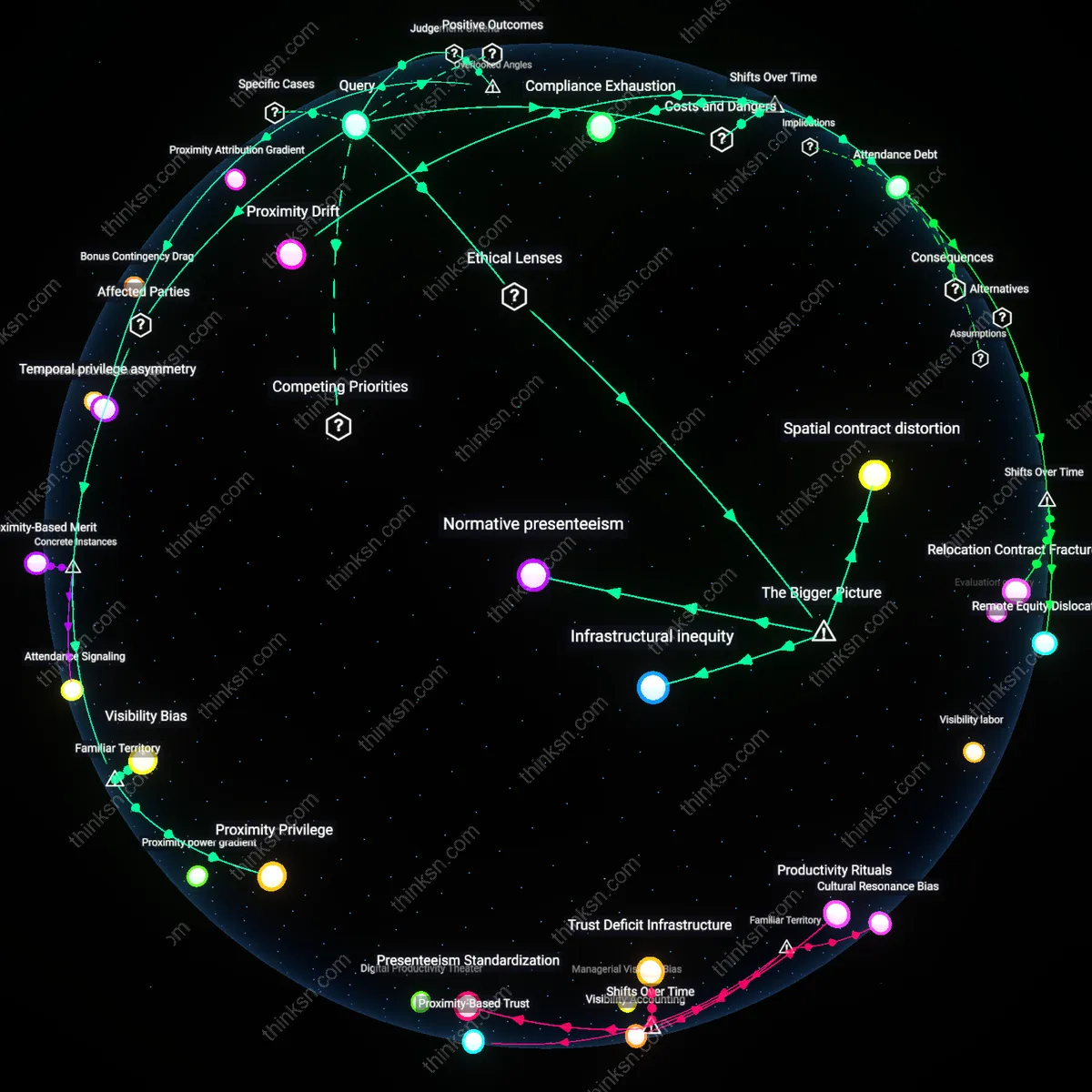
Analysis reveals 10 key thematic connections.
Key Findings
Strategic Omission
It is rational to conceal reproductive health decisions from employers because workplace anti-discrimination policies fail to eradicate implicit bias in promotion and assignment practices, particularly in hierarchical corporate environments like financial services in major U.S. cities. Managers retain discretionary authority over team composition and high-visibility projects, and historically, women—especially those assumed to be planning pregnancy—have been funneled into less demanding roles regardless of formal protections. This creates a self-protective logic in which preemptive concealment becomes a calculated career investment rather than a sign of distrust in legal systems. The non-obvious insight is that legal compliance does not eliminate informal power structures that penalize perceived instability.
Normative Evasion
Concealing reproductive health decisions is a rational act because disclosure risks triggering moralized workplace norms around 'dedication' that operate independently of anti-discrimination law, especially in tech startups and legal firms where overwork is culturally valorized. When an employee signals potential time demands outside work—such as fertility treatments or pregnancy—it can undermine their perceived commitment, regardless of actual performance, because organizational culture often equates availability with merit. This reveals the instability of legal protection when it collides with unwritten codes of professional identity. The overlooked reality is that individuals hide not because of illegal acts but to avoid the informal sanctions of normative judgment.
Institutional Arbitrage
Reproductive secrecy is rational because employees engage in jurisdictional navigation—disclosing health plans to medical providers under HIPAA safeguards while withholding them from HR departments that operate under weaker ethical constraints than legal ones, particularly in states with restrictive reproductive laws. Workers in hybrid remote roles across state lines exploit discrepancies between federal protections and local enforcement capacities, effectively treating health decisions as cross-jurisdictional assets. This exposes a hidden layer of legal pluralism in corporate governance, where rational actors don't just fear punishment but strategically map institutional boundaries. The underappreciated dynamic is that compliance frameworks are not uniform systems but fragmented terrains to be gamed for stability.
Epistemic Autonomy
Choosing to conceal reproductive health decisions from an employer preserves workers’ epistemic autonomy, enabling them to dictate the conditions under which personal medical data enters corporate information systems, even when legal non-discrimination policies exist. Because employer data aggregation practices—such as health insurance analytics or workplace wellness programs—can reclassify sensitive decisions into indirect risk indicators (e.g., predicting turnover or absenteeism), employees who withhold information disrupt algorithmic profiling that operates just beyond legal accountability. This dimension is rarely acknowledged because antidiscrimination discourse focuses on overt acts rather than the predictive governance embedded in workplace data infrastructures, which quietly reshape managerial perceptions without triggering legal violations. The ability to manipulate one’s data opacity thus becomes a subtle but critical form of agency within surveillance-heavy workplaces.
Stigma Inventory Burden
Employees who conceal reproductive health decisions reduce the organization’s accumulation of stigma inventory—a hidden cognitive load carried by managers who, despite compliance training, subconsciously categorize certain life choices as disruptions to team equilibrium. When such disclosures are widespread, they create a diffuse but real drag on team cohesion narratives within leadership circles, influencing informal decisions like mentorship access or international postings. Concealment, in this light, acts as a distributed risk-mitigation strategy that prevents the normalization of reproductive events as organizational friction points. This mechanism is overlooked because it operates at the level of collective perception rather than individual bias, subtly reshaping culture from below by limiting the pool of “legible” stigma within managerial discourse.
Temporal Escape
It is rational to conceal reproductive health decisions when workplace non-discrimination policies create a false sense of safety that emerged only after the erosion of broader social protections in the 1980s—employers increasingly absorbed functions once managed by the state, making health disclosures a liability despite legal shields. As occupational health regimes became privatized, employees faced implicit coercion to perform biological neutrality, where any deviation risks being coded as unprofessional or disruptive to productivity. The non-obvious reality is that legal protection in this domain does not dismantle power asymmetries but displaces them into subtler forms of surveillance and self-regulation, revealing how post-welfare state transitions have recast privacy as a survival tactic rather than a guaranteed right.
Normative Drift
It is rational to withhold reproductive health information because employer tolerance evolved not from ethical commitment but from shifting economic imperatives in the 1990s and early 2000s, when knowledge-sector firms rebranded inclusion as innovation capital. As tech and service industries replaced manufacturing cores, corporate cultures began absorbing reproductive rights language—yet only as long as visibility remained performative and non-disruptive. The unseen consequence was a slow normalization of reproductive legibility to employers, where even protected disclosures become audit trails; thus, resisting visibility is not paranoia but a corrective to the historical drift that has turned rights into managed assets rather than liberatory tools.
Discursive Shield
Women at Planned Parenthood in Texas after SB8's enactment strategically concealed fertility treatment plans from employers to avoid professional penalties despite legal non-disclosure requirements, because visible association with banned reproductive services triggered informal workplace reprisals regardless of formal protections, revealing that legal rights are insufficient when social enforcement mechanisms operate through stigma rather than law.
Bureaucratic Asymmetry
Public school teachers in Idaho avoided discussing IUD insertions with administrators after the state cut family planning funding, not due to illegal retaliation but because performance review systems incorporated unspoken expectations of 'moral alignment' with local values, exposing how formally neutral employment structures absorb cultural norms to silently penalize legally protected choices.
Jurisdictional Arbitrage
Tech contractors at SpaceX operating remotely from California while legally based in Florida concealed egg-freezing timelines from HR to bypass employer-linked insurance audits that conflicted with state-level policy discrepancies, demonstrating that rational evasion arises not from overt discrimination but from deliberate misalignment between personal legal jurisdiction and corporate policy enforcement zones.