Are HR Departments Really Just Company Police?
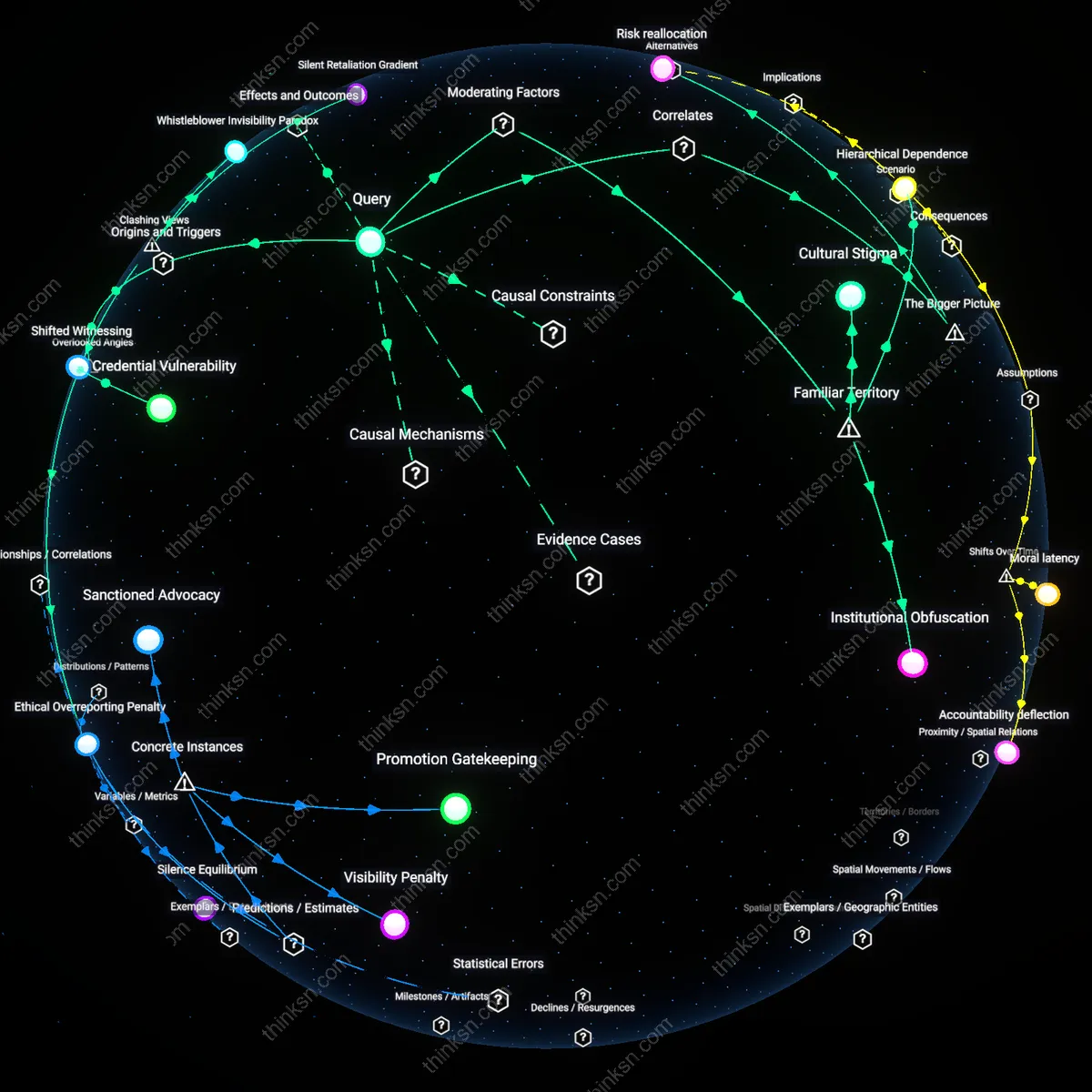
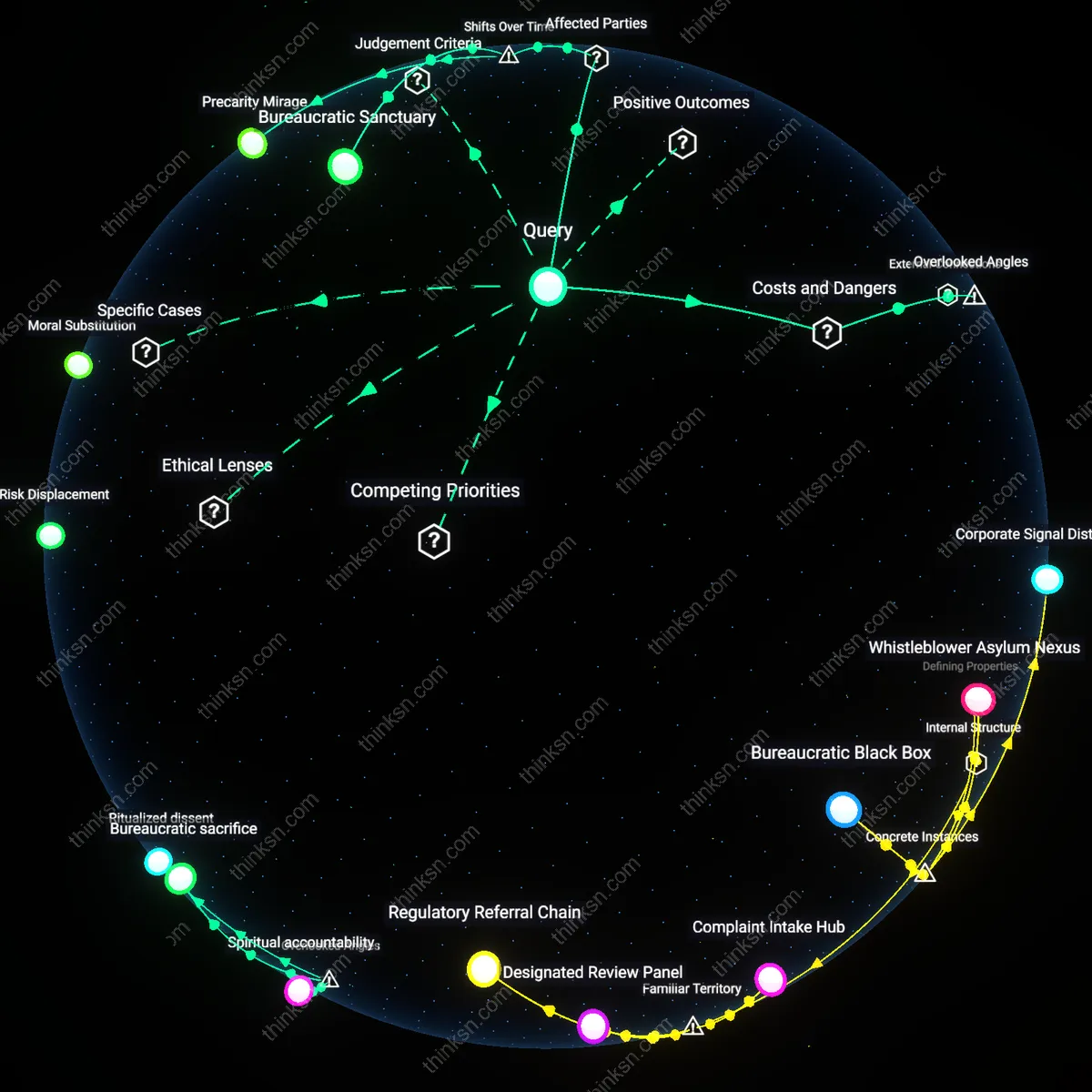
Analysis reveals 4 key thematic connections.
Key Findings
Disciplinary drift
The shift from HR as administrative facilitators to internal compliance enforcers after the 1980s expanded investigative authority over misconduct reports, which repositioned HR as gatekeepers of legal liability rather than employee advocates. This transition, accelerated by rising litigation risks and the institutionalization of workplace policies like Title VII enforcement, embedded a disciplinary logic into HR practices that prioritizes organizational insulation over trust-building. As a result, employees increasingly perceive reporting to HR as initiating a punitive process rather than seeking support, which suppresses disclosure—especially in cases involving managerial misconduct. The non-obvious consequence is not simply mistrust, but the systematic alignment of HR procedures with risk mitigation timelines and legal defensibility, altering the very meaning of 'reporting' within workplace culture.
Reporting Avoidance
Perception of HR as 'company police' correlates with decreased reporting of misconduct, not because employees lack legal protections, but because they distrust HR’s role as a neutral or protective actor. This distrust operates through frontline employees’ lived experiences with managerial retaliation—even when formal policies exist—creating a behavioral aversion to engaging institutional channels. What’s underappreciated is that legal safeguards are statistically irrelevant to reporting decisions when procedural justice is perceived as compromised, revealing that compliance infrastructure can coexist with systematic disengagement.
Procedural Mirage
The presence of codified employee protections correlates with stronger perceptions of HR as an enforcement entity, not a support function, thereby reinforcing the 'company police' image. This occurs because compliance-driven training and audit regimes emphasize organizational risk mitigation over employee advocacy, redirecting HR activity toward documentation and liability control. The dissonance lies in how legal protections, intended to empower workers, are institutionally operationalized in ways that deepen alienation, exposing a performative alignment with law that masks functional indifference to equity.
Whistleblower Inversion
Employees with the most knowledge of legal protections are often the least likely to report internally, not due to fear alone, but because their awareness reveals the gap between statutory rights and HR’s discretionary enforcement. This divergence functions through specialized roles—like union stewards or compliance officers—who observe patterns of selective discipline and case suppression, leading them to route disclosures externally or not at all. The critical insight is that expertise in protections erodes trust in mechanisms, reversing the assumed relationship between legal literacy and reporting confidence.