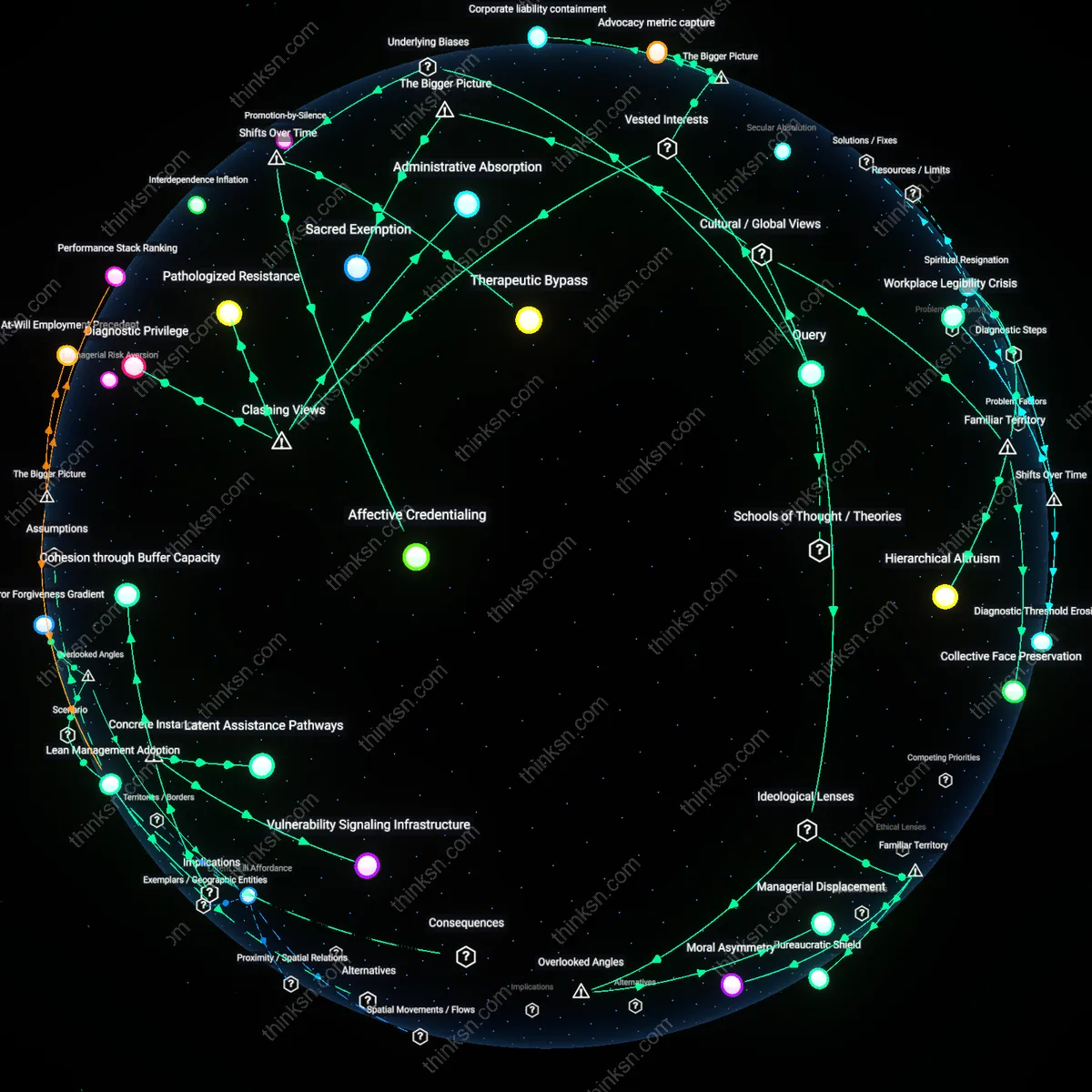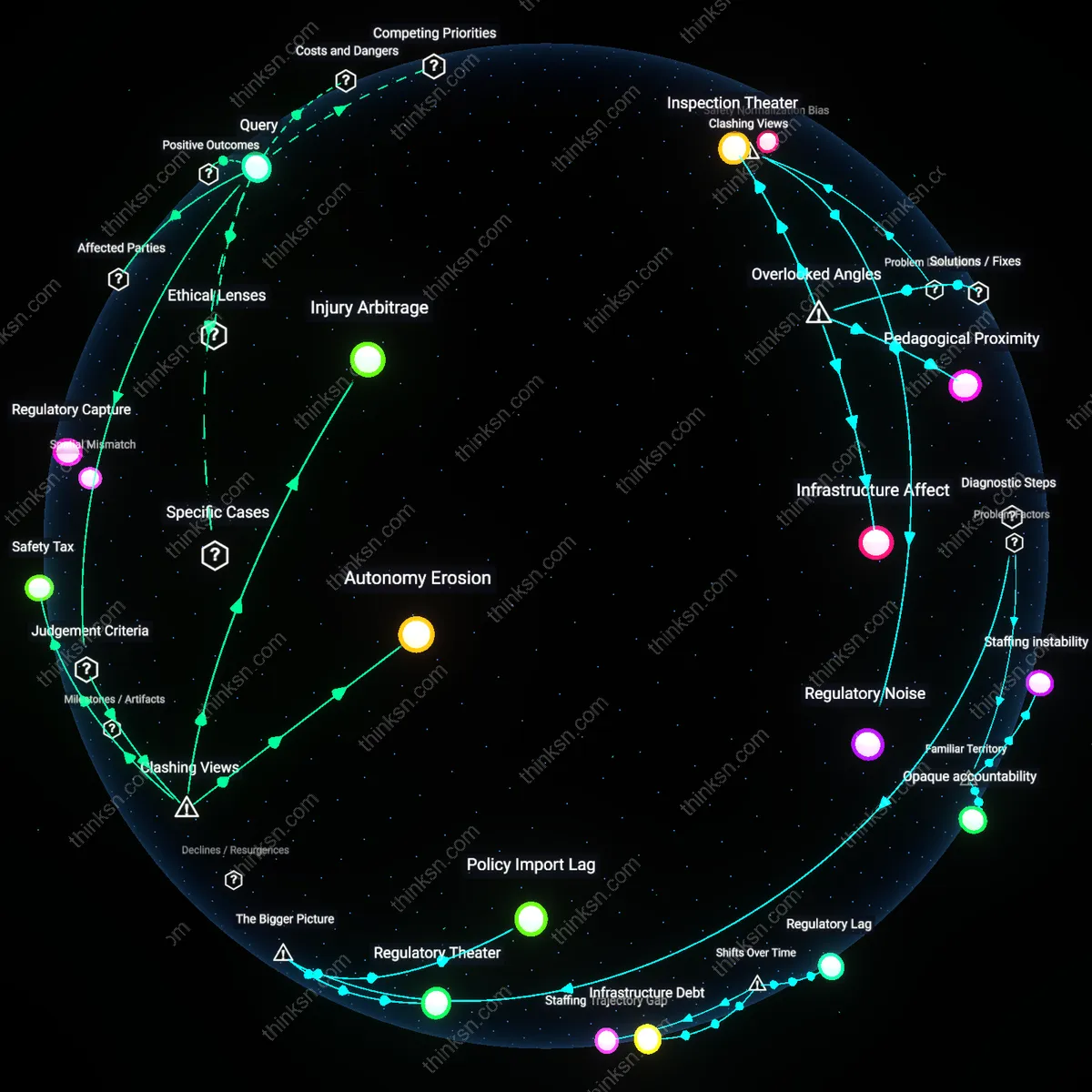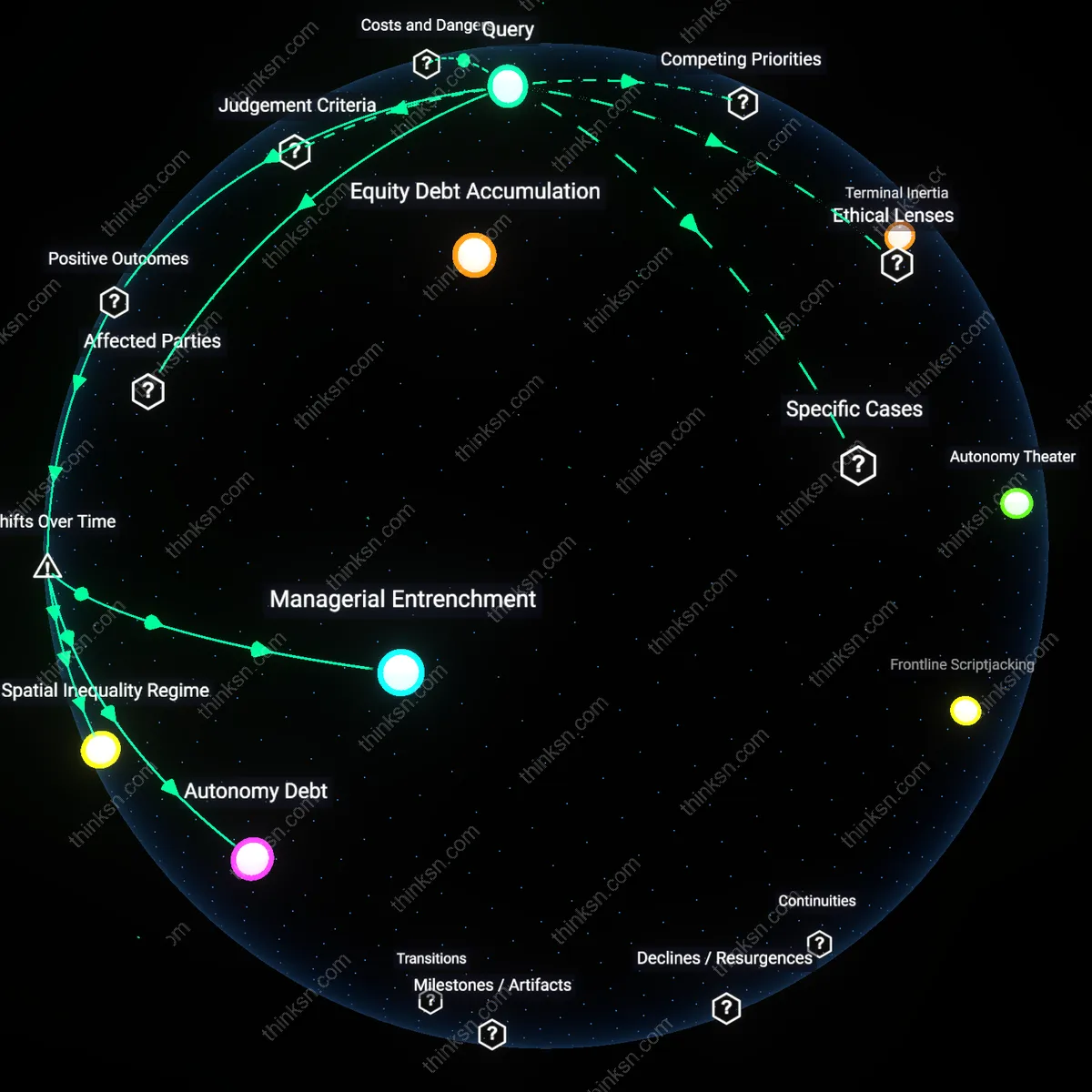
Employee Choice vs Manager Veto in Hybrid Work Policies?
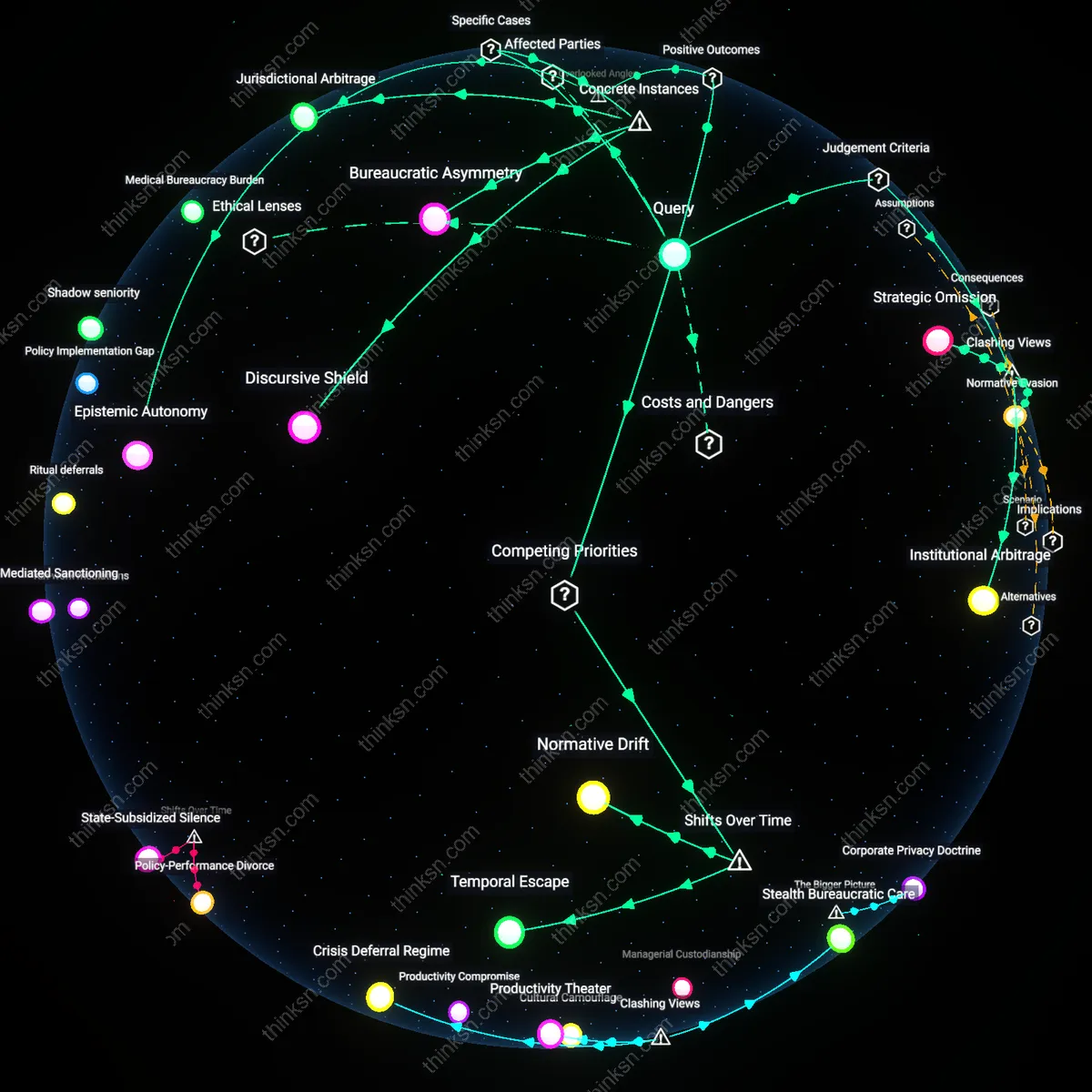
Analysis reveals 6 key thematic connections.
Key Findings
Managerial Legitimacy Erosion
Managerial veto power over hybrid work undermines employee autonomy, triggering a loss of perceived fairness that destabilizes trust in leadership. When managers unilaterally override hybrid arrangements without transparent criteria, employees interpret these actions as arbitrary, activating psychological contract violations that weaken organizational commitment. This occurs within systems of implicit reciprocity where autonomy is perceived as a reward for performance, and its revocation—especially without justification—signals capricious authority. The non-obvious consequence is not mere dissatisfaction but the quiet corrosion of managerial legitimacy, as employees begin to view leaders not as coaches but gatekeepers hoarding control.
Institutional Flexibility Paradox
When organizations implement hybrid work policies but preserve managerial veto power, they reproduce structural rigidity masked as flexibility, privileging hierarchical oversight over operational adaptability. Middle managers, pressured to demonstrate team productivity while lacking systemic support for remote coordination, deploy veto power as a risk-avoidance tactic, reinforcing presenteeism norms even in distributed settings. This dynamic reveals how institutional innovation can be neutralized by embedded bureaucratic incentives, where the appearance of modernization conceals continuity in control mechanisms. The underappreciated outcome is that the organization becomes less agile, not more, because decision-making remains centralized and contextually disconnected.
Equity Debt Accumulation
Managerial discretion in hybrid work access entrenches unequal outcomes across demographic lines, particularly disadvantaging caregivers, neurodivergent employees, and those in lower hierarchical tiers who lack bargaining power. Without standardized criteria, veto power enables implicit bias to shape who gets autonomy, transforming individual managerial judgments into systemic exclusion patterns over time. This occurs within decentralized decision-making environments where accountability for equity is diffuse, allowing disparities to compound invisibly across departments. The non-obvious mechanism is not overt discrimination but the gradual accrual of 'equity debt'—a growing deficit in fair opportunity distribution that erodes inclusion without triggering formal redress.
Managerial Entrenchment
Managerial veto power in hybrid work consolidates control by reversing post-pandemic shifts toward distributed decision-making, enabling middle managers in firms like IBM and Unilever to reclaim authority eroded during 2020–2021 remote transitions; this reversal operates through performance oversight systems retrofitted to monitor location-based presence, revealing how crisis-driven autonomy recedes when institutional routines reassert normative workplace hierarchies.
Autonomy Debt
The erosion of employee autonomy in hybrid policies accumulates organizational 'debt' by undermining trust built during the 2020–2022 era when remote work demonstrated sustained productivity without oversight, a shift exemplified by tech firms like GitLab that maintained autonomy-only models; this dynamic reveals how reverting to managerial discretion destabilizes long-term employee expectations, treating temporary crisis adaptations as expendable rather than foundational to modern employment contracts.
Spatial Inequality Regime
Enforcing managerial veto over hybrid work reproduces geographic privilege by privileging employees near headquarters—evident in post-2022 return-to-office mandates at banks like JPMorgan Chase—where proximity determines access to flexibility, transforming what was briefly a democratized temporal autonomy into a spatially stratified benefit; this marks a decisive reversal from pandemic-era decentering of work, exposing how control re-coalesces around physical centrality in ways that reinforce pre-existing urban and class divides.