How Far Is Too Far When Supporting Geographically Split Kids?
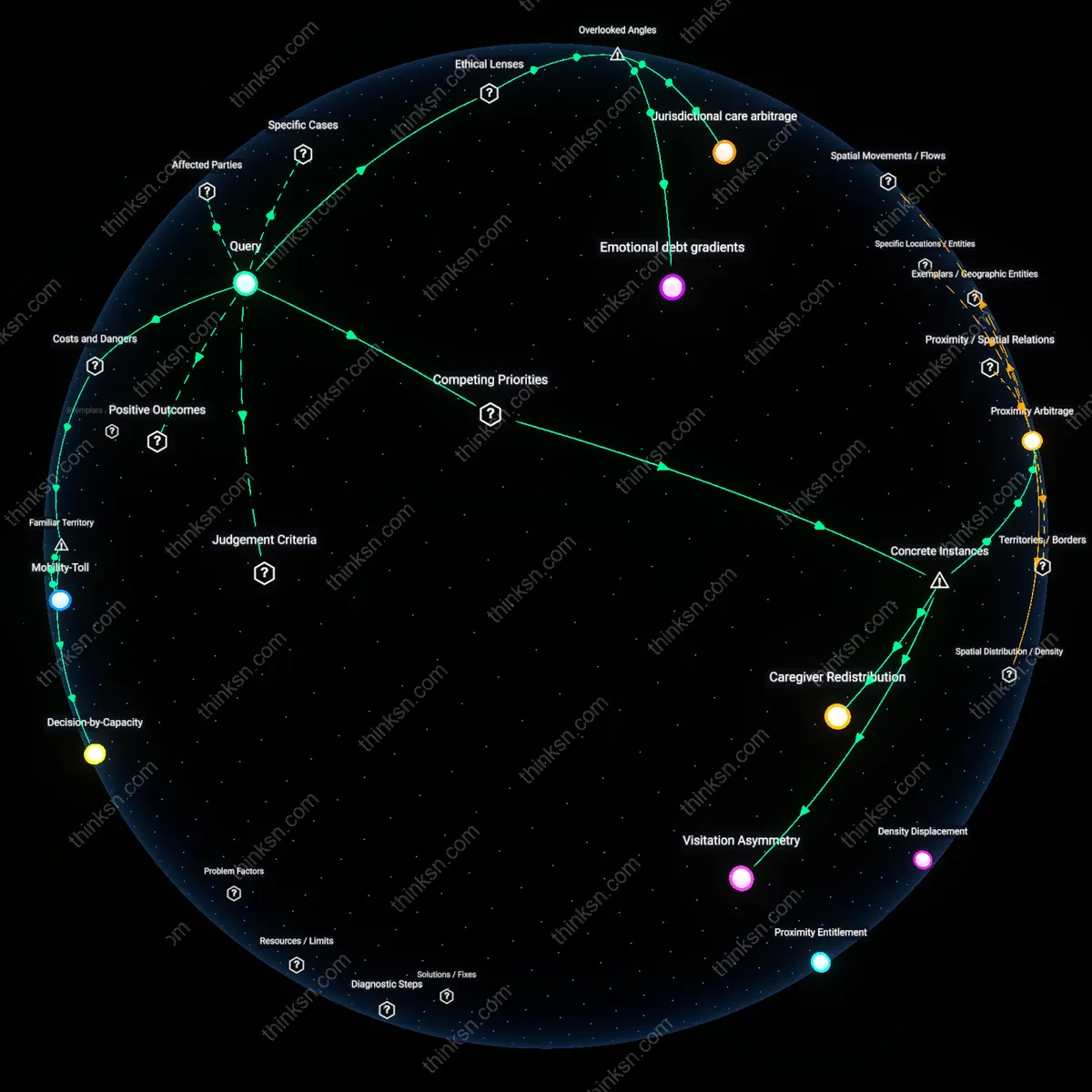
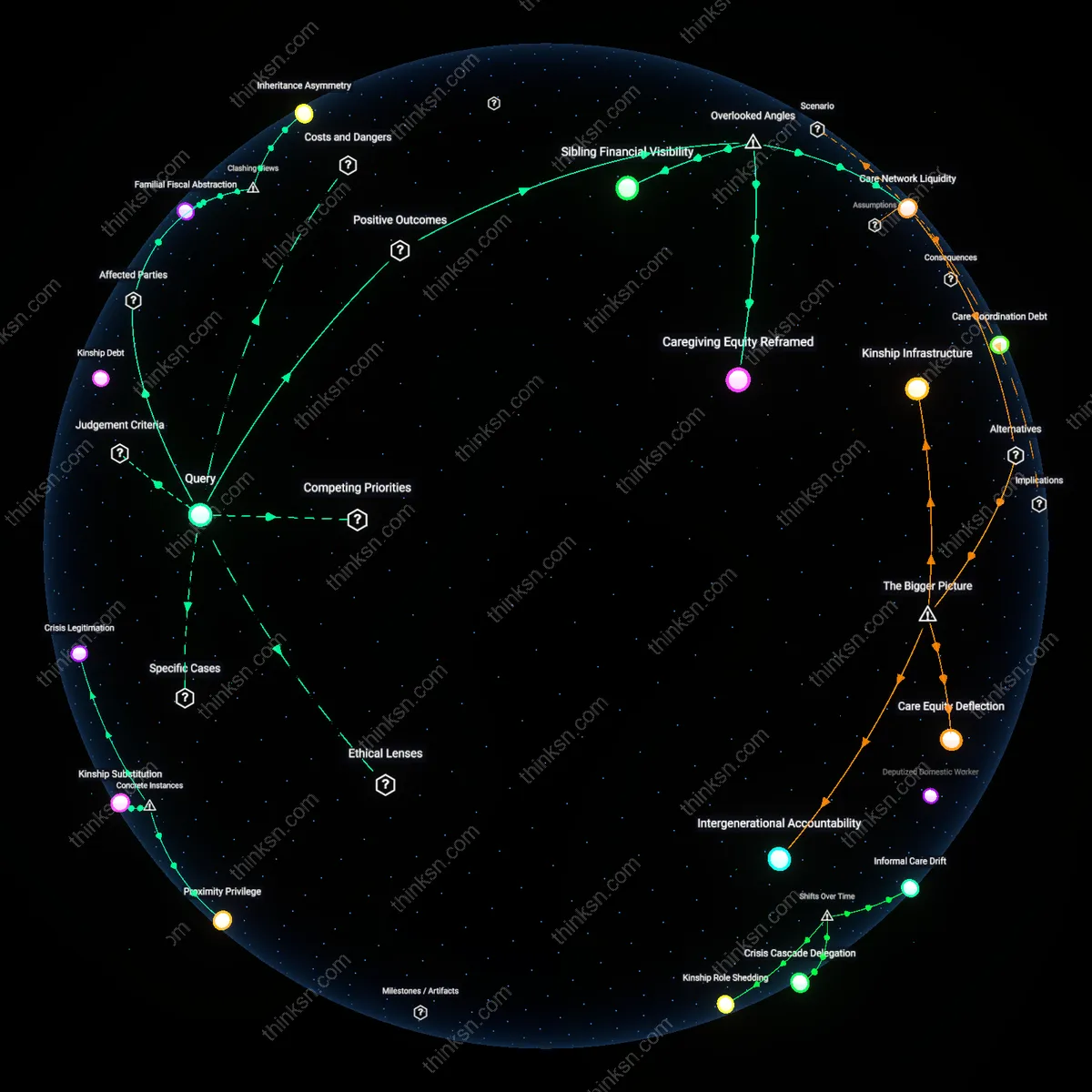
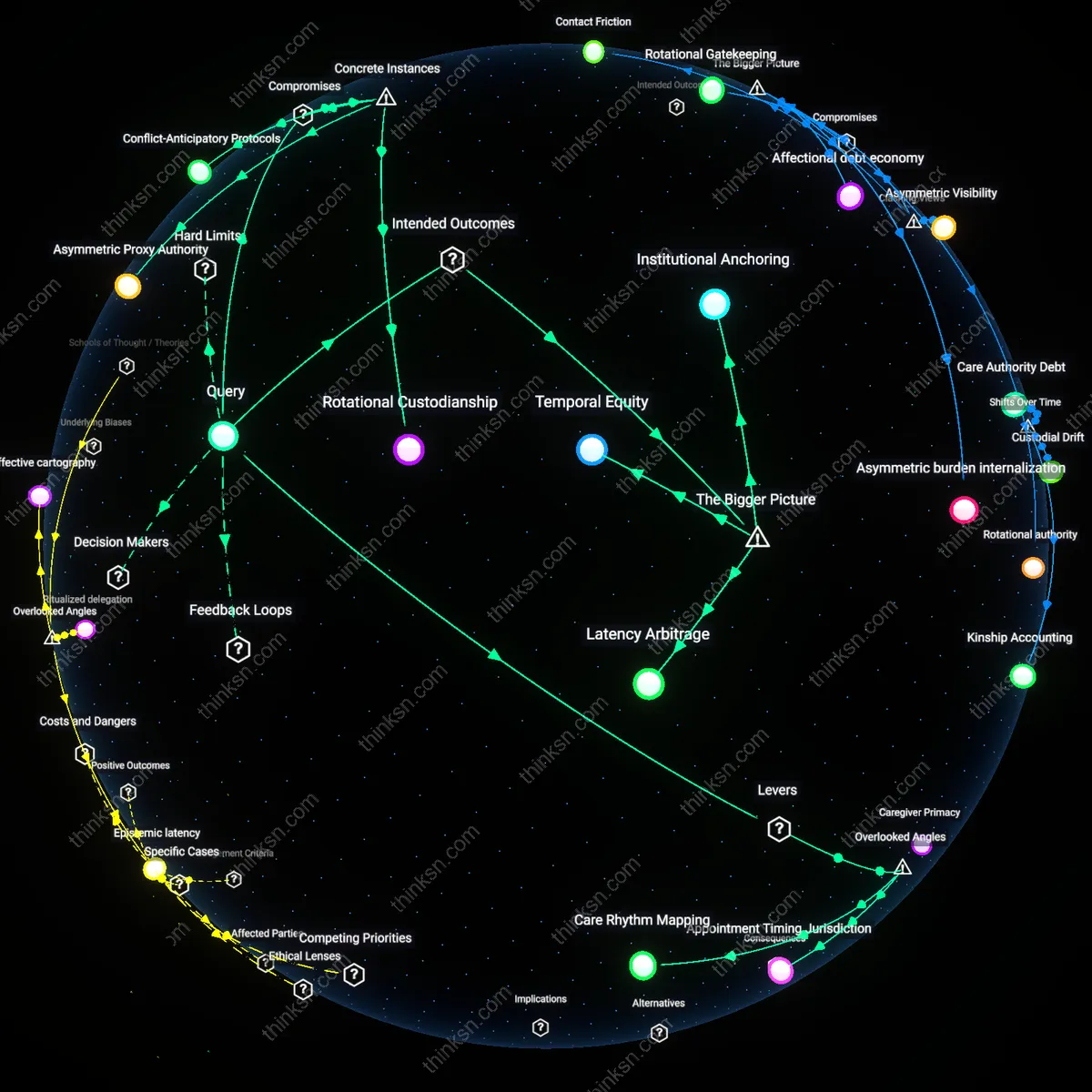
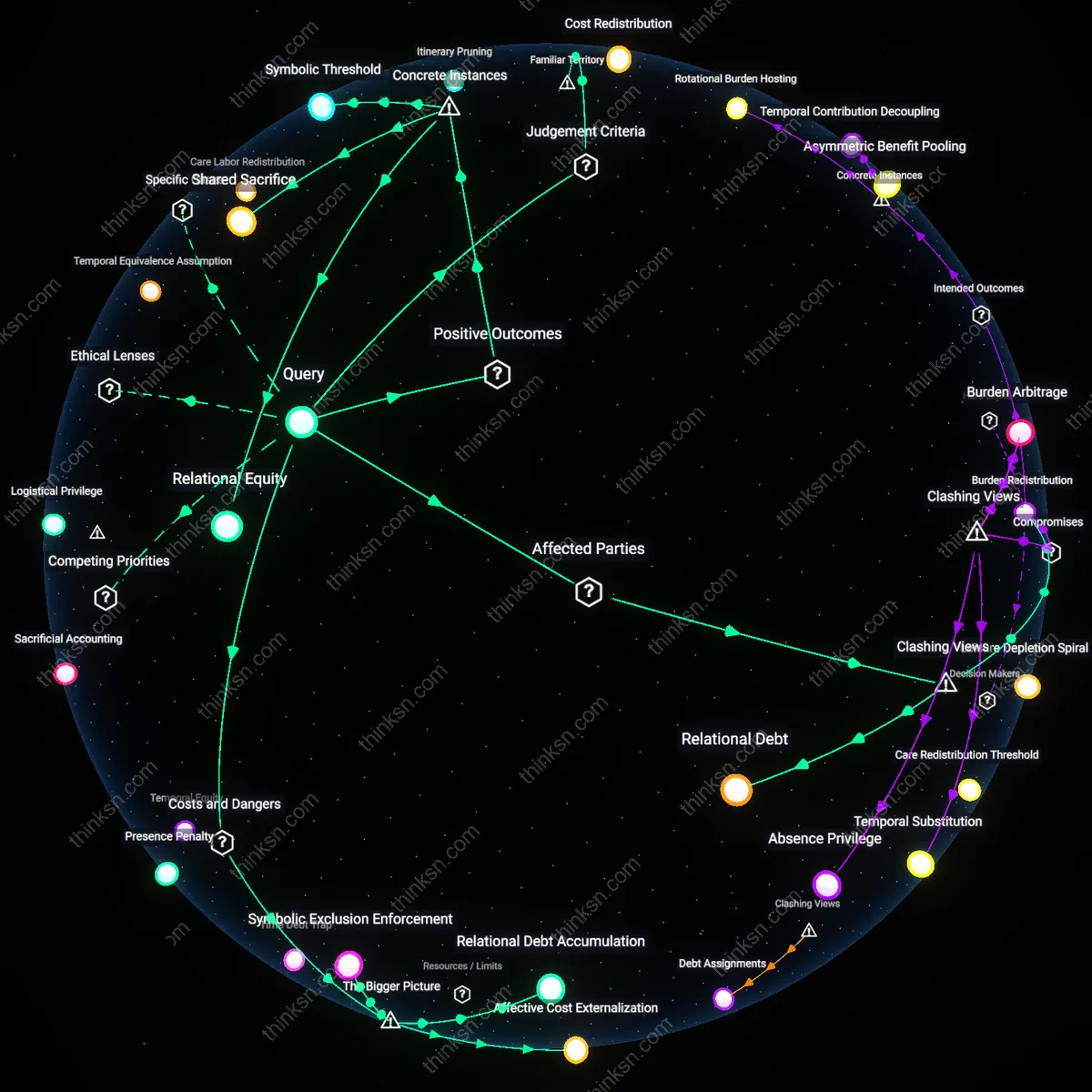
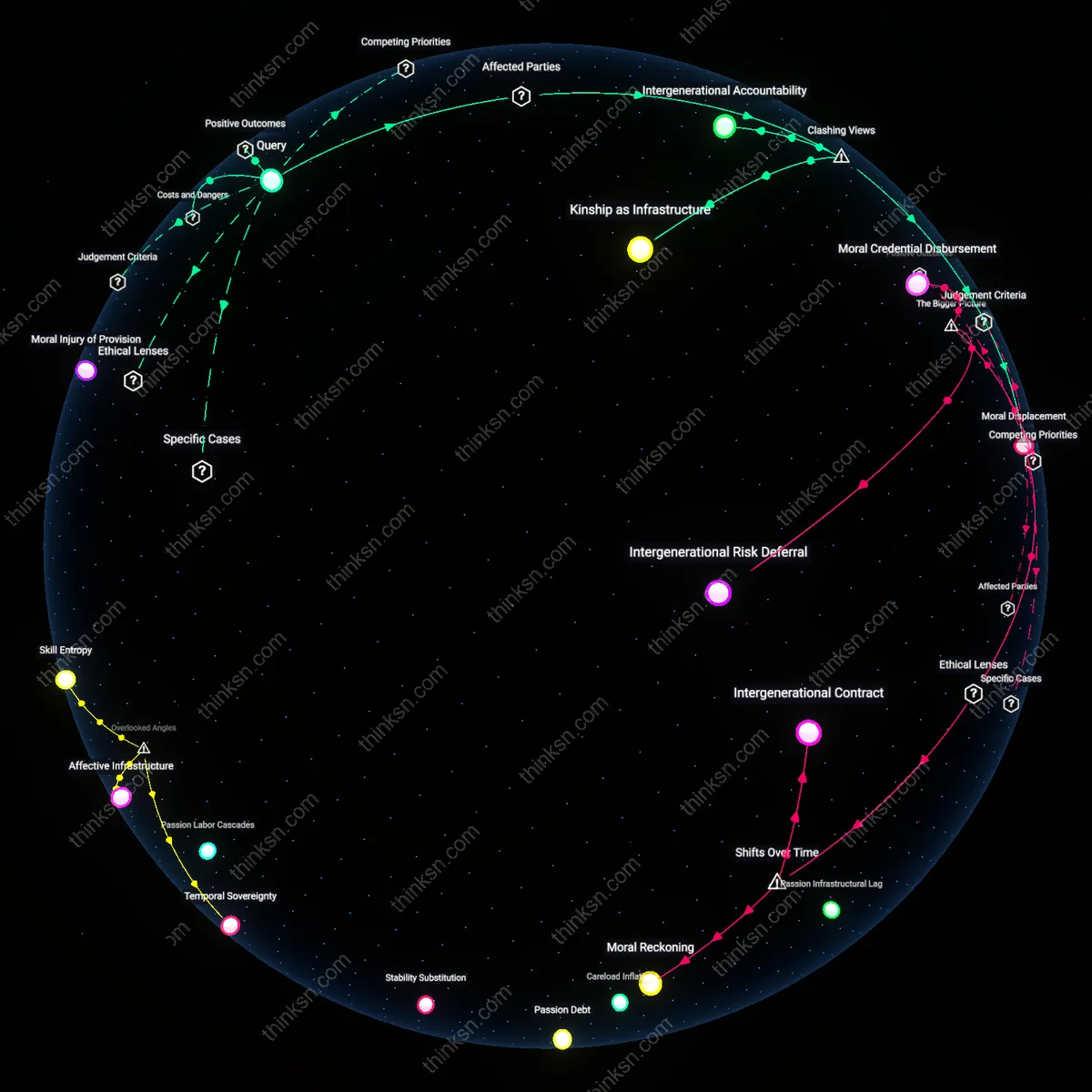
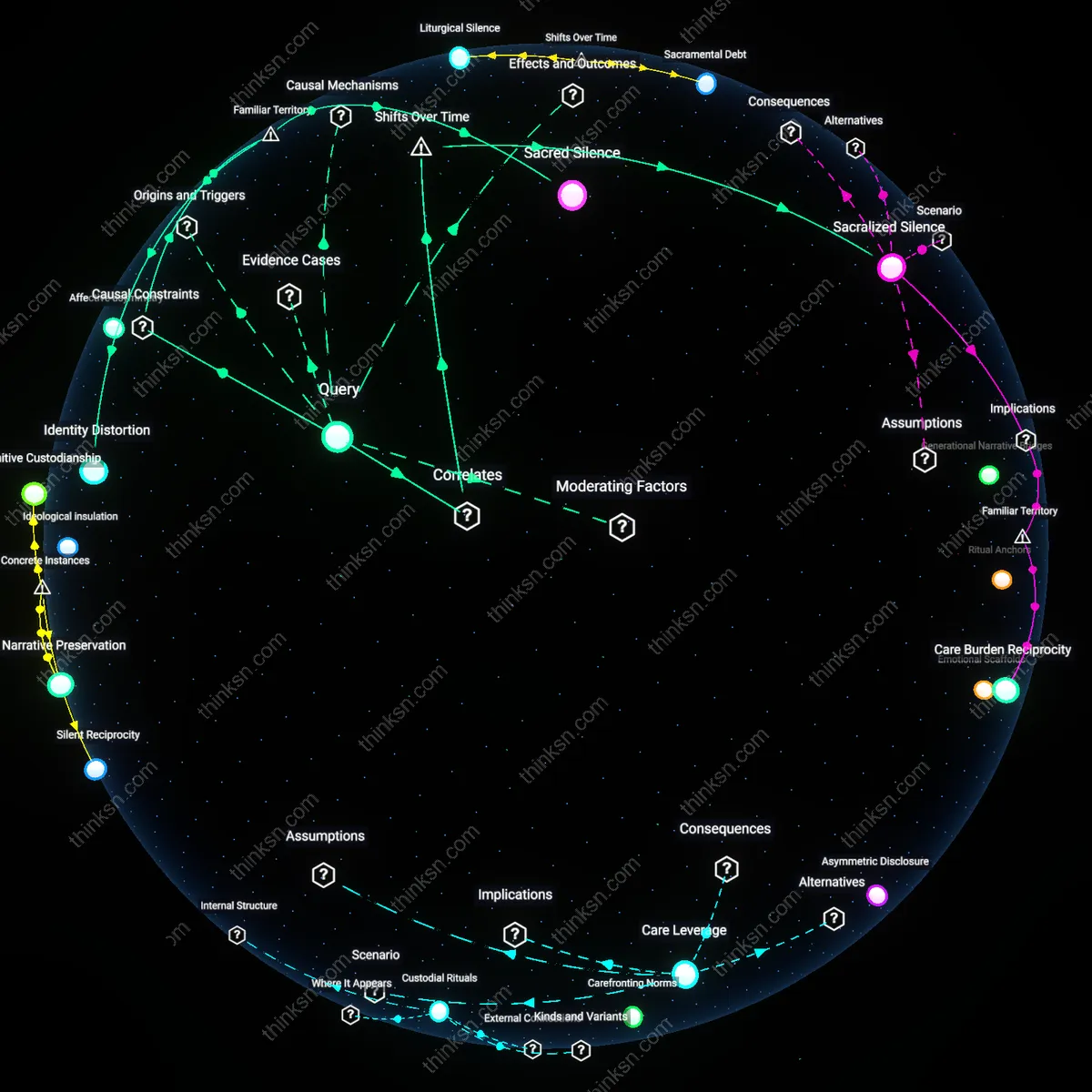
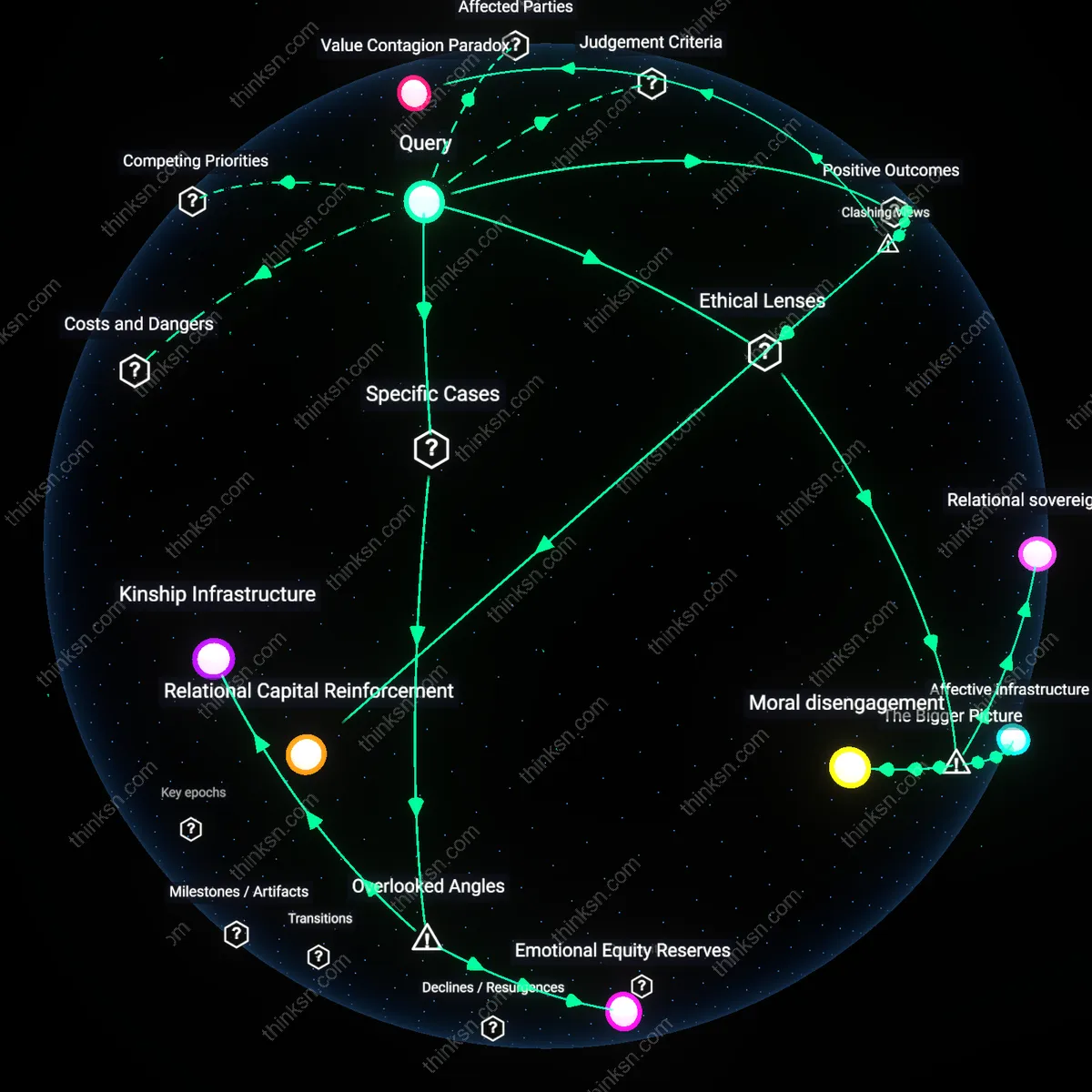
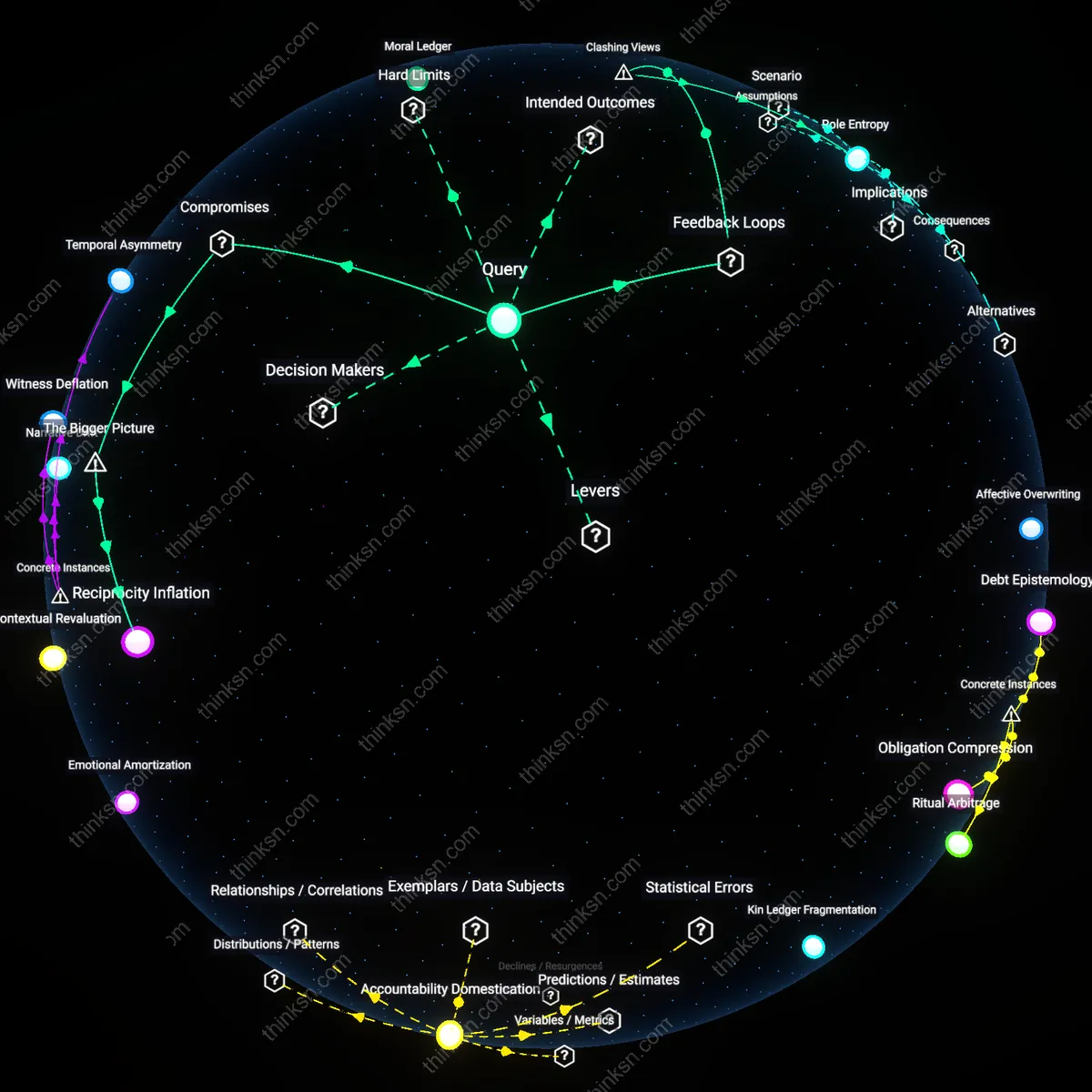
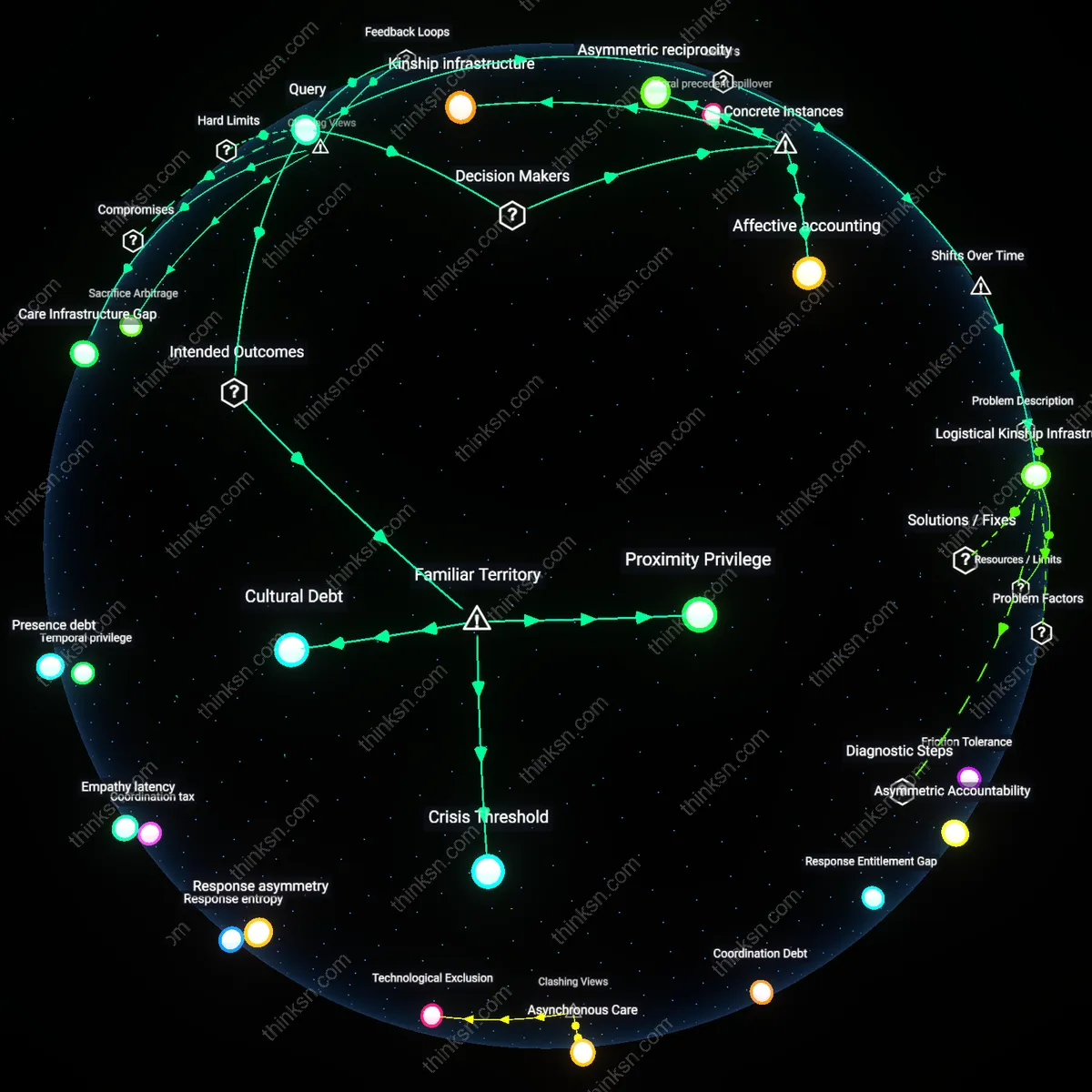
Analysis reveals 10 key thematic connections.
Key Findings
Logistical Kinship Infrastructure
Parents should institutionalize communication and resource-sharing through scheduled virtual check-ins and shared digital financial platforms, treating coordination as a technical system rather than an emotional act. Since the widespread adoption of consumer video conferencing and mobile banking after 2010, the capacity to monitor and distribute support across distances has shifted from reliance on sporadic visits and cash envelopes to trackable, routine exchanges—what sociologists observed in Midwestern rural families during the 2020 pandemic as a normalization of 'remote care logistics.' This system operates through calendar-synchronized transfers and agenda-driven family meetings, making invisible labor visible and preventing nearness bias; analytically, this marks a departure from kinship as proximity-based ritual to kinship as administered practice, revealing how digital mediation has transformed familial equity from an ethos into an operational workflow.
Care Infrastructure Gap
Parents must prioritize the adult child with the weakest local care infrastructure, not equal material distribution, because geographic dispersion exposes asymmetries in accessible health, housing, and social services that trigger reinforcing dependency loops. When one child lives in a region with underfunded public services or sparse kinship networks, parental support becomes a de facto public supplement, and redirecting resources there prevents escalating crises that later demand broader family sacrifice. This counters the intuitive moral of fairness as symmetry, revealing that equitable outcome requires unequal input—a non-obvious recalibration when viewed through systemic fragility rather than individual intent.
Emotional Debt Accumulation
Parents should intentionally create visible, documented imbalances in support to disrupt the unspoken expectation of reciprocity that breeds resentment among geographically distant siblings. By openly investing more in the nearest child—say, through home-cooked meals or emergency childcare—they generate a surplus of perceived 'emotional debt' that the distant siblings experience secondhand, which activates a balancing loop via guilt-driven compensation (e.g., funding a parent’s trip to visit). This challenges the dominant framing of proximity as a logistical inconvenience by reframing it as a strategic emotional asset, revealing that inequity, when made explicit, can stabilize relational dynamics rather than erode them.
Sacrifice Arbitrage
Parents should outsource symbolic acts of equity—birthday gifts, holiday cards—to third-party services so that minimal personal effort sustains the appearance of fairness, reserving their time and energy for substantive, asymmetric support to the nearest child. This creates a balancing feedback loop where the emotional cost of perceived neglect is offset by predictable, ritualized gestures, allowing the system to absorb geographic strain without demanding impossible parity in attention. It contradicts the conventional virtue of 'personal touch' in caregiving, exposing a residual economy where emotional labor can be arbitraged without relational collapse.
Kinship infrastructure
Parents in rural Oaxaca sustain equitable support across geographically dispersed adult children by leveraging communal land tenure systems tied to ancestral plots, where each child retains usufruct rights regardless of migration, ensuring geographic distance does not erode claims to family resources; this mechanism operates through the *usos y costumbres* governance framework, which legally recognizes kin-based resource access outside formal property markets, revealing that equitable treatment does not require uniform financial transfers but can be maintained through collectively held assets—what is non-obvious is that equity can be structurally preserved not by equal acts of giving, but by institutionalizing shared access to rooted, place-specific assets.
Asymmetric reciprocity
In post-reunification Germany, parents in Leipzig balanced support between adult children in Berlin and those remaining locally by channeling more financial aid to urban migrants facing higher living costs while expecting greater caregiving labor from those nearby, a pattern formalized informally through intergenerational housing co-residency; this system functioned via tacit renegotiation of obligations calibrated to geographic disparity, showing that equity emerges not from symmetry in support but through differentiated yet complementary forms of exchange—what is underappreciated is that geographic dispersion can enable rather than undermine fairness when contributions are heterogenous but mutually binding.
Affective accounting
Chinese diaspora parents in Vancouver reconcile uneven material support for adult children in Toronto, Shanghai, and Sydney by maintaining detailed mental records of emotional, financial, and ceremonial exchanges—such as tuition payments, festival red envelopes, and video call frequency—adjusted for local cost of living and cultural expectations, using Lunar New Year gatherings as audit points to recalibrate reciprocity; this practice operates through culturally embedded tracking of non-fungible contributions, revealing that perceived equity among dispersed children relies less on objective parity than on transparent, narrativized ledgers of care—what is overlooked is that emotional legitimacy in parenting can be sustained through ritualized assessment of intangible investments rather than equal distribution.
Proximity Privilege
Prioritize equal time over equal spending to counteract the hidden advantage local children receive through daily presence. Frequent in-person contact creates emotional leverage and access that distant siblings cannot match, so parents must regulate visit cycles and enforce rotation—even at emotional cost—to disrupt the default favoritism embedded in geographic convenience. The non-obvious insight is that equity requires constraining what feels like natural responsiveness to the child who is simply 'there.'
Crisis Threshold
Distribute support based on verified need, reserving parental intervention for life-stage emergencies like medical crises, job loss, or housing instability—regardless of location. This shifts the parent’s role from constant provider to strategic responder, using objective benchmarks to define when help is justified. The underappreciated truth is that constant support erodes adult autonomy, and the familiar refrain of 'being there' often masks overinvolvement that undermines equity.
Cultural Debt
Acknowledge that frequent travel to distant children accumulates emotional and financial strain, and treat that burden as a shared family liability rather than a personal parental duty. When one parent bears repeated cross-country trips, the imbalance isn't just logistical—it reshapes family narratives, assigning greater importance to geographically remote children. The insight is that the effort to 'stay connected' across distance carries invisible costs that distort perceptions of fairness if left unaccounted.