Should One Sibling Bear All Caregiving Costs While Others Pay?
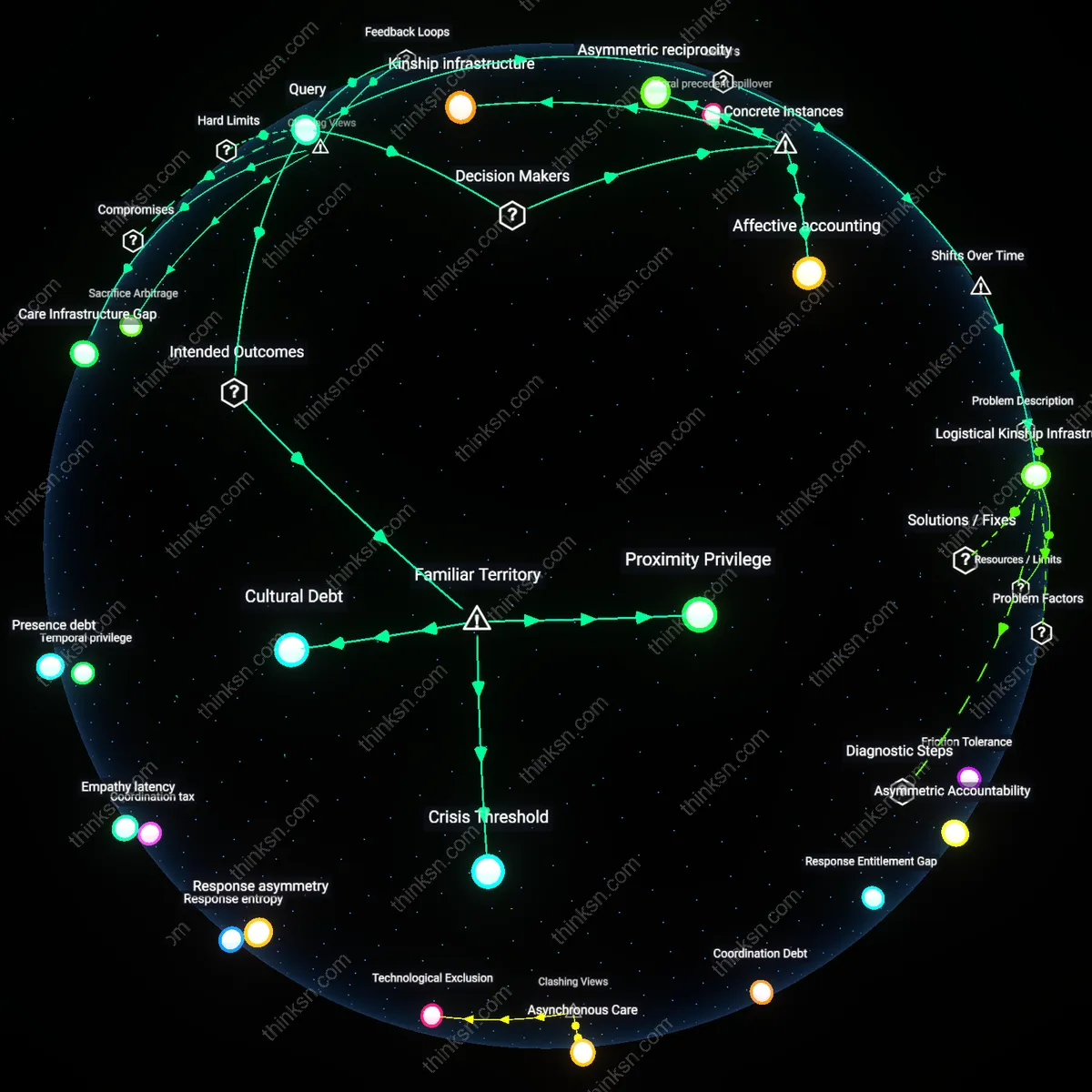
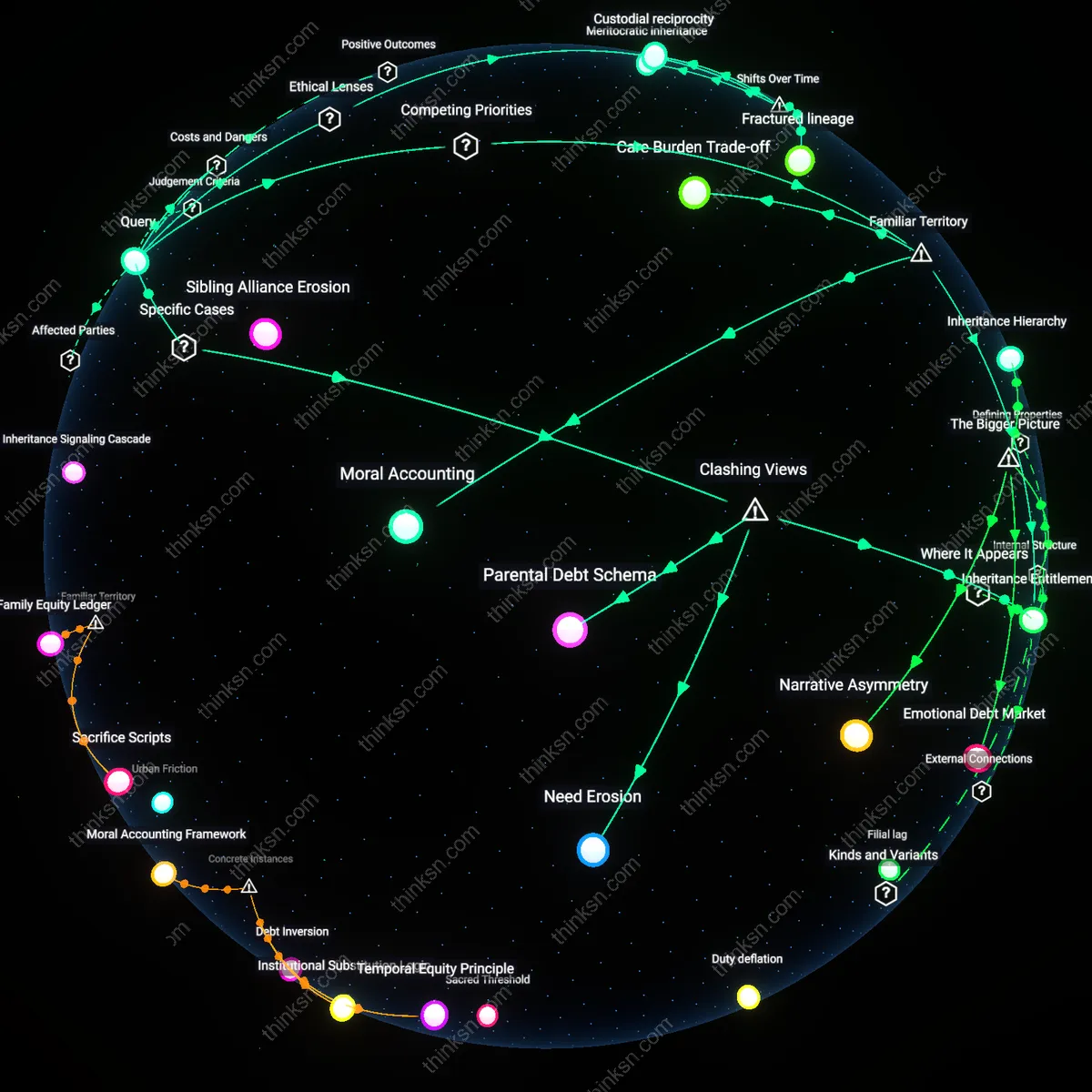
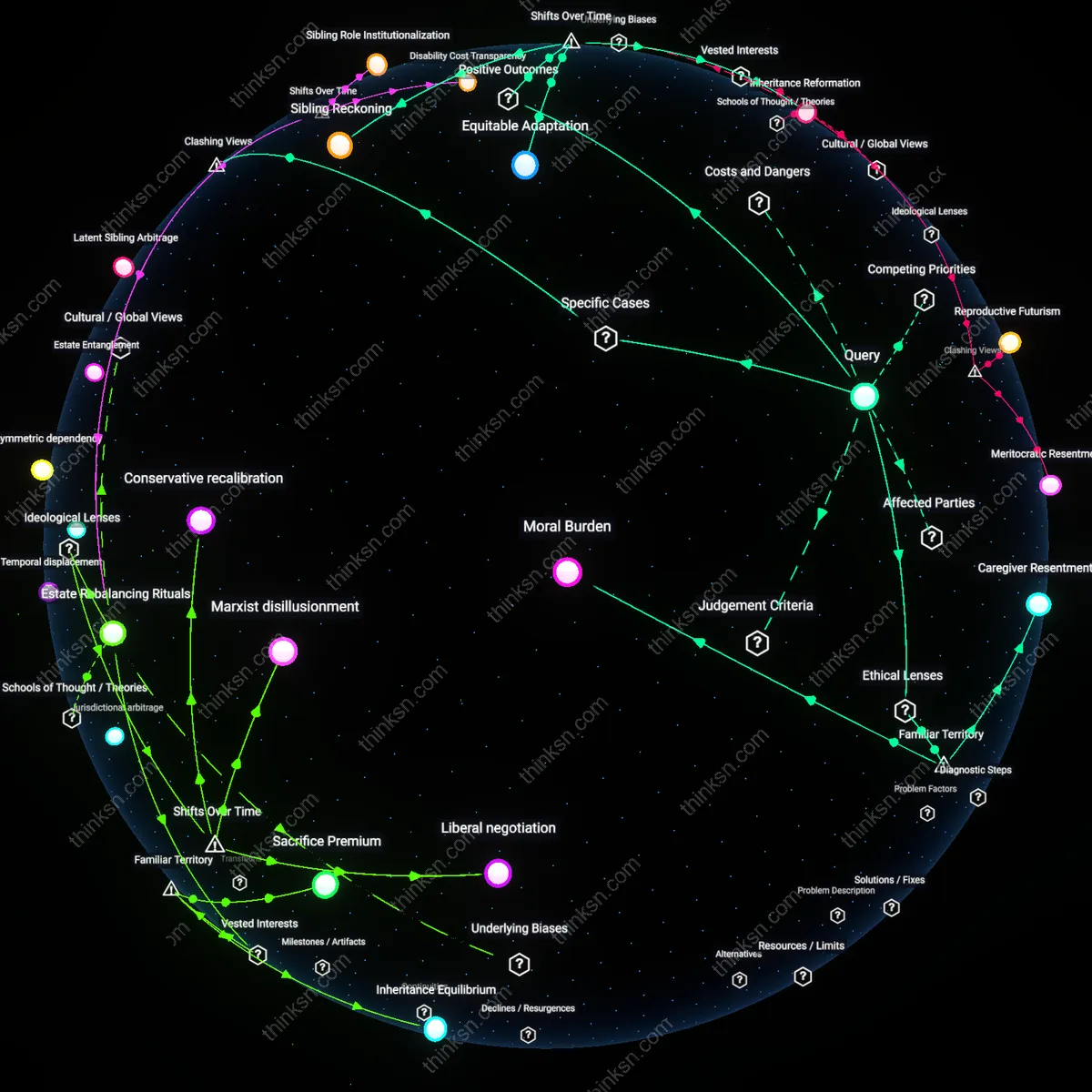
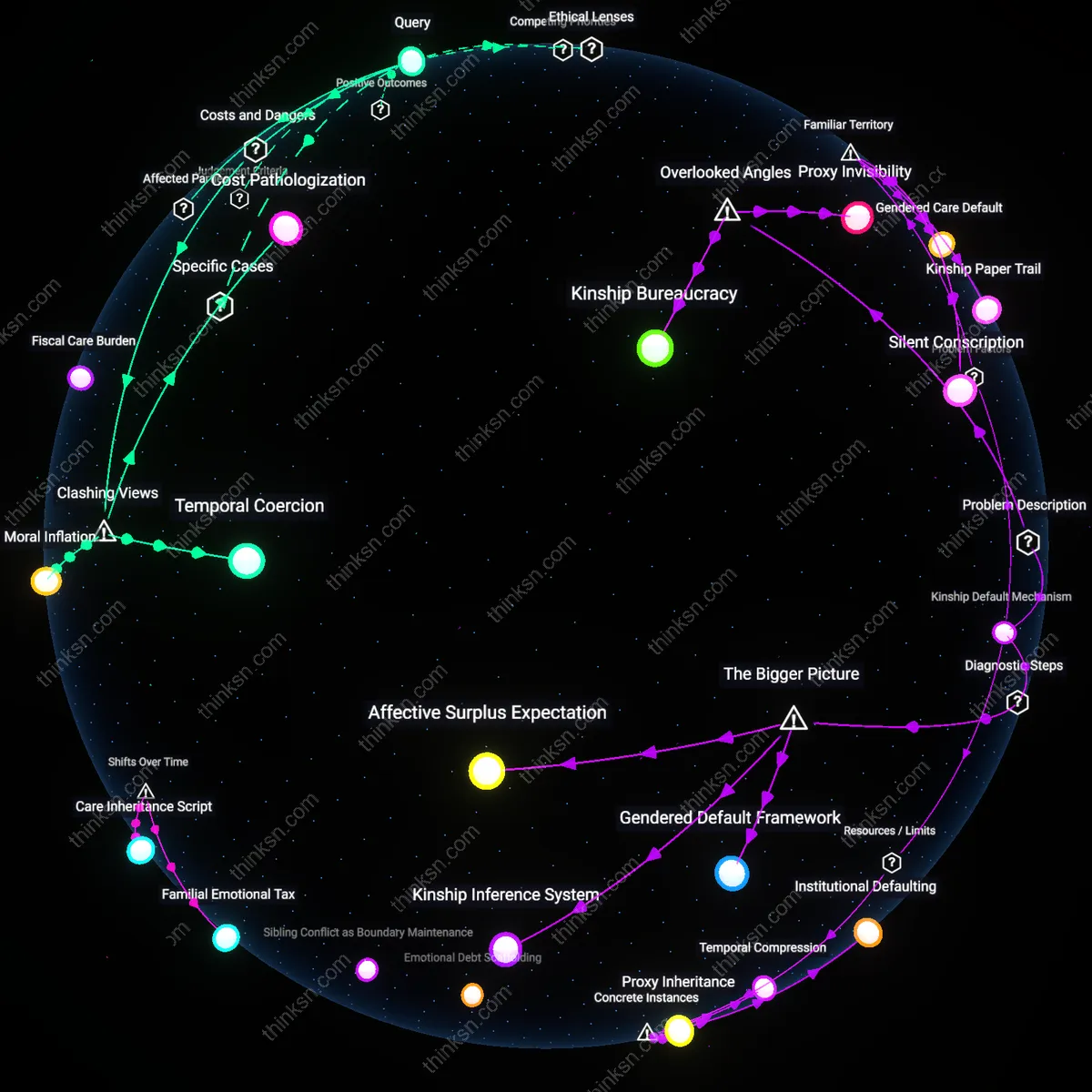
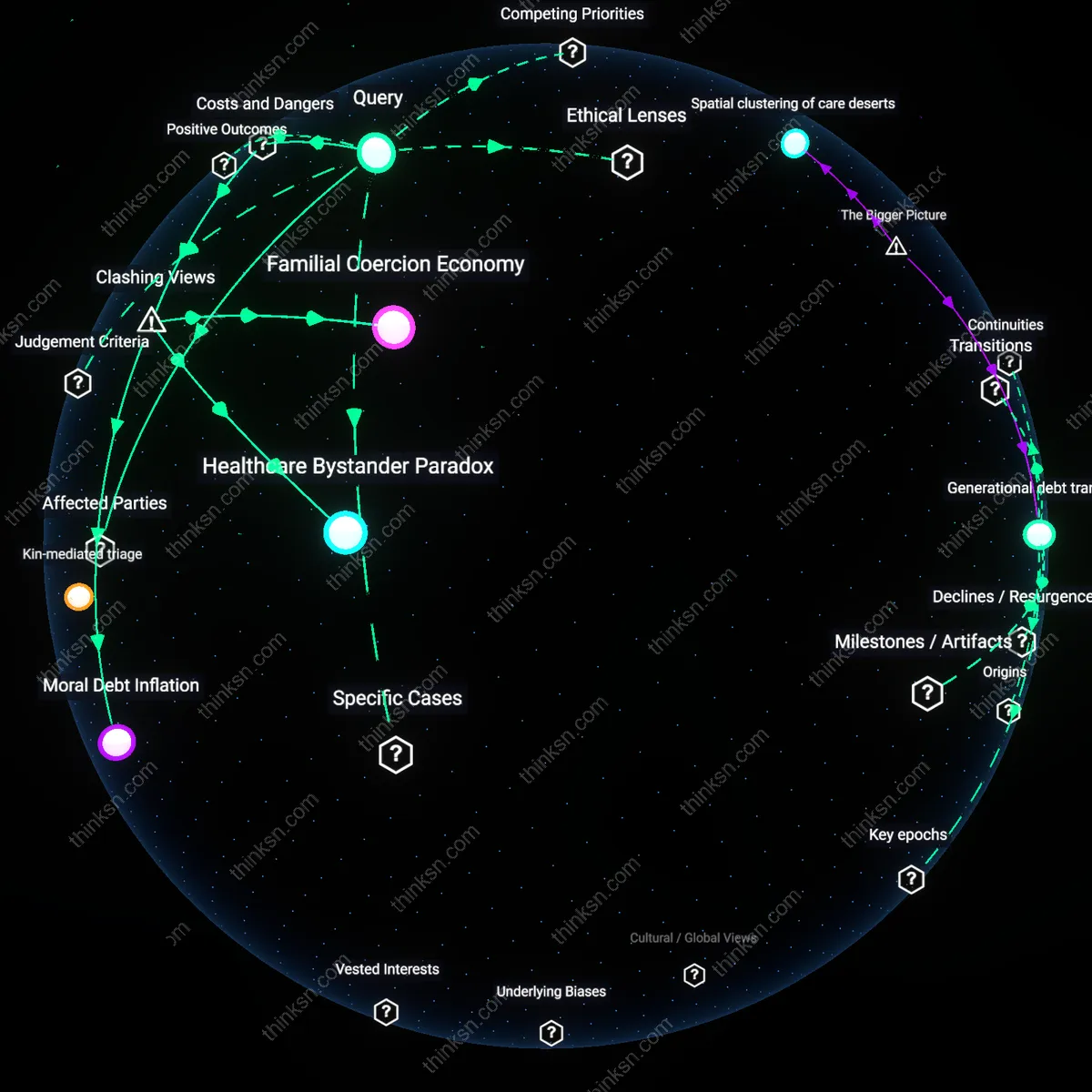
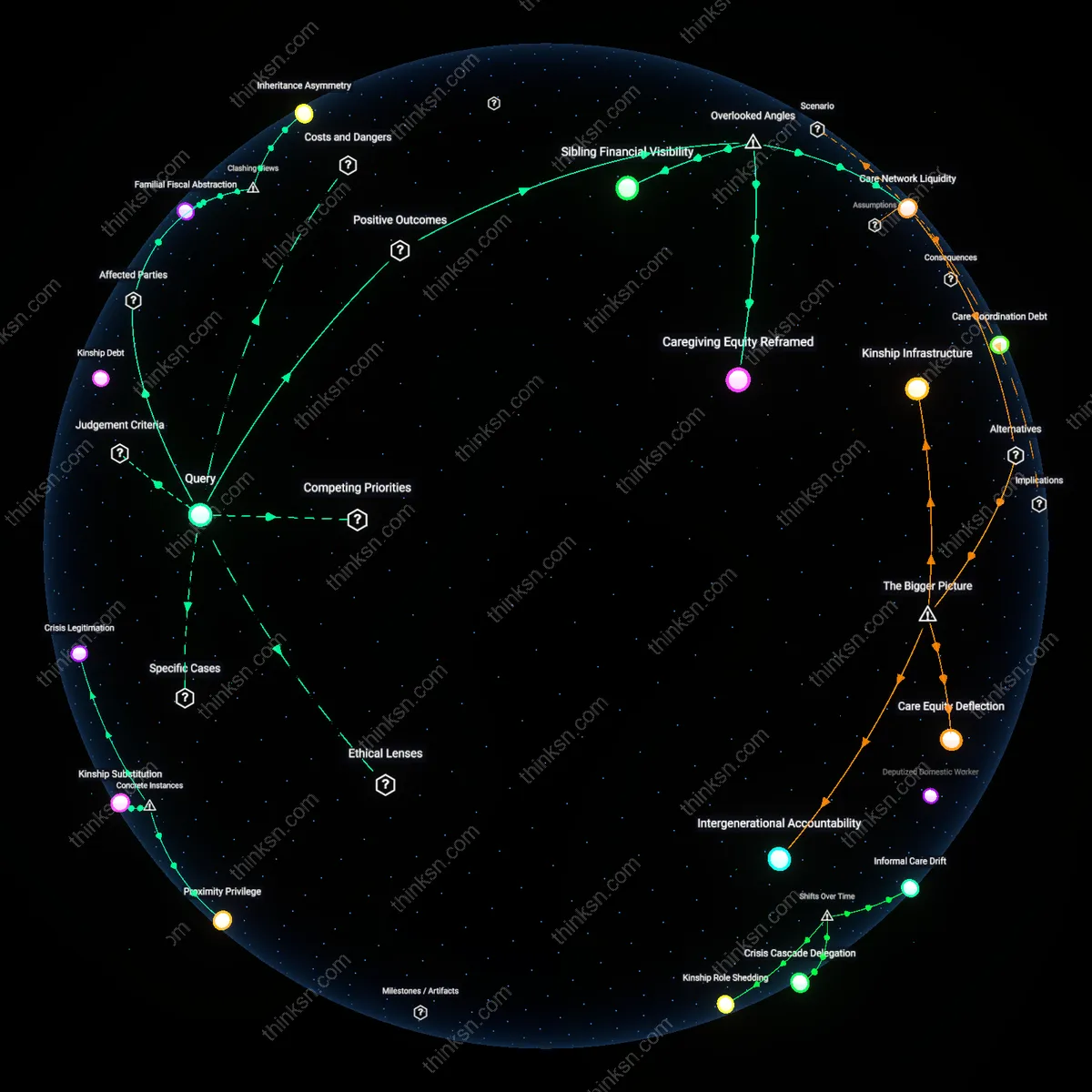
Analysis reveals 6 key thematic connections.
Key Findings
Familial Fiscal Abstraction
It is fair to assign full caregiving to one adult child when siblings are distant but financially able because the spatial and temporal proximity of the primary caregiver operationalizes filial duty more concretely than financial contributions, and the family, as an informal care economy, often tacitly delegates hands-on responsibility to the most accessible member regardless of financial parity. This dynamic is reinforced by federal tax policies like the dependent care tax credit, which implicitly favor localized, hands-on caregiving while offering no offset for distant siblings’ contributions, thereby institutionalizing a split between physical labor and financial support. The non-obvious reality is that fairness here is not violated but redistributed—into a system where presence is a form of equity, even when it creates emotional asymmetry among siblings.
Geographic Absolution
It is fair for one adult child to bear full caregiving responsibilities because physical distance functionally severs the possibility of equitable shared care, and fairness must be recalibrated not by intent or wealth but by logistical feasibility—siblings in different time zones or countries cannot participate in daily decisions about medication or transportation, even if they pay for home health aides. Institutions like Medicare and state aging agencies design services around a single local coordinator, deputizing the proximate child as the default decision-maker, which makes caregiving not a shared duty but a legally recognized role. The hidden structure is that proximity confers obligation not through moral superiority but systemic designation, rendering financial ability secondary to administrative necessity.
Inheritance Asymmetry
It is not fair for one adult child to bear full caregiving responsibilities because the unspoken expectation of inheritance compensation—where the primary caregiver anticipates future asset transfer as recompense—creates a coercive dynamic that distorts familial relationships into implicit labor contracts, particularly in states without filial responsibility laws like Pennsylvania, where financial obligation isn't legally enforceable. Evidence indicates that siblings who contribute only money often feel their payments absolve them of emotional or physical involvement, while the caregiver accrues resentment that surfaces during estate distribution, turning wills into retrospective labor audits. The overlooked mechanism is that without formal agreements, caregiving becomes a form of speculative investment in inheritance, introducing economic risk where moral duty was assumed.
Caregiving Equity Reframed
It is fairer to distribute caregiving through time-adjusted contribution models that recognize the monetary value of foregone opportunities, because adult children who relocate or scale back work absorb hidden costs in career trajectory and mental health that distant siblings do not bear, and acknowledging this through structured compensation or rotational responsibilities recalculates fairness not as equal effort but equal sacrifice—revealing that caregiving equity is not symmetrical but cumulative, a reality rarely accounted for in familial moral calculations.
Sibling Financial Visibility
Publicly tracking financial support by distant siblings in a shared caregiving ledger increases accountability and reduces resentment because when payments are visible to the caregiving sibling, it transforms abstract familial duty into documented reciprocity, activating social norms of fairness and institution-like behavior within kin networks—a mechanism seen in mutual aid groups in urban Japan, where transparency alters perception of burden, an effect overlooked when caregiving is treated as private and emotional rather than transactional and communal.
Care Network Liquidity
Designating rotating family representatives—such as nieces, nephews, or cousins—as temporary local surrogates when siblings are geographically constrained builds adaptive resilience into elder care systems, because continuity of oversight depends not on blood proximity but on the density of available trusted intermediaries, and when planned in advance, this distributes responsibility without overburdening any one individual, a strategic redundancy most familial units ignore until crisis hits, mistaking bloodline obligation for operational necessity.