How Siblings Can Fairly Share Long-Distance Caregiving Responsibilities?
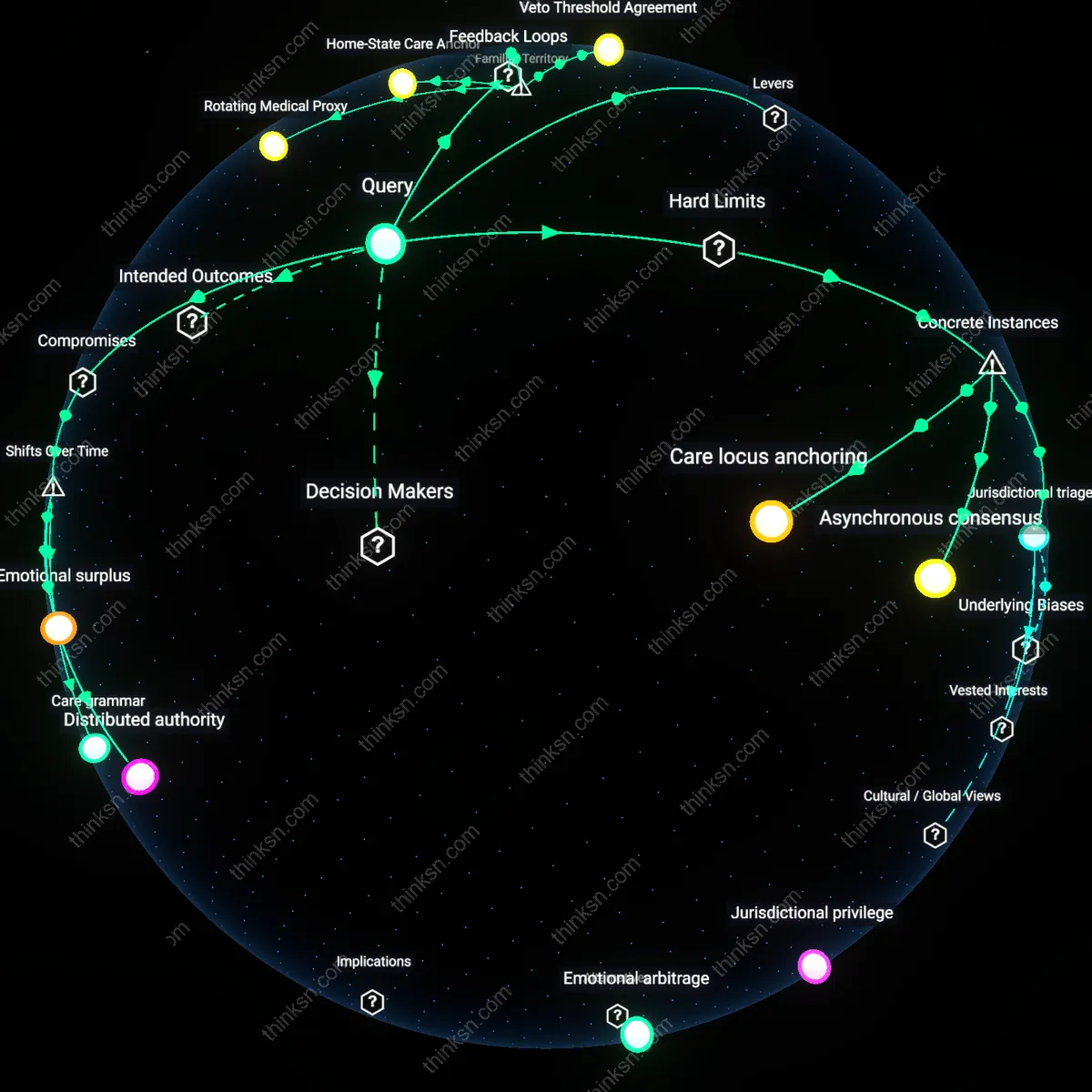
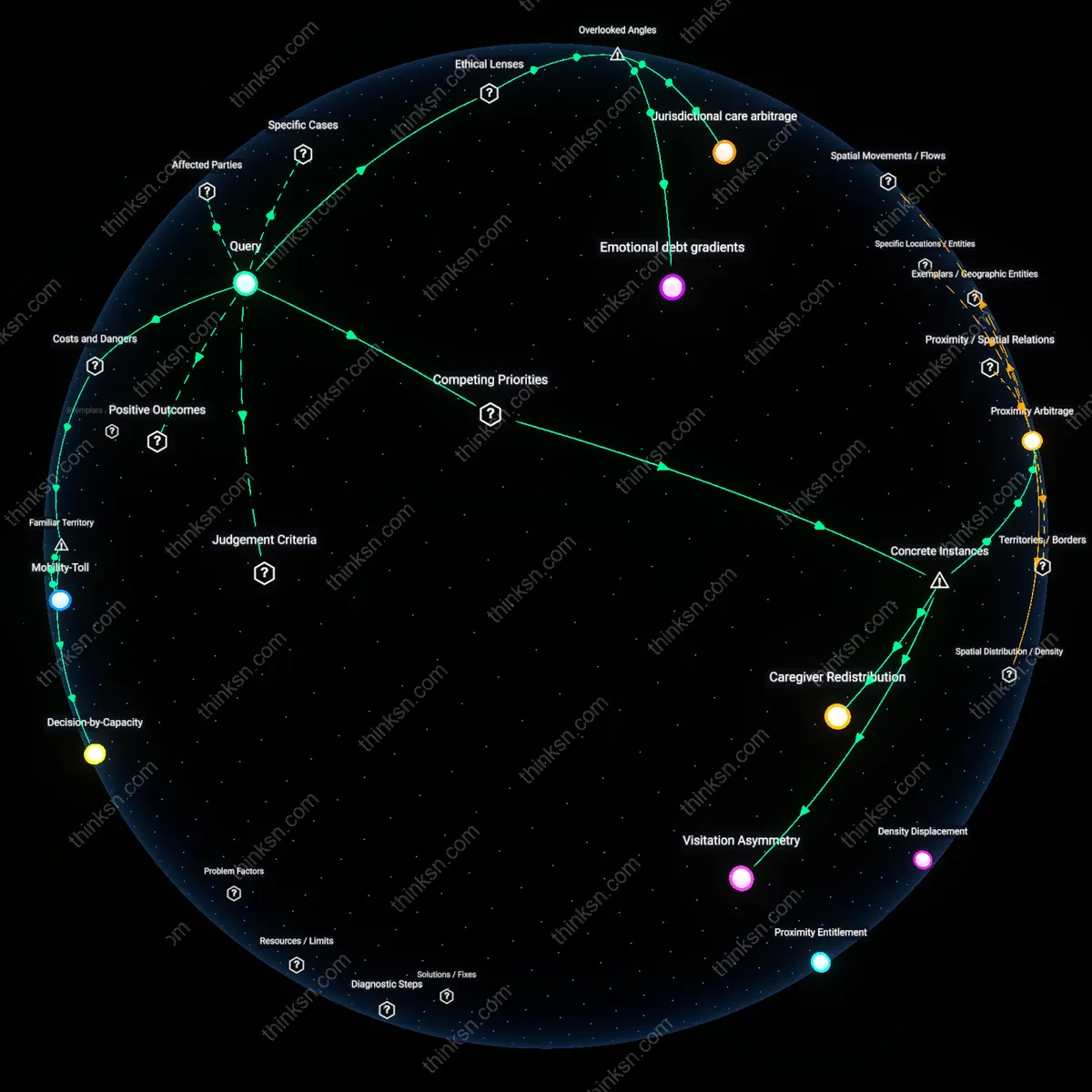
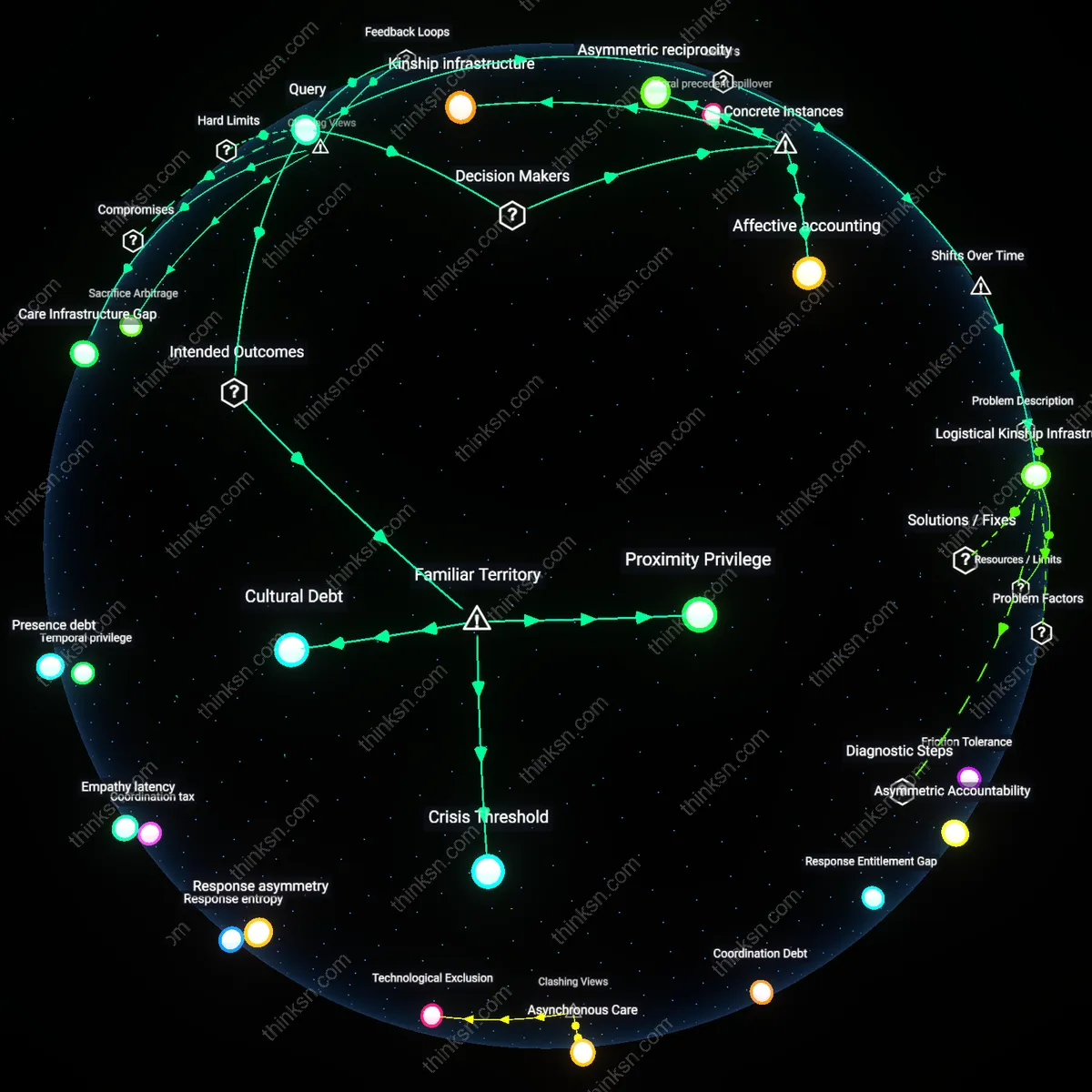
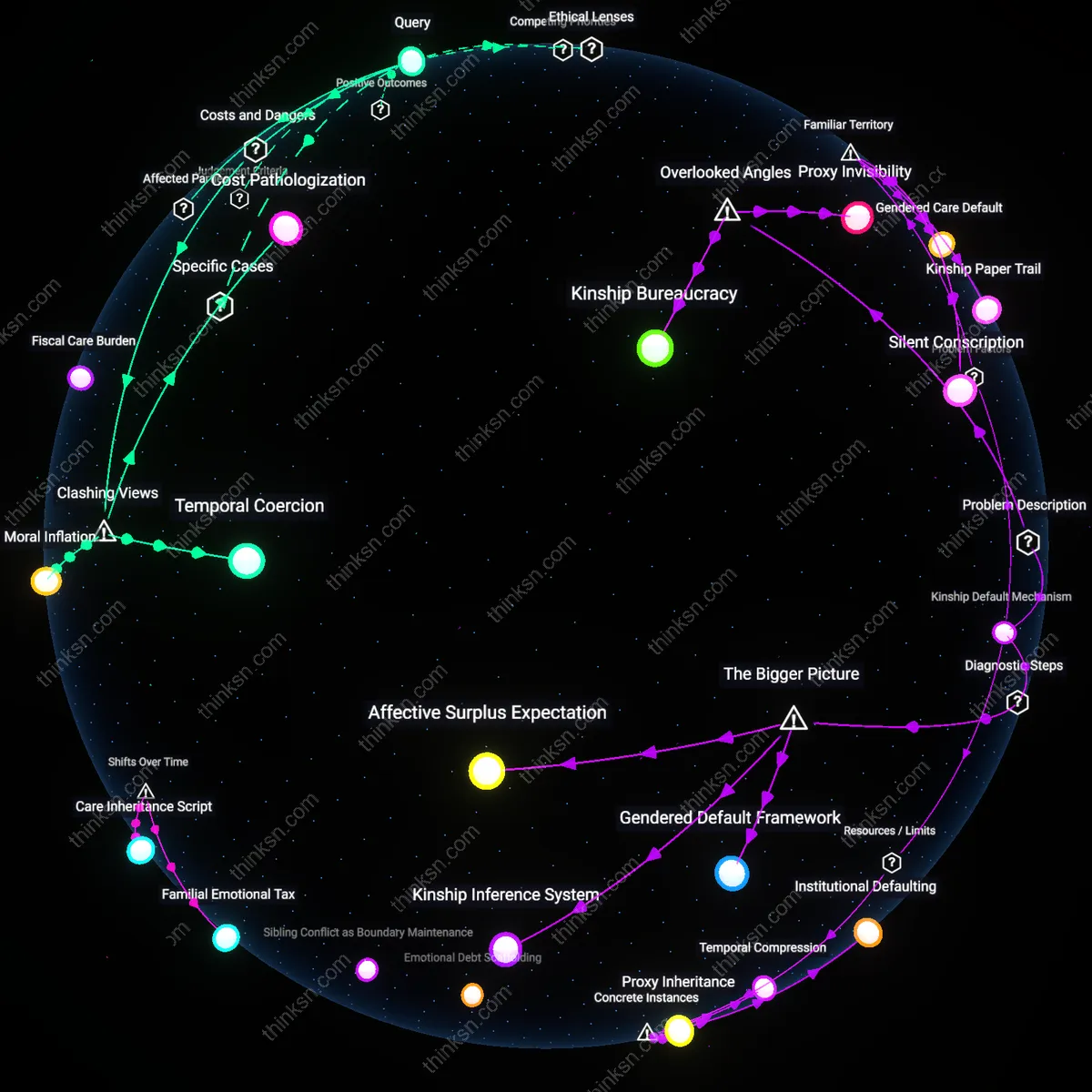
Analysis reveals 9 key thematic connections.
Key Findings
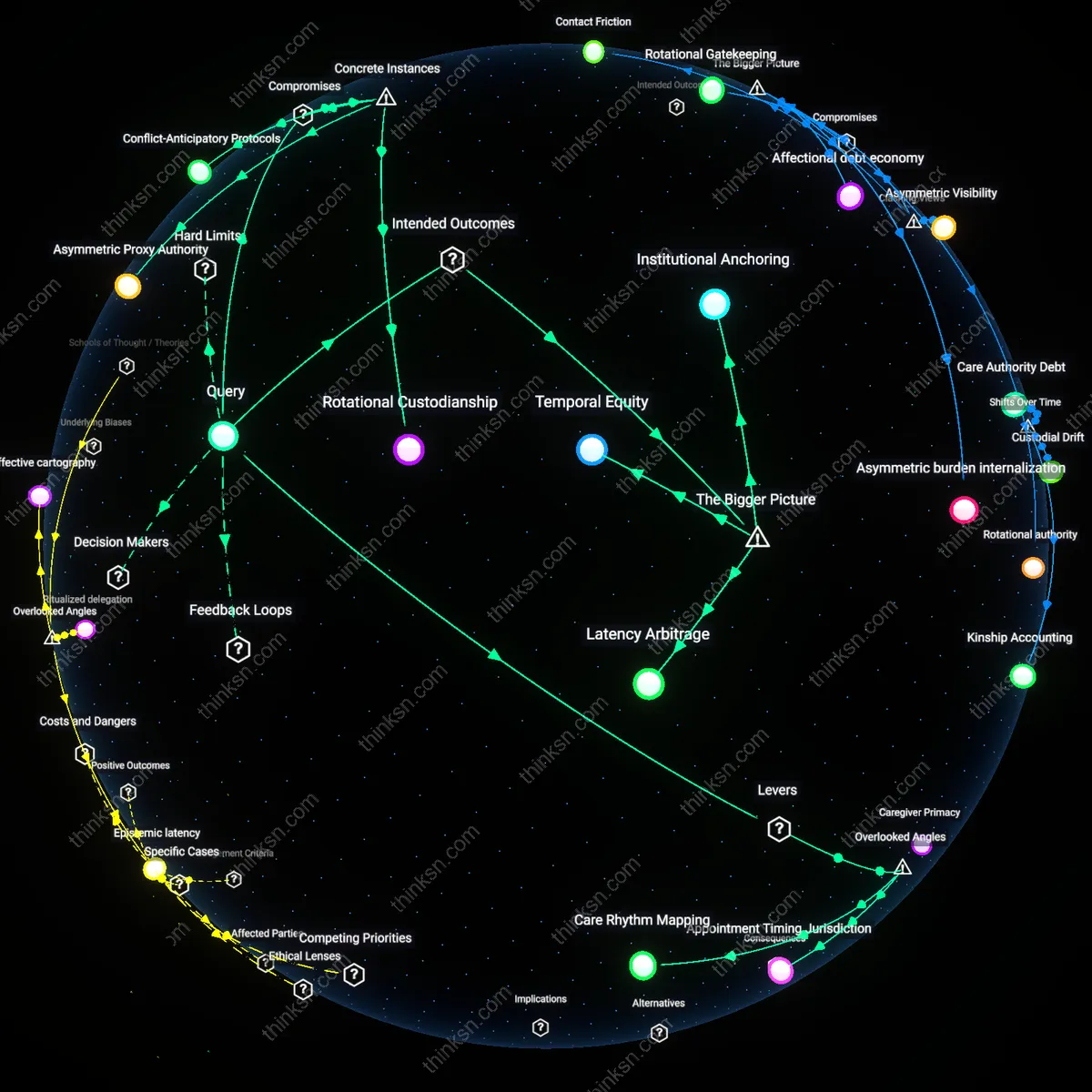
Appointment Timing Jurisdiction
Assign decision rights over appointment scheduling windows to the sibling in the parent’s time zone to reduce coordination latency and anchor accountability in temporal proximity. This lever exploits the structural advantage of local presence in synchronizing medical logistics, not just physical attendance—since local siblings naturally absorb real-time disruptions (e.g., clinic rescheduling, transportation issues), granting them formal authority over timing decisions prevents delays caused by cross-time-zone deliberation cycles; the overlooked angle is that medical coordination is a temporal governance problem, not just a labor distribution one, where decision speed matters more than effort balance—what changes is that fairness shifts from equal task burden to optimized responsiveness.
Care Rhythm Mapping
Institute a shared calendar that auto-tracks appointment frequency, lead times, and provider response patterns to expose the hidden workload rhythm of care coordination. This lever surfaces the uneven pulse of medical logistics—some specialists require three-month advance booking, others reschedule weekly—enabling siblings to redistribute responsibilities based on predictability and lead-time demand rather than appointment count; the overlooked angle is that fairness depends on volatility absorption, not task volume, as unpredictable tasks (e.g., urgent referrals) impose cognitive load and emergency labor that geographically distant siblings often offload unintentionally; this shifts equity from equal participation to risk-sharing across temporal uncertainty.
Medical Liaison Equity
Designate rotating ‘primary liaison’ status that bundles communication permissions, record access, and clinic decision authority for fixed intervals, making responsibility episodic rather than distributed. This lever uses time-bound institutional access—like patient portal login rights or HIPAA authorizations—as a transferable asset, so only one sibling manages coordination at a time, reducing duplication and conflict; the overlooked angle is that medical systems structurally resist multi-party coordination due to privacy rules, so fairness emerges not through parallel involvement but sequential exclusivity, revealing that the bottleneck is not effort but authorized agency—what changes is that equity requires temporary monopoly, not shared duty.
Rotational Custodianship
Assigning time-bound, rotating responsibility for coordinating a parent’s medical appointments to geographically distant siblings, modeled after Iceland’s Althingi-inspired family governance during the 2008 financial crisis, ensures equitable burden-sharing by legally codifying temporary decision rights; this mechanism prevents decision fatigue in any one sibling by institutionalizing succession, revealing that fairness emerges not from equal effort at once but from guaranteed turns over time.
Asymmetric Proxy Authority
In the 2017 coordination of care for former U.S. Senator Bob Dole across Kansas, D.C., and California, siblings delegated medical liaison duties to the sibling nearest the parent at each appointment window, formalizing decisions through a shared digital log verified by a neutral third-party geriatric care manager; this system optimized for timely execution by accepting reduced consistency in communication style, demonstrating that proximity-based delegation with auditable records allows distributed families to trade coordination uniformity for logistical feasibility.
Conflict-Anticipatory Protocols
During the 2019 care planning for Nelson Mandela’s family in Johannesburg, where children resided across London, Durban, and Cape Town, a binding memorandum outlined escalation paths and defined dispute resolution triggers before any appointment scheduling began, modeled on the Truth and Reconciliation Commission’s procedural templates; by prioritizing process legitimacy over speed of consensus, the family embedded neutral arbitration thresholds into their framework, showing that pre-negotiated rules for disagreement reduce real-time friction more effectively than pursuit of unanimity.
Temporal Equity
Adopt a rotating coordination calendar weighted by time zone proximity to the parent’s location to ensure each sibling assumes responsibility during locally feasible hours. This shifts burden-sharing from an even distribution of tasks to an equitable distribution of cognitive and temporal costs, acknowledging that siblings in distant time zones face higher coordination friction due to asynchronous availability. The mechanism works through structured handover protocols synchronized with the parent’s medical cycle, reducing decision fatigue and missed communications; its significance lies in exposing how time zone asymmetry—often overlooked in familial caregiving models—functions as a systemic inequity that distorts perceived responsibility. The non-obvious insight is that fairness in coordination is less about equal task volume and more about minimizing disruptive temporal intrusion across geographies.
Institutional Anchoring
Designate a neutral third party—the parent’s primary care coordinator or a geriatric care manager—as the central node for appointment scheduling, with siblings accessing updates through shared digital health portals. This detaches coordination ownership from familial roles and embeds it within existing clinical infrastructure, where accountability is already institutionally enforced. The system operates through HIPAA-compliant information flows and scheduled update cycles, reducing inter-sibling conflict over communication gaps; analytically, this reframes familial responsibility as a logistical network problem rather than a moral burden, revealing how healthcare systems inadvertently enable familial conflict by failing to absorb coordination overhead. The overlooked dynamic is that medical institutions are structurally positioned to buffer kinship tensions but typically abdicate this role, leaving families to replicate flawed peer-to-peer coordination.
Latency Arbitrage
Assign coordination duties based on communication lag rather than emotional expectation, giving prioritization to siblings whose geographic position enables faster response to medical emergencies or last-minute changes. This leverages physical proximity not as a logistical convenience but as a responsiveness multiplier within time-sensitive care cascades, where delayed replies can trigger appointment cancellations or treatment delays. The mechanism functions through real-time status tracking via shared calendars and alert systems, with responsibility dynamically shifting during critical periods; the key insight is that decision rights should follow information velocity, not birth order or perceived availability—revealing an unexamined tradeoff between emotional equity and operational efficacy in long-distance caregiving networks. The systemic pressure here is the mismatch between slow familial consensus patterns and rapid clinical scheduling demands.