Why Refusing Family Vacation Funds Sparks Accusations of Selfishness?
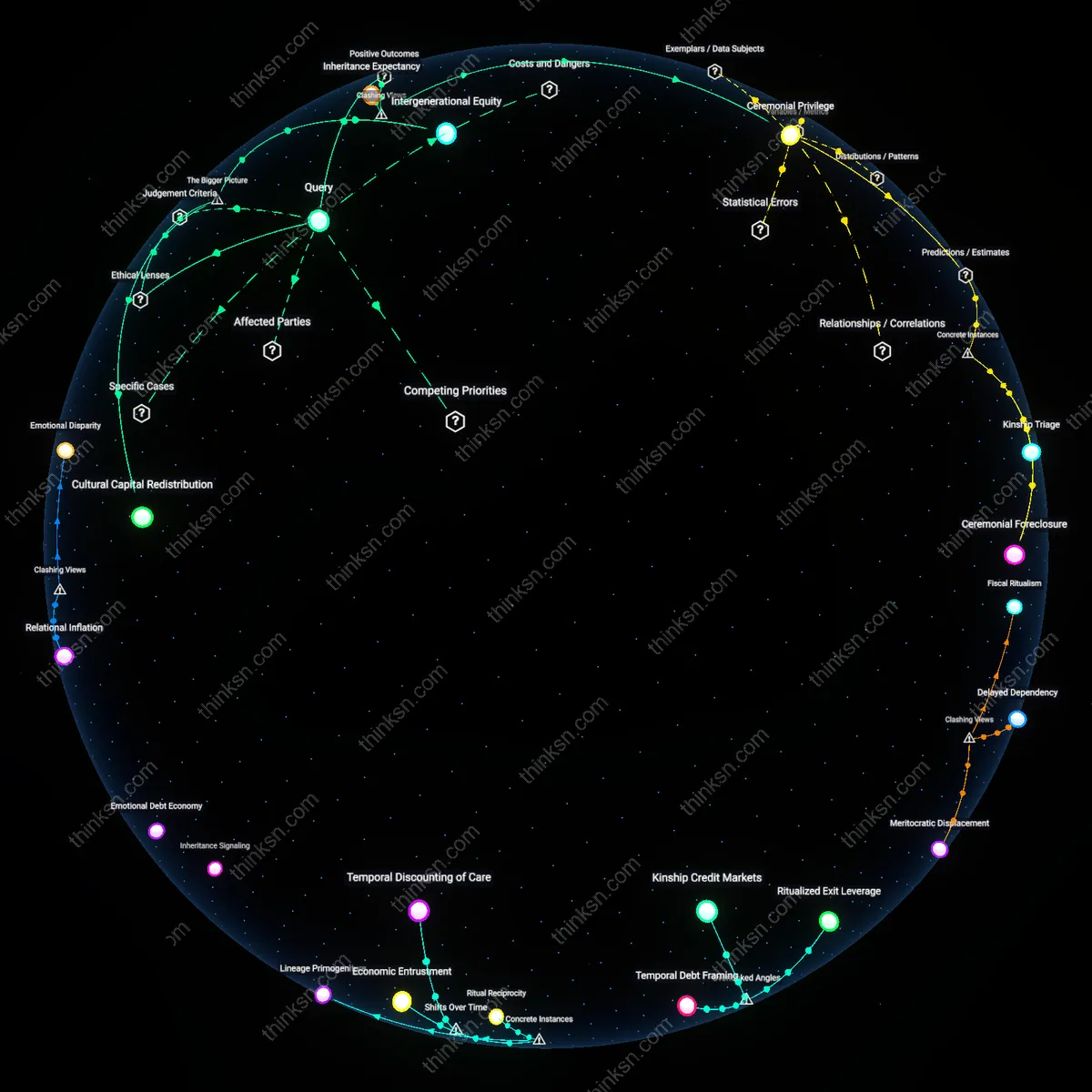
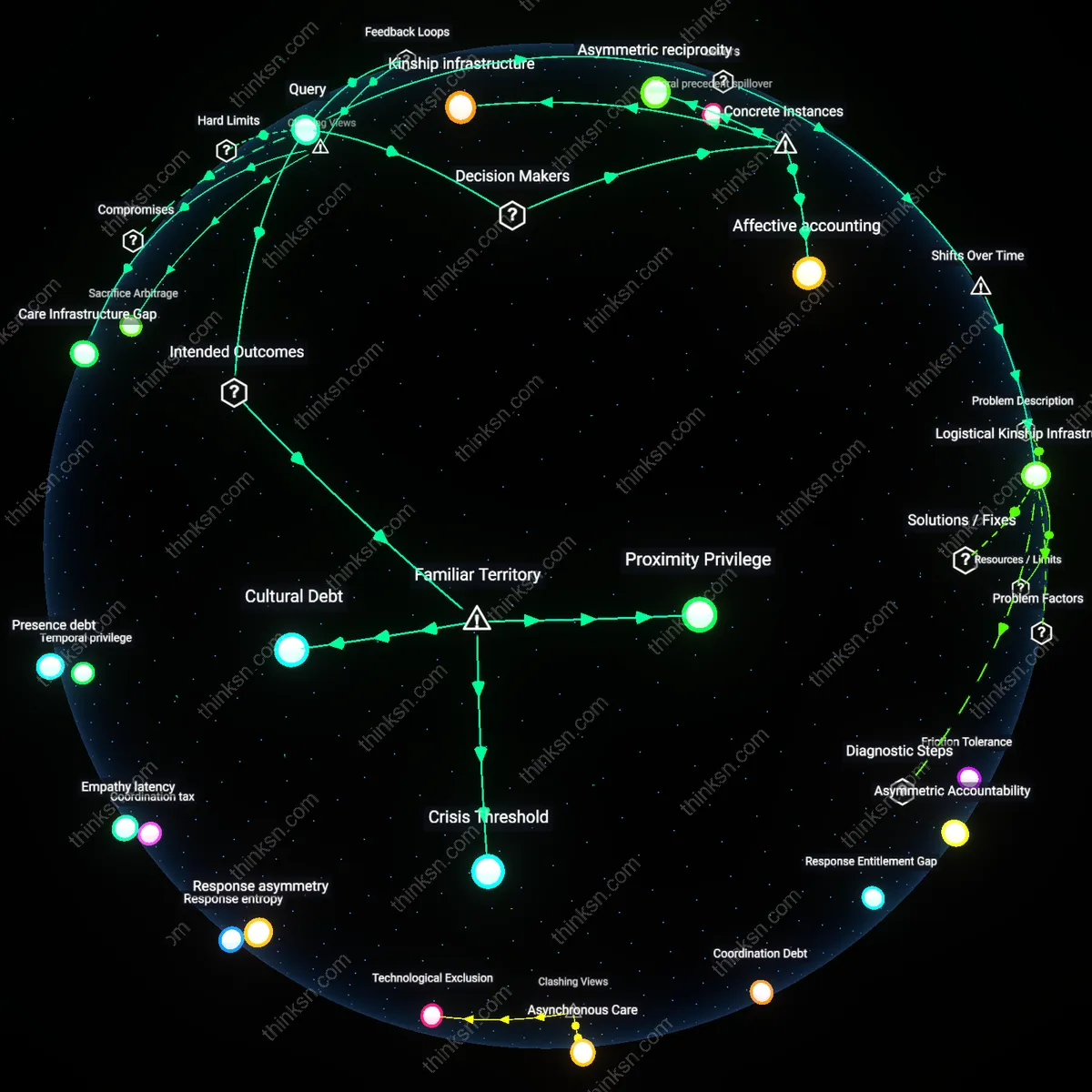
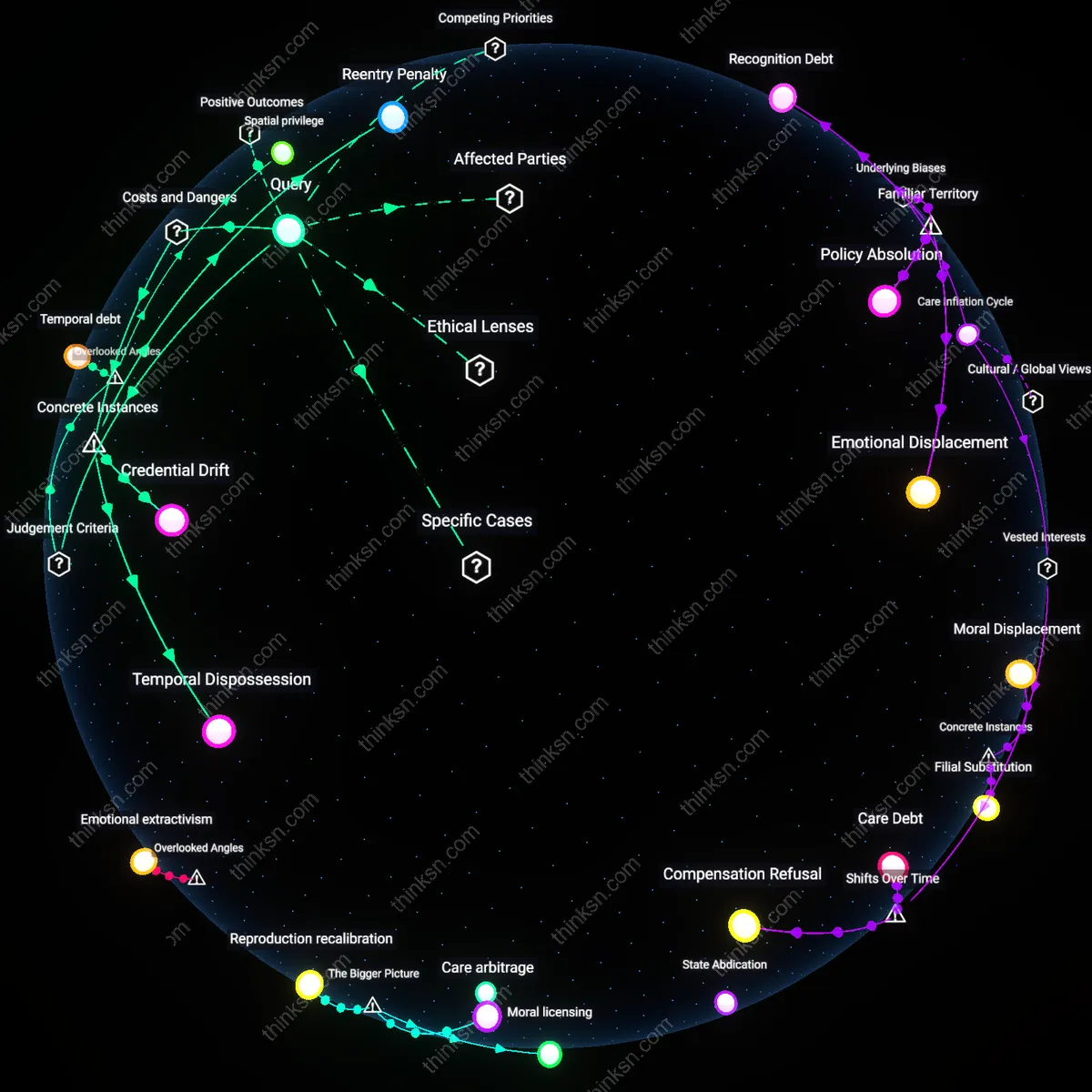
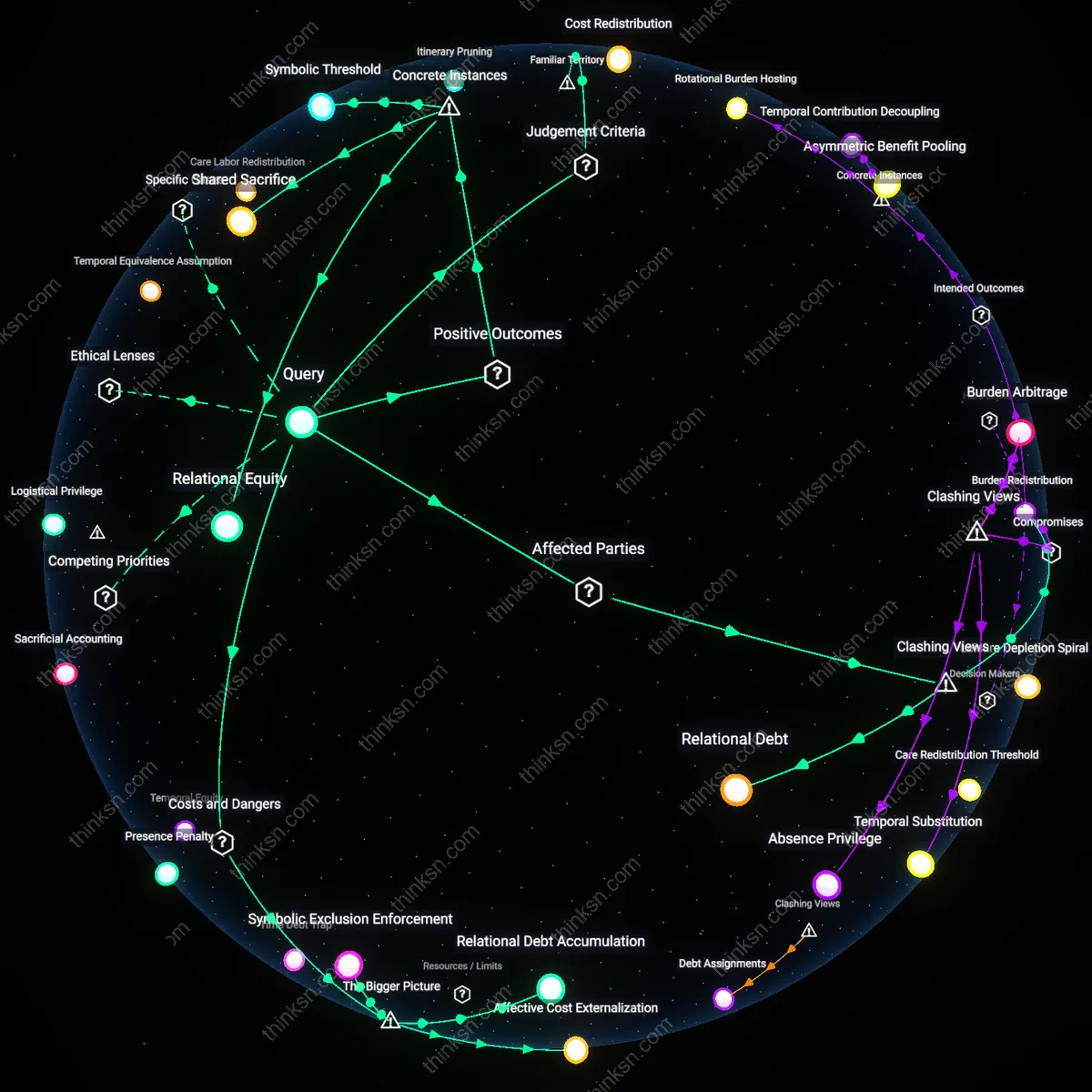
Analysis reveals 9 key thematic connections.
Key Findings
Relational Debt
Declining to contribute financially to a family vacation is seen as selfish not because of the monetary amount but because it violates an unspoken ledger of past and future familial obligations that operate like a moral currency. Family members, especially those who have previously subsidized the individual or absorbed collective costs, perceive non-contribution as defaulting on relational debt—a tacit expectation that support flows reciprocally over time, even when immediate capacity is low. This mechanism functions through intergenerational and lateral care networks where financial participation signals commitment more than wealth, and its breach disrupts the symbolic economy of belonging. The non-obvious insight is that the judgment stems not from present inequality but from the fear of eroded reciprocity in an informal yet deeply binding system of emotional accounting.
Burden Redistribution
Refusing to contribute financially shifts the economic load onto already vulnerable family members, particularly wage-earning adults or elders managing fixed incomes, making the refusal appear selfish even when justified. In extended families with uneven earning power—such as those including gig workers, retirees, or single parents—vacation funding often depends on a fragile balance of contributions, and one person’s withdrawal forces others to absorb disproportionate risk or sacrifice. The system operates through implicit risk pooling, where financial constraints are only acceptable if they do not destabilize interdependent budgets, and the non-obvious element is that the stigma arises not from the refusal itself but from its cascading effect on precariously balanced dependencies others cannot easily absorb.
Relational Account-Keeping
Declining to contribute financially to a family vacation is seen as selfish because shared experiences are unconsciously tracked as debts and credits in long-term relational memory. Families operate through implicit reciprocity systems where non-monetary contributions (like emotional labor or past support) are weighed against current financial asks, and opting out disrupts the perceived balance of give-and-take. What’s underappreciated is that people judge based on accumulated relational history, not the isolated act—so refusing now may be read as breaking a pattern, not making a one-time choice.
Relational Equity
When the Smith family planned a reunion trip to Lake Tahoe in 2018, one adult sibling, despite earning less than others, contributed a fixed amount while another declined entirely—even though they had stable income from freelance work—leading to a breakdown in communication that lasted two years, revealing that financial participation functions as a measurable expression of relational commitment, not merely economic capacity, and this perceived withdrawal damaged trust in reciprocal care within the kinship network.
Shared Sacrifice
During the Johnson family’s 2009 European tour—funded through a collective savings pool—daughter Maya, a graduate student, contributed minimally but visibly by skipping meals out and redirecting book stipends, which preserved her inclusion and moral standing, demonstrating that even token contributions signal willingness to bear burden alongside others, reinforcing cohesion through demonstrable effort rather than absolute value.
Symbolic Threshold
In 2015, when the Rivera family organized a beach house rental in Cape May and middle son Luis cited student debt to opt out of costs entirely—offering only to ‘clean up’ afterward—his absence from the financial ledger rendered his later presence on the trip socially ambiguous, exposing how a minimal monetary entry acts as a ritual threshold that transforms passive beneficiaries into recognized co-owners of the experience.
Relational Debt Accumulation
Declining to contribute financially to a family vacation despite personal constraints is seen as selfish because it disrupts established patterns of reciprocal obligation, triggering perceptions of relational non-performance. Families often operate as informal economies where non-monetary contributions (emotional labor, time, past support) are tacitly offset by financial participation when possible; withholding now ruptures this unspoken ledger. The mechanism lies in how family members assess long-term equity in investment, not just immediate cost-sharing, making non-contribution appear as a withdrawal from relational debt settlement. This reveals the underappreciated reality that familial solidarity is sustained through periodic symbolic payments that affirm membership, not just material need or capacity.
Affective Cost Externalization
Refusing financial input shifts the emotional burden of conflict and resentment onto other family members, making the act appear selfish regardless of economic justification. When one member declines to pay, others must absorb the discomfort of renegotiating budgets, confronting inequity, or masking tension to preserve group cohesion—tasks that fall asymmetrically on caregivers or planners. This externalization operates through the hidden labor of emotional regulation, which is systematically required to maintain the appearance of familial harmony. The non-obvious risk is that financial refusal becomes less about money and more about offloading the affective costs of group disintegration onto those already managing familial care infrastructure.
Symbolic Exclusion Enforcement
A family vacation functions as a ritual reaffirmation of belonging, and financial non-participation—even when rationalized—activates systemic expectations that membership requires sacrifice. The act is interpreted as selfish because it violates the norm that one sacrifices within capacity to co-produce shared experiences, thereby signaling disengagement from collective identity formation. This operates through institutionalized kinship logics where symbolic contributions cement inclusion, and their absence, regardless of reason, triggers automatic social sanctions. The overlooked dynamic is that economic constraint becomes secondary to the perceived refusal to endure discomfort for the group, effectively enforcing exclusion through the very mechanism meant to sustain connection.