Subterranean Data Centers
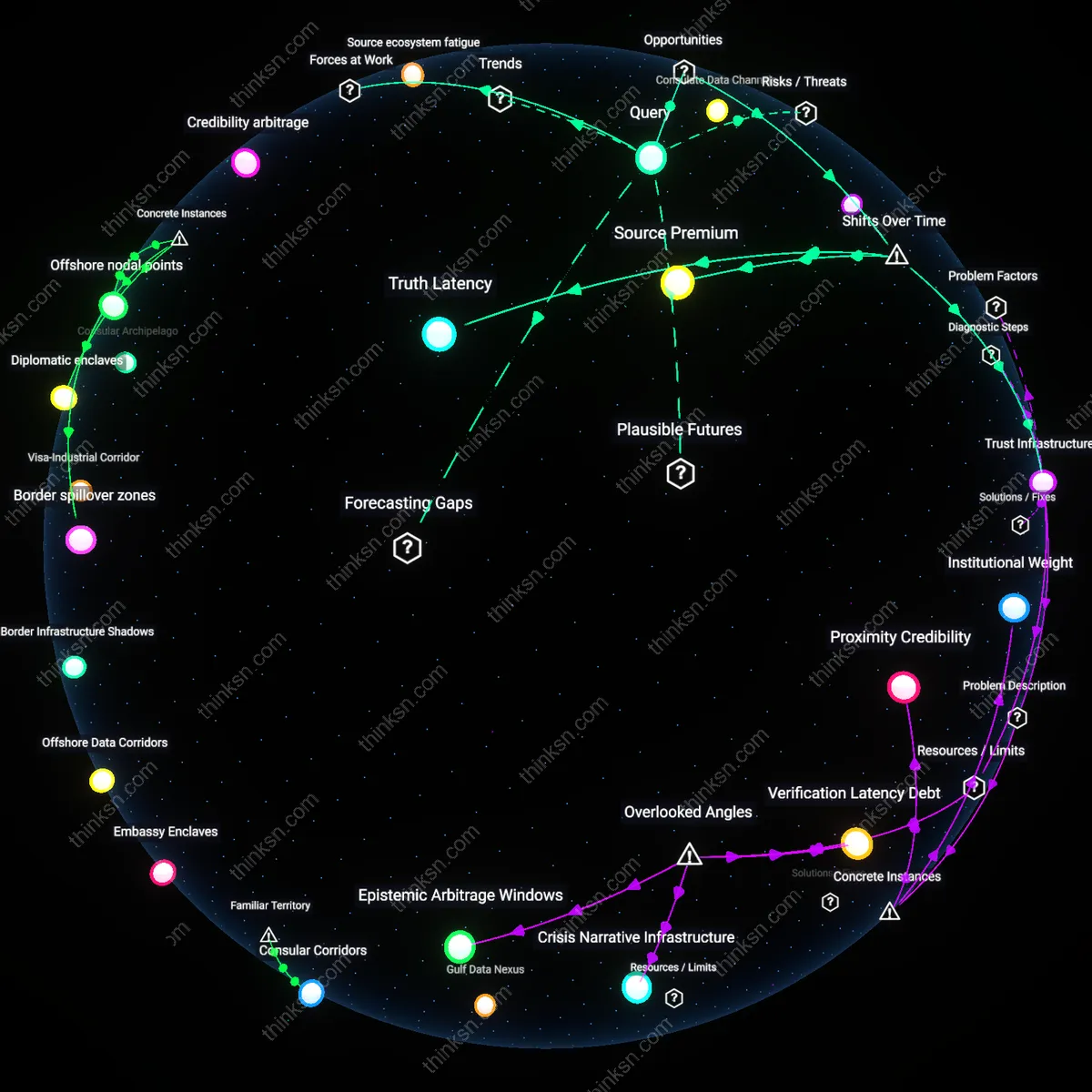
Hybrid consular data exchanges physically occur in decommissioned military bunkers beneath cities like Frankfurt and Denver, where temperature stability and hardened infrastructure enable secure interoperability between civilian and diplomatic networks. These facilities, originally built for Cold War continuity of government, now host multiparty data trusts that require physical isolation to prevent signal leakage, a condition overlooked because public discourse assumes diplomatic data flows primarily through embassies or cloud platforms. The non-obvious dependency on geologically stable underground sites—often managed by third-party custodians with dual clearance from host nations and international bodies—means access is de facto restricted to states with legacy access agreements to such real estate, reshaping power asymmetries in ways that transcend legal or technical access protocols.
Consular Corridors
Hybrid consular data exchanges primarily occur in major international airport hubs like Frankfurt, Dubai, and JFK, where biometric scanners, visa pre-clearance zones, and shared immigration databases intersect. These nodes concentrate data flows because airlines, host governments, and consular agencies co-locate screening infrastructure in transit zones that function as legal gray spaces, enabling real-time data pooling between states without requiring full territorial sovereignty transfer. The dominance of these corridors obscures how access to consular data is effectively privatized through aviation logistics firms and border-tech contractors who control the physical and digital chokepoints—rendering 'access' less about citizenship or diplomatic status and more about movement through commercially privileged air routes.
Embassy Enclaves
Hybrid consular data exchanges occur within extraterritorial diplomatic compounds where consular services intersect with intelligence infrastructures, making embassy grounds—particularly in high-surveillance states—the de facto sites of these exchanges. These spaces operate under host-state jurisdiction nominally, but function as insulated nodes where bilateral data brokering bypasses local legal oversight through diplomatic immunity, rendering physical location secondary to political ascription. This arrangement privileges state actors with clearance to enter these enclaves while excluding local civil institutions, lawyers, or affected migrants, thereby transforming consulates from public service points into gatekeepers of algorithmically assessed risk profiles. The non-obvious reality is that diplomatic territory becomes a jurisdictional anomaly enabling data extraction under consular pretense, which contradicts the assumed transparency of state-to-state cooperation.
Offshore Data Corridors
These exchanges are materially hosted in third-country data centers governed by informal bilateral memoranda, not in the territories of the nations whose citizens are being vetted, thereby displacing the locus of consular data processing to politically neutral or compliant jurisdictions like Iceland or Singapore. This offshoring allows states to circumvent domestic privacy laws and judicial review by routing biometric and visa application data through jurisdictions with minimal regulatory friction, where private contractors manage interoperable databases under classified service agreements. Access is thus determined not by geographic proximity but by participation in closed technical-administrative networks, privileging IT vendors and security agencies over both applicants and consular staff in situ. This reveals that the physical site of data exchange is deliberately delinked from diplomatic presence, undermining the intuitive assumption that consular functions must be territorially co-located with representation.
Border Infrastructure Shadows
The exchanges emerge not at diplomatic posts but within dual-use migration management systems embedded in border regions—such as the U.S.-Mexico land ports equipped with Integrated Biometric Units—where consular data is silently fused with customs and law enforcement feeds during pre-clearance screenings. These hybrid nodes operate without legislative designation as data exchange sites, yet function as such through covert API integrations between the Department of State’s Consular Consolidated Database and DHS’s Automated Biometric Identification System. Because access depends on operational clearance within border enforcement hierarchies rather than consular channels, frontline officers and contractors exercise de facto control over data flows, often without awareness from visa applicants or even foreign service officers. This reframes border infrastructure as a site of unacknowledged consular data hybridization, challenging the notion that such exchanges require formal, visible diplomatic architecture.
Diplomatic enclaves
Hybrid consular data exchanges occur within the U.S. Consulate General in Jerusalem’s Armenian Quarter, where physical proximity to both Israeli security infrastructure and Palestinian civil society networks enables selective data brokering. The consulate’s location inside a Christian religious quarter—extraterritorial under international law—allows it to host biometric verification systems linked to Israeli border databases while simultaneously serving as an access point for Palestinian applicants from the West Bank, creating a spatial loophole where U.S. immigration screening operates through de facto coordination with Israeli authorities despite formal neutrality. This arrangement reveals how enclave geographies can institutionalize asymmetric data access under multilateral frameworks.
Border spillover zones
The U.S.-Mexico Consular Data Integration Hub functions primarily within the El Paso Intelligence Center (EPIC), located just two miles from the international boundary, where its geographic integration with Customs and Border Protection’s Command Center enables real-time fusion of visa histories, biometric screenings, and migrant interdiction logs. Because the facility is situated in a militarized border adjacency zone—physically detached from diplomatic compounds yet legally shielded by consular immunity—Mexican nationals’ visa data can be cross-referenced with deportation triggers without requiring formal bilateral agreements, privileging law enforcement access over migrant privacy. This exposes how proximity to border enforcement nodes transforms consular data systems into preemptive surveillance tools.
Offshore nodal points
British Overseas Citizen visa processing and biometric data aggregation for Hong Kong residents shifted to the UK Visa Application Centre in Croydon, UK, after the 2020 National Security Law, making it the primary hybrid consular node despite lacking formal diplomatic status. Its function as a data chokepoint arises not from diplomatic extraterritoriality but from its integration with the Home Office’s Secure Identity Programme and proximity to the National Cyber Crime Unit in London, allowing real-time vetting that excludes applicants reliant on Hong Kong-based consular outreach. This demonstrates how data centralization in metropolitan service hubs can displace consular access from crisis zones while maintaining the appearance of continuity.
Consular Archipelago
Hybrid consular data exchanges now physically occur in offshore third-party processing enclaves—such as the EU-funded centers in Niger or IOM-managed hubs in Senegal—that emerged after 2015, when European states externalized border controls in response to the so-called migration crisis. These locations, operated through multilateral intermediaries and situated along major trans-Saharan migration routes, re-route data flows from traditional embassy-based consular services to militarized logistical nodes where access is conditional on biometric registration and cooperation with return programs, privileging state security actors over migrants and destabilizing the expectation of consular protection as territorially anchored. The shift from capital-city embassies to pre-border outposts reveals how digital-trust infrastructure has become mobile, selective, and embedded in migration deterrence, a non-obvious transformation because it appears as logistical support but functions as jurisdictional displacement. This movement fractures the universalist norm of consular access by tethering it to transit corridors rather than citizenship or nationality, producing a new spatial logic of exclusion.
Visa-Industrial Corridor
Hybrid consular data exchanges are concentrated in privatized visa application centers—such as those operated by VFS Global or TLScontact in Lagos, Colombo, or Dhaka—that physically materialized between 2005 and 2015 as Western states contracted out visa processing to third-party logistics firms amidst rising application volumes and security pressures. These centers, located in semi-public commercial districts rather than diplomatic zones, serve as data harvesting chokepoints where access to consular systems is mediated by user fees, appointment availability, and outsourcing protocols, privileging applicants with digital fluency and disposable income while filtering out those without infrastructure access. This relocation from embassies to for-profit service chains represents a non-obvious erosion of the public-service model of consular affairs, where physical access is now shaped less by citizenship than by participation in a monetized, geographically tiered infrastructure that treats personal data as a transactional toll.
Djibouti Corridor
Hybrid consular data exchanges are physically centralized in Djibouti’s International Free Trade Zone due to its co-location with Chinese and U.S. military logistics hubs, enabling informal data pooling between consulates and defense attachés under the guise of counterterrorism coordination. This convergence allows select bilateral actors to bypass formal treaty frameworks, leveraging physical proximity to establish real-time biometric and visa tracking exchanges that exclude regional states like Ethiopia and Somalia despite their higher stake in migration flows. The non-obvious consequence is that geographic containment within a militarized trade enclave converts consular data into a securitized commodity, where access is determined by defense interoperability rather than diplomatic reciprocity. This reveals how sovereignty-fractured zones become backchannels for bilateral data integration under multilateral cover.
Schengen Firewall
The primary node for hybrid consular data exchange in Europe operates through the Consular Contact Point network embedded in the Frankfurt Consular Hub, where EU external service rules permit third-country data ingestion via 'administrative assistance' clauses that circumvent GDPR territorial limits. This arrangement is sustained by Frontex’s operational demand for visa refusal patterns from non-EU consulates, which in turn grants countries like Morocco and Tunisia asymmetric access to Schengen visa approval analytics in exchange for migration interdiction cooperation. The underappreciated mechanism is that physical placement within a regulatory exception zone—an EU member state infrastructure designed to process external data without full legal harmonization—enables a feedback loop where border control dependencies structure consular data reciprocity, privileging transit states that can deliver deportation compliance over origin countries with stronger diplomatic standing.
Gulf Data Nexus
Hybrid consular data exchanges are institutionalized in the Dubai Consular Automation Gateway, where the absence of formal diplomatic immunity enforcement enables on-the-ground data brokering between Indian, Philippine, and Bangladeshi labor consulates and Emirati interior ministries through commercial cloud servers managed by DarkMatter and Group 42. This setup functions because the UAE’s kafala system treats migrant worker data as corporate liability rather than personal sovereignty, allowing consulates to access repatriation and medical records only in exchange for biometric labor registries fed into national AI surveillance models. The critical but obscured dynamic is that extraterritorial data access is contingent on consular complicity in algorithmic labor control, transforming physical location in a financial-technology enclave into a condition of data sovereignty forfeiture for labor-sending states.