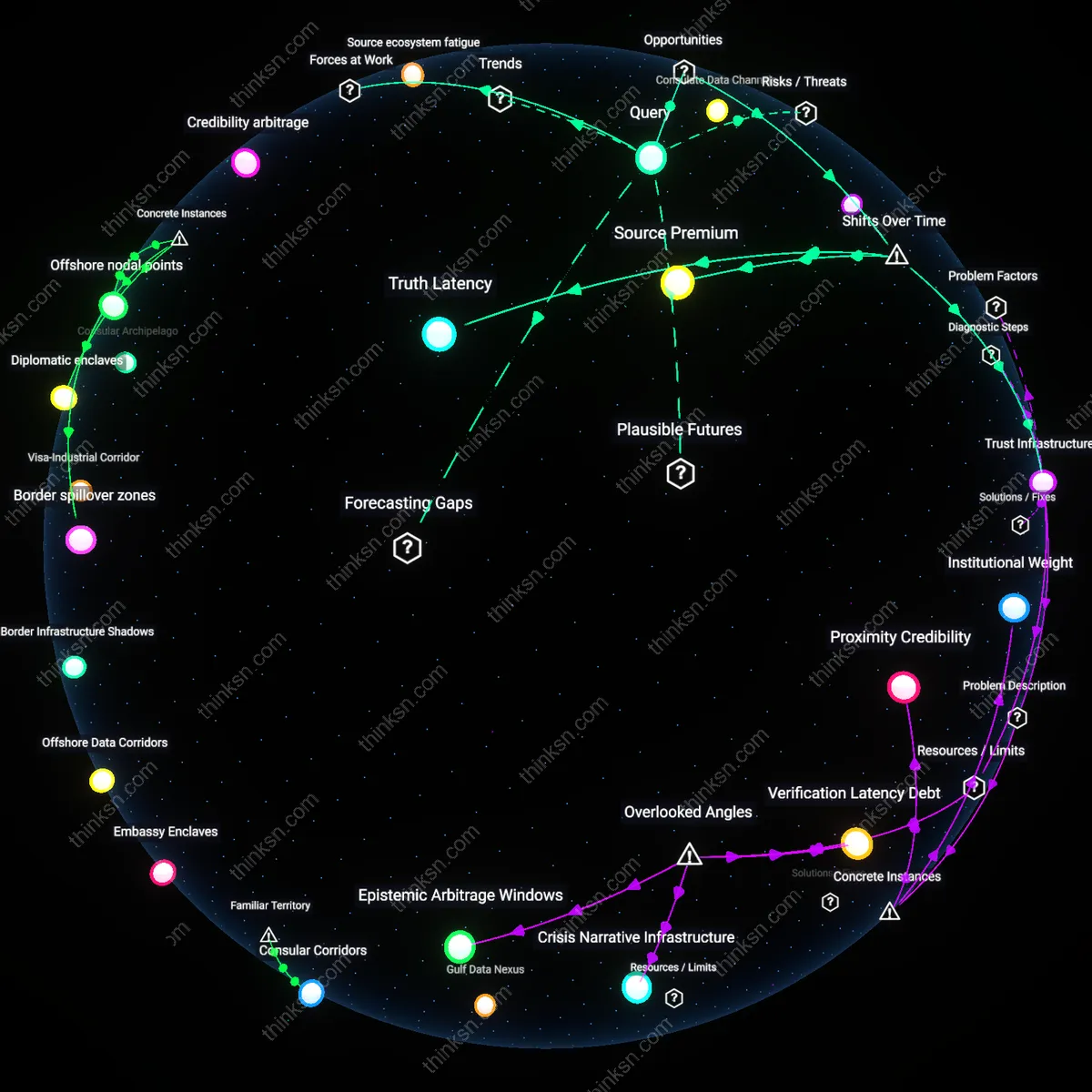
Why Regional Bias Skews Diversity Visa Lottery Odds?
Analysis reveals 9 key thematic connections.
Key Findings
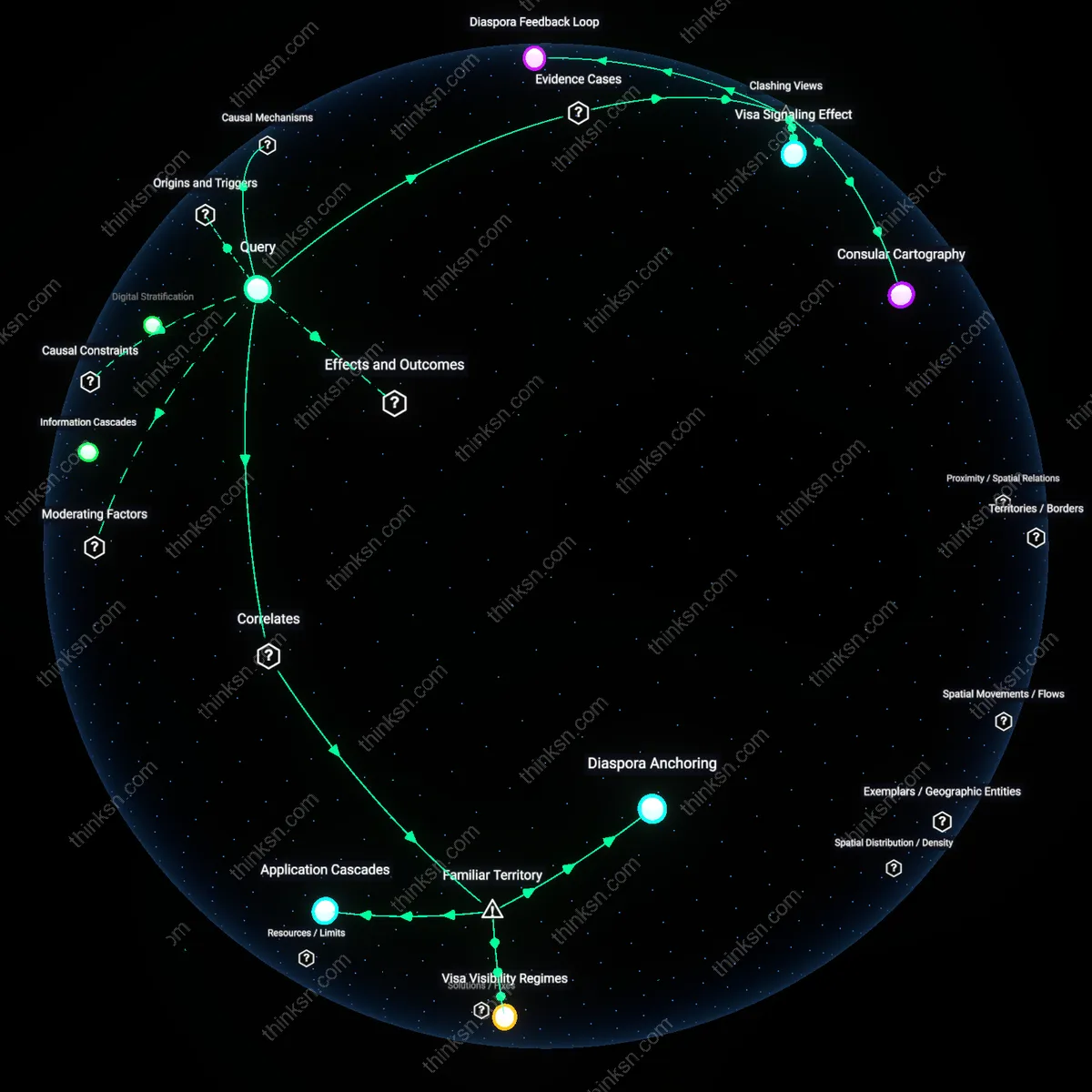
Information Cascades
The geographic concentration of diversity visa applicants emerged during the 1990s as early successes in specific regions created self-reinforcing information networks that lowered perceived barriers to entry. Migrants who obtained visas through the lottery in countries like Egypt and Nepal shared procedural knowledge—such as application techniques and deadlines—through tightly knit community channels, making participation more accessible in those locations over time. This mechanism privileged localities with prior winners, transforming isolated incidents into concentrated patterns of application by the early 2000s. The non-obvious implication is that informational access, not just eligibility or need, became a structuring force in who could effectively participate.
Gatekeeper Institutionalization
After the initial decade of the diversity visa program (late 1990s–early 2000s), private visa assistance agencies and local notaries in countries like Ghana and Ukraine became formalized intermediaries, embedding themselves as required conduits for application submission. These gatekeepers accumulated technical expertise and charging power, effectively monopolizing application logistics in urban centers and creating path dependence in regions where institutional support emerged earliest. Over time, this concentrated applicant flows into locations where such services were already entrenched, even as the program expanded globally. The shift reveals how informal institutional capture, rather than state policy, steered geographic participation patterns.
Digital Stratification
The U.S. State Department’s shift to online-only diversity visa applications in 2005 disproportionately advantaged populations in regions with robust internet access and digital literacy, accelerating concentration in urban hubs across countries like Ethiopia and Uzbekistan. Rural or lower-income applicants, despite eligibility, faced exclusion due to lack of stable connectivity, device ownership, or familiarity with digital forms—conditions that varied sharply within nations. This technological threshold reshaped the geography of participation not by intent but by infrastructural inequality, crystallizing disparities that had been latent in the pre-digital era. The transformation underscores how a procedural modernization amplified existing spatial divides.
Diaspora Anchoring
Migration aspirations cluster in specific regions because existing diasporas act as informal conduits for information about the diversity visa lottery. Family and community networks in countries like Nigeria, Egypt, and Ukraine amplify awareness and application rates through trusted word-of-mouth channels, bypassing formal or state-led outreach. This mechanism turns social remittances—shared norms, expectations, and procedural knowledge—into a self-reinforcing recruitment engine for participation. While often framed as cultural affinity, the non-obvious role of longitudinal social infrastructure reveals how historical migration patterns systematically reproduce new entries into the lottery.
Visa Visibility Regimes
The concentration of DV lottery applicants emerges most strongly in countries where U.S. cultural presence is high but legal migration pathways are tightly restricted. Nations such as Ghana, Armenia, and Bangladesh experience disproportionate participation because American media, education models, and public diplomacy efforts are pervasive, yet access to student, work, or family visas is limited by policy design. This creates a structural paradox where aspiration is cultivated by visibility but thwarted by gatekeeping, making the DV lottery a perceived 'backdoor' alternative. The underappreciated insight is that soft power inadvertently fuels demand for a low-probability lottery when it outpaces the availability of legitimate channels.
Application Cascades
Geographic clustering of applicants arises from localized surges triggered by public success stories, such as rare winners from a particular town or ethnic group being widely publicized in media or religious gatherings. In places like Accra or Yerevan, a single lottery winner can initiate a feedback loop, where visible outcomes stimulate mass participation the following year regardless of actual odds. These cascades operate through community-level imitation rather than rational assessment of probability, and their intensity depends on public legibility of the outcome rather than underlying economic or political conditions. The non-obvious point is that participation spreads not through accurate information, but through symbolic proof of possibility—even when statistically negligible.
Diaspora Feedback Loop
Geographic concentration in the diversity visa lottery is driven by self-reinforcing migration networks that emerge after initial resettlement patterns become institutionalized through remittance-based economies and transnational social infrastructures. In Ethiopia and Nigeria, second- and third-wave applicants disproportionately originate from clusters where prior visa recipients have established communication pipelines, legal assistance hubs, and ritualized preparation cultures—such as the widespread use of community-based mock interviews in Accra or Addis social circles—making entry strategies less random and more path-dependent. This undermines the intuitive view of the lottery as a decentralized equalizer, revealing instead a migration thermodynamics where mobility capital concentrates spatially once critical density is achieved, not through state policy alone, but through emergent diaspora scaffolding.
Visa Signaling Effect
The visibility of successful applicants, amplified by local media and religious institutions in places like Kyiv or Tbilisi, transforms individual wins into systemic migration stimuli by recalibrating risk perception and procedural knowability. When a single recipient from a small city like Dnipro is featured in regional news or church bulletins, application rates in that district spike the following year not because eligibility changed, but because the perceived opacity of the U.S. immigration system collapses into a tangible, socially validated template. This challenges the dominant narrative that applicant geography reflects suppressed demand, instead showing that information cascades—orchestrated not by embassies but by civic mimetics—create hotspots of participation where visibility, not need, governs enrollment.
Consular Cartography
U.S. consular resource allocation indirectly governs applicant concentration by determining where visa facilitation infrastructure persists, as seen in the sustained high application rates from Cebu and Manila despite identical eligibility across the Philippines—because only in these cities does the U.S. consulate maintain public-facing help desks, digital kiosks, and regular outreach tours. This institutional footprint normalizes participation where presence is visible, contradicting the assumption that lottery access is uniformly digital and placeless; the system appears neutral but in practice rewards proximity to legacy diplomatic nodes, exposing a spatialized gatekeeping logic disguised as randomness.