Bureaucratic Theater
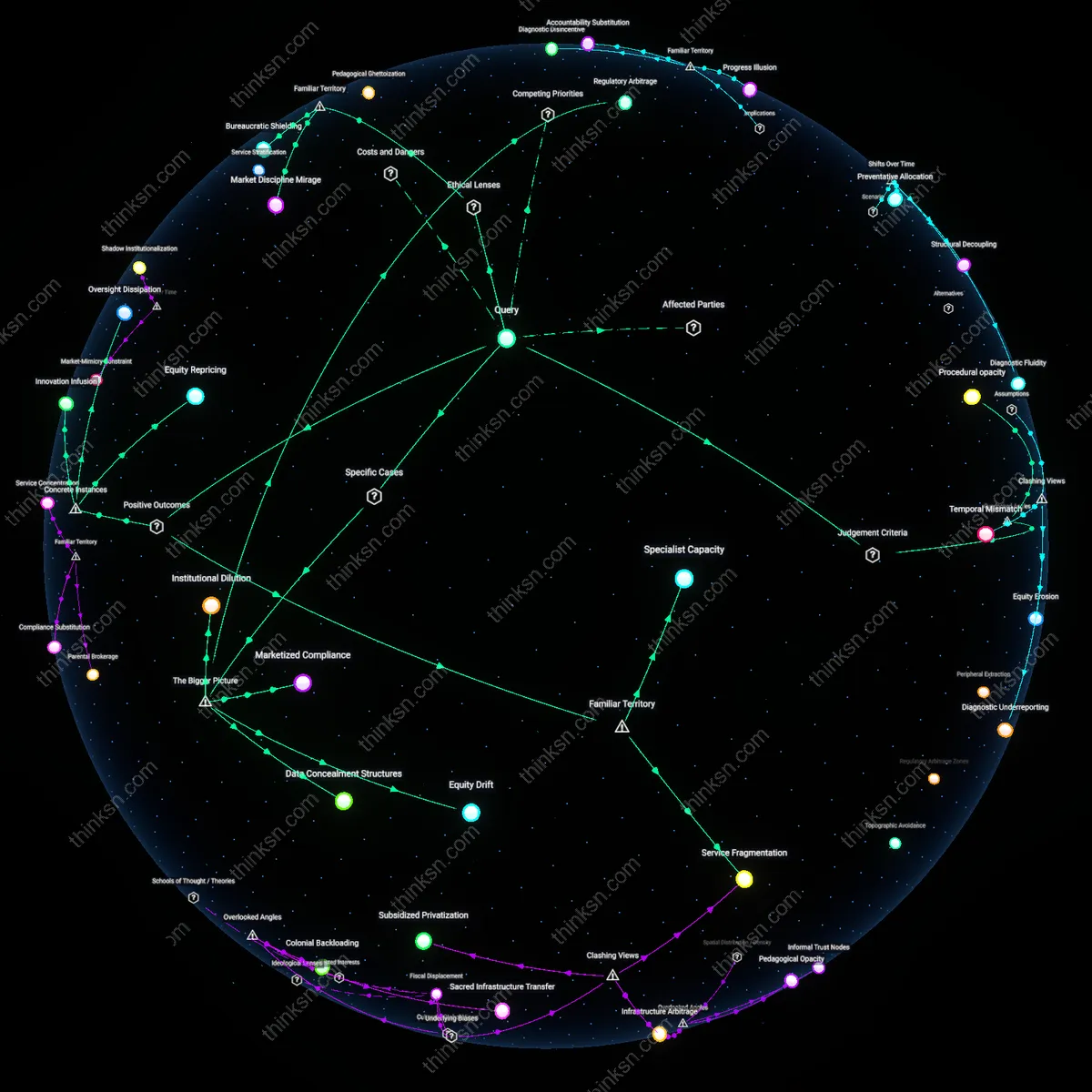
Public preschool programs feel unsafe not because staff violate regulations, but because compliance is performed for auditors rather than embedded in daily practice, meaning safety checks become ritualized displays—like locked doors that are propped open during operation because staffing ratios prevent supervision—revealing a system where accountability is designed to produce proof of rule-following, not actual security. This gap persists because oversight bodies prioritize documentation over observed behavior, allowing a disconnect between policy design and embodied staff routines, particularly in underfunded districts where maintaining appearances conserves political capital. The non-obvious truth is that the problem isn’t negligence, but the misalignment between performance of safety and its lived implementation.
Trust Arbitrage
Middle-class parents flee public preschool not due to personal experience with failure, but because they interpret neighborhood demographics as risk proxies—assuming that lower-income enrollment correlates with lower program quality or danger—thus using social composition as a heuristic for institutional trust, a move that redistributes safety expectations along class lines regardless of actual compliance. This cognitive substitution allows privileged families to justify private spending as risk mitigation, even when injury rates or inspection scores don’t differ, exposing a market-like calculation where trust is arbitraged rather than assessed. The dissonance lies in recognizing that distrust is not a reaction to malfunction, but a socially rational strategy to maintain symbolic and spatial distance.
Regulatory Noise
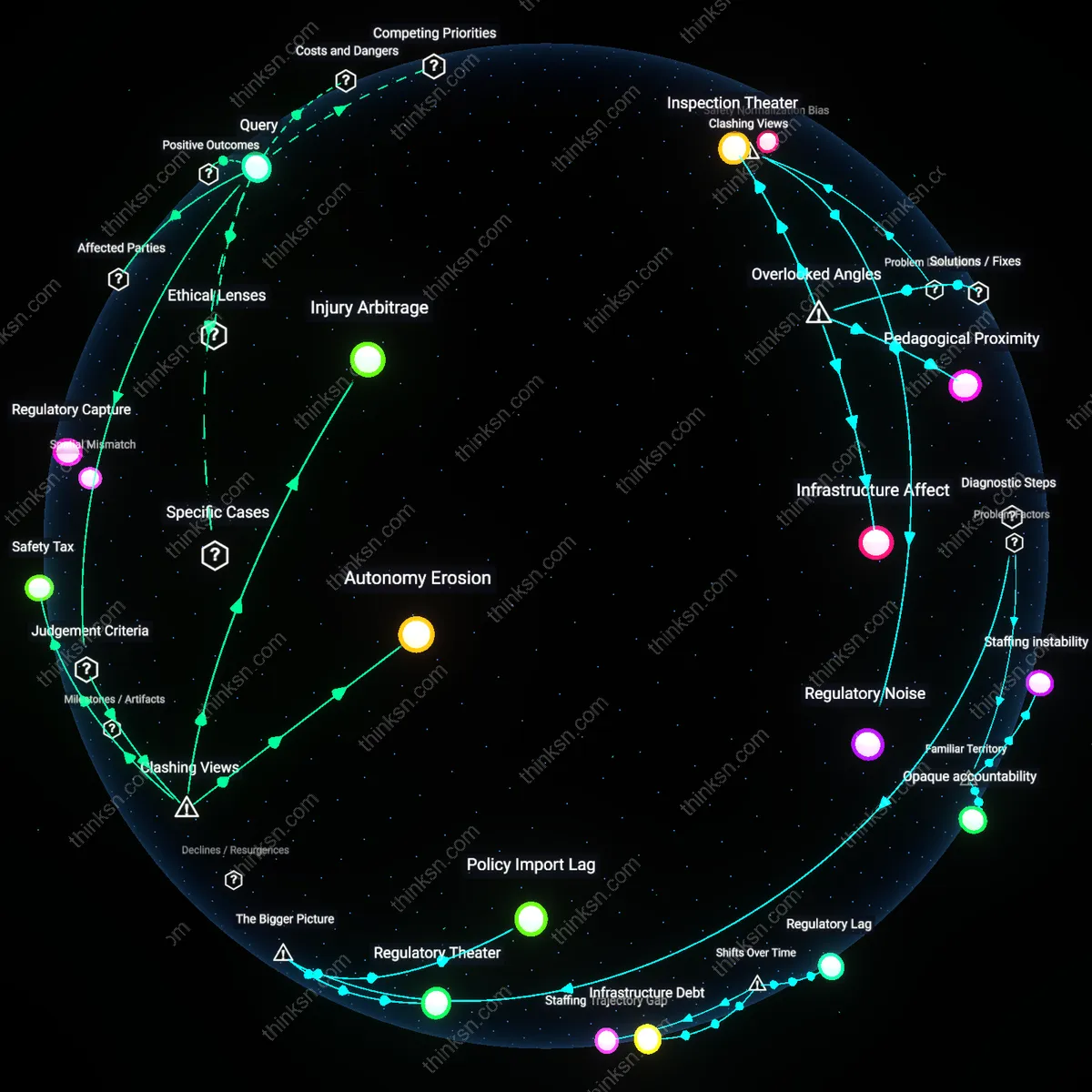
Parents perceive public preschools as unsafe because safety rules are so numerous, inconsistently enforced, and disjointed from visible adult attentiveness that they generate sensory confusion—such as food allergy protocols posted in six languages but rarely enacted—creating an environment where the sheer volume of signage and rules signals bureaucratic chaos, not control. The mechanisms of compliance, meant to reassure, instead overload perceptual cues available to parents during drop-off and pick-up, making disorder feel systemic even where major failures are absent. The underappreciated point is that regulatory saturation can erode trust more effectively than no rules at all, as it masks operational coherence with administrative clutter.
Staffing instability
Public preschools feel unsafe because chronic underfunding leads to high teacher turnover and reliance on underqualified aides, particularly in low-income districts. When lead educators cycle through classrooms rapidly or lack appropriate credentials, parents perceive inconsistency and diminished developmental care, even when state safety rules are technically followed. This undermines trust not through rule-breaking but through the erosion of relational continuity—the sense that familiar, competent adults are present—which most parents associate with safety in early learning.
Infrastructure neglect
Parents perceive public preschools as unsafe when facilities show visible decay—peeling paint, broken restrooms, or outdated playgrounds—regardless of compliance with health codes. These conditions reflect prolonged disinvestment and signal administrative indifference, which parents interpret as a proxy for unseen risks like lax hygiene or emergency preparedness. While regulations may mandate minimum standards, they often don’t enforce aesthetic or psychological signals of care, leaving families to equate physical neglect with systemic unreliability.
Opaque accountability
Public preschool programs feel unsafe because disciplinary actions, safety incidents, or staff violations are shielded by bureaucratic opacity, union protections, or scattered oversight bodies, preventing families from verifying program integrity. Unlike private options that market transparency as a selling point, public systems often treat personnel and incident records as internal matters, reinforcing the perception that problems are hidden rather than resolved. This gap between rule existence and accessible verification transforms procedural compliance into a credibility deficit.
Regulatory Theater
Public preschool programs feel unsafe because mandated safety standards are undermined by inconsistent enforcement driven by political incentives to appear reform-minded without allocating sufficient oversight resources. Local education authorities conduct routine inspections on paper but lack staff or autonomy to act on violations, creating a facade of compliance while known risks—like untrained staff or expired safety certifications—persist unchecked. This gap between rule existence and functional monitoring is most pronounced in districts with high charter proliferation, where accountability is diffused across management entities, allowing dangerous conditions to cluster invisibly. The non-obvious consequence is that parents’ distrust is not of the rules themselves but of the hollow performance of their implementation—a dynamic enabled by budget-constrained oversight bodies caught between legislative mandates and operational neglect.
Policy Import Lag
Parents flee public preschools because national curriculum and safety models are adopted without adaptation to regional cultural and infrastructural contexts, rendering even correctly implemented reforms ineffective in building trust. For example, insulated emergency protocols designed for Midwest tornadoes fail in Southern cities with different storm patterns, leading to repeated, highly publicized safety failures that discredit entire systems. Frontline staff, often undertrained on both procedure and local risk profiles, cannot bridge the gap between standardized policy and on-the-ground reliability. The underappreciated mechanism is that legitimacy in public services depends not just on rule existence but on perceived situational competence—an alignment that evaporates when blanket reforms ignore hyperlocal hazard geographies and community expectations.
Inspection Theater
Standardize and publicly stream unannounced classroom inspections through parent-accessible platforms to expose the gap between compliance paperwork and actual safety practices. Most oversight assumes documentation equals safety, but ritualized checklists—like verifying fire extinguisher tags without observing evacuation drills—create a performativity loop where schools optimize for audit survival, not child security; live footage disrupts this by anchoring accountability to behavior, not records. This shifts power from bureaucratic compliance to observational transparency, a mechanism overlooked because accreditation systems are designed to satisfy legal liability, not perceptual trust.
Pedagogical Proximity
Embed community health workers—not just teachers or administrators—into preschool governance councils to co-design safety protocols around familial caregiving norms. Public distrust often stems not from violence or neglect per se, but from cultural mismatches in care practices—such as sleep positioning, language discipline, or food sharing—that feel existentially unsafe to parents, even when health codes are met. By integrating local caregiving epistemologies into safety standards, programs stop feeling alien; this dimension is ignored because policy equates safety with physical risk mitigation, not ontological belonging.
Infrastructure Affect
Redirect preschool capital improvement funds toward sensory-level renovations—acoustic dampening, natural lighting gradients, and visible food prep areas—that shape visceral parental perceptions of safety independent of actual risk. The emotional calculus of trust is driven more by ambient cues (e.g., echoing loudness signaling chaos, dim lighting suggesting neglect) than by technical compliance, yet facility standards focus on code minimums, not perceptual salience. Upgrading sensory architecture treats the school’s physical affect as a medium of credibility, a lever that bypasses cognitive appraisal and builds trust pre-reflectively—rarely considered because reform debates assume rational information processing governs institutional trust.
Regulatory Lag
Public preschool programs feel unsafe because oversight standards have not been updated to reflect post-2008 early education research on child-staff ratios and facility safety, leaving parents reliant on visible private-sector improvements while public systems operate under outdated 1990s-era licensing templates. State budget constraints since the Great Recession froze regulatory modernization efforts, so even when new safety codes exist in policy drafts, implementation requires training and infrastructure investment that chronically underfunded districts cannot access—what appears today as distrust is actually parental recognition of a system frozen in a pre-early-education-reform era. This reveals that trust erosion is not about current mismanagement but about the material persistence of obsolete standards despite changed knowledge, a blind spot when focusing only on present conditions.
Staffing Trajectory Gap
The shift from volunteer-based Head Start staffing in the 1970s–1990s to today’s demand for credentialed early childhood educators has left non-reform cities unable to recruit qualified personnel due to salary caps tied to pre-2000 funding models, making parents equate public programs with untrained staff even where safety rules exist. Municipal budgeting cycles still reflect lower historical wage baselines, so when private centers pay market rates post-2010 to attract certified teachers, public programs cannot compete—this staffing divergence, cemented during the 2005–2015 professionalization wave in early education, produces a perception of unsafety rooted not in neglect but in institutional inertia. The underappreciated point is that formal safety rules cannot compensate for the implied risk parents associate with underpaid, high-turnover staff, a legacy of phased human capital shifts frozen by fiscal limits.
Infrastructure Debt
Public preschool facilities in cities that did not adopt Oklahoma City’s capital renewal program by 2012 remain in school buildings constructed before 1980, when early childhood environmental safety standards—like non-toxic materials, secure outdoor access, and sound-dampened classrooms—were not codified, creating physical environments parents perceive as dangerous despite compliance with minimal code requirements. Inflation-adjusted maintenance funding has declined since the 2008 municipal bond downturn, so renovations depend on one-time grants that bypass routine needs, leaving safety compliance as a paper exercise rather than experiential reality. The critical insight is that trust is shaped by sensory cues—peeling paint, shared restrooms with older children, noisy hallways—that outlast regulatory updates, exposing how deferred capital investment produces a spatial residue of risk long after rules change.