TikTok Creativity vs Attention Fragmentation: A Trade-off?
Analysis reveals 10 key thematic connections.
Key Findings
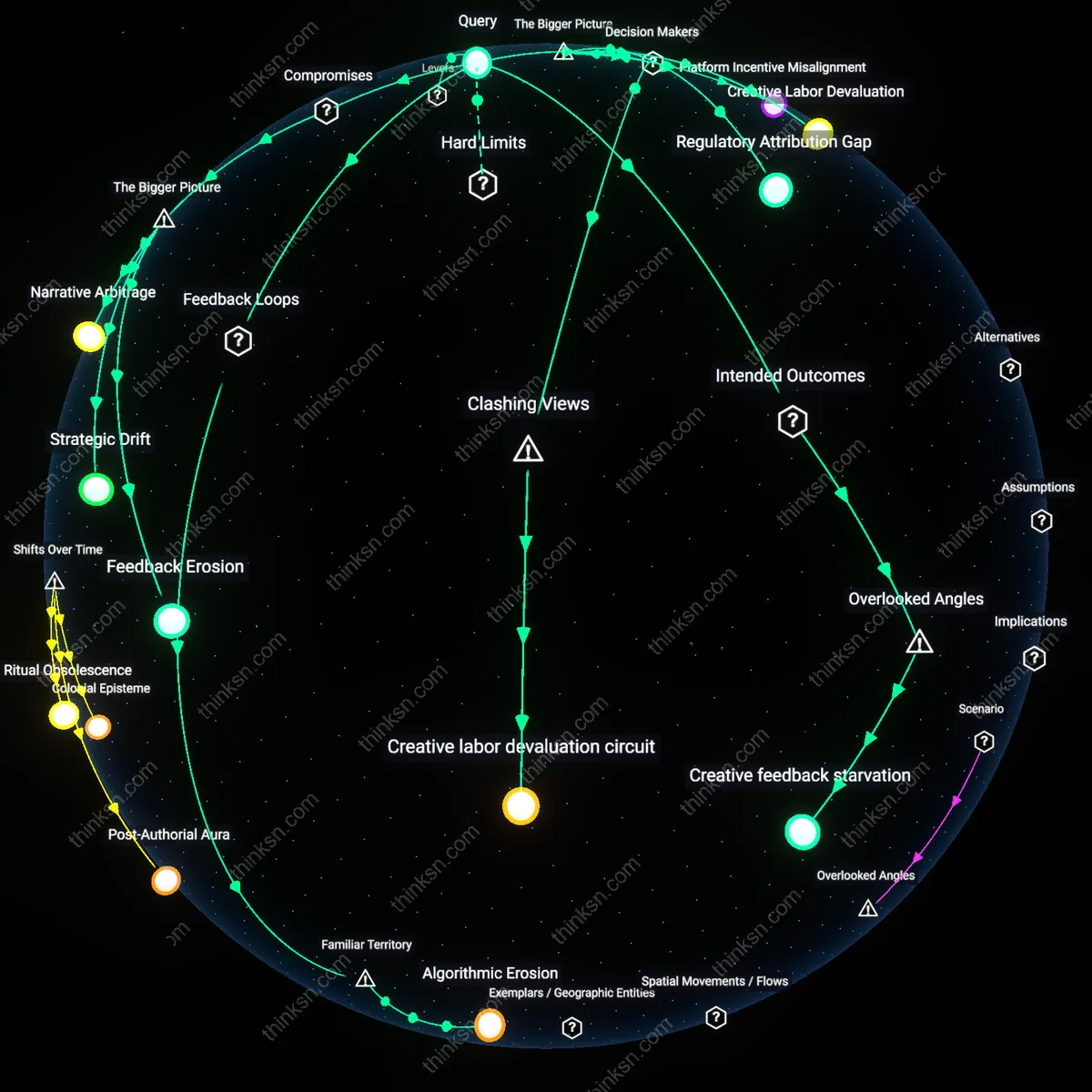
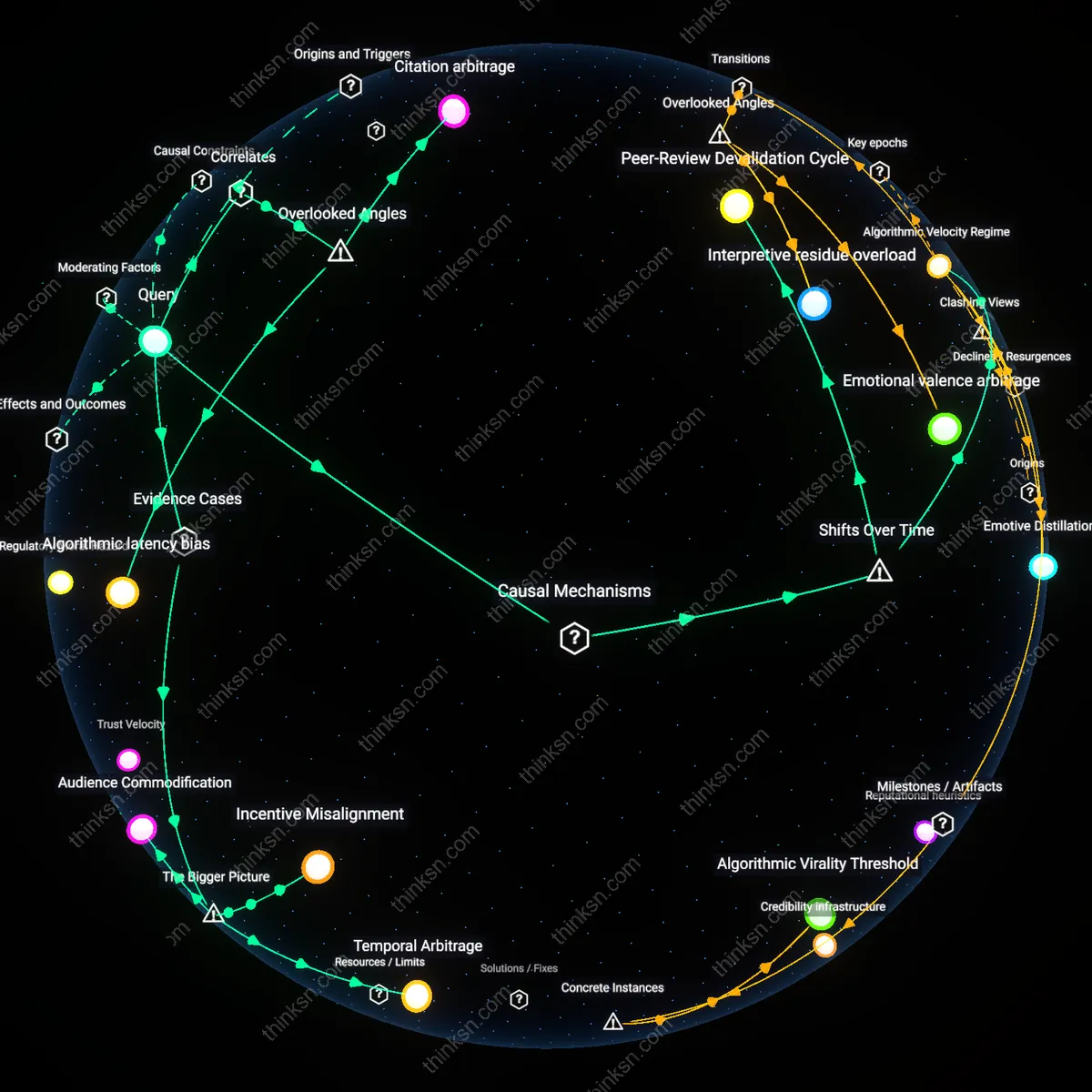
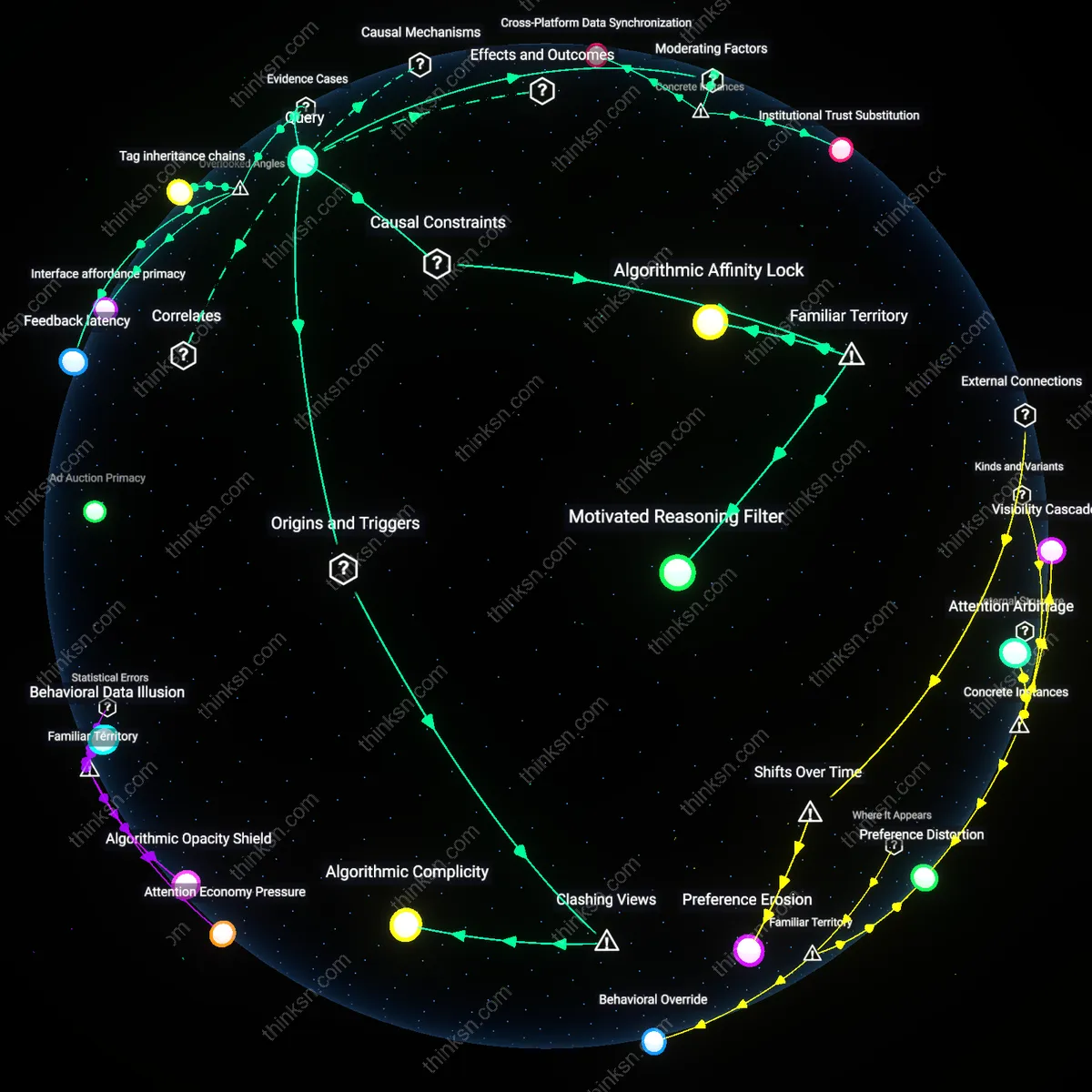
Algorithmic Incubators
TikTok’s algorithm does not fragment attention but instead cultivates hyper-focused creative subcultures by rewarding iterative niche production, a mechanism invisible to users who perceive only surface-level distraction. Young adults in marginalized identity groups—such as rural LGBTQ+ youth or neurodivergent creators—use TikTok’s feedback loops to refine craft within microgenres (e.g., ASMR choreography or trauma-informed comedy), transforming supposed attention decay into sustained community-specific innovation. This challenges the dominant narrative of cognitive erosion by revealing how algorithmic amplification can function as a hidden incubator for identity-rooted artistry, where engagement metrics serve not as dopamine traps but as developmental scaffolding.
Behavioral Taxation
TikTok’s promotion of creativity is a form of behavioral taxation imposed on young adults by venture-backed attention economies, where the appearance of creative freedom masks extractive data labor. Creators on TikTok—particularly low-income teens and aspiring influencers—are incentivized to produce content that maximizes rewatch rates and sharing, not artistic growth, leading to self-exploitation in pursuit of virality. This reframes 'creativity' not as liberation but as a disguised performance requirement, revealing how the platform’s algorithm enforces a new mode of digital precarity where attention fragmentation is not a side effect but the core operational outcome.
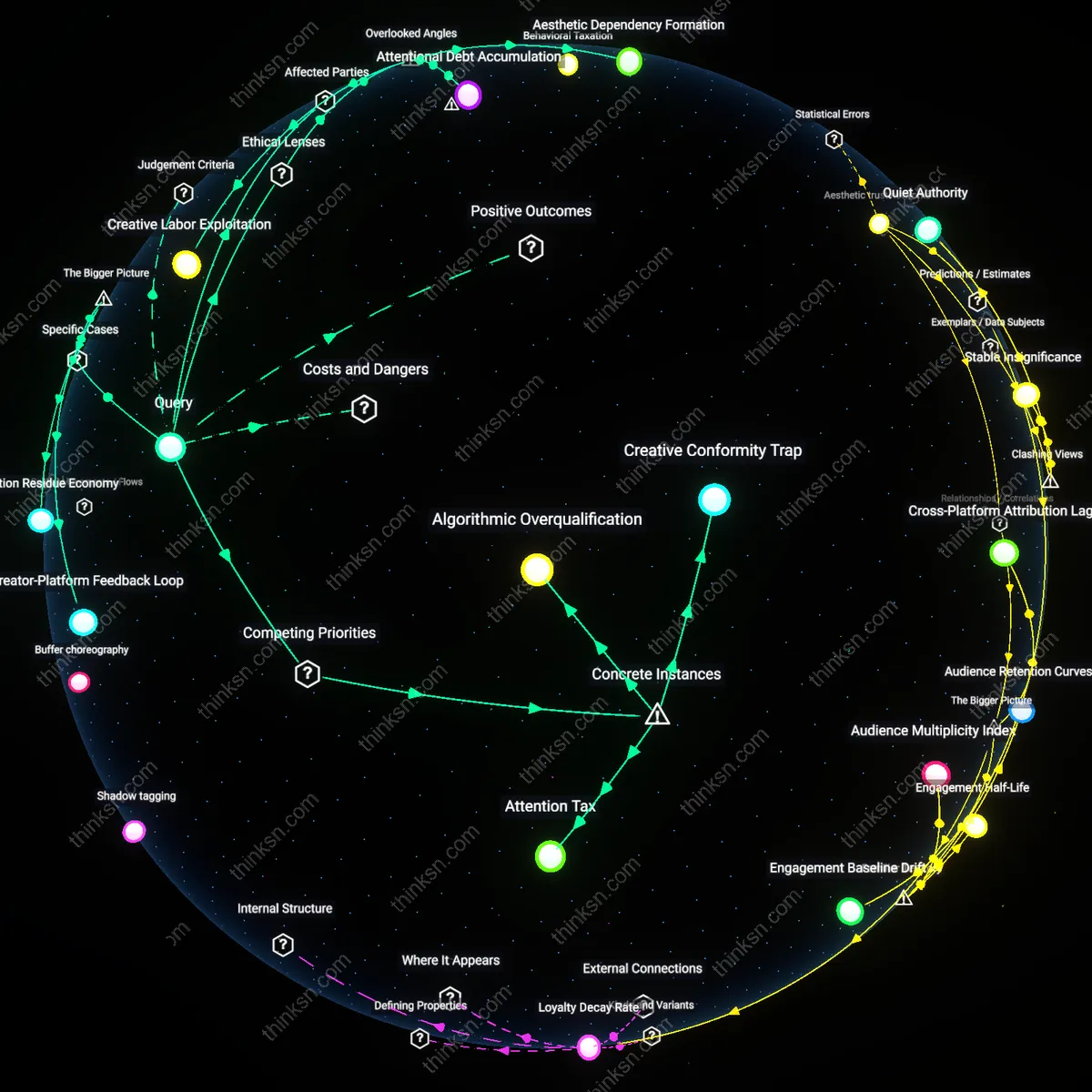
Creative Conformity Trap
TikTok's algorithm rewards content that mimics trending formats, as seen in the 2023 viral 'Silhouette Challenge' where users replicated a specific audio-visual template across millions of videos, which increased creative participation but systematically favored minor variations over original expression, revealing that the platform's promotion of creativity is functionally tied to imitative performance rather than innovation, making attention fragmentation a structural byproduct of gamified homogenization.
Attention Tax
In South Korea’s 2022 digital wellness reforms, regulators identified that short-form video platforms like TikTok imposed an implicit cognitive load on users under 25 by fragmenting sustained attention spans, evidenced by declining performance in classroom settings at Seoul National University where students exposed to over two hours of TikTok daily showed reduced retention in lecture-based assessments, demonstrating that the algorithmic reward for creativity operates as a zero-sum extraction from deeper cognitive engagement, where virality consumes mental bandwidth previously allocated to focused learning.
Algorithmic Overqualification
When the Museum of Modern Art in New York incorporated TikTok-generated content into its 2021 'Reimagining Space' exhibit, curators found that dozens of submissions demonstrated technically sophisticated editing and conceptual depth, yet were disqualified because they adhered too rigidly to TikTok’s algorithmic logic—such as front-facing camera dominance and sub-15-second pacing—revealing that the platform’s creative incentives produce overqualified creators whose skills are misaligned with non-platformized artistic contexts, thereby fragmenting attention not just cognitively but institutionally across incompatible attentional economies.
Creative Labor Exploitation
TikTok's algorithmic promotion of creativity does not outweigh its role in causing attention fragmentation because it systematically converts precarious youth creativity into proprietary training data for AI models under conditions of informalized labor, a mechanism justified within utilitarian justifications of 'democratized expression' but which functions as digital enclosure. Young creators generate microcontent that trains TikTok’s recommendation and moderation algorithms, yet receive no compensation, ownership, or consent in how their creative patterns are abstracted into machine learning weights—a process normalized under neoliberal innovation ethics that frame platform access as reciprocal exchange. This exploitation is overlooked because most analyses treat creativity and attention as zero-sum trade-offs, missing how the platform monetizes both through the unremunerated labor that fuels its adaptive infrastructure, thereby transforming self-expression into a hidden production chain.
Attentional Debt Accumulation
TikTok causes a form of long-term cognitive externalization that outweighs its creative benefits by instilling attentional habits akin to financial debt, where immediate engagement rewards are paid against future concentrative capacity, a mechanism supported by behavioral economics models of present bias but rarely accounted for in digital well-being discourse. The algorithm trains users to expect high-frequency, low-effort dopamine resets, eroding tolerance for delayed cognitive rewards—a dynamic particularly impactful in young adults whose prefrontal cortex development coincides with peak app exposure. This dimension is overlooked because ethical evaluations typically focus on content or screen time, not on the intertemporal substitution of attention, whereby the brain’s executive control becomes structurally undercapitalized, mirroring how debt undermines future economic autonomy.
Aesthetic Dependency Formation
The net effect of TikTok’s creative promotion is negative because it fosters aesthetic dependency—a condition in which users’ creative self-conception becomes parasitic on algorithmic validation loops rooted in predictable meme templates, audio reuse, and choreographic mimicry, a dynamic sanctioned by liberal pluralism’s celebration of participatory culture but which undermines epistemic autonomy. Creators adapt not to personal inspiration but to the implicit grammar of what the algorithm rewards, leading to convergent ideation masked as diversity; this dependency is rarely seen because most critiques focus on mental health or misinformation, not on how algorithmic curation reshapes the very possibility of originality by conditioning creative imagination to pre-validated forms.
Creator-Platform Feedback Loop
TikTok's algorithmic promotion of creativity outweighs its role in attention fragmentation among young adults when measured by the sustained output of novel content forms from users like Khaby Lame, whose pantomime-style videos emerged from platform-specific reward mechanisms that amplify minimalistic, universally accessible humor. This dynamic is driven by the platform’s A/B-tested recommendation engine, which privileges high completion rates and rewatchability, thus favoring content that strips away linguistic and cultural barriers. The system rewards iterative innovation within constrained formats, creating a self-reinforcing cycle where user creativity is both shaped and sustained by algorithmic selection pressures. What is underappreciated is that the same mechanism fragmenting attention also creates a low-barrier evolutionary sandbox for meme mutation and stylistic divergence at scale.
Attention Residue Economy
TikTok's role in causing attention fragmentation among young adults outweighs its promotion of creativity, as evidenced by behavioral shifts in first-year university students at American campuses like Ohio State, where learning analytics show declining sustained engagement in lectures exceeding three minutes—coinciding with TikTok usage exceeding 90 minutes per day. This fragmentation is not merely about duration but the erosion of cognitive bridging between discrete stimuli, as the platform’s intermittent reinforcement schedule weakens executive control systems tasked with maintaining goal-relevant focus. The broader system at work is an attentional economy where dopamine-regulated engagement metrics trump informational continuity, making deep learning structurally incompatible with habits formed on the platform. The overlooked dynamic is that creativity is being rechanneled into micro-performances rather than cumulative knowledge building, privileging immediate resonance over long-term intellectual development.