Why Sensational Science Trumps Sober Research Online?
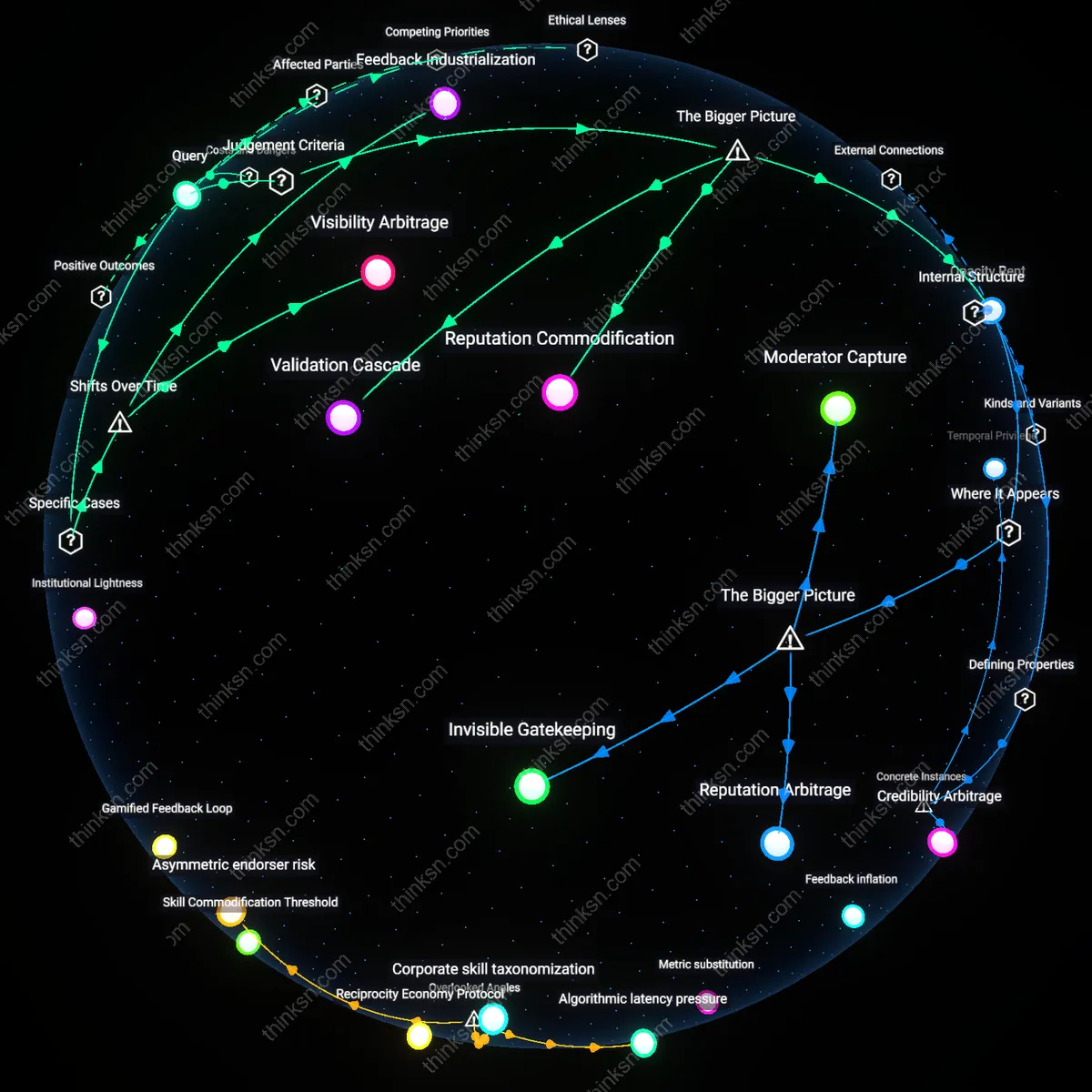
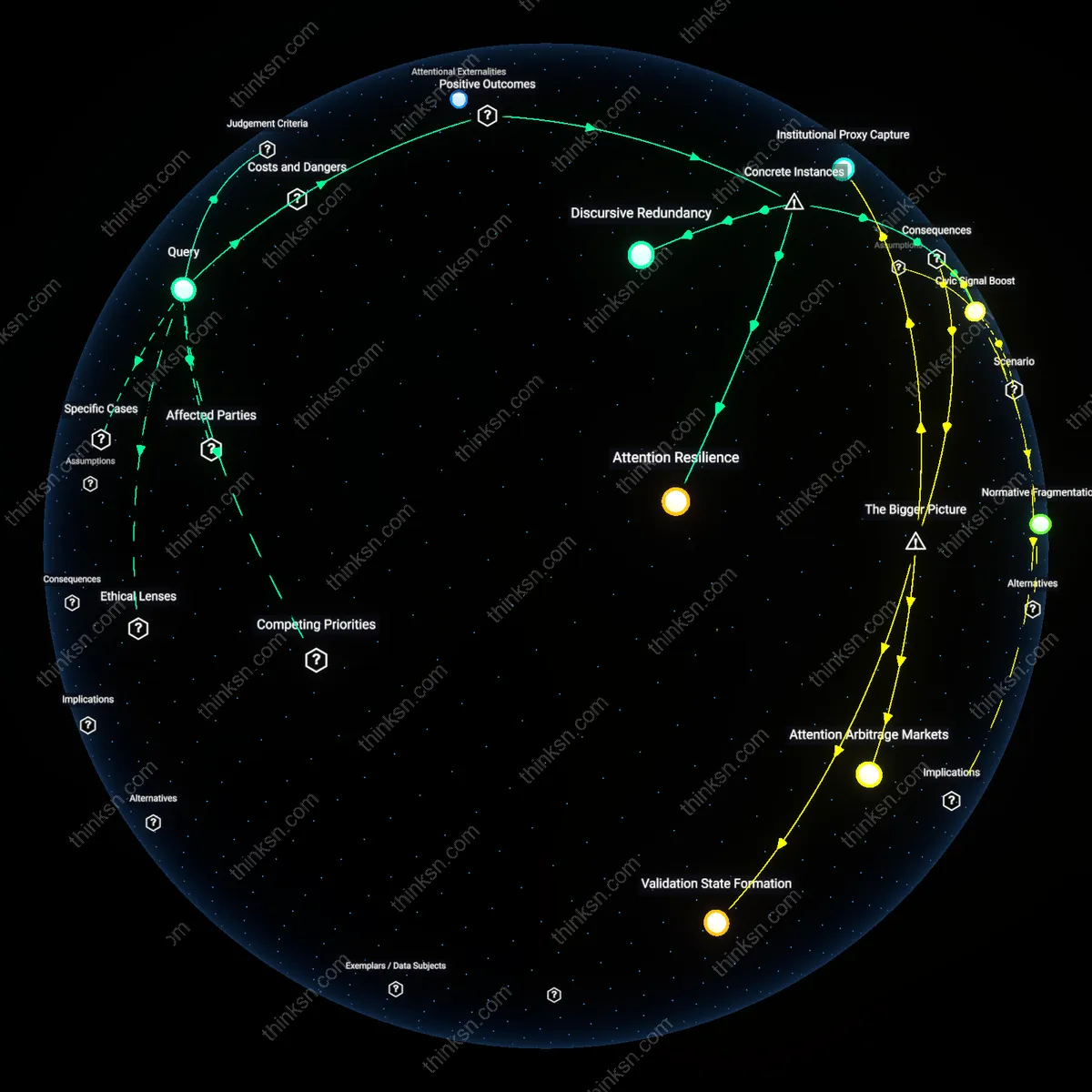
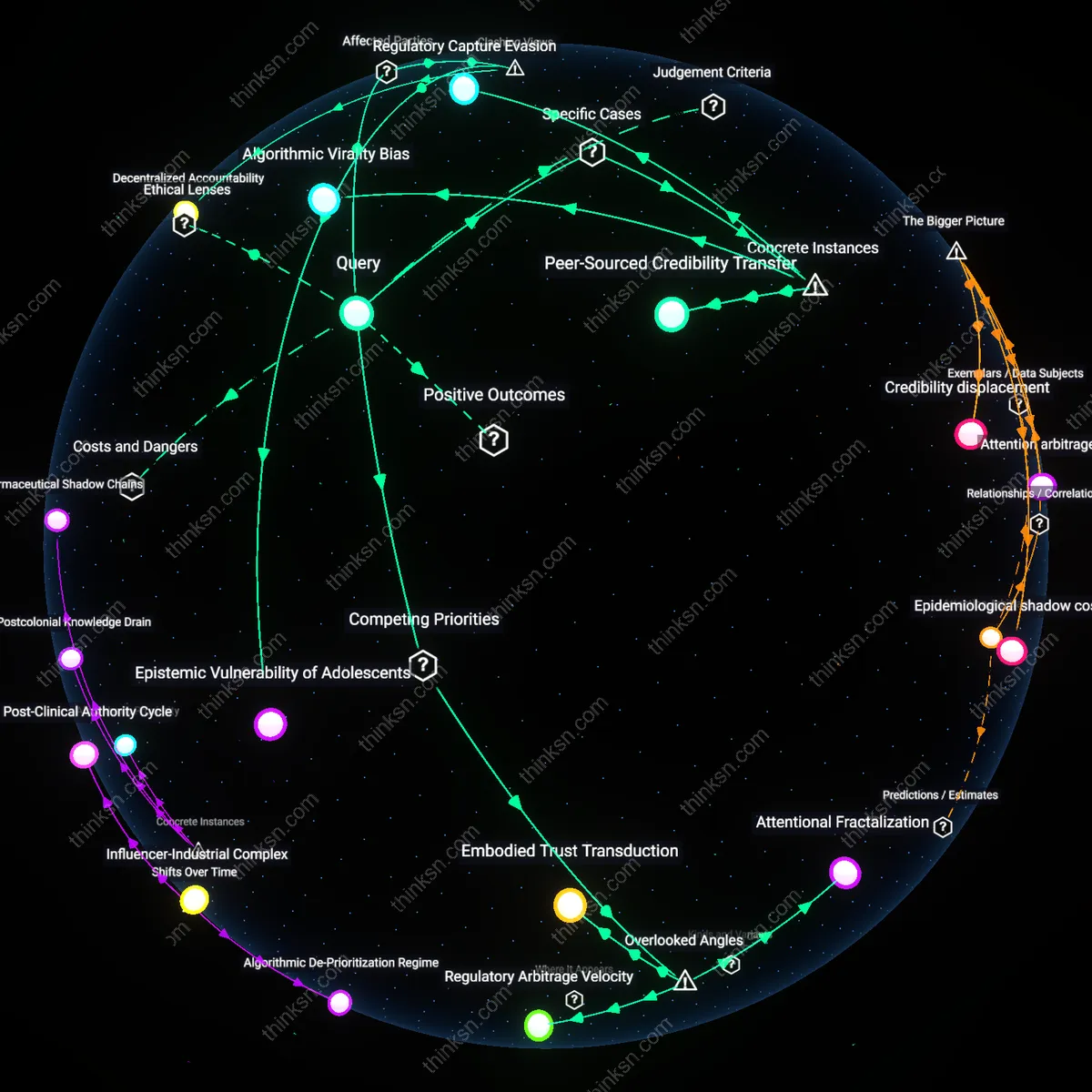
Analysis reveals 8 key thematic connections.
Key Findings
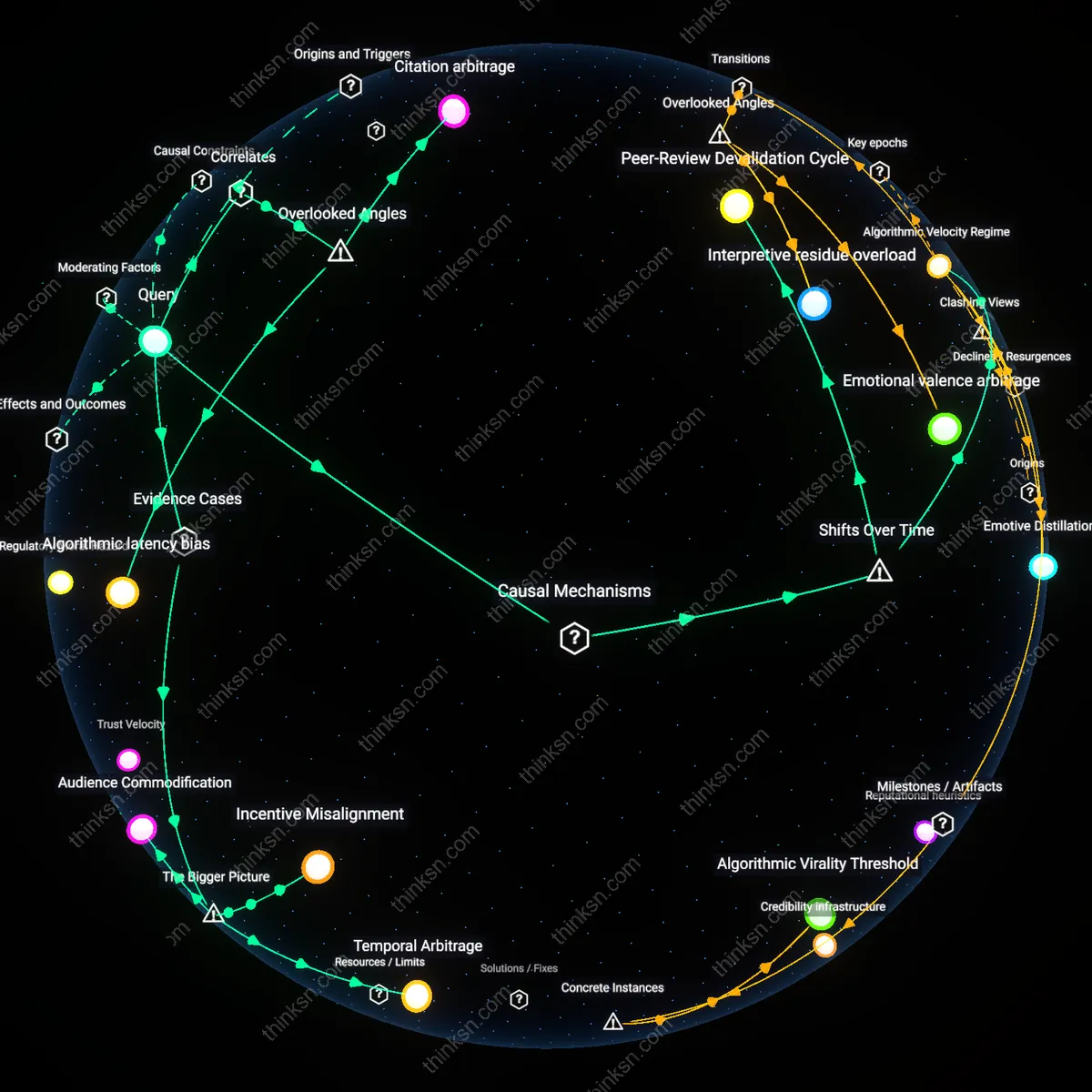
Algorithmic Velocity Regime
The shift from editorially curated science communication to platform-driven distribution after 2010 enabled algorithmic amplification of emotionally charged content, which systematically prioritizes speed and engagement over epistemic rigor. Social media platforms like Facebook and YouTube began optimizing recommendation engines for watch time and click-through rates, embedding feedback loops where user interaction—especially outrage or awe—triggers further dissemination of sensational scientific claims, such as miracle cures or apocalyptic predictions, bypassing traditional gatekeepers like academic institutions or science journalists. This mechanism is non-obvious because it does not rely on user ignorance alone but on automated systems that reward reactivity, making virality an emergent property of design rather than content quality.
Peer-Review Devalidation Cycle
Beginning in the mid-2000s, the erosion of public trust in institutional authority—fueled by political polarization and high-profile scientific controversies—created a feedback loop where peer-reviewed findings were increasingly perceived as slow, opaque, and elitist, while sensational claims gained credibility by positioning themselves as 'suppressed truths.' This shift transformed the attention economy into a credibility arbitrage system, where actors like influencers or alternative media outlets exploit uncertainty and delay in scientific consensus to promote immediate, emotionally satisfying narratives, such as anti-vaccine or climate denial claims, thereby weakening the cultural authority of peer review itself. The underappreciated consequence is that the devalidation of peer review is not merely ideological but structurally incentivized by platforms that reward contrarianism with visibility.
Algorithmic latency bias
Content moderation systems prioritize removal of misinformation over amplification of rigor, creating a temporal gap where sensational claims spread unchecked while peer-reviewed findings await verification queues. Platform algorithms do not actively promote sensationalism per se, but the delayed clearance of scientifically validated content—due to fact-checking pipelines and editorial workflows—enables unchallenged diffusion during critical early engagement windows. This timing asymmetry is rarely modeled in attention-economy analyses, which assume simultaneous competition, but in reality, the lag in credential validation systematically disadvantages evidence-based claims. The overlooked dynamic is not preference for sensation, but infrastructure-induced delay in legitimacy signaling.
Credentialed invisibility
Peer-reviewed science becomes structurally invisible in recommendation engines because its linguistic and structural markers—such as hedged conclusions, methodological detail, and citation clusters—trigger low engagement predictions in machine learning models trained on virality patterns. These models interpret scientific caution as low emotional valence and thus downgrade dissemination, not due to bias toward sensationalism, but because platforms’ interpretability layers misread epistemic norms as audience disengagement signals. What is missed is that the very markers of scientific reliability are treated as algorithmic penalties, making rigorous findings invisible not because they’re outcompeted, but because they fail to register as content the system knows how to amplify. This shifts the locus of distortion from user behavior to model semantics.
Citation arbitrage
Academic institutions and press offices increasingly reframe peer-reviewed findings using narrative templates derived from media analytics—prioritizing surprise, scale, and moral urgency—enabling journals to gain attention by mimicking the rhetorical structure of sensational claims. This strategic mimicry, driven by institutional competition for research funding and public relevance, creates a feedback loop where even validated science must adopt the affective signature of misinformation to gain visibility. The underrecognized force here is not platform design alone, but the academic field’s own adaptation to attention markets, which erodes epistemic distinctions from within by making peer-review credentials a branding layer atop sensationalized packaging. This turns the scientific ecosystem into an active participant in its own distortion.
Incentive Misalignment
Platform algorithms prioritize engagement metrics over epistemic validity, causing outlets like BuzzFeed or viral science influencers on YouTube to amplify preliminary or exaggerated findings because they generate more clicks than cautious peer-reviewed studies. This occurs through automated recommendation systems that reward watch time and shares, disproportionately elevating emotionally charged or counterintuitive claims—such as 'NASA confirms wormholes are real'—even when based on misread preprints, while actual breakthroughs in journals like Nature or The Lancet remain buried. The non-obvious consequence is not merely misinformation, but a structural erosion of institutional science’s visibility, where attention becomes a proxy for legitimacy despite decoupling from methodological rigor.
Temporal Arbitrage
Sensational science claims spread rapidly through platforms like Twitter and TikTok because actors such as independent health bloggers or alternative medicine promoters exploit the lag between peer review’s slow consensus-building and the real-time news cycle’s demand for novelty. For instance, during the early stages of the COVID-19 pandemic, unverified claims about ivermectin's efficacy outpaced clinical trial results by months, gaining traction through coordinated amplification networks including right-wing media and wellness communities. This speed asymmetry transforms provisional data into perceived truths, revealing how the time-bound mechanics of attention economies override the procedural temporality of scientific validation.
Audience Commodification
Digital platforms monetize user attention by treating audiences as data commodities, which incentivizes entities like Vice’s science vertical or startup-driven media such as Futurism to reframe complex research as personality-driven narratives or existential revelations—e.g., turning a single neuroimaging study into 'This Brain Scan Proves Free Will Is an Illusion.' These outlets depend on ad revenue tied directly to page views and session duration, making them structurally incapable of rewarding nuance, which fails to sustain engagement. The underappreciated outcome is not just distortion of science, but the systemic substitution of epistemic authority with performative epiphany, where credibility accrues to whoever best dramatizes uncertainty.