Why Does FTC Privacy Enforcement Favor Big Tech Over Startups?
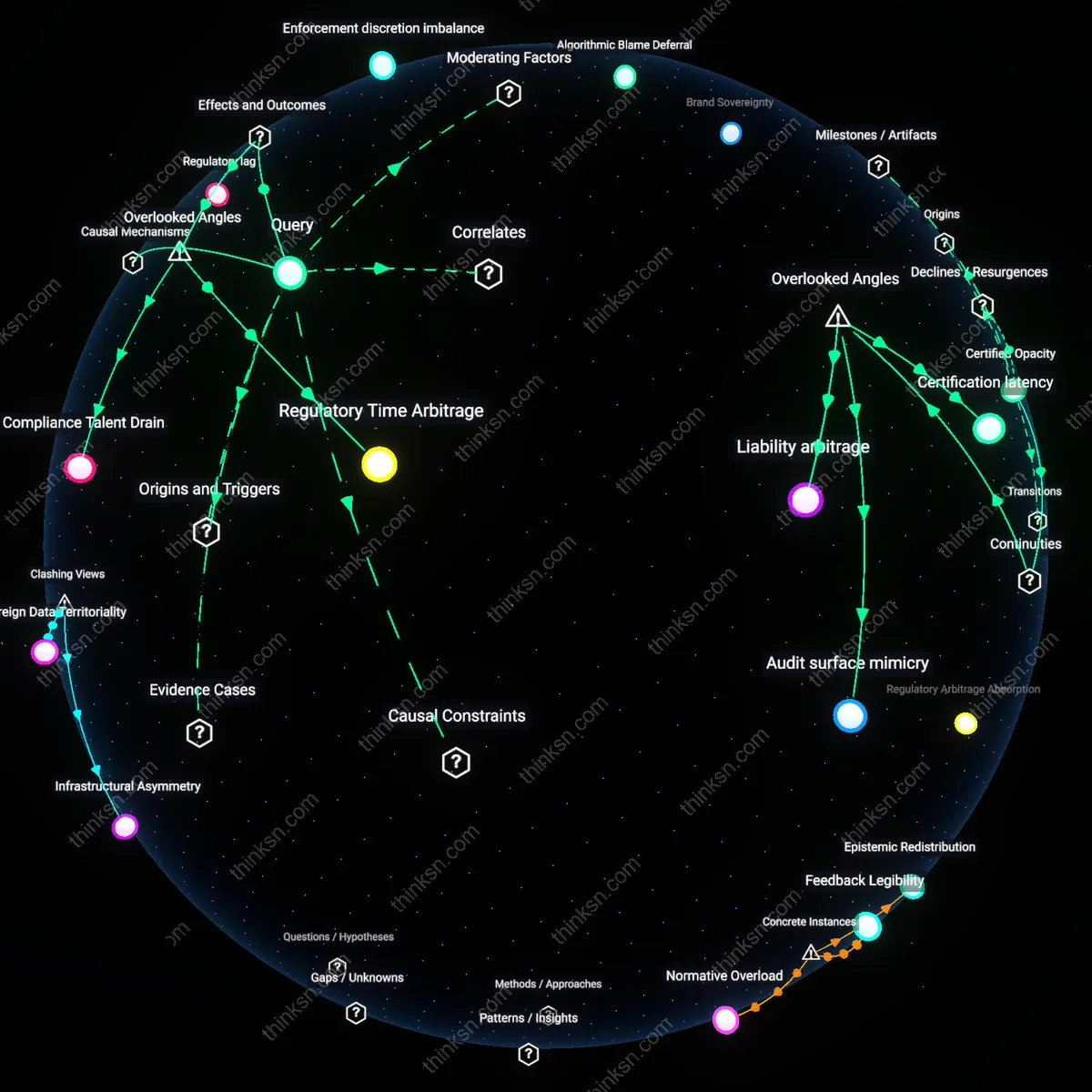
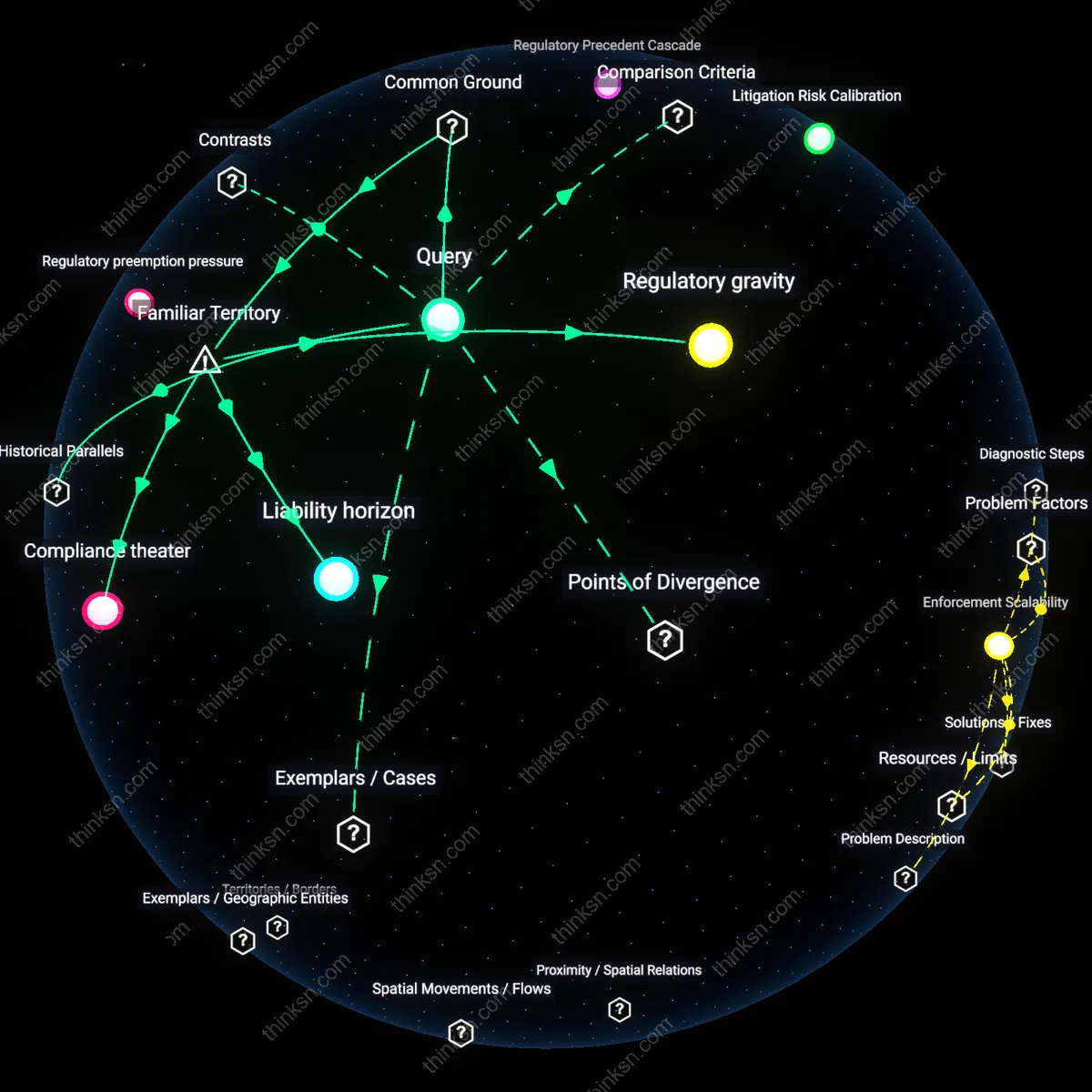
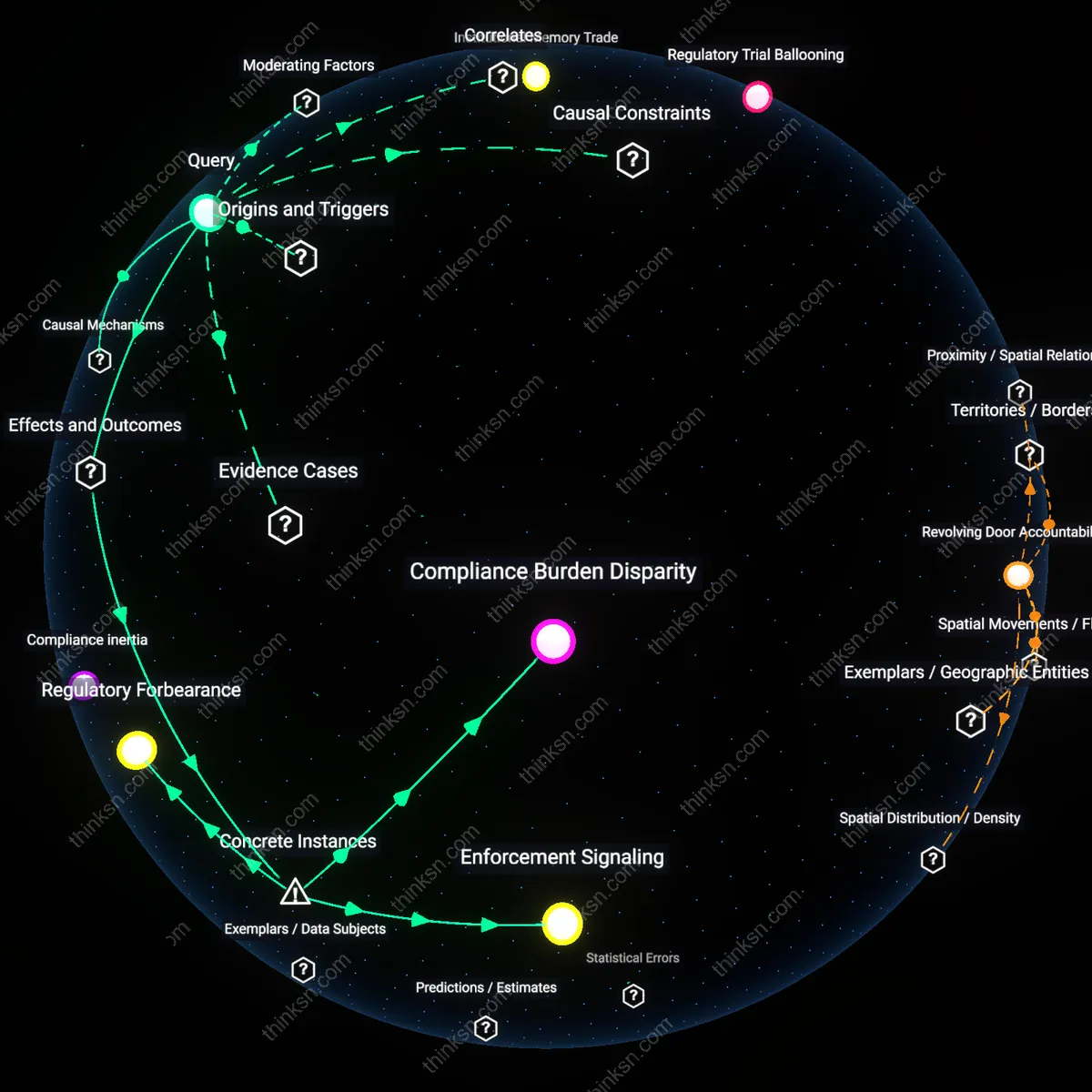
Analysis reveals 6 key thematic connections.
Key Findings
Regulatory capture
The selective enforcement of FTC privacy rules favoring big tech emerged through the revolving door between Silicon Valley and federal agencies after the 2008 financial crisis, when former compliance officers from Google and Facebook assumed leadership roles at the FTC. This shift in personnel introduced a culture of corporate risk management over public accountability, mediating enforcement decisions through internal norms that privileged stability over innovation. The non-obvious consequence is not mere bias but the institutional rewiring of regulatory logic to treat large firms as co-regulators rather than targets.
Compliance inertia
Startups face disproportionately high barriers under FTC privacy enforcement due to a post-2015 pivot toward ex post penalties instead of ex ante guidance, a shift that advantaged firms with established legal infrastructure. As the FTC stopped issuing clear rules and instead relied on case-by-case adjudication, larger companies could absorb uncertainty through dedicated compliance teams while startups could not. The overlooked effect is that regulatory ambiguity itself became a tool of market consolidation, privileging those already embedded in the system.
Normative lag
The uneven application of privacy enforcement reflects a post-Snowden era (post-2013) failure to update legal standards to match technical realities, allowing big tech to exploit legacy loopholes in consent and data ownership while startups lack the political capital to negotiate similar flexibility. As surveillance capitalism matured, the FTC preserved outdated enforcement templates that mistook scale for legitimacy, thereby normalizing differential treatment across firm size. The unacknowledged outcome is that temporal misalignment between law and technology entrenches hierarchy under the guise of consistency.
Regulatory Forbearance
The Federal Trade Commission’s 2011 consent decree with Google—imposed after Google bypassed Safari’s privacy settings to place tracking cookies—resulted in no financial penalty and minimal operational constraints despite clear deception, a leniency not typically extended to smaller firms like Path, which faced aggressive enforcement for minor data collection violations the same year; this asymmetry reveals how agencies selectively apply remedial force against smaller entities while accommodating dominant players through non-punitive oversight mechanisms, normalizing a form of regulatory forbearance where reputational deterrence substitutes for structural accountability, an outcome rarely acknowledged in public enforcement discourse.
Compliance Burden Disparity
When the FTC sued the startup Dover Street Market in 2020 over COPPA violations for collecting children’s data via an e-commerce plugin, it imposed strict retroactive compliance protocols and mandated third-party audits, whereas no comparable audit regime followed Facebook’s 2019 settlement for exposing children’s data in its 'Onavo' scandal—exposing how startups bear outsized compliance costs under the same legal framework, operationalizing a compliance burden disparity that functions as a market barrier, marginalizing small entrants not through formal rules but through the uneven cost structure of adherence, a dynamic obscured by the surface neutrality of privacy statutes.
Enforcement Signaling
The FTC’s 2023 decision to prioritize and publicly announce enforcement actions against emerging AI-driven startups like Clearview AI for biometric data scraping—while delaying or downgrading scrutiny of Amazon’s Ring partnerships with over 2,000 police departments involving unconsented facial recognition use—demonstrates how regulatory visibility is weaponized to shape market expectations, creating an enforcement signaling effect that amplifies reputational damage for smaller firms while preserving ecosystem stability around dominant actors, thereby reinforcing systemic power hierarchies through selective public censure rather than proportionate legal correction.