Do Cooling-off Periods Really Prevent Regulatory Capture?
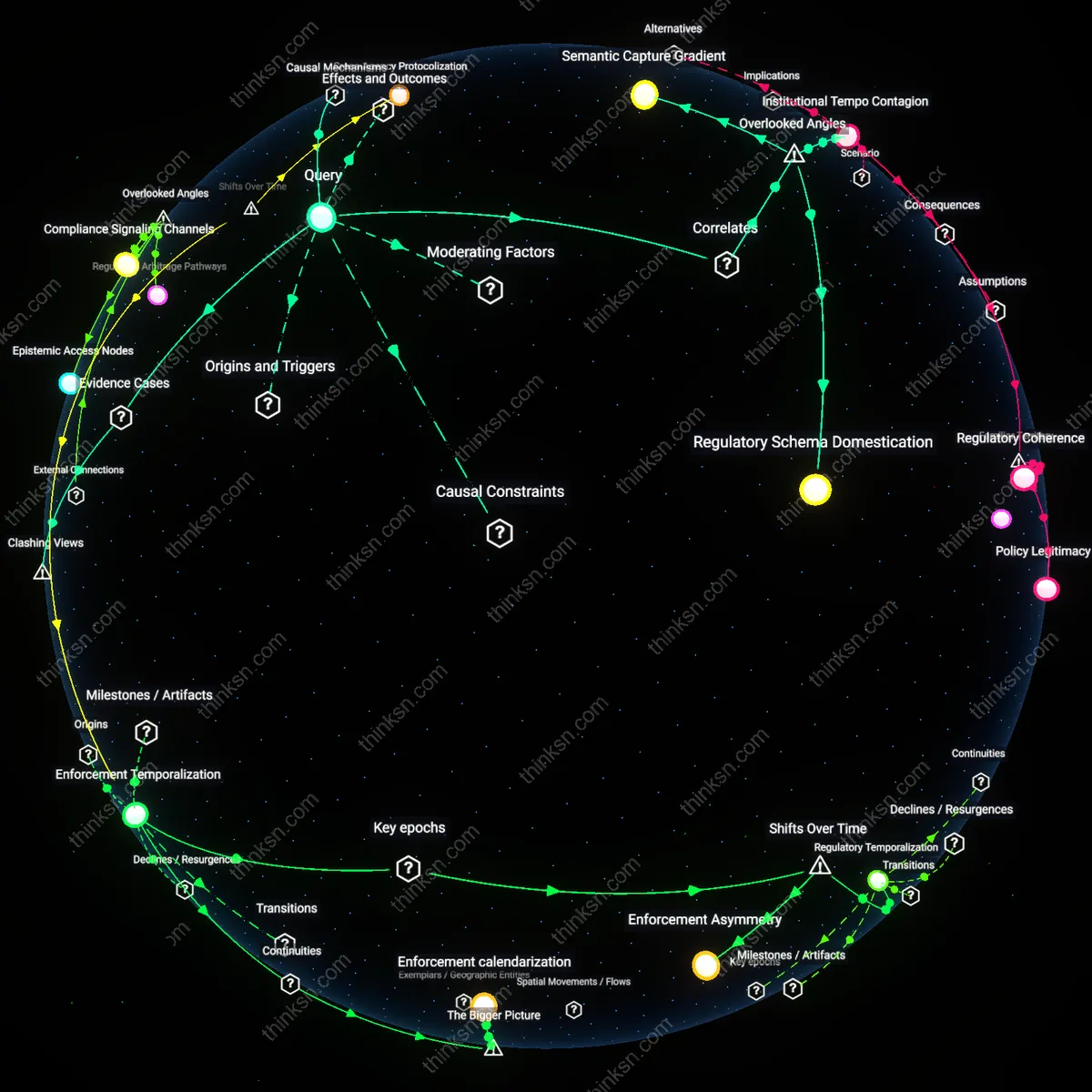
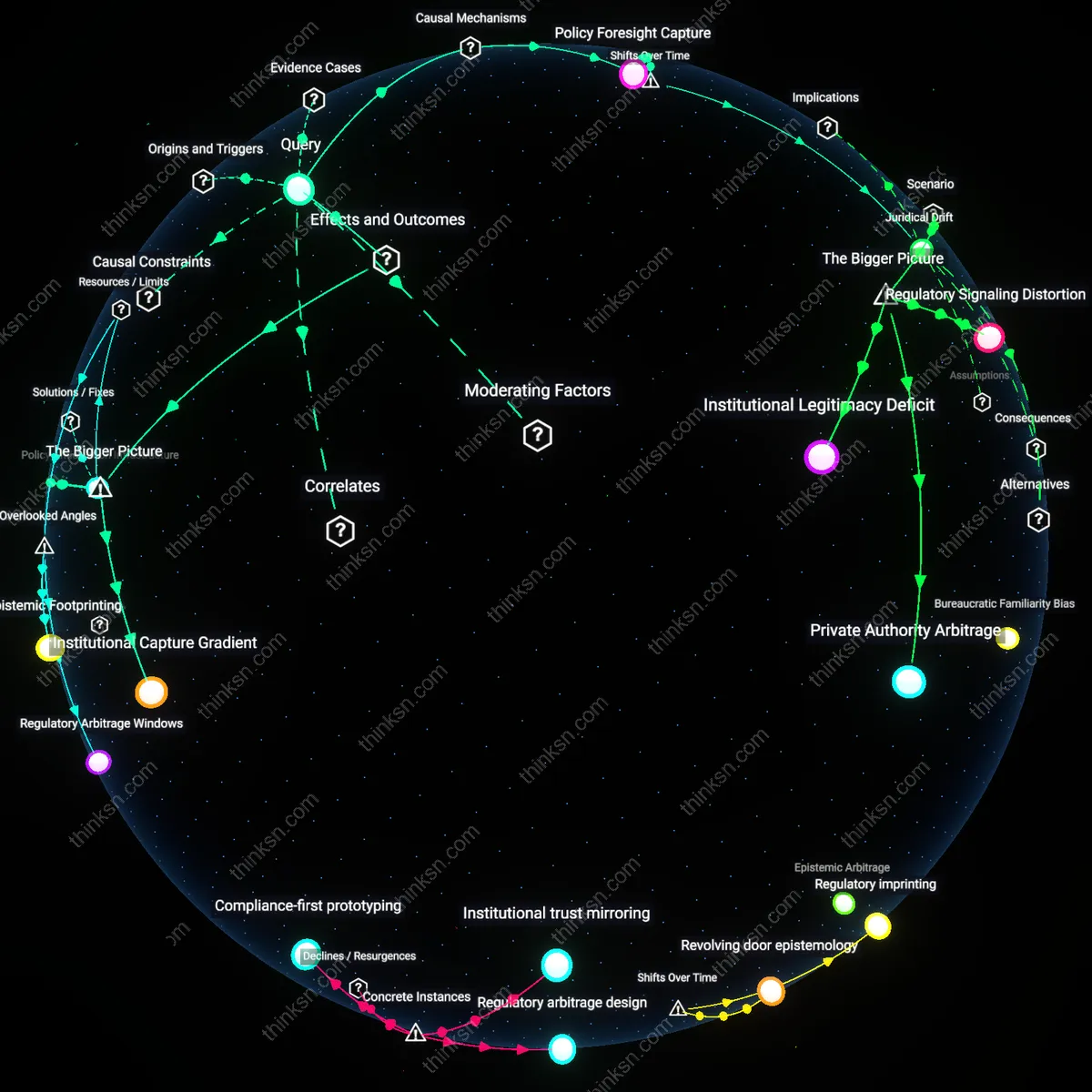
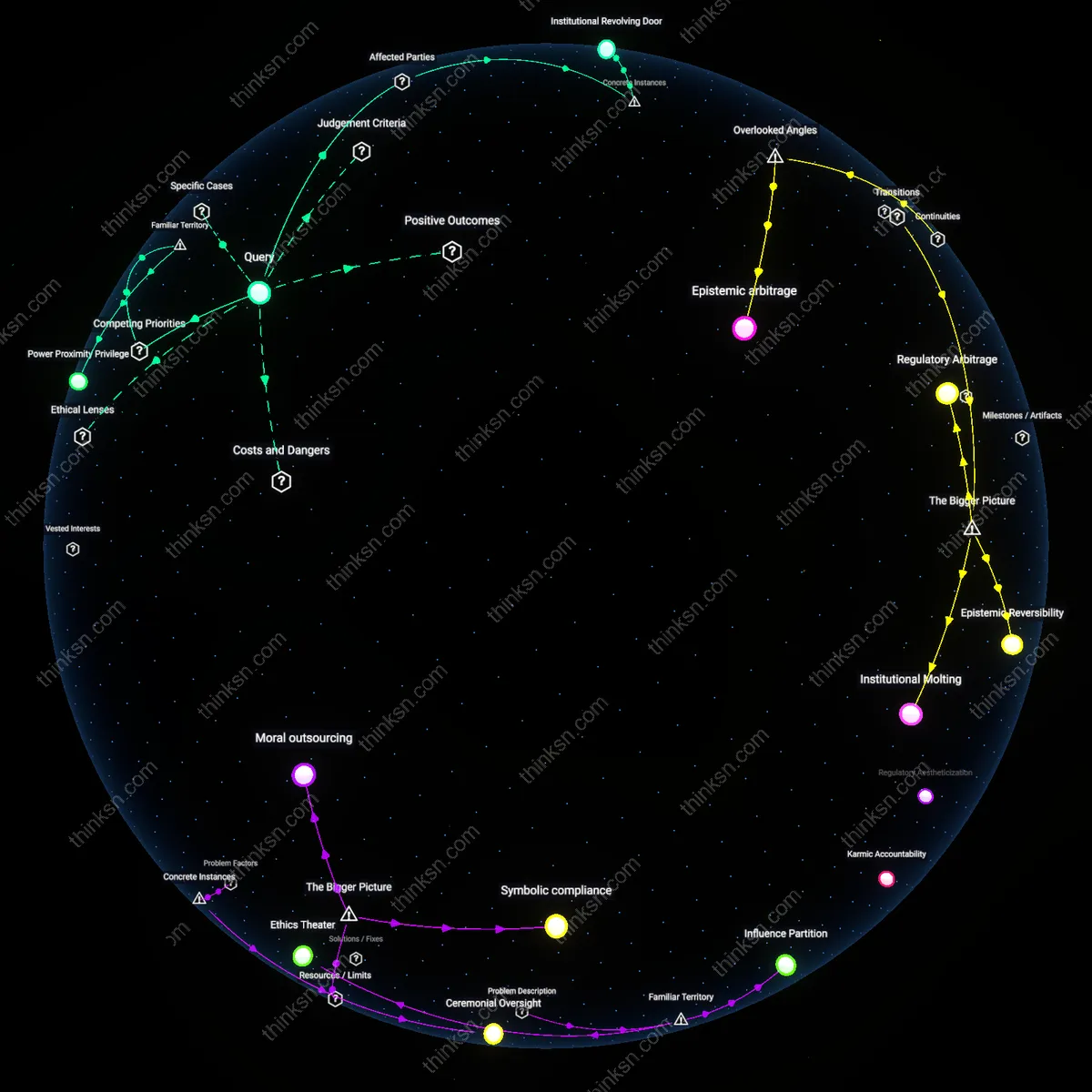
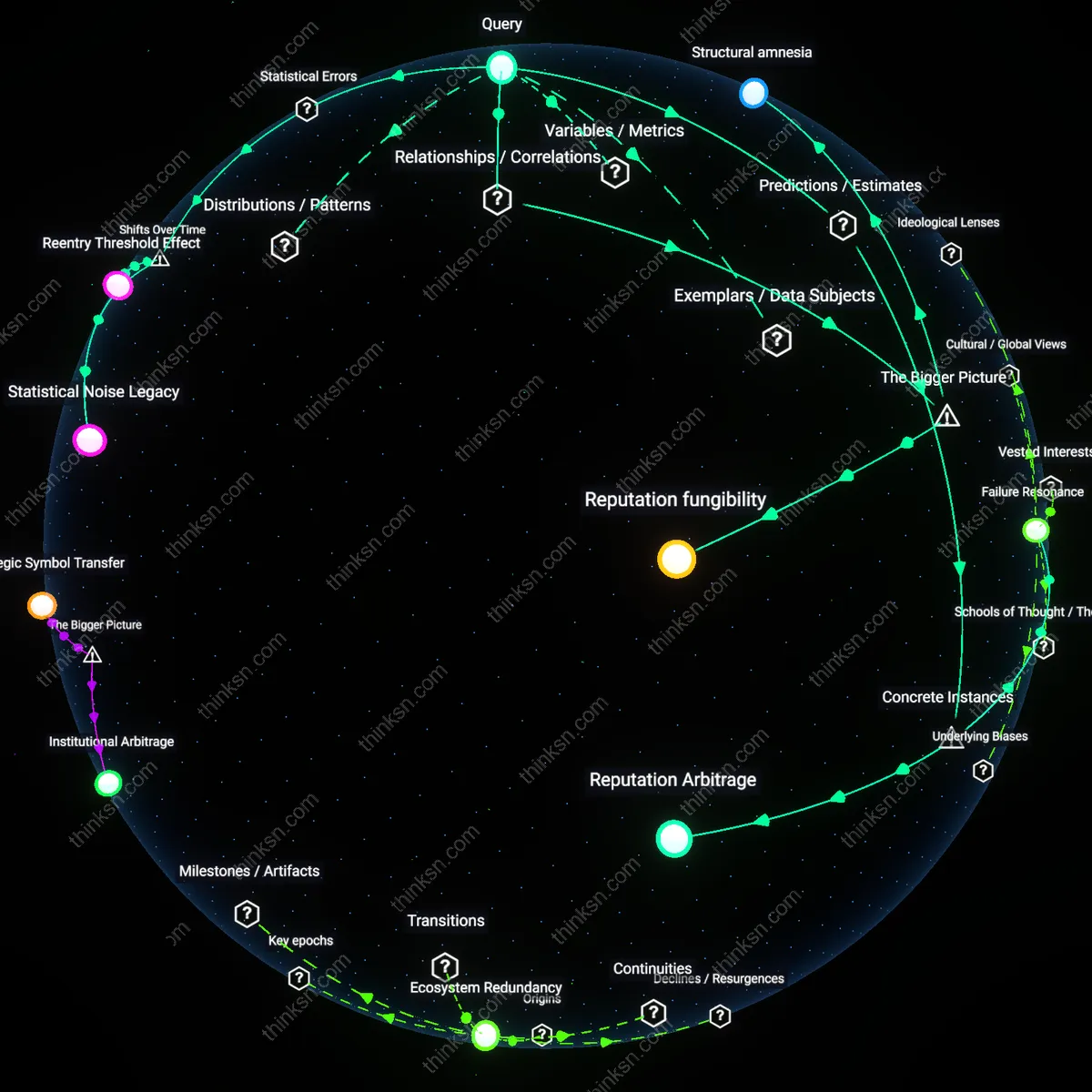
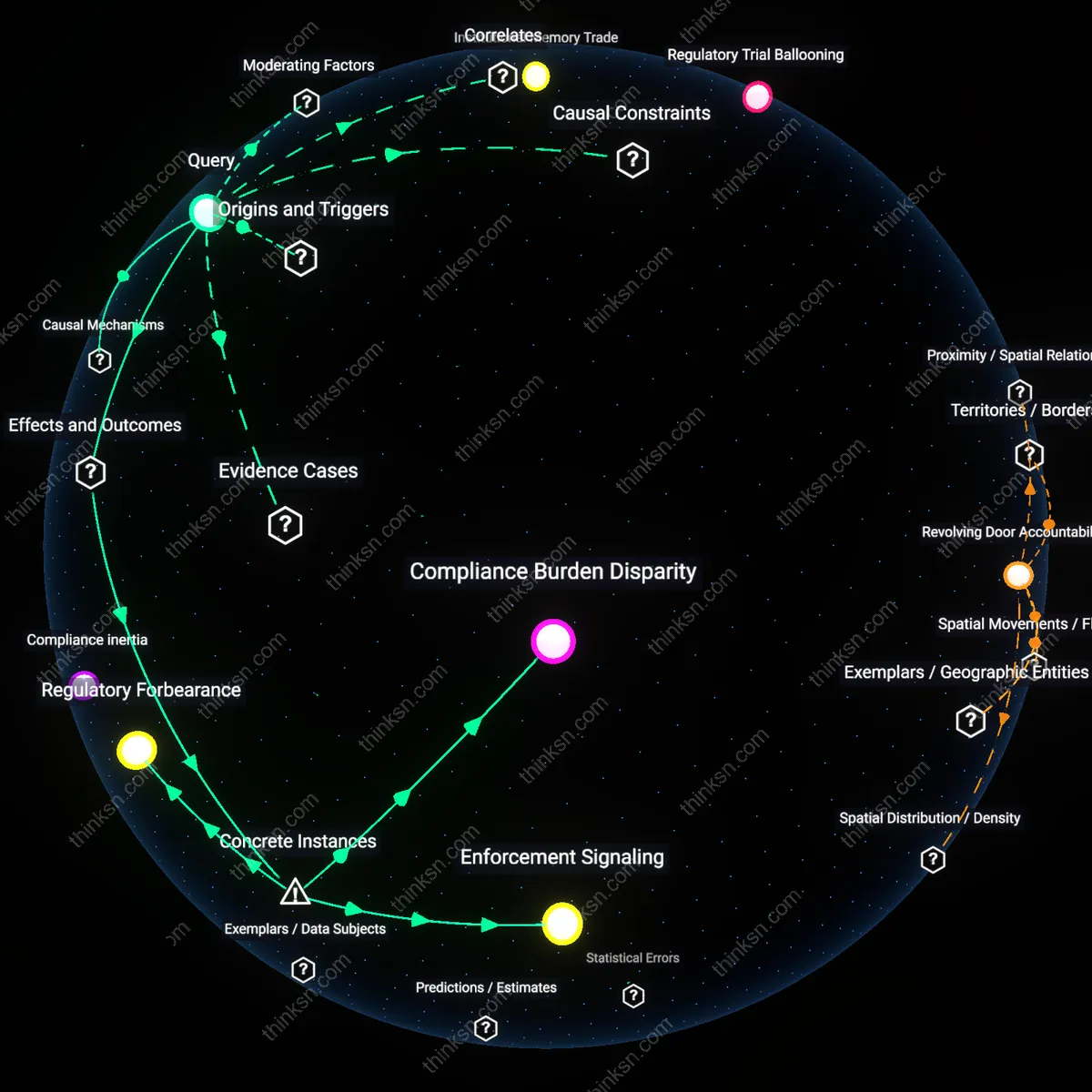
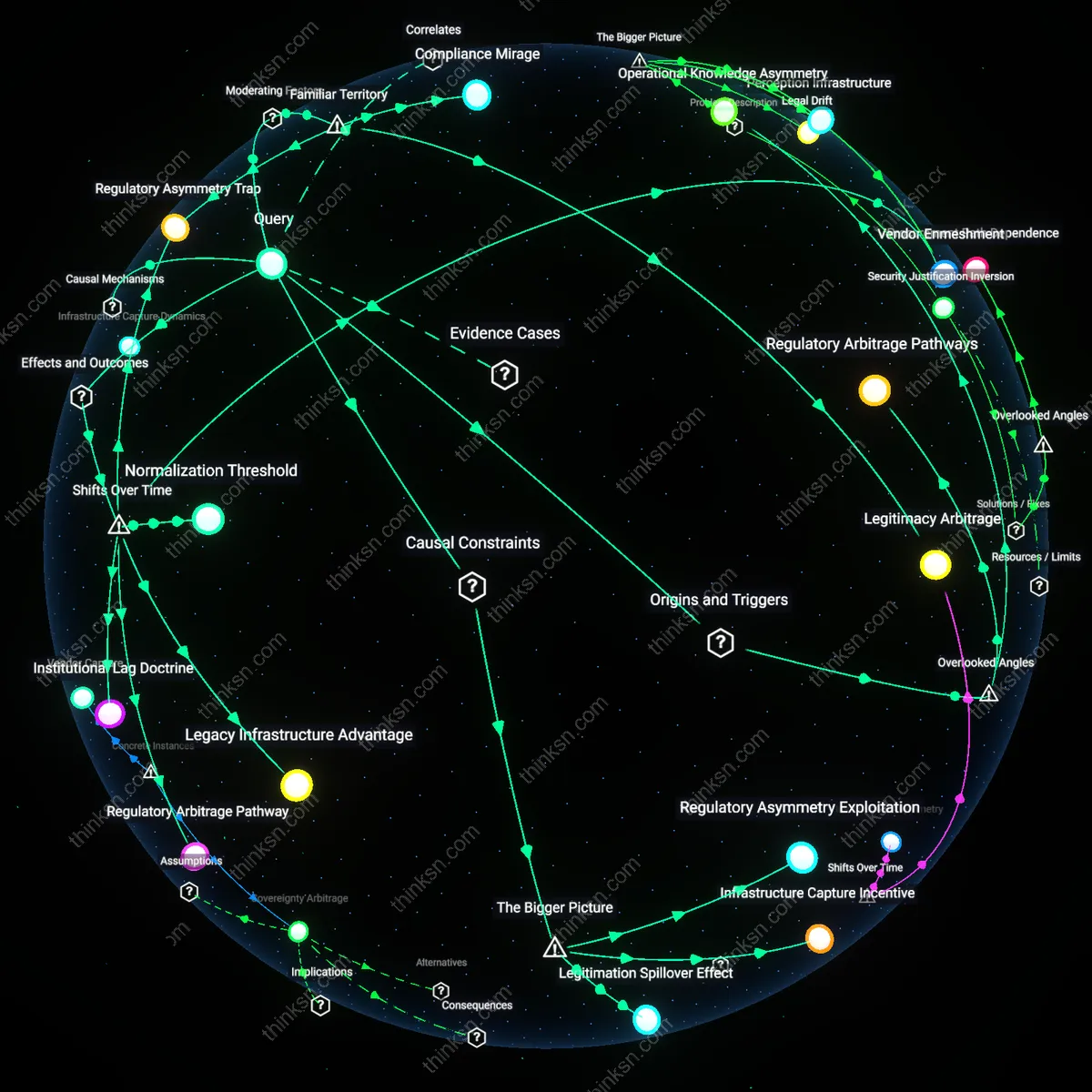
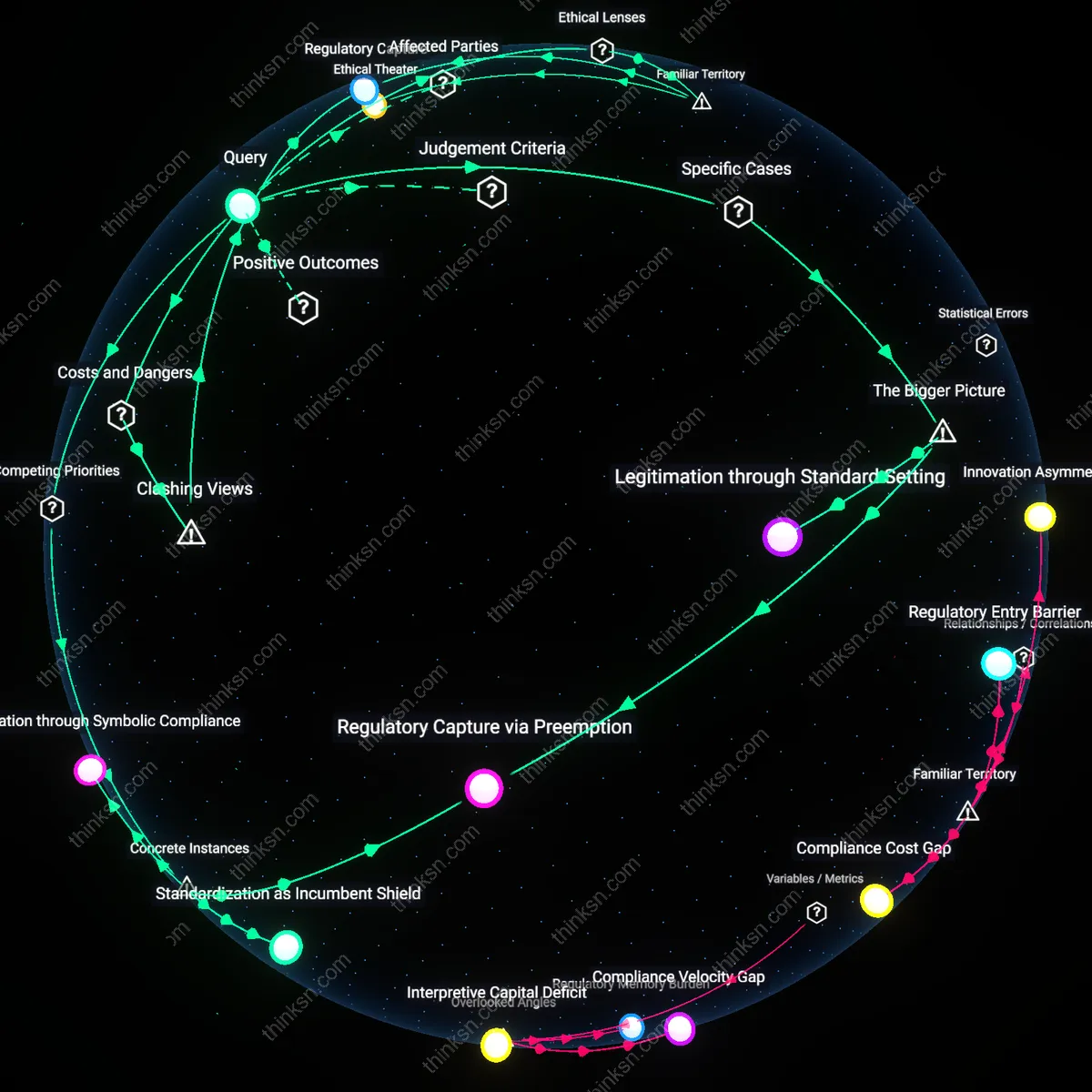
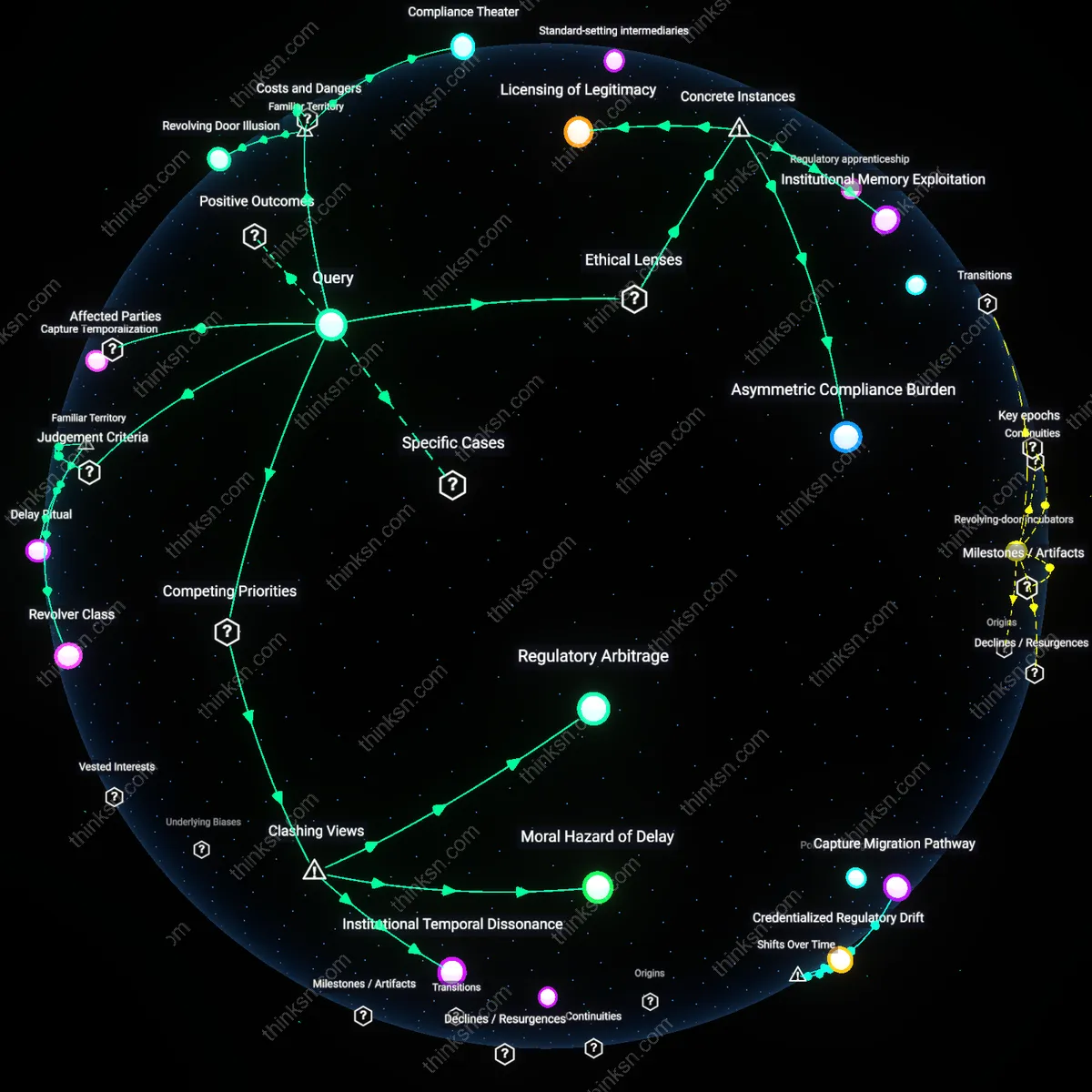
Analysis reveals 14 key thematic connections.
Key Findings
Regulatory Revolving Door
A cooling-off period fails to prevent regulatory capture because former agency officials reintegrate into the industries they once oversaw, leveraging relationships built during service. The mechanism is not evasion of formal rules but the continuity of informal networks that persist across public and private sectors, particularly evident since the deregulatory turn of the 1980s when expertise became fungible between regulators and regulated. The shift from rule-based compliance to relationship-based influence reveals that cooling-off periods only codify a delay, not a barrier, in a system where career trajectories normalize movement between oversight and industry roles.
Institutionalized Influence Lag
Cooling-off periods inadvertently institutionalize a predictable delay in influence, allowing corporations to plan recruitment and lobbying strategies around the expiration of waiting periods, particularly since the expansion of financial regulation post-2008. Firms now time executive hires and policy initiatives to coincide with the end of cooling-off windows, transforming what was meant to be a firewall into a scheduled gateway. This normalization of delayed access, especially visible in U.S. Securities and Exchange Commission alumni placement, reveals how procedural safeguards can calcify into predictable transitions rather than prevent undue influence.
Capture Temporalization
Regulatory timelines have been reshaped by cooling-off periods to convert immediate post-employment influence into a deferred but guaranteed return on regulatory experience, a transformation solidified during the 1990s WTO-aligned regulatory harmonization when mobility across jurisdictions increased. Rather than prevent capture, the period marks a socially accepted incubation of influence, where the wait becomes a silent acknowledgment of future access rights. This temporalization of access turns ethical safeguards into countdowns, revealing that the measure did not interrupt capture but instead scheduled it.
Revolver Class
A cooling-off period fails to prevent regulatory capture because it targets individual behavior rather than structural incentives, leaving intact the career-cycle alignment between regulators and the industries they oversee. Senior officials in agencies like the SEC or FDA routinely transition into high-paying roles in the sectors they once regulated, a pattern sustained by shared epistemic communities and institutional familiarity. The cooling-off ban merely postpones these moves, preserving the underlying dynamic where regulatory expertise is functionally conscripted into future private-sector advantage. What's underappreciated is that the delay reinforces the legitimacy of the revolving door rather than challenging its moral hazard, treating timing as a proxy for integrity.
Delay Ritual
Cooling-off periods act as performative delays that satisfy procedural accountability without altering power flows, functioning as a ceremonial barrier rather than a structural one. Entities like national financial regulators or EU commissioners observe mandatory one- to two-year waiting periods before engaging in lobbying, a rule widely publicized to signal ethical rigor. Yet these intervals coincide with the declassification of strategic insights and the maturation of informal networks, allowing influence to resume under acceptable cover. The non-obvious insight is that the ritual duration itself becomes a measure of compliance, substituting time served for actual disentanglement.
Influence Arbitrage
Cooling-off periods enable influence arbitrage by creating a predictable gap during which former regulators monetize tacit knowledge before formal reentry, turning the delay into a strategic window. For instance, ex-Fed officials often join think tanks or advisory boards where they shape policy narratives without violating employment bans, thus maintaining access and relevance. This mechanism operates through the asymmetry between codified employment rules and the fluidity of expert influence in media, consultancy, and closed-door forums. What’s overlooked is that the constraint doesn’t reduce leverage—it simply shifts its expression into less transparent, interim channels.
Revolving Door Illusion
A cooling-off period fails to prevent regulatory capture because it merely postpones employment ties between regulators and regulated firms, allowing influence to shift into covert channels during the wait. Regulators at agencies like the SEC or FDA still anticipate future private-sector jobs, so they cultivate relationships, tailor rulings, and signal goodwill in ways that bypass formal restrictions—actions that are hard to monitor and politically deniable. The public assumes time-limited bans create integrity, but this familiar faith in 'waiting periods' masks the continuity of personal and professional networks, making the system appear ethical while preserving access. What’s underappreciated is how the ritual of the cooling-off period satisfies oversight optics without disrupting the underlying economy of influence.
Compliance Theater
Cooling-off periods generate a false sense of accountability by mimicking regulation without altering power asymmetries, thereby increasing the cost of scrutiny while protecting entrenched interests. Firms in sectors like pharmaceuticals or investment banking continue to recruit former regulators after the mandated interval, treating the delay as a line-item expense rather than a deterrent—evidence indicates this pattern persists across EU and U.S. frameworks. The public conflates rule-following with ethical governance, but the performance of compliance distracts from deeper reforms, such as pay parity or public service tenure incentives. The danger lies in mistaking the appearance of reform for systemic change, reinforcing trust in a mechanism that mainly sanitizes reputation.
Regulatory Arbitrage
A cooling-off period does not prevent regulatory capture but redistributes influence to intermediaries who exploit timing asymmetries in regulatory transitions. Lobbyists and corporate strategists, anticipating personnel shifts at agencies like the SEC or FDA, redirect former regulators into consulting firms or trade associations where they orchestrate policy alignment without formal conflict-of-interest violations, operating through shadow networks that bypass cooling-off enforcement. This mechanism is significant because it reveals how compliance with procedural ethics can obscure substantive capture, demonstrating that temporal restrictions merely displace influence to less scrutinized actors. The non-obvious insight is that the rule strengthens decentralized coordination among elites rather than curbing their collective sway.
Moral Hazard of Delay
Cooling-off periods foster a culture of calculated recidivism by signaling that influence-peddling is a sanctioned career trajectory, provided it is deferred. Officials at agencies such as the FCC or Treasury internalize the delay as a transaction cost rather than an ethical boundary, structuring decisions during tenure to build goodwill with future employers under the assumption that timing, not behavior, is what must be managed. This dynamic is analytically significant because it transforms ethics rules into career planning tools, normalizing post-service leverage rather than deterring it. The clashing view shows that the cooling-off period doesn't restrain ambition—it professionalizes it.
Institutional Temporal Dissonance
Cooling-off periods fail to align with the operational tempo of modern regulatory challenges, rendering them irrelevant in fast-moving domains like cryptocurrency or AI oversight, where a two-year ban means irrelevance. Former regulators at bodies like the CFTC or NIST re-enter the private sector not through formal lobbying but by designing compliance architectures that retroactively validate prior regulatory leniency, exploiting the lag between policy decay and market innovation. This misalignment is critical because it reveals that delay functions as obsolescence, allowing influence to return not at the same point of entry but at a new systemic hinge. The underappreciated truth is that temporal rules cannot contain influence when time itself is weaponized as a strategic variable.
Institutional Memory Exploitation
A cooling-off period failed to prevent regulatory capture in the U.S. Securities and Exchange Commission’s oversight of credit rating agencies before the 2008 financial crisis because former SEC officials leveraged their deep familiarity with examination protocols to help firms like Moody’s and Standard & Poor’s structure products that technically complied with rules while subverting their intent. The mechanism was not revolving-door employment per se, but the strategic deployment of insider knowledge about regulatory blind spots—knowledge preserved across the cooling-off interval and monetized upon re-entry into the private sector. This reveals that cooling-off periods do not neutralize influence when the value lies in cognitive infrastructure rather than formal position, exposing a gap in deontological ethics, which assumes that separating role from actor severs corrupting obligations.
Asymmetric Compliance Burden
In the European Union’s implementation of cooling-off periods for pharmaceutical regulators, evidence indicates that large firms like Novartis and Roche adapted by pre-positioning former regulators in advisory roles just beyond the prohibited timeframe, while smaller competitors lacked the resources to monitor or replicate such long-term influence strategies. The cooling-off rule, intended to create ethical parity, instead entrenched advantage by allowing dominant actors to convert temporal delays into orchestrated influence cycles, reinforcing a neorealist view of power in regulatory systems where formal rules are absorbed and exploited by those with strategic capacity. The non-obvious outcome is that time-bound restrictions can function as exclusionary barriers, not equalizers, in contexts of uneven institutional resilience.
Licensing of Legitimacy
Japan’s Ministry of Economy, Trade and Industry (METI) exemplifies how cooling-off periods can ritualize rather than restrict influence, as retired bureaucrats take prestigious positions in affiliated industry associations like Keidanren immediately after the prescribed waiting period, carrying perceived authority that shapes policy through informal consensus, not direct decision-making. The cooling-off interval becomes a socially sanctioned transition phase that preserves hierarchical deference, aligning with Confucian-derived political ethics where relational continuity trumps procedural separation. This demonstrates that in systems prioritizing social harmony over adversarial accountability, cooling-off periods do not delay undue influence—they codify and legitimize its temporal pacing.