Trusting Health Experts Amid Sponsor Bias?
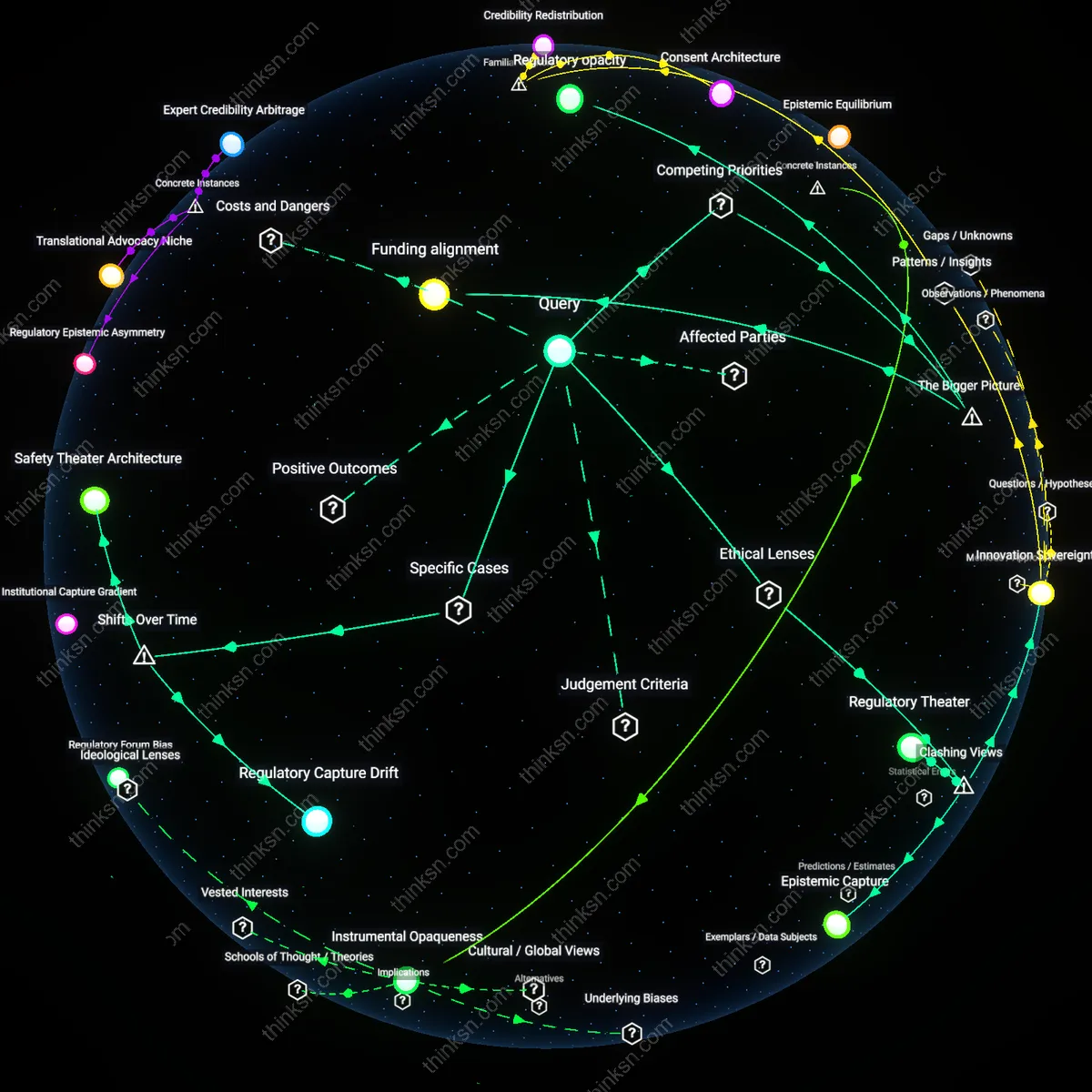
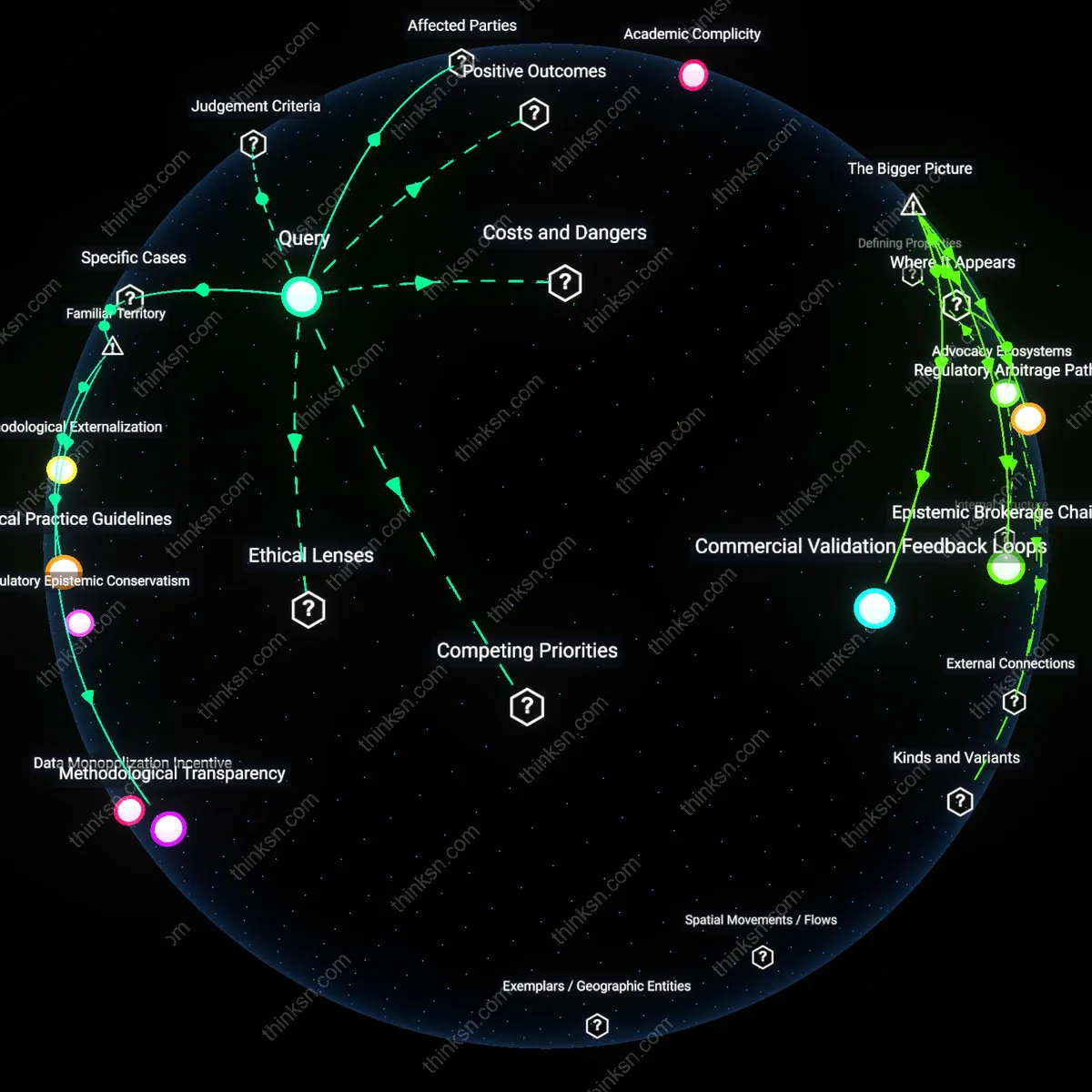
Analysis reveals 11 key thematic connections.
Key Findings
Institutional Firewall
One can balance trust in a health expert by requiring structural separation between expert advisory roles and sponsorship funding streams, as demonstrated by the World Health Organization’s (WHO) Expert Advisory Panel on Nutrition, which in 2014 implemented a policy barring members from receiving industry grants tied to food or beverage companies; this institutional firewall operates through formal conflict-of-interest declarations and funding segregation, making expert recommendations on sugar intake more credibly independent of Coca-Cola’s sponsorship of broader WHO nutrition initiatives; the non-obvious insight is that trust is preserved not through individual virtue but institutional design that insulates deliberative spaces from commercial influence.
Transparency Paradox
Disclosing commercial sponsorships alongside health recommendations can actually reinforce undue influence even as it appears to promote accountability, as seen in the 2016 U.S. Dietary Guidelines Advisory Committee’s report, where expert panels listed ties to food industry groups while still advancing recommendations favorable to processed food sectors; the mechanism is discursive legitimation—public acknowledgment of sponsorship becomes a procedural substitute for critical scrutiny, allowing commercial alignment to persist under the guise of transparency; the underappreciated dynamic is that full disclosure may function less as a check on bias and more as a ritual that neutralizes skepticism.
Epistemic Arbitrage
Health experts maintain credibility in the public sphere by selectively deploying neutral scientific language while privately aligning with commercial goals, exemplified by Dr. Robert Lustig’s public anti-sugar advocacy funded in part by beverage companies’ competitors, such as dairy industry groups promoting milk over soda; this operates through epistemic arbitrage, where scientific authority is leveraged across competing commercial ecosystems, allowing the expert to appear independent while advancing market-driven narratives; the key insight is that critical awareness must attend not just to direct sponsorship but to which knowledge regimes are amplified or suppressed within broader economic rivalries.
Institutional Vetting
One should rely on peer-reviewed medical journals and academic medical centers to filter expert advice because these institutions have built-in mechanisms—such as editorial boards, conflict-of-interest disclosures, and methodological scrutiny—that systematically reduce the influence of commercial sponsorship. These bodies operate as gatekeepers within mainstream biomedical science, where credibility depends on adherence to standardized research norms rather than public persuasion or funding sources. The underappreciated element, despite widespread trust in institutions like the NIH or NEJM, is that their authority rests not on ideological neutrality but on procedural consistency—making institutional affiliation, not individual charisma, the stabilizing factor in public health discourse.
Sponsorship Transparency
People should assess expert credibility by demanding full disclosure of financial ties to pharmaceutical companies, medical device manufacturers, or health supplement markets because visibility into funding relationships enables the public to interpret advice with contextual skepticism. This mechanism functions through regulatory mandates like the Open Payments database in the U.S., where transfers from firms to physicians are logged and publicly accessible, turning opaque influence into auditable data. What’s rarely acknowledged in everyday debate is that transparency alone doesn’t correct bias—it only shifts the burden of interpretation onto an already overwhelmed public, transforming trust into a do-it-yourself project.
Epistemic Shielding
Individuals protect their trust in health experts by mentally segregating scientific consensus from market-driven messaging, treating bodies like the CDC or WHO as insulated from commercial interests regardless of documented industry liaisons. This cognitive buffer operates through familiar distinctions—like credentialed doctor versus TV personality or peer-reviewed study versus sponsored podcast—allowing people to preserve belief in objectivity even amid systemic entanglements. The overlooked reality is that this shielding persists not because boundaries are firm, but because collapsing them would undermine the social function of expertise itself, making epistemic stability dependent on strategic ignorance.
Epistemic Sovereignty
One must prioritize local healing ontologies over global biomedical authority to resist the colonial framing of sponsored expertise as universally valid, as seen in Māori communities in Aotearoa who recenter rongoā Māori not as alternative medicine but as sovereign knowledge systems that structurally reject commodified health paradigms; this mechanism operates through tribal custodianship of knowledge, where trust is reserved for experts embedded in ancestral reciprocity rather than institutional credentials, undermining the Western assumption that scientific legitimacy is epistemologically neutral and highlighting how commercial influence is not merely corruptive but constitutive of a foreign epistemic order.
Commercial Iconoclasm
In Iran, state-endorsed health authorities integrate Islamic bioethics with suspicion of pharmaceutical multinationalism, positioning religious vetting of clinical guidelines as a check on sponsorship bias, where clerically supervised medical councils publicly disavow drug trials funded by Western firms not because of data integrity alone but because financial entanglement with non-Muslim corporations is interpreted as a spiritual compromise; this reveals that trust is regionally calibrated not through methodological rigor but through doctrinal alignment, challenging the secular global health premise that transparency and peer review suffice to neutralize commercial influence.
Sponsorship Relationality
Yoruba traditional healers in Nigeria maintain trust precisely by making sponsorship visible and reciprocal—when a healer receives support from a pharmaceutical distributor, they publicly name the sponsor during consultation and offset influence by redistributing medicine to kinship networks, transforming sponsorship from a hidden bias into a socially managed obligation governed by àṣẹ (spiritual efficacy) and communal accountability; this inverts the Western ethic of disclosure-as-detachment, exposing that neutrality is not the only path to integrity and that some non-Western systems treat embeddedness as more reliable than disinterestedness.
Sponsorship Concealment Incentive
One must analyze the timing and format of sponsorship disclosures in clinical guidelines, because expert panels often delay or minimize declarations until appendices or post-meeting publications, effectively segregating financial ties from the authoritative text where trust is formed. This mechanism—where disclosure is real but sequestered—allows institutions like the American Diabetes Association to maintain credibility while preserving industry influence on recommendation language, making the separation of content and sponsorship a designed feature rather than a safeguard. What is overlooked is that temporal and spatial dispersal of disclosures reduces their cognitive salience without violating transparency norms, shifting attention from conflict mitigation to conflict management.
Epistemic Legitimacy Drain
Trust should be calibrated by assessing how often non-sponsored experts are excluded from guideline committees not due to lack of expertise but because their research frameworks challenge scalable medical models favored by funders, as seen in NIH consensus panels on long-term opioid use. Here, commercial influence operates less through direct content edits than through pre-emptive gatekeeping of who qualifies as a legitimate voice, privileging epidemiologists with industry-aligned data infrastructures over ethnographers or pain specialists emphasizing qualitative risk. This institutional filtering sustains a narrow epistemology that treats market-compatible conclusions as scientifically default, masking how sponsorship shapes not just what is said, but who gets to define what counts as knowledge.