Do Drug Sponsorships Skew Perceptions of Medication Value and Price?
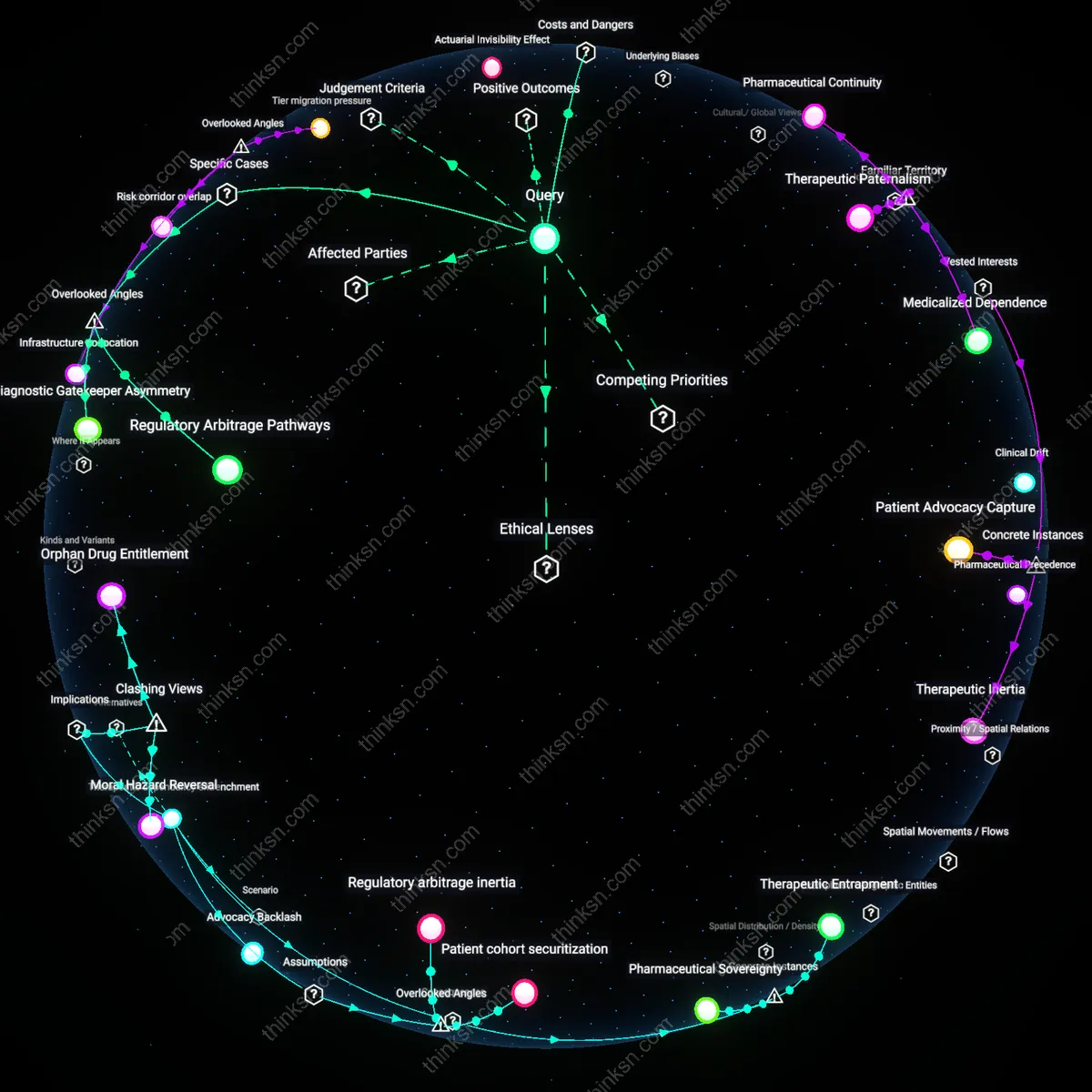
Analysis reveals 6 key thematic connections.
Key Findings
Epistemic capture
Pharmaceutical sponsorship systematically reshapes public understanding of medical necessity by embedding corporate narratives within patient advocacy groups, making market-driven drug pricing appear medically justified. Industry funding allows pharmaceutical companies to co-author educational materials, train patient group leaders in messaging, and position high-cost therapies as 'essential' through testimonial campaigns that foreground individual survival stories over systemic cost analysis. This mechanism operates through the erosion of epistemic independence in patient organizations, where the source of information is no longer perceived as separate from the product being promoted, thereby transforming price objections into moral failures to support patient survival. The non-obvious consequence is that resistance to drug costs becomes framed not as economic critique but as betrayal of sick communities, masking the role of capital in shaping medical epistemology.
Moralized consumerism
Right-leaning patient advocacy groups, when sponsored by drug manufacturers, reframe medication unaffordability as a failure of individual access rather than systemic profiteering, thus shifting public debate from price regulation to personalized charity models. By aligning high drug prices with narratives of innovation and personal responsibility—where patients must 'fight' for access through co-pay assistance programs—these groups depoliticize pricing and cast pharmaceutical firms as benevolent partners rather than rent-seeking entities. This dynamic operates through a conservative logic that privileges private solutions over public regulation, where the sponsored group's legitimacy stems from its alignment with free-market ideals and suspicion of state intervention. The counterintuitive result is that patients internalize market rationales, defending high prices as necessary for continued innovation, thereby neutralizing broader collective demands for price transparency or public production.
Affective commodification
Marxist analysis reveals that pharmaceutical sponsorship converts patient suffering into a form of emotional capital that legitimizes price inflation by tethering drug value to performative expressions of desperation and hope. Patient advocacy groups, funded by drug makers, produce affect-laden testimonies and lobbying campaigns that transform clinical need into public spectacles of vulnerability, which in turn justify premium pricing as a 'response' to urgent human demands. This process functions through the commodification of care, where expressions of love, fear, and longing for survival are repurposed to support capital accumulation under biocapitalism. What is obscured is that these emotional appeals are not spontaneous but institutionally produced—rendering the patient voice a surplus product of corporate funding, not an authentic demand signal from civil society.
Commercialized Trust
Pharmaceutical sponsorship of patient advocacy groups directly equates corporate funding with legitimacy in public perception, particularly in Western societies where market-driven health systems dominate. In the U.S. and parts of Western Europe, where patient groups like the National MS Society or JDRF receive substantial industry funding, the public interprets their endorsement as independent validation, even though their operational budgets rely on drug company grants. This conflation operates through the institutional visibility of well-funded campaigns, where disease awareness months or treatment access initiatives become indistinguishable from brand promotion—rendering the necessity of high-cost drugs appear self-evident. What’s underappreciated is how this dynamic leverages the cultural expectation that advocacy must be loud and visible to be credible, thereby privileging corporate-backed groups over grassroots alternatives that may question pricing.
Moral Sourcing
In many non-Western or collectivist societies—such as those in sub-Saharan Africa or South Asia—public judgment of a medication’s necessity is filtered through communal and religious norms that prioritize equitable access over individual patient empowerment. When global pharmaceutical firms sponsor local advocacy groups, as seen with GSK’s partnerships with TB coalitions in India or Nigeria, the public often interprets the gesture as charitable intervention rather than advocacy, framing high prices as justified only if they align with broader moral duties to heal. This operates through culturally embedded expectations that health is a shared responsibility, making corporate funding acceptable only when it visibly translates into subsidized distribution or public clinics. The underappreciated insight is that sponsorship in these contexts doesn’t enhance perceived necessity through patient voice but through the optics of paternalistic benevolence.
Diagnostic Consensus
In countries with state-controlled or consensus-based medical systems, like Japan or Germany, pharmaceutical sponsorship of patient groups subtly reinforces the legitimacy of certain diagnoses, thereby expanding the perceived necessity of treatments. For instance, when Eisai funded menopause awareness campaigns in Japan through affiliated patient networks, it contributed to the medical normalization of perimenopause as a condition requiring pharmacological management—aligning public expectations with pharmaceutical solutions. This functions through the mutual reinforcement of clinical guidelines, patient self-identification, and sponsored education, where the price of medication becomes secondary to the cultural acceptance of the diagnosis itself. The overlooked mechanism is that sponsorship doesn’t directly justify cost, but first constructs the population that needs the drug.