Is Biotech Funding Biasing Gene Editing Oversight?
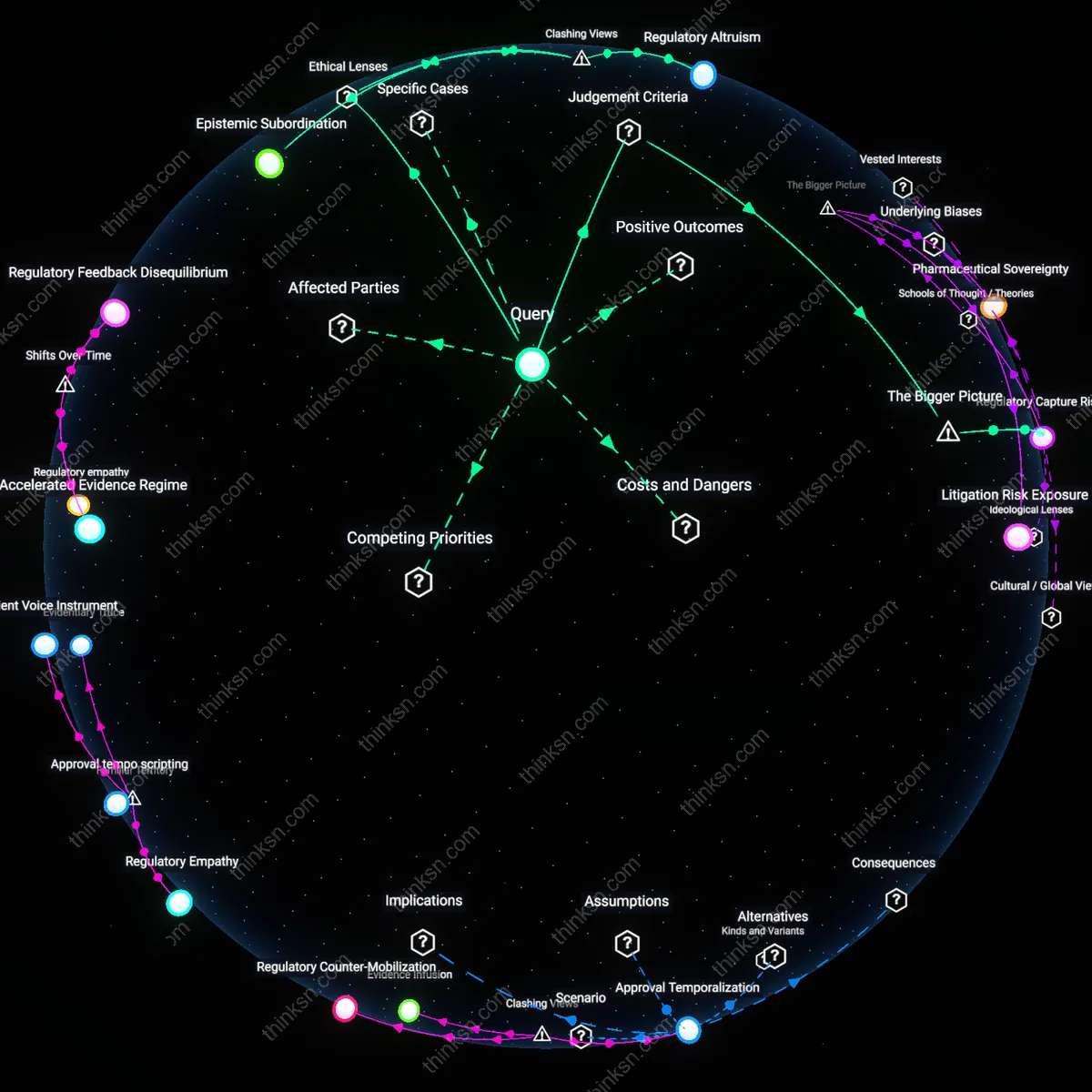
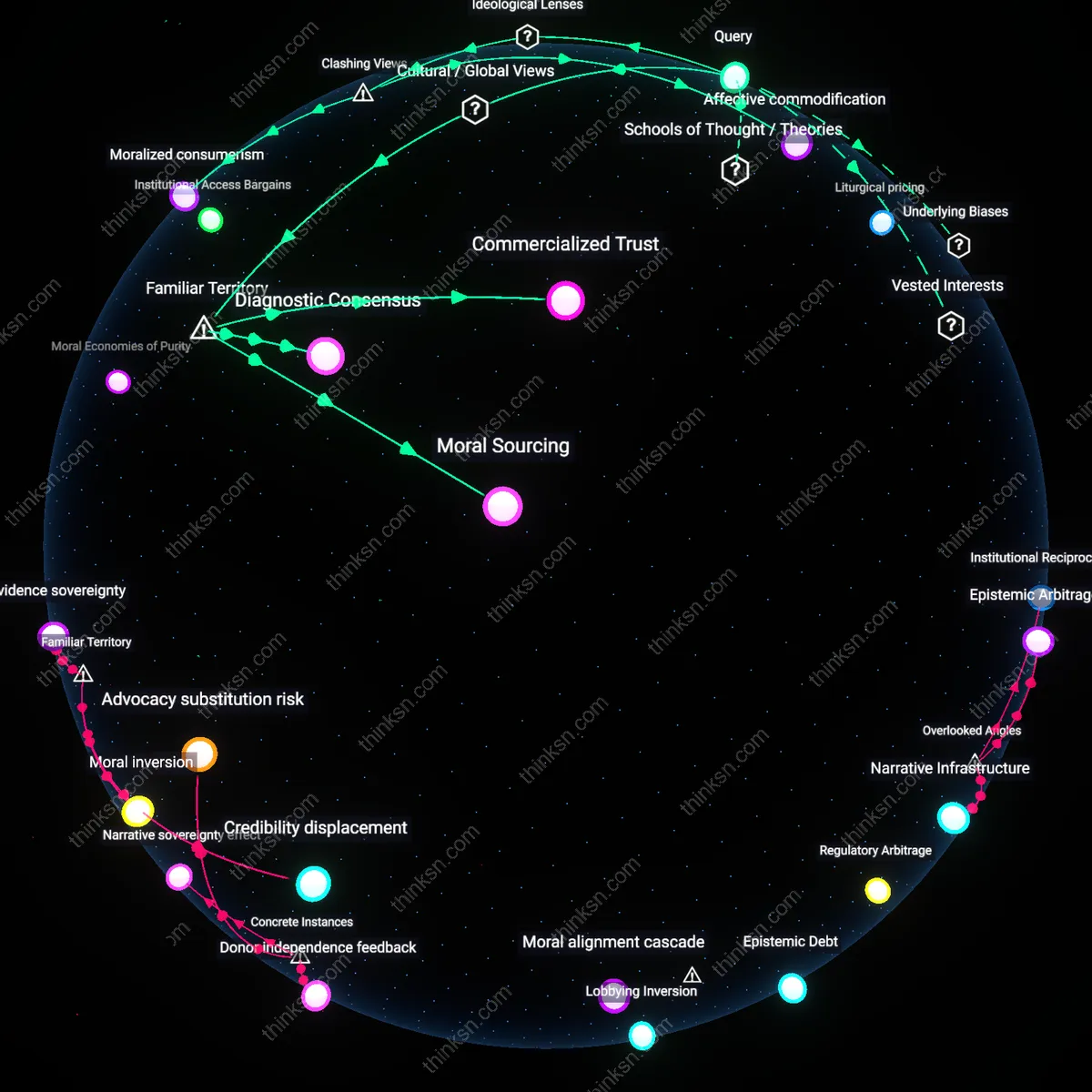
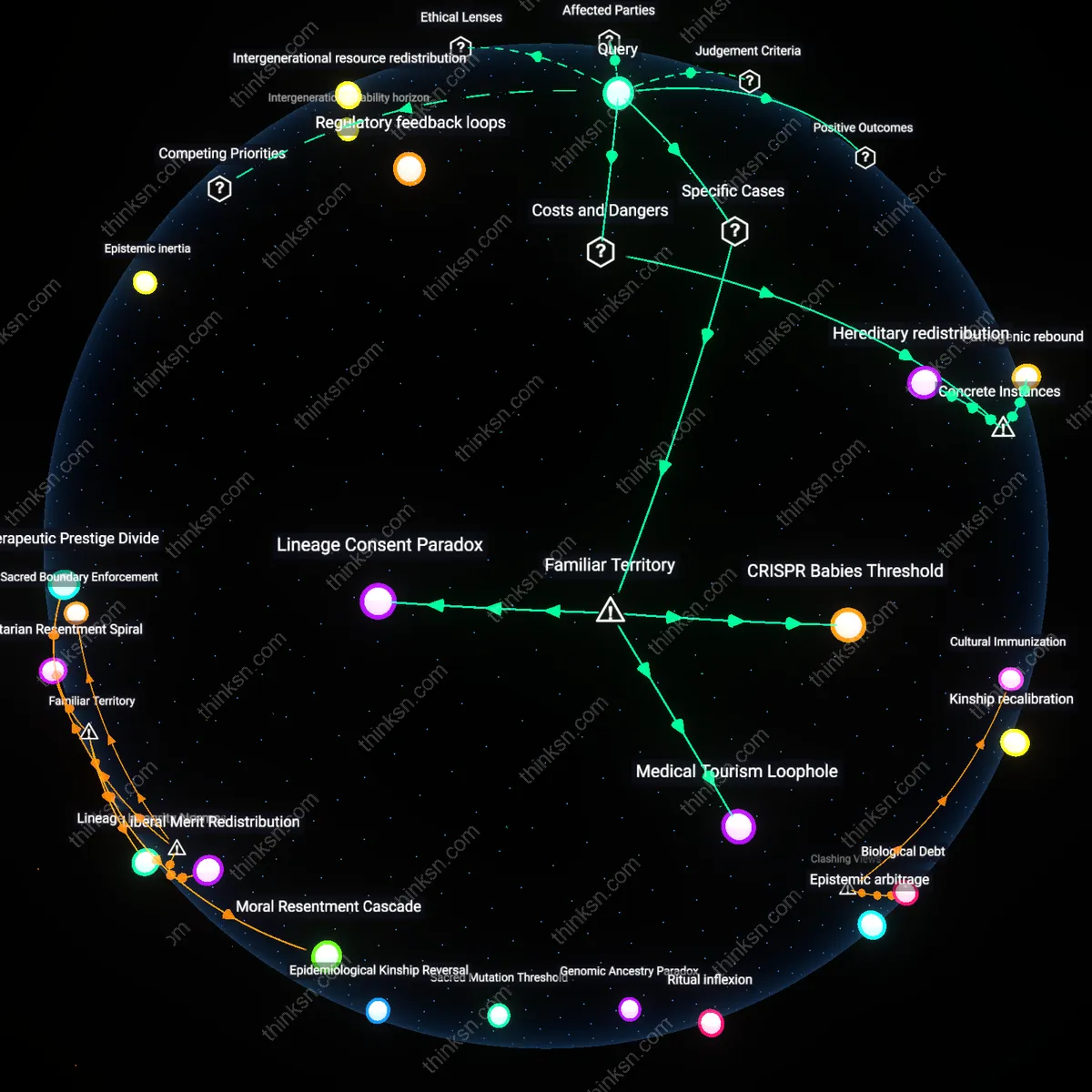
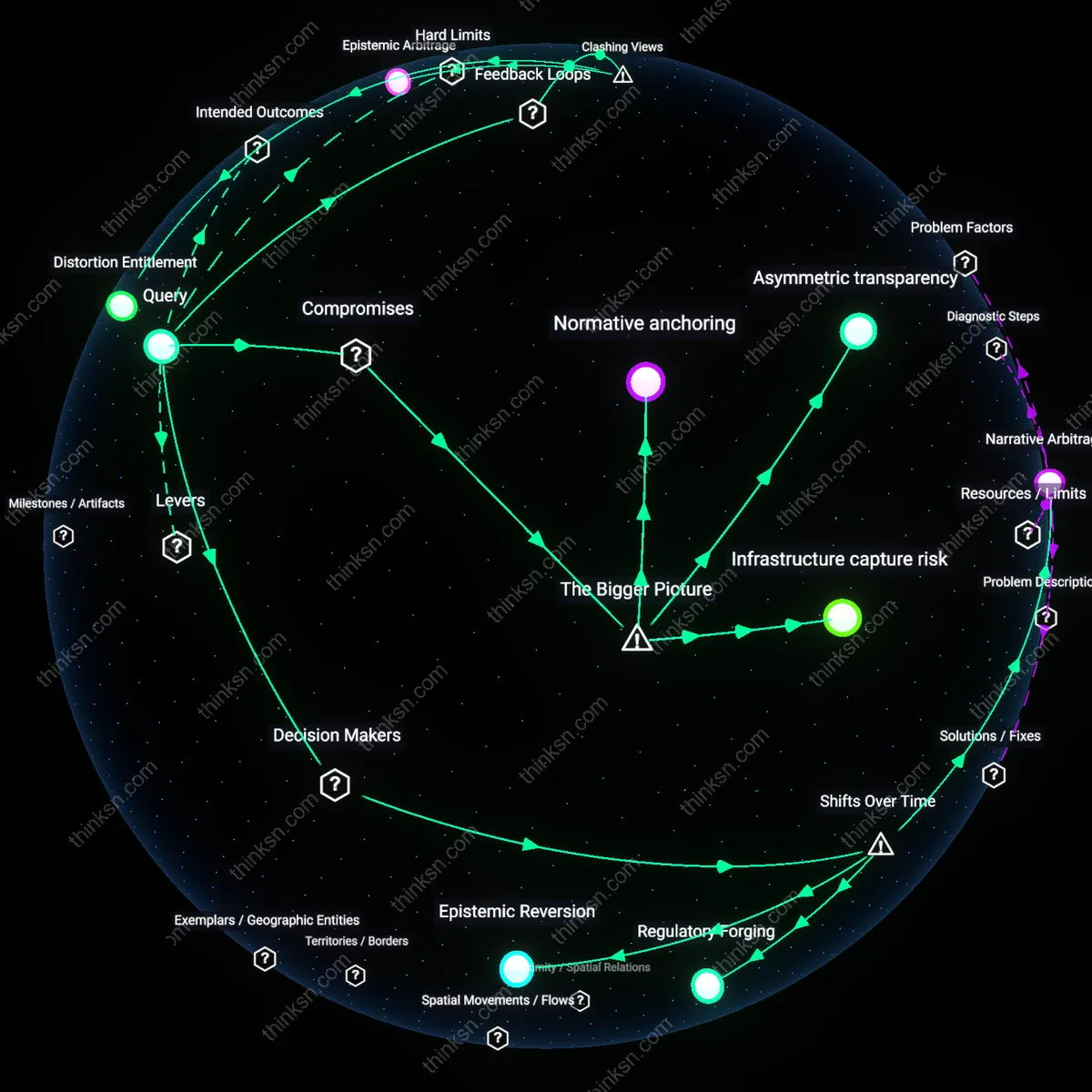
Analysis reveals 8 key thematic connections.
Key Findings
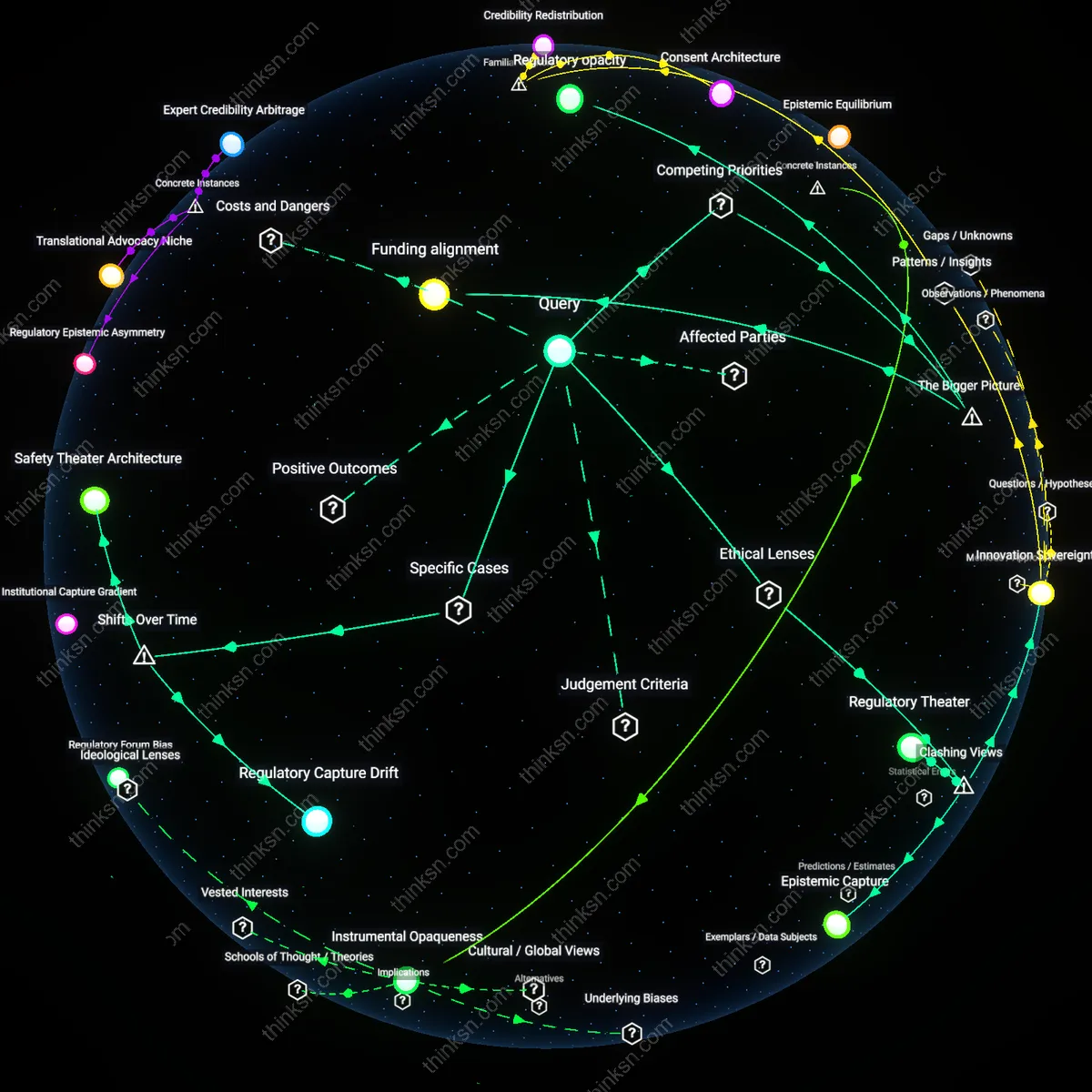
Funding alignment
Testimony at a gene-editing oversight hearing funded by a biotech company prioritizes patent protection over public safety when financial dependencies shape evidentiary standards. The company’s sponsorship of the hearing creates a structural incentive for regulators to accept data formats and risk thresholds that favor proprietary innovation timelines over independent safety verification, embedding commercial proof structures into public review. This misalignment is systemically enabled by the concentration of technical expertise within patent-holding firms, which limits regulatory access to non-proprietary safety models. The non-obvious implication is that public safety protocols become selectively responsive not to worst-case scenarios but to those already insurable within the firm’s existing intellectual property framework.
Regulatory opacity
Public safety is compromised when oversight hearings adopt the biotech company’s confidential data practices, effectively converting safety evaluation into a derivative of patent defense strategy. Because the hearing operates under the sponsor’s control of data release timing and scope, genuine safety concerns requiring open scientific scrutiny are deferred or recategorized as 'premature disclosure' risks. This dynamic is amplified by the revolving door between regulatory agencies and the biotech sector, where career trajectories incentivize regulators to treat corporate information barriers as legitimate. The underappreciated outcome is that the protection of the public is functionally subordinated to the need to secure future licensing revenue streams under international IP agreements.
Asymmetric burden
The burden of proof in the hearing shifts from the sponsor to the public when safety critiques are dismissed as lacking 'reproducible evidence'—a standard the company controls through exclusive access to gene-editing vectors and datasets. This asymmetry arises because patent law grants exclusive experimental use rights, preventing independent labs from generating counterevidence without legal exposure. Within the oversight system, this licenses a feedback loop where only patent-aligned research is deemed 'credible,' marginalizing precautionary claims from non-corporate scientists. The overlooked mechanism is that public safety becomes hostage to the pace and direction of proprietary R&D, not independent risk assessment.
Regulatory Theater
Testimony at a gene-editing oversight hearing funded by a biotech company serves public safety interests only when regulatory agencies demonstrably reject industry-preferred outcomes, because the funding structure inherently aligns procedural legitimacy with corporate strategy rather than independent risk assessment. The U.S. FDA’s reliance on industry-funded advisory panels, for example, creates a ritual of scrutiny that mimics democratic accountability while insulating patent-protected platforms from substantive challenge, revealing that safety judgments are often post hoc validations of commercial pipelines. This undermines bioethics frameworks like principlism, which assume neutral oversight, and exposes the non-obvious reality that transparent process can function as obfuscation when funding dictates participation.
Epistemic Capture
We determine that the testimony primarily advances patent protection by analyzing how the framing of 'safety' is narrowed to technical feasibility—such as off-target editing rates—while excluding socio-ethical risks like germline inheritance or global equity, because corporate-funded hearings systematically privilege quantifiable, isolated variables amenable to proprietary control. This reflects a Popperian falsification bias in regulatory science, where only narrow, testable claims are admitted, effectively excluding Rawlsian considerations of justice or precautionary principles common in European biotech policy. The non-obvious consequence is that knowledge itself becomes a contested terrain, where what counts as 'evidence' is shaped less by scientific consensus than by intellectual property strategy.
Innovation Sovereignty
The testimony serves public safety only when civil society actors—such as patient advocacy groups or independent bioethicists—possess legally mandated speaking time and evidentiary standing equal to corporate representatives, because without symmetric procedural rights, neoliberal innovation ideology positions market-driven development as synonymous with public good. In the 2018 NASEM summit on heritable genome editing, where 70% of panelists had declared biotech affiliations, the absence of enforceable participation quotas allowed corporate narratives of 'responsible innovation' to displace deliberative democracy, challenging liberal pluralism’s assumption that plural voices naturally balance power. This reveals that inclusion without institutionalized parity reproduces hegemony under the guise of openness.
Regulatory Capture Drift
Testimony at gene-editing oversight hearings increasingly reflects patent protection interests when industry-funded experts dominate panels, as seen in the 2017–2023 USDA advisory meetings on CRISPR crops where biotech-affiliated scientists outnumbered independent ecologists. This shift from public health representation to proprietary science began after the 2016 National Academies report framed gene editing as a regulatory continuity with existing crop laws, enabling a quiet procedural redefinition of risk assessment that embeds intellectual property logics into safety review structures. The non-obvious consequence is not corruption but the temporal alignment of oversight timelines with patent expiration cycles, making safety evaluation responsive to market exclusivity schedules rather than ecological uncertainty.
Safety Theater Architecture
Public safety justification in gene-editing hearings became a performative requirement after the 2015 International Summit on Human Gene Editing, where industry-funded testimonies successfully reframed off-target effects as 'manageable error rates' rather than systemic risks, shifting the burden of proof onto critics. This transition—from precautionary scrutiny to procedural confidence-building—allowed companies like Editas Medicine to position patent disclosures as compliance gestures, leveraging the form of transparency to pre-empt stricter regulation. The overlooked dynamic is how post-2018 FDA hearings adopted scripted 'risk dialogues' modeled on biologics licensing, where the performance of cautious deliberation substitutes for independent validation, turning safety protocols into IP-sanitizing rituals.