Are Industry Meta-Analyses Trustworthy for Drug Efficacy?
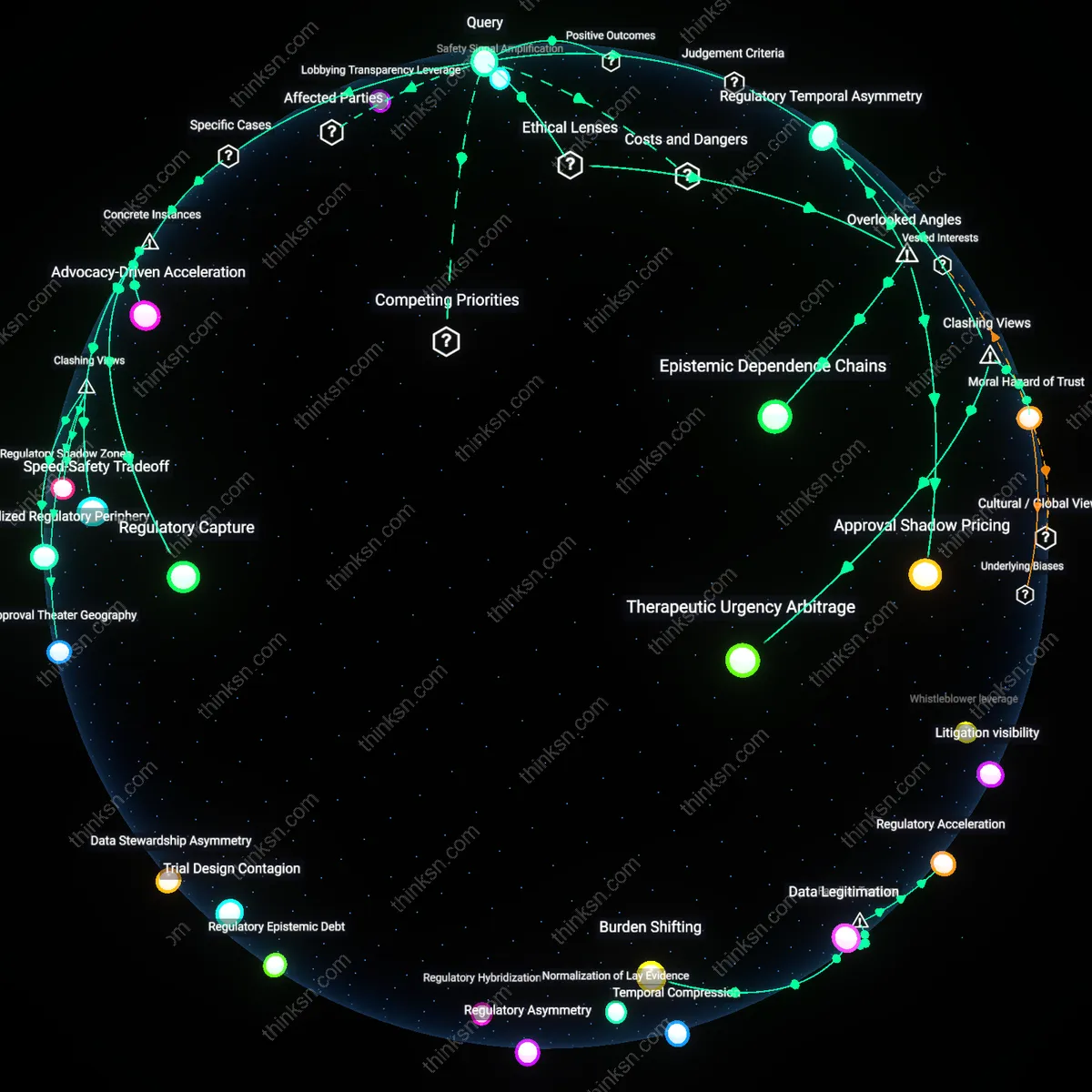
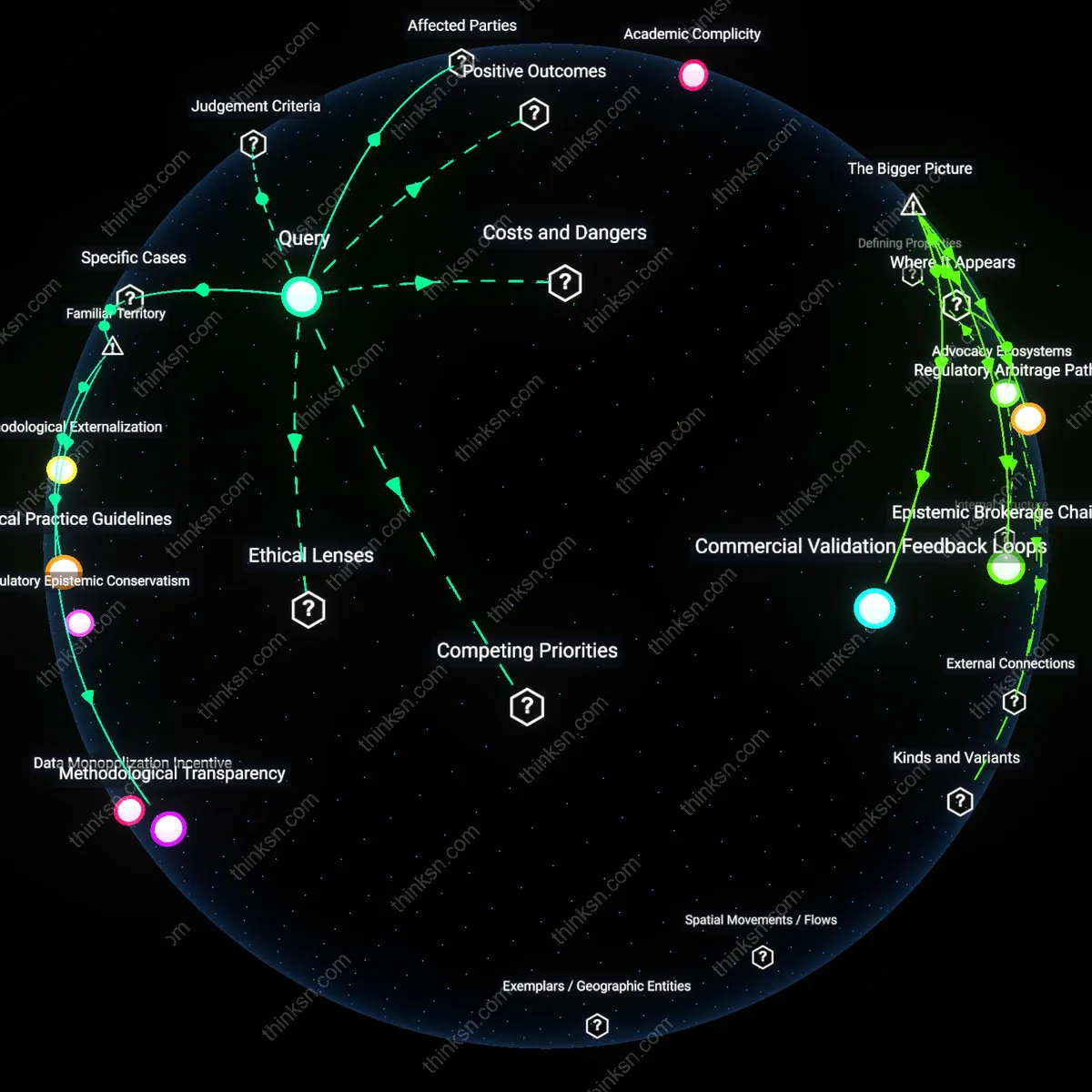
Analysis reveals 6 key thematic connections.
Key Findings
Regulatory Asymmetry
Patients can assess industry-funded meta-analyses by recognizing that post-2000s drug approval pathways increasingly shifted evidentiary responsibility from regulators to post-market observation, transferring risk to end users. This transition, cemented by FDA’s accelerated approval expansions and weak conflict-of-interest mandates, created a regime where manufacturers conduct and publish pivotal meta-analyses without mandatory independent replication, leaving patients to navigate evidentiary gaps that formal oversight no longer fills. The non-obvious consequence is that reliability now depends less on methodological rigor than on the invisible architecture of regulatory deferral—the withdrawal of state capacity to preemptively validate claims.
Academic Complicity
Patients should scrutinize the affiliations of journal editorial boards and guest authors, as the 1990s commercialization of academic medicine transformed major medical journals into hybrid platforms where industry-funded meta-analyses gain legitimacy through university-affiliated co-authors and editorial leniency. This shift—marked by the rise of ‘ghost-managed’ publications and key opinion leader networks—means that peer review often functions as reputational laundering rather than epistemic gatekeeping. The underappreciated dynamic is that credibility is manufactured through academic proximity, not methodological transparency, making institutional prestige a proxy for trust despite degraded evidentiary standards.
Advocacy Ecosystems
Patients increasingly rely on disease-specific advocacy organizations that emerged in the 1980s–1990s, such as those in HIV/AIDS and rare cancers, to interpret industry-funded meta-analyses—these groups evolved from patient collectives into hybrid knowledge brokers with access to independent biostatisticians and negotiated data access agreements. As these organizations transitioned from protest actors to institutional interlocutors, they developed selective counter-expertise that now functions as a shadow review system outside formal regulatory channels. The unacknowledged shift is that patient trust in evidence now flows through politicized intermediaries who curate scientific meaning based on communal risk tolerance, not neutral appraisal.
Regulatory Scrutiny
Patients should assess whether regulatory agencies like the FDA or EMA have independently reviewed and confirmed the findings of industry-funded meta-analyses. These agencies evaluate the same data used in meta-analyses but operate under public accountability mandates, requiring transparency in trial inclusion and statistical methodology, such as in the review processes following controversies like those around rosiglitazone’s cardiovascular risk. While the public commonly associates drug approval with scientific legitimacy, the non-obvious insight is that regulatory re-evaluation—especially after post-market safety signals—often exposes selective reporting in industry meta-analyses that initial summaries may obscure.
Methodological Transparency
Patients can rely on independent methodologists from institutions like the Nordic Cochrane Collaboration or Cochrane Review teams to re-analyze and audit the statistical integrity of industry-funded meta-analyses. When Cochrane researchers re-evaluated studies behind antidepressant efficacy claims—such as in the case of study 329—they uncovered suppressed negative data and inappropriate pooling methods that skewed results. Although the public frequently trusts published statistical aggregation at face value, the underappreciated reality is that methodological choices like endpoint selection and outlier handling, when left unchecked, can reverse efficacy conclusions even with valid raw data.
Clinical Practice Guidelines
Patients should examine whether major clinical guidelines from bodies like the U.S. Preventive Services Task Force or the American College of Physicians have incorporated the meta-analysis findings into treatment recommendations. For instance, discrepancies emerged when industry-funded meta-analyses claimed strong efficacy for PCSK9 inhibitors, yet the ACC/AHA guidelines showed hesitancy in broad adoption due to cost-benefit concerns validated by independent modeling. Despite widespread belief that guideline inclusion equates to scientific consensus, the nuanced truth is that guideline committees integrate non-industry evidence and real-world effectiveness, filtering out findings that fail replication under diverse clinical conditions.