Procedural Legitimacy vs Partisan Skew in Congressional Hearings?
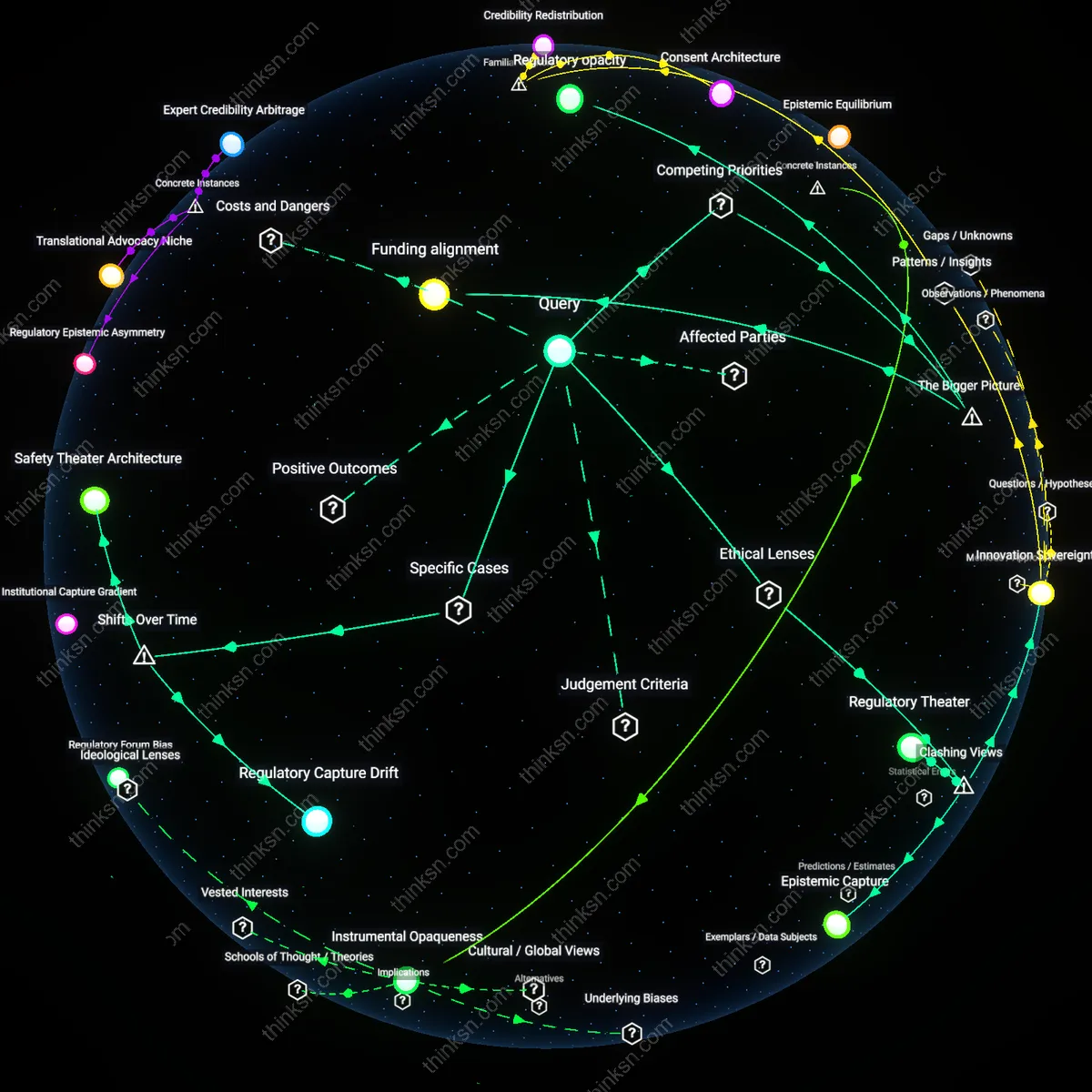
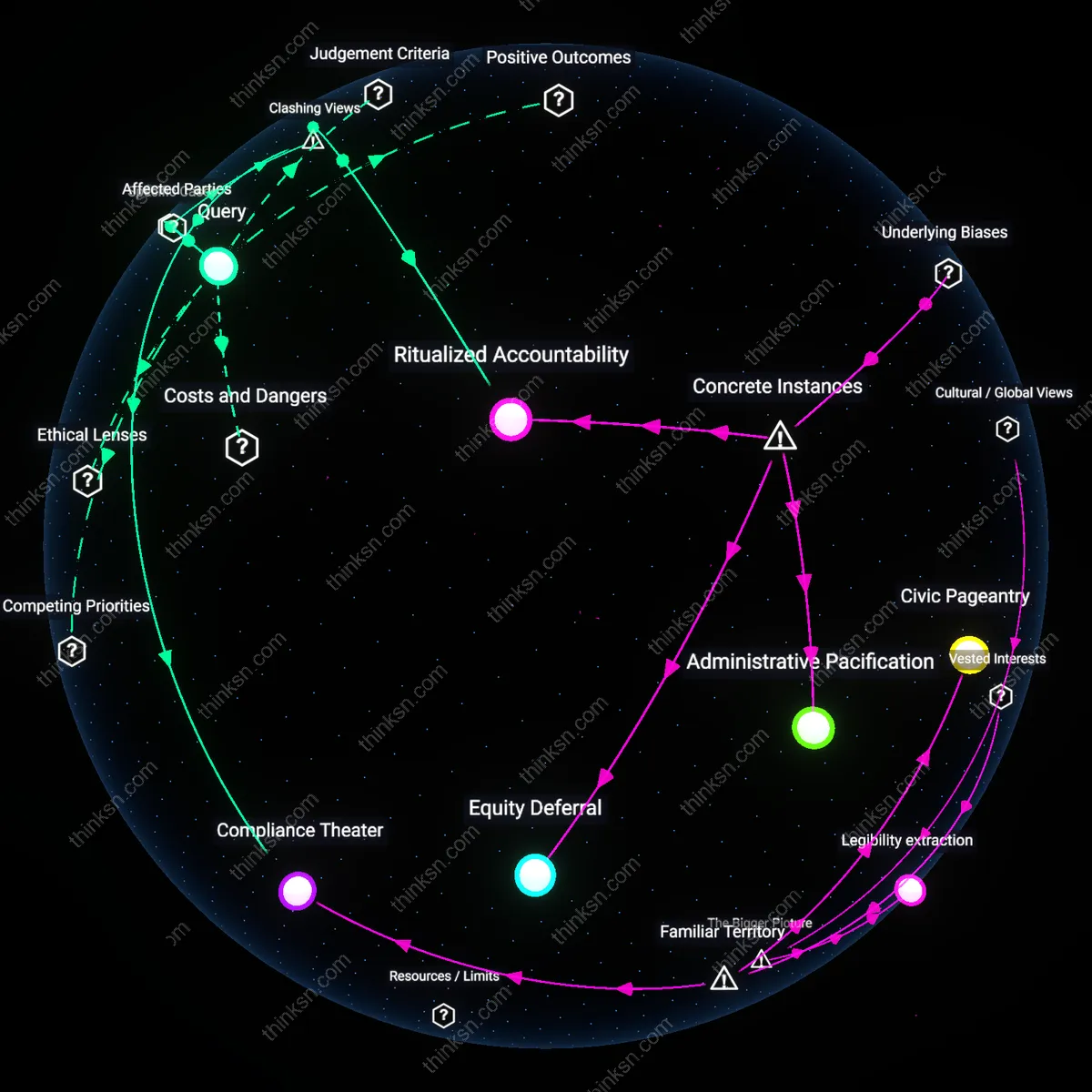
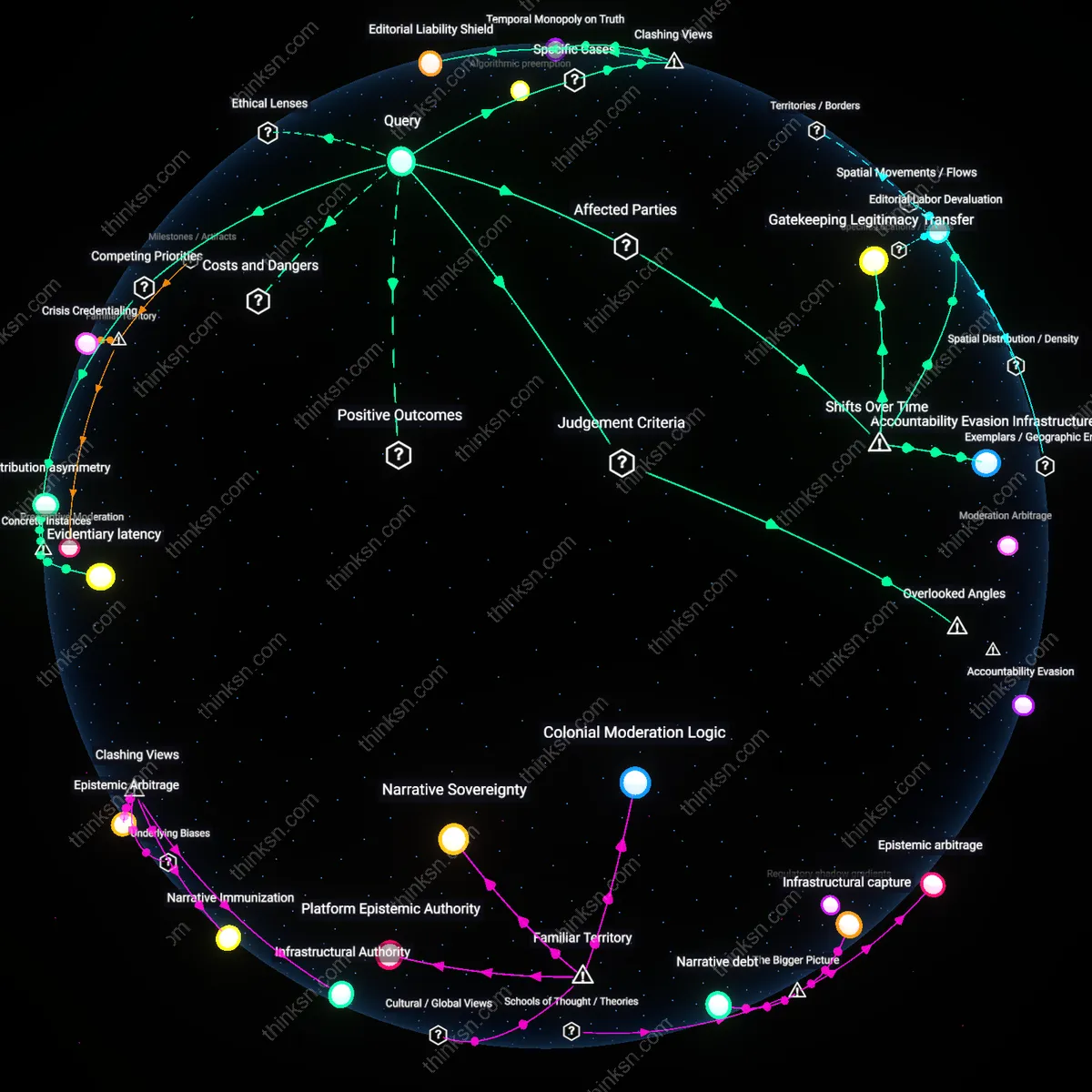
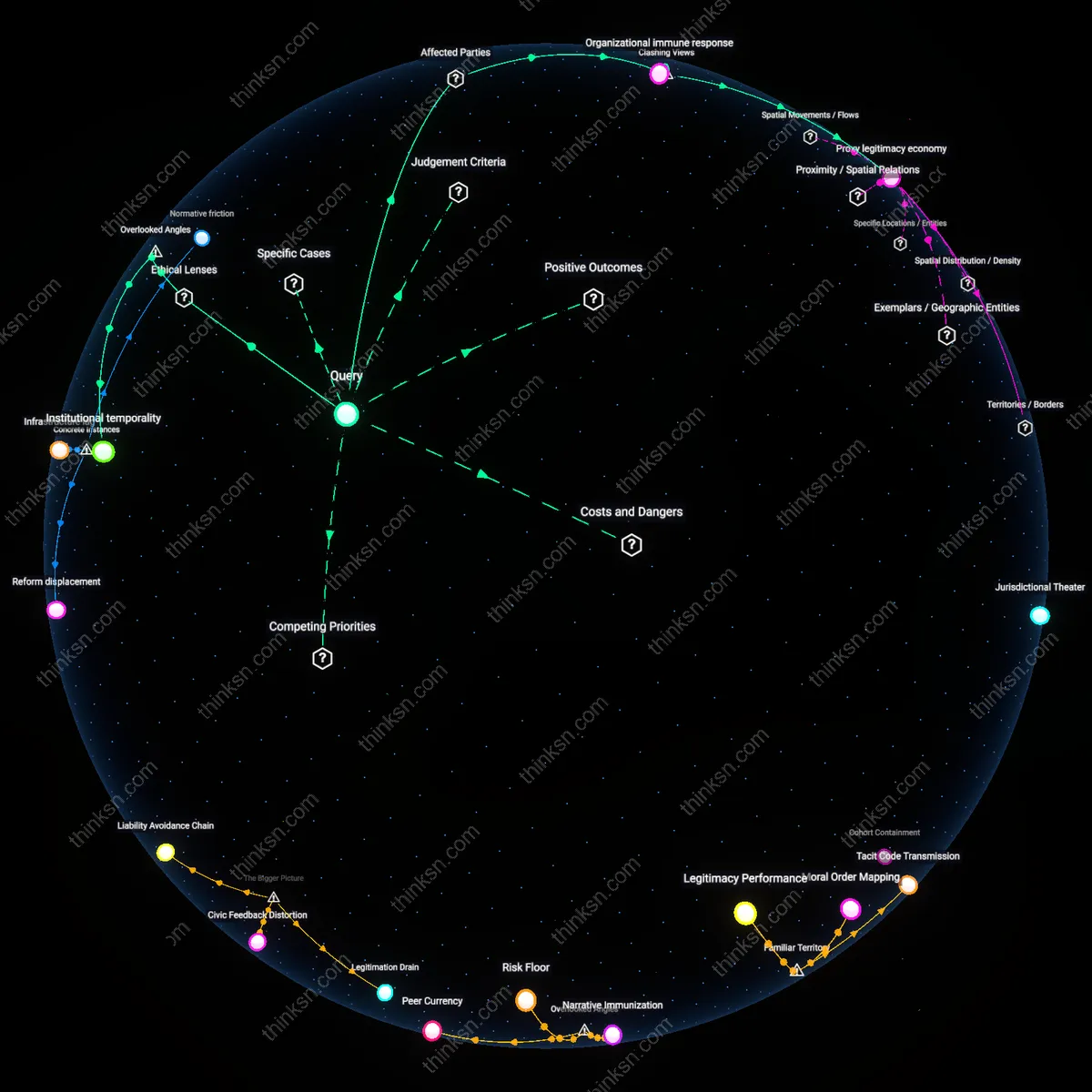
Analysis reveals 12 key thematic connections.
Key Findings
Rule-Enforcement Gatekeepers
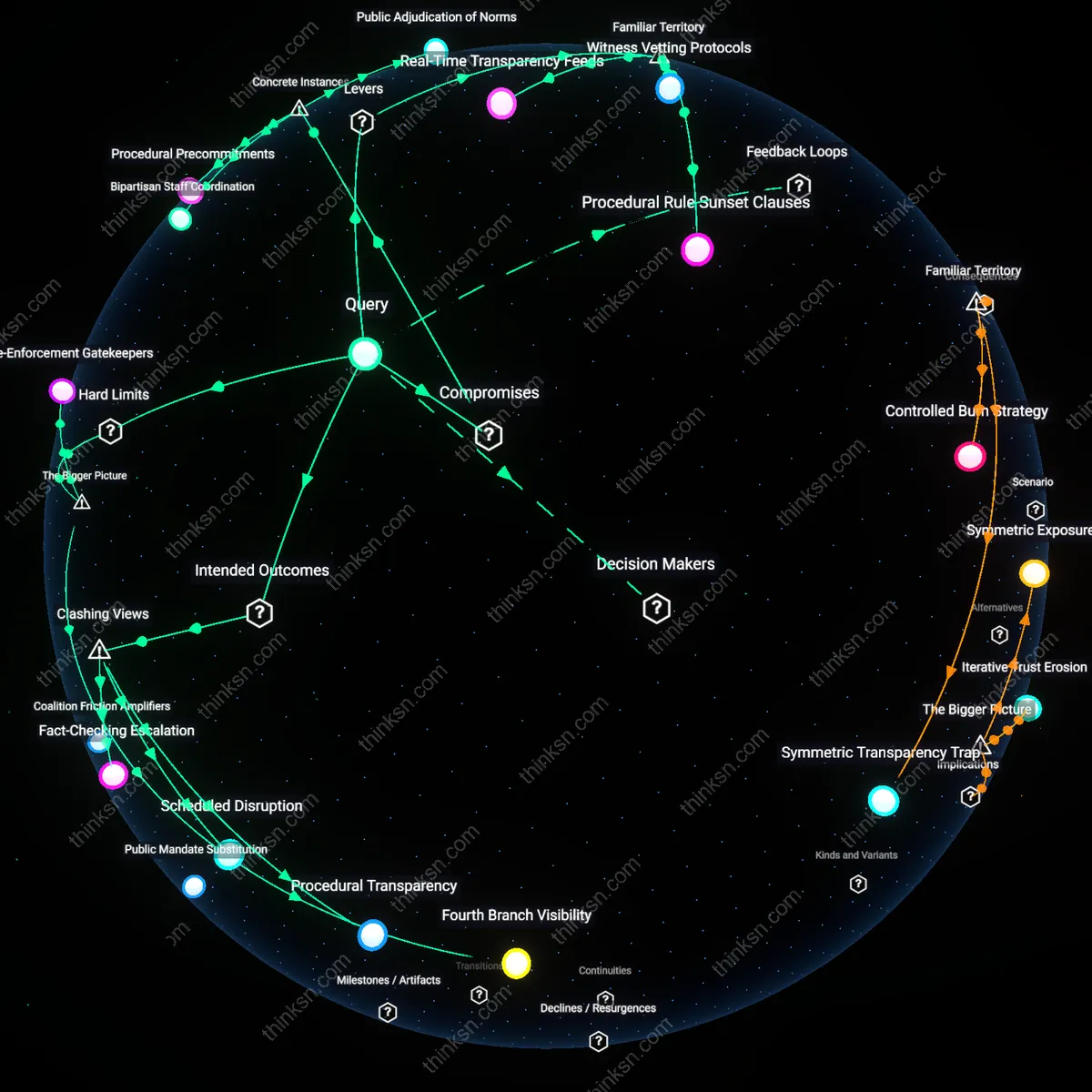
Congressional hearings maintain procedural legitimacy when neutral presiding officers strictly enforce standing rules against partisan breaches, regardless of political cost. These officers—typically senior committee clerks or deputy chairs—routinely override dominant-party members who attempt to manipulate timing, questioning order, or witness access, invoking Rule XI of the House and Title 2 of the U.S. Code to block deviations; their authority is sustained not by mandate but by precedent-dependent deference from both parties when norms are under duress, revealing that legitimacy persists not through moral leadership but through the quiet procedural authority of unelected arbiters who are shielded from electoral pressures. The non-obvious force here is not the partisanship on display, but the submerged dependency of norm survival on institutional roles with no public constituency.
Cross-Partisan Political Pricing
Procedural legitimacy endures in congressional hearings when both major parties tacitly assign a political cost to sabotaging process, such that immediate partisan gains are discounted against long-term institutional damage. This pricing emerges from behind-closed-doors coordination between party leadership staff—especially leadership counsels and whip offices—who anticipate public backlash and judicial scrutiny and thus constrain floor behavior; the mechanism operates through anticipatory discipline, not compliance, meaning legitimacy is not preserved by rules themselves but by the shared forecasting of reputational and legal exposure among elites embedded in overlapping legal and media systems. The overlooked insight is that procedural integrity is a byproduct of strategic loss-aversion, not norm commitment.
Fourth Branch Visibility
Procedural legitimacy in congressional hearings survives partisan agendas only when non-governmental actors—specifically investigative journalists and open-government NGOs—create persistent observational pressure that transforms procedural violations into political liabilities. Entities like ProPublica and the Sunlight Foundation deploy freedom-of-information requests, real-time transcripts, and forensic edit-detection on released documents to create an audit trail visible to oversight bodies and watchdog courts; this forces committees to perform neutrality even when privately aligned, exposing a feedback loop where procedural form is sustained not by internal will but by an external ecosystem of interpretive actors who convert procedure into public narrative. The key dynamic is that legitimacy becomes performative, maintained not for its own sake but as a defense against interpretive capture by autonomous civic agents.
Witness Vetting Protocols
Strengthen neutral criteria for expert testimony inclusion to ensure only non-partisan, credentialed witnesses are called. Committee chairs unilaterally control witness lists, but adopting pre-established, transparent eligibility benchmarks—such as peer-reviewed expertise, prior government service, or non-advocacy institutional affiliation—forces bipartisan deference to shared standards of credibility, inserting friction into partisan witness selection. This lever operates through existing committee rules that govern hearing preparation, making it a low-cost institutional tweak with high signaling value. What’s underappreciated is that audiences—even politically aligned ones—perceive legitimacy more from the appearance of meritocratic inclusion than ideological balance, making neutral vetting a quiet anchor of trust.
Procedural Rule Sunset Clauses
Institute automatic expiration of hearing regulations unless reauthorized every Congress to force regular renegotiation of conduct norms. The standing rules governing questioning time, document disclosure, and member conduct are often exploited through long-standing ambiguities that favor majority party control, but requiring full committee reapproval of these rules biennially compels both parties to renegotiate baseline fairness. This functions through the formal rule-making authority vested in each new Congress under House and Senate standing orders. The counterintuitive insight is that procedural legitimacy thrives not on permanence, but on visible, recurring mutual assent—ritualized recommitment mimics consent, even amid conflict.
Real-Time Transparency Feeds
Broadcast unedited, delay-free hearing footage through official congressional platforms to constrain performative behavior by immediate public scrutiny. Lawmakers often tailor questions and theatrics for edited cable news clips or viral moments, but streaming uncensored audiovisual feeds—timestamped, with full context preserved—raises the cost of overt grandstanding by exposing manipulation to informed audiences and institutional watchdogs. This lever exploits existing public affairs networks and digital infrastructure managed by the House Audio-Visual Department and Senate Recording Studio. The overlooked aspect is that transparency doesn’t just inform—it alters performance, since actors moderate partisan excess when they know their actions are being assessed in full, not framed by media curators.
Bipartisan Staff Coordination
Establishing neutral working groups composed of partisan staff members from both parties on House and Senate committees maintains procedural legitimacy by enabling behind-the-scenes agreement on witness lists, questioning order, and evidence handling, as seen in the 2002 Senate Intelligence Committee hearings on Iraq WMD intelligence, where staff from both Republican and Democratic leadership negotiated transcript transparency and source disclosure protocols despite public party divergence. This mechanism insulated core procedural norms from floor politics by relocating compromise to operational staff levels, revealing that legitimacy often depends not on public consensus but on invisible administrative coordination across ideological lines.
Procedural Precommitments
Setting binding rules for hearing conduct before political pressures peak preserves legitimacy, as demonstrated by the 1973 Senate Watergate Committee’s unanimous adoption of its procedures prior to testimony, including equal time for minority counsel and joint approval of subpoenas, negotiated between Chair Sam Ervin and minority leader Howard Baker. By locking in symmetric procedural rights before partisan incentives intensified, the committee constrained later deviations from fairness, showing that legitimacy can be structurally enforced through timing—preemptive rule-setting neutralizes the ability of partisan agendas to reshape process mid-stream.
Public Adjudication of Norms
When procedural disputes are resolved through on-record, real-time debate visible to the public, legitimacy is sustained despite bias concerns, as occurred during the 2019 House impeachment hearings where Chairman Adam Schiff allowed Republican members to subpoena witnesses and cross-examine them on camera during open sessions, making asymmetries in questioning visibly contestable. This exposed partisan objections to public scrutiny, transforming potential procedural grievances into performative accountability moments, revealing that legitimacy can be preserved not by eliminating bias, but by making its contestation part of the formal record.
Procedural Transparency
Mandating real-time public access to pre-hearing briefing materials ensures procedural legitimacy by exposing partisan manipulations before they influence testimony. This mechanism forces committee staff and hearing officers to standardize information distribution across party lines, making procedural favors visible to journalists and oversight institutions. Most scholars assume partisan bias emerges during testimony, but the non-obvious breakthrough is that legitimacy collapses earlier—in the hidden choreography of briefing. Revealing that choreography resets expectations around accountability.
Scheduled Disruption
Introducing rotating minority-party chairs for initial questioning periods institutionalizes partisan challenge as a procedural feature, not a flaw. This structured inversion forces majority agendas to withstand immediate, rule-bound opposition built into the hearing’s architecture, transforming resistance into legitimacy. The counterintuitive insight is that allowing partisan agendas formal space—even privileging them temporally—prevents legitimacy erosion by satisfying procedural fairness expectations. This reframes disruption not as distortion but as diagnostic.
Fact-Checking Escalation
Authorizing non-partisan auditors to issue binding corrections during live testimony recalibrates legitimacy around enforceable accuracy, not balanced partisanship. When the Congressional Research Service can interject verified corrections that automatically qualify public statements, partisanship persists but loses epistemic dominance. The underappreciated mechanism is that legitimacy shifts from procedural neutrality to cumulative factual fidelity, which partisans cannot override without immediate, documented penalty.