Do Former Biotech Scientists Skew USDA Policy for Patents?
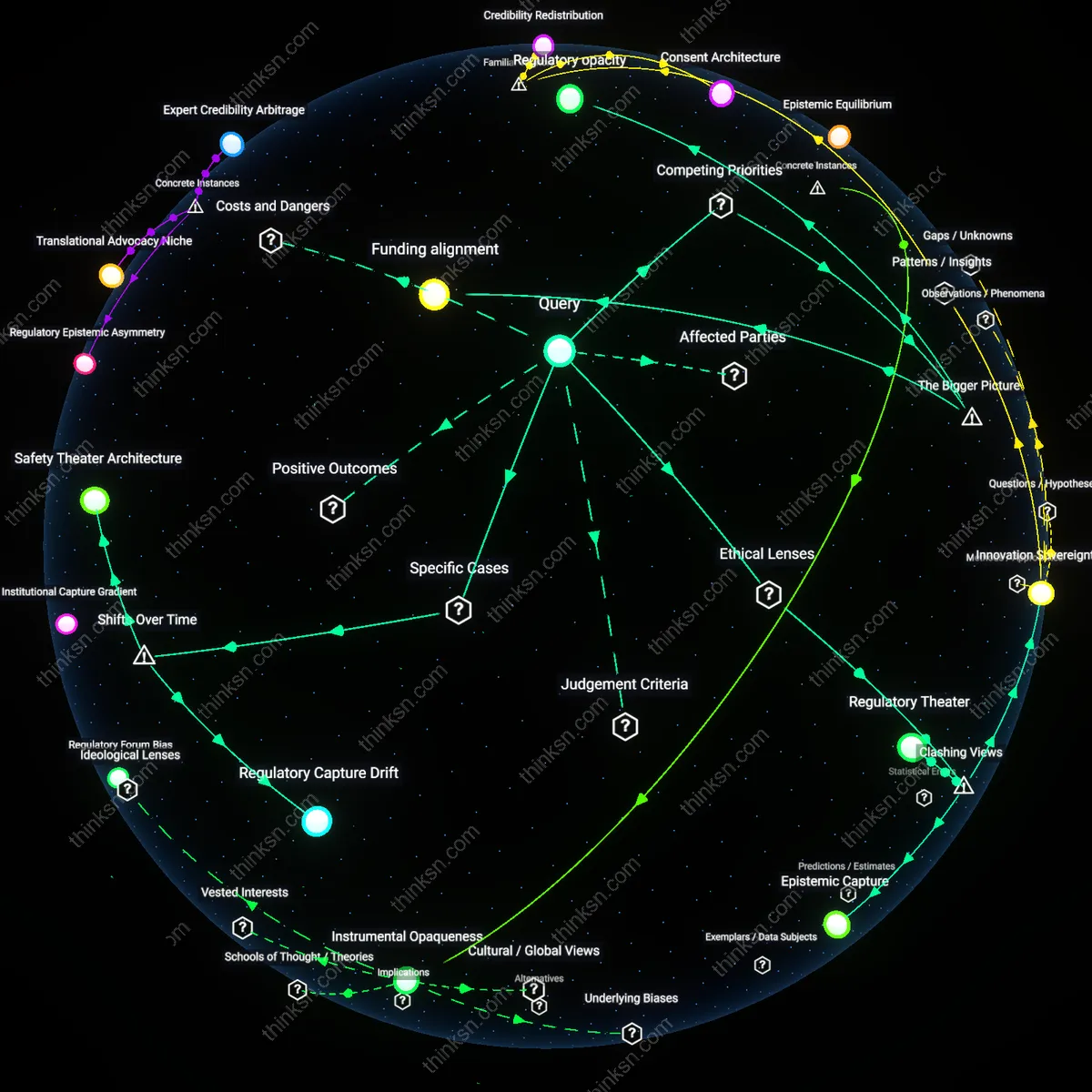
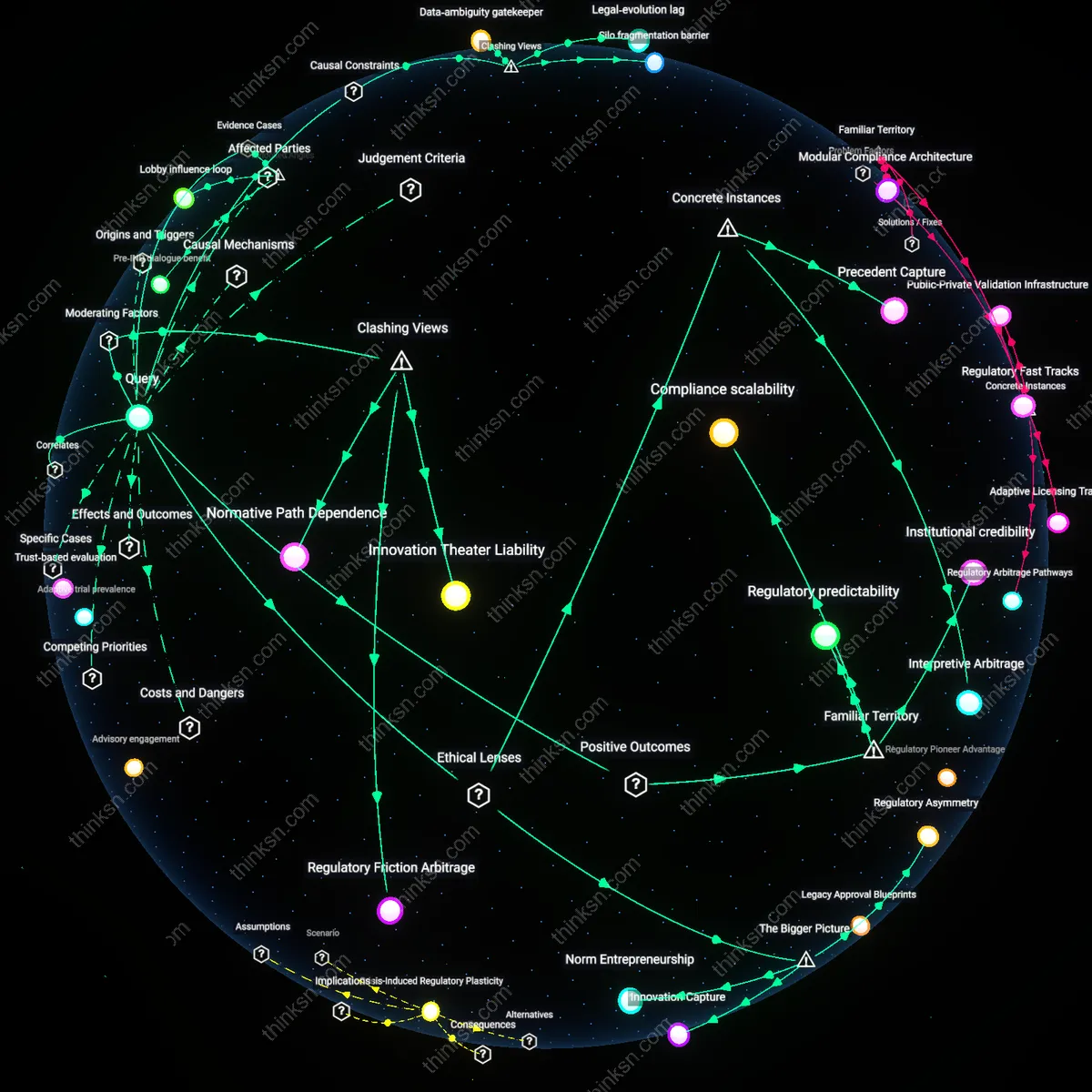
Analysis reveals 6 key thematic connections.
Key Findings
Epistemic arbitration
Former agricultural biotech scientists on USDA policy panels enhance the speed and coherence of technical decision-making during regulatory crises. Their industry experience enables rapid interpretation of complex biosafety data, allowing panels to issue guidance under time pressure—such as during emergency approvals of drought-resistant GMOs—by reducing interpretive ambiguity between competing scientific claims. This function of translating, prioritizing, and reconciling technical inputs is rarely discussed in bias-expertise debates, which focus instead on influence or conflict; yet it constitutes a critical administrative capability that prevents gridlock. The overlooked dimension is not bias or competence alone, but the role these scientists play in *resolving epistemic disagreement* among equally valid scientific perspectives—making timely policy possible without consensus in the broader scientific community.
Regulatory choreography
The presence of former biotech scientists enables smoother alignment between pre-market research design and regulatory review timelines, allowing companies to anticipate evidentiary thresholds and structure trials accordingly. These individuals carry tacit knowledge about which data formats, endpoints, or documentation styles are likely to be accepted by the USDA, creating an invisible but consequential synchronization between private innovation pipelines and public evaluation processes. This subtle coordination reduces repeat submissions and accelerates technology diffusion—not because of deregulation, but because of *predictable interpretation* of rules. The bias-expertise debate typically ignores this temporal efficiency gain, focusing instead on outcome favoritism, while missing how such scientists function as backstage choreographers of regulatory rhythm.
Regulatory Revolving Door
The integration of former agricultural biotech scientists into USDA policy panels since the 1990s reflects a normative shift in post-1980s neoliberal governance that redefined regulatory expertise as inherently aligned with industry innovation, where the erosion of epistemic neutrality emerged not from malice but from institutionalized career trajectories that reward conformity to market-driven science; this transition from New Deal-era precautionary administration to risk-permissive technocracy reveals how the career mobility between regulated firms and regulatory bodies has become a structural feature, not a flaw, normalizing conflicts of interest as routine governance under the regime of scientific managerialism.
Epistemic Legitimacy Crisis
The legitimacy of USDA policy decisions began to fracture in the late 2000s as public challenges to biotech regulation—exemplified by lawsuits over glyphosate-resistant crops and organic coexistence—exposed a temporal rupture in how scientific authority is socially warranted, shifting from a mid-20th-century model of state-backed scientific consensus to a contemporary pluralistic arena where institutional proximity to industry is interpreted as moral compromise rather than technical rigor, thus revealing that the credibility of expert panels now depends not just on technical competence but on perceived independence, a standard that emerged only with the politicization of food safety after the Monsanto-Bayer litigation wave.
Asymmetric Accountability
Since the 1986 Coordinated Framework for Biotechnology established a product-based, rather than process-based, regulatory paradigm, former biotech scientists on USDA panels have operated within a legal-ethical framework that privileges innovation speed over distributive justice, creating an enduring asymmetry where accountability flows upward to corporate stakeholders and downward to farmers, but not horizontally to civil society—a structure that crystallized during the deregulation of genetically engineered crops under the Bush administration and persists even as climate-resilient agriculture demands more democratized knowledge systems, exposing how historical legal doctrine now preempts equitable scientific governance.
Revolving door inertia
Former scientists from Monsanto’s crop development division who later joined USDA advisory panels directly shaped guidelines on glyphosate-tolerant crops, prioritizing biotech yield metrics over ecological resilience because regulatory continuity with prior industry assumptions reduced internal coordination costs. This persistence of technical frameworks across institutional boundaries reflects how personnel movement sustains methodological path dependence, not just individual bias—what matters is that the same models for field trial evaluation were retained despite known limitations in measuring long-term soil health. The non-obvious insight is that the system rewards procedural consistency over epistemic diversity, making it structurally resistant to paradigm shifts even when scientific dissent exists.