Attentional Reserves
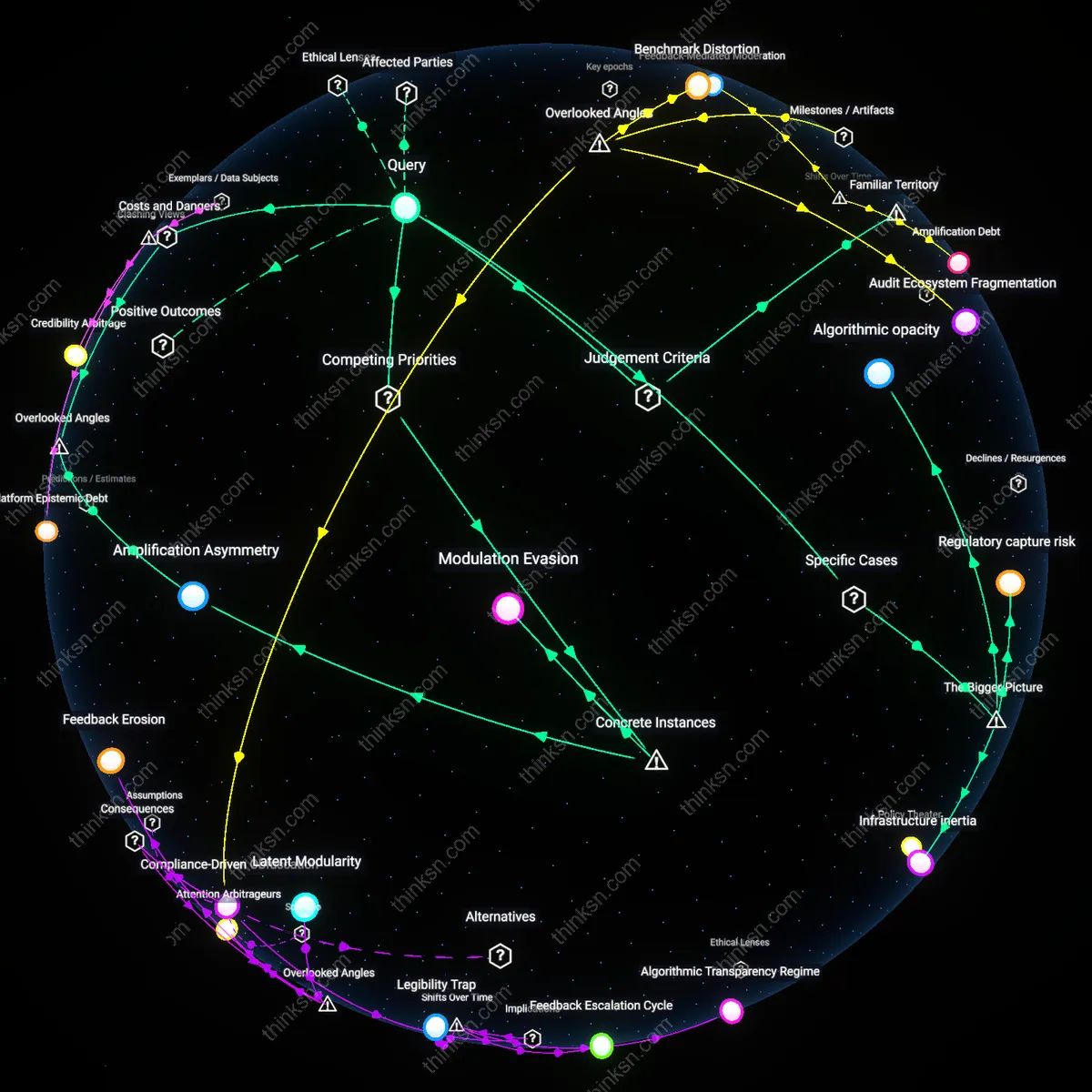
Extending the visibility of public issues on social media would activate latent civic engagement by disrupting the algorithmic scarcity of attention. Platform designs since the mid-2010s prioritized recency and virality, training users to treat political discourse as ephemeral; maintaining visibility over weeks would counteract this learned disposability, allowing marginalized groups in cities like Memphis and Phoenix to sustain pressure on local governments. The mechanism—prolonged salience bypassing platform decay curves—reveals that public attention operates not just through intensity but through duration, a dimension systematically eroded since the shift from chronological to engagement-optimized feeds. The non-obvious insight is that the crisis of political attention is not overload but mis-timed depletion.
Policy Lag Exploitation
Keeping public issues visible for weeks would expose the temporal mismatch between social media’s real-time outrage cycle and legislative scheduling, privileging institutional actors who adapt to delay, such as congressional staffers and federal agency liaisons. Since the 2010s, policy responses have increasingly lagged behind digital crises—seen in events like the Flint water crisis and George Floyd protests—where immediate visibility outpaced bureaucratic capacity. By stretching issue salience, platforms would inadvertently grant strategic advantage to entities skilled in exploiting that lag, turning sustained visibility into procedural negotiation space. The underappreciated shift is that attention longevity, once seen as democratic accountability, now functions as a timing weapon in asymmetric governance.
Narrative Stratification
Prolonged visibility would fragment public discourse into layered temporal narratives as competing coalitions—such as state-level activist networks and legacy media producers—extend, revise, or weaponize issue meanings across weeks. In contrast to the 2009–2015 era of consensus-forming during acute crises (e.g., Arab Spring), today’s interpretive battles are post-event, as seen in prolonged controversies like the Atlanta spa shootings or Hurricane Maria. Extending visibility enables slow-build counter-narratives—like those deployed by disinformation rings from 2016 onward—to gain legitimacy through persistence rather than virality. The overlooked dynamic is that extended duration doesn’t solidify truth but enables narrative sedimentation, where repeated exposure replaces epistemic closure.
Attention inertia
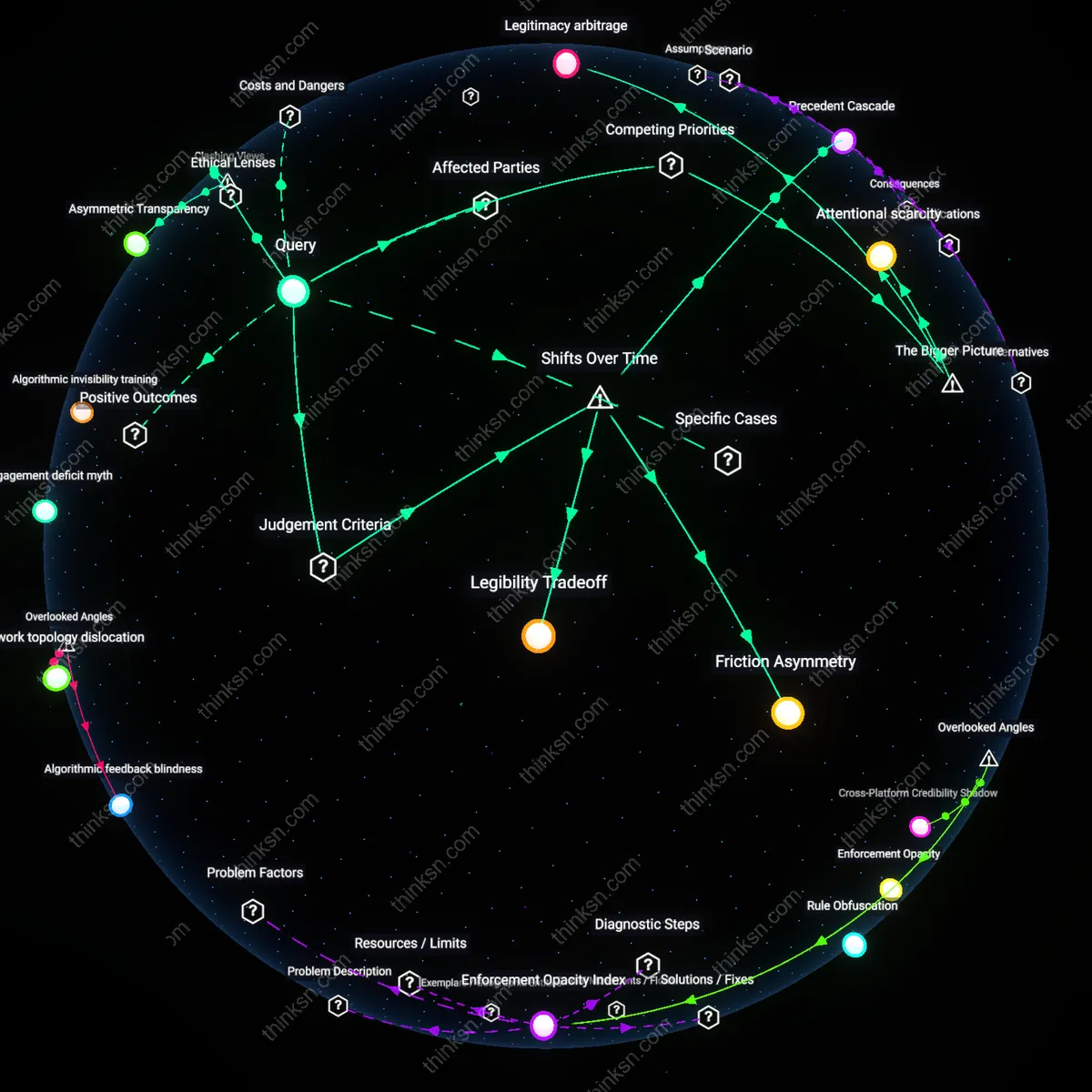
Public issues would persist in user feeds due to algorithmic amplification designed to retain engagement, causing platforms like Facebook and Twitter to prioritize prolonged exposure to high-salience topics. This mechanism functions through machine learning models that detect early engagement spikes and feed content into extended recommendation circuits, effectively anchoring discourse in recurring loops. What’s underappreciated is that longevity isn’t driven by public interest but by the platforms’ optimization for attention retention, not deliberation.
Outrage escalation
Extended visibility would deepen polarization as reactive communities on platforms such as Reddit and YouTube refine and intensify their narratives over time. The mechanism is cumulative exposure to emotionally charged commentary, where each incremental post reinforces in-group cohesion and out-group antagonism through shared moral indignation. Unlike fleeting outrage, sustained cycles allow sentiment to calcify into entrenched positions, transforming ephemeral controversy into identity-defining conflicts.
Policy visibility gap
Government responsiveness would lag behind public attention as persistent online discourse amplifies mismatched expectations between citizen urgency and institutional timelines. This occurs because legislative bodies like the U.S. Congress operate on fixed procedural calendars, while social media enforces real-time accountability, creating friction in how issues are prioritized. The underappreciated dynamic is that extended visibility doesn’t translate to faster action—it exposes the structural slowness of governance to digital tempo.
Attentional Accountability
Public officials in Minneapolis faced sustained scrutiny after George Floyd’s killing in 2020 because video of the incident remained widely circulated for weeks, preventing immediate media fade-out; this prolonged visibility forced continuous institutional response from local police, city council, and state prosecutors, revealing that durational persistence of content on platforms can convert episodic outrage into structural pressure by maintaining alignment between public attention and political action timelines.
Narrative Resilience
During the 2011 Egyptian revolution, social media posts documenting police brutality and protester demands remained visible and widely shared for weeks despite internet blackouts, allowing opposition groups to resist state attempts to reframe events through state media; the anchoring function of persistent digital records enabled counter-narratives to solidify and gain legitimacy, showing that extended visibility protects collective memory from manipulation by dominant institutions during political transitions.
Policy Feedback Loops
When graphic footage from the 2017 Grenfell Tower fire in London stayed visible across UK social networks for weeks, it amplified resident testimony and architectural critiques, which in turn were cited repeatedly in parliamentary inquiries and media investigations; the prolonged salience transformed a singular tragedy into an ongoing public audit of housing policy, revealing that sustained issue visibility can institutionalize public input by feeding grassroots evidence into formal policymaking cycles long after initial attention typically decays.
Attention entropy
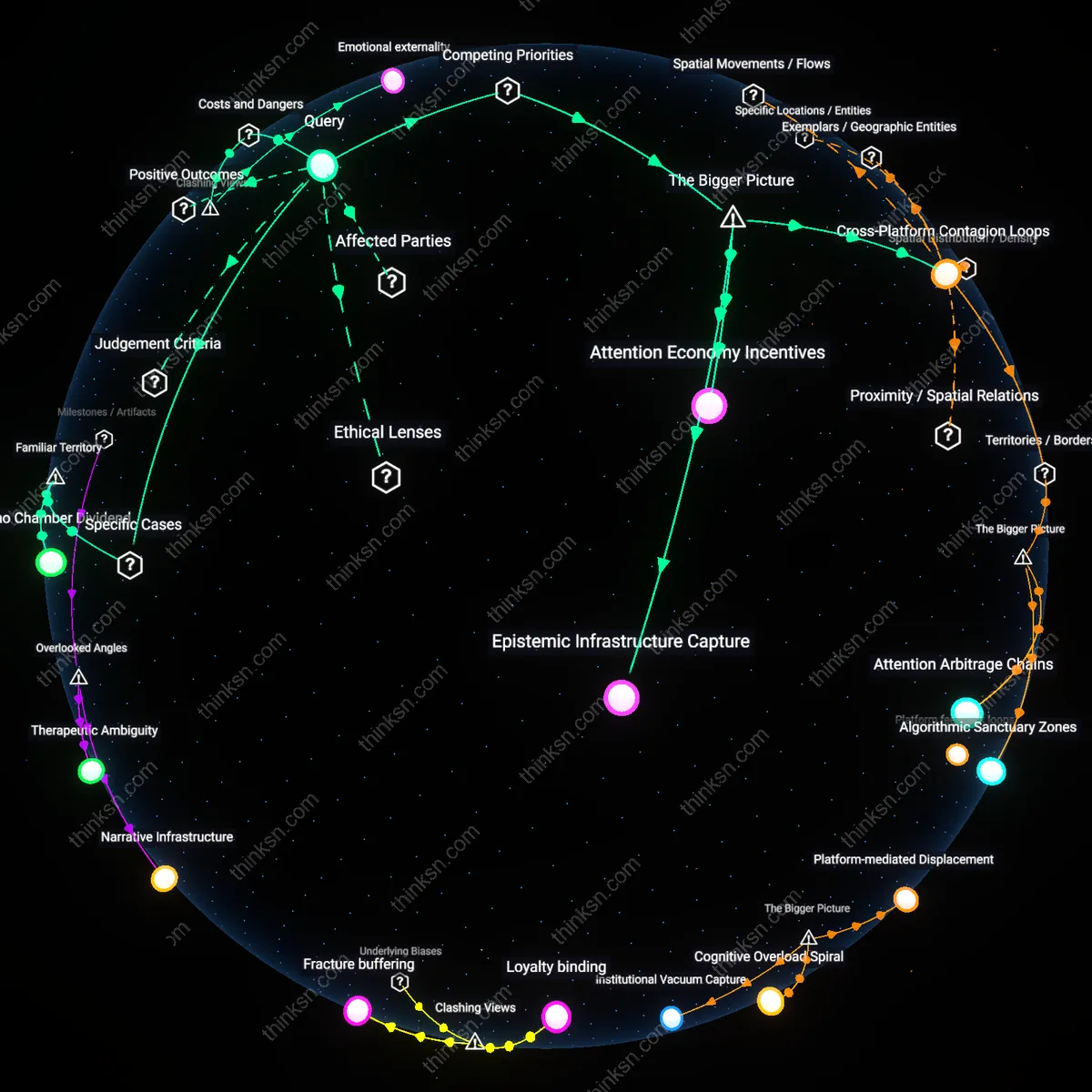
Extending visibility of public issues on social media would increase competition among topics for user engagement, causing platforms to amplify emotional or polarizing content to cut through the noise. As more high-salience issues persist in feeds, users’ attention becomes fragmented and less predictable, forcing algorithmic ranking systems to favor novelty and affective charge over relevance or factual accuracy. This shift intensifies the decay of coherent public discourse, not because attention spans shorten, but because attention itself becomes more entropic—distributed unevenly and unpredictably across overlapping issue clusters. The overlooked mechanism is that prolonged visibility doesn't just sustain awareness; it alters the thermodynamic-like properties of attentional flow, degrading signal integrity even as volume increases.
Institutional lag
If public issues remain visible for weeks, formal institutions like legislatures or regulatory agencies would face intensified mismatch between sustained public salience and their own slow decision cycles, leading to visible dissonance between online discourse and policy response timelines. Bureaucratic processes, designed for sequential deliberation and periodic review, cannot contract to match persistent visibility, causing pressure points at the interface of digital tempo and institutional time. This lag becomes a visible defect, eroding public trust not due to lack of action per se, but because the rhythm of accountability is exposed as structurally out of sync. The overlooked dimension is that platform visibility changes the perception of institutional adequacy—not by revealing inefficiency, but by disrupting the temporal compact between civic concern and official response.
Moderator drift
Sustained visibility of public issues would force content moderators—both human and AI—to reinterpret context over longer durations, increasing the risk that posts drift in meaning as framing evolves, yet are still governed by initial moderation rules. A protest post deemed informational in week one may be seen as incitement by week three as rhetoric escal desper, but moderation systems rarely recalibrate post-hoc classifications. This creates a growing gap between real-time community norms and fixed enforcement thresholds, leading to inconsistent rulings and perceived bias. The overlooked dependency is that moderation is not a static filter but a temporal interpretation system, and longevity of content exposes its inherent lag in semantic adaptation, destabilizing perceived fairness more than volume or reach ever could.
Attentional Inflation
Extending the visibility of public issues on social media would not deepen democratic engagement but instead erode the perceived urgency of all issues by normalizing prolonged exposure, as seen in the algorithmic dilution of protest movements like #EndSARS in Nigeria, where continuous visibility led platforms and audiences to treat sustained outrage as ambient noise rather than a call to action, revealing that prolonged salience can short-circuit mobilization by undermining the very scarcity that gives attention its political value.
Backfire Transparency
If social media platforms allowed public issues to remain visible for weeks, official institutions like municipal governments or federal agencies would increasingly withhold policy responses to avoid creating permanent digital records of hesitation or contradiction, as observed during the slow rollout of OSHA’s COVID-19 regulations amid sustained online scrutiny, demonstrating that permanence in public discourse can disincentivize institutional responsiveness by turning provisional decisions into indefensible liabilities.
Echoed Marginalization
Prolonging the visibility of social justice issues would entrench backlash narratives rather than dissolve them, as seen in the months-long amplification of #MeToo cases, which enabled counter-mobilization by legal and media actors to reframe accusations as threats to due process, revealing that extended visibility benefits not only advocates but also those who weaponize duration to recast movements as overreach, thus institutionalizing resistance under the guise of balance.