Is Relying on One Social Media News Source Sabotaging Your Perspective?
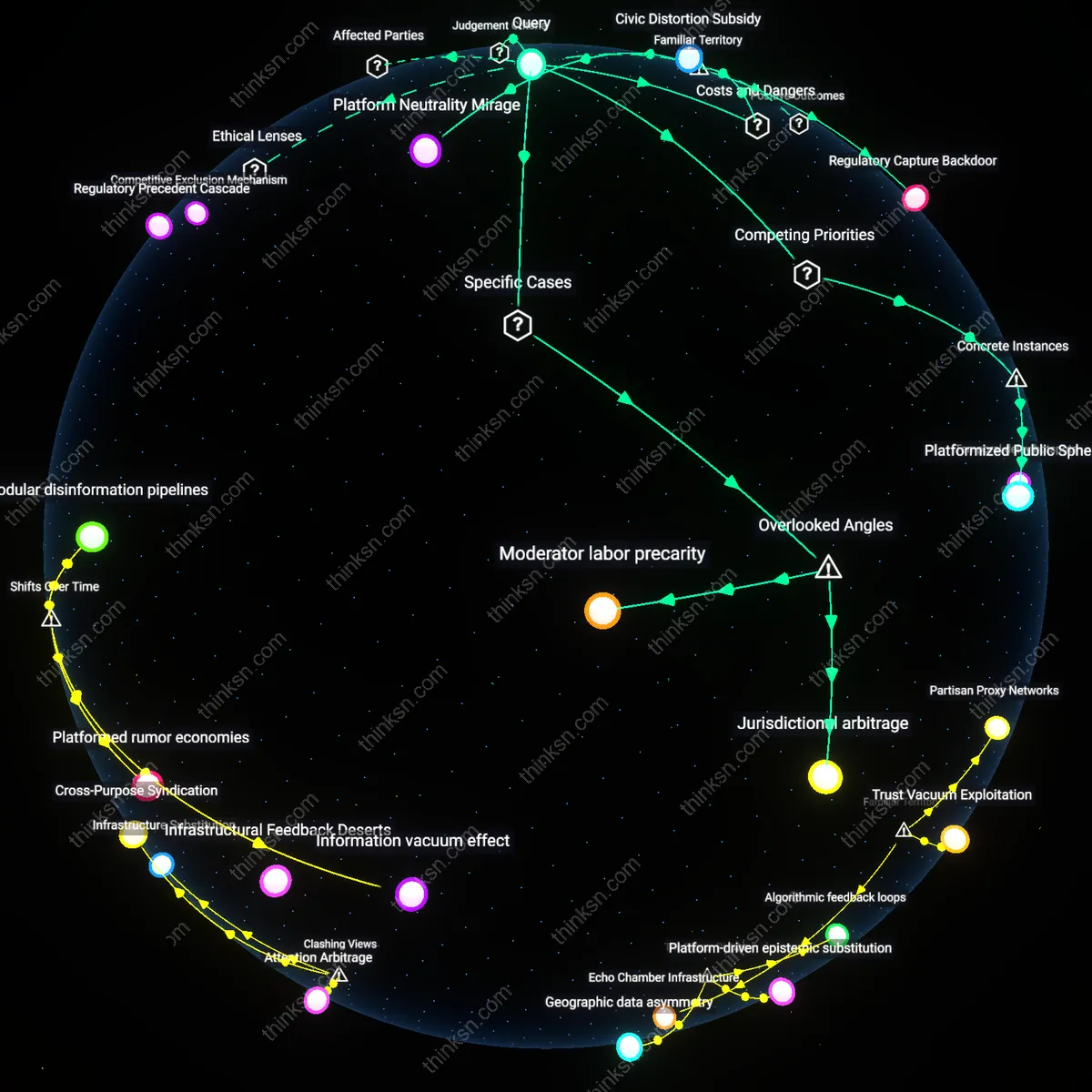
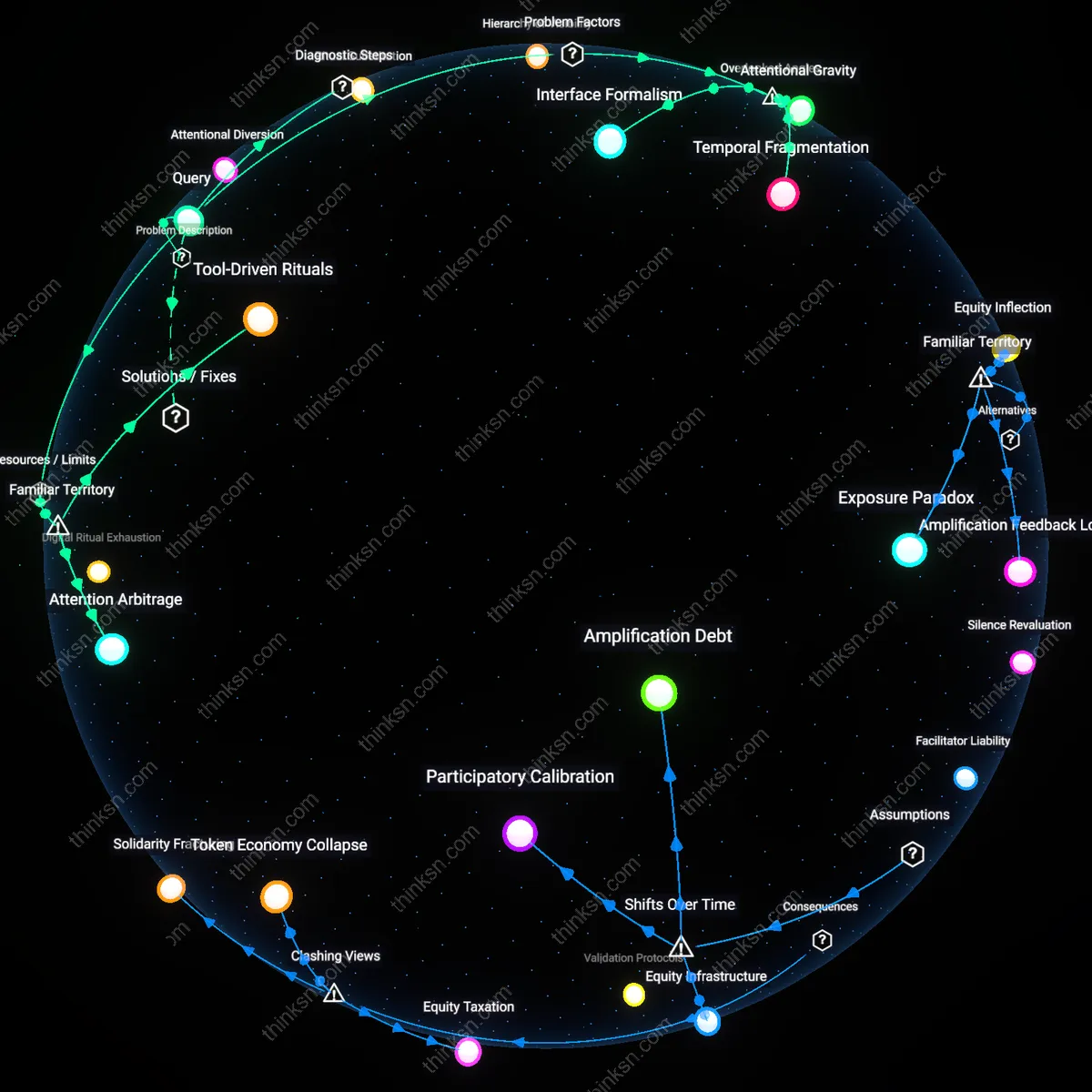
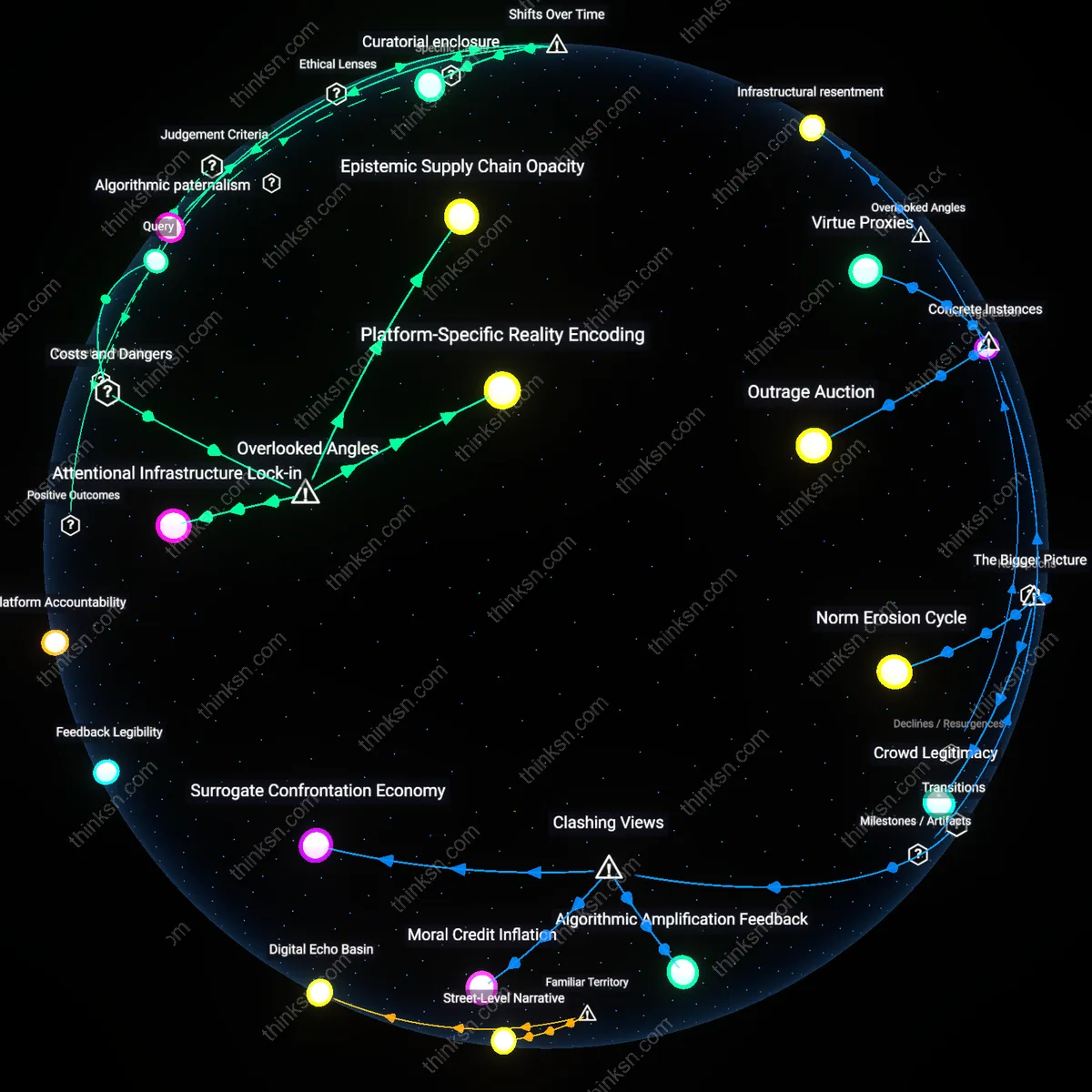
Analysis reveals 8 key thematic connections.
Key Findings
Attention Coordination
Relying on a single social media platform can enhance collective political awareness by synchronizing public attention around critical events. When users on platforms like X (formerly Twitter) converge on shared informational streams, it creates a centralized attention economy that accelerates the diffusion of urgent political developments—such as election irregularities or protests—across geographies. This coordination effect is driven not by platform neutrality, but by the concentration of algorithmic amplification under a single corporate logic, which paradoxically enables faster consensus formation during crises. The underappreciated systemic function here is that fragmented media ecosystems often delay recognition of emergent threats, whereas algorithmic monoculture can act as a de facto early-warning system shaped by engagement incentives rather than editorial judgment.
Feedback Legibility
Using one dominant platform for news increases the visibility of public sentiment to institutional actors such as policymakers and international observers, creating a real-time feedback loop that can pressure accountability. When political discourse is channeled through a single algorithmically curated space like Facebook in countries such as the Philippines or Brazil, authorities cannot easily ignore viral narratives because they are embedded in quantifiable engagement metrics—shares, reactions, trending topics—that signal mass affect. This legibility arises from the platform’s centralized data architecture, which turns diffuse public opinion into observable, actionable signals. The non-obvious dynamic is that algorithmic opacity, while distorting perception, simultaneously generates standardized indicators of political salience that offline or pluralistic media environments often lack.
Platform Accountability
Dependence on a single social media platform incentivizes civil society actors to organize targeted accountability campaigns against centralized curation practices, producing institutional reforms that would be harder to achieve in fragmented media landscapes. For example, sustained pressure from digital rights groups and advertisers on Meta over Facebook’s role in spreading misinformation during elections has led to concrete changes, such as the creation of the Oversight Board and greater transparency in political ad archives. This pressure is effective precisely because the platform operates as a bottleneck—its market dominance makes it a single point of leverage for regulatory and reputational intervention. The overlooked systemic consequence is that monopolistic curation, while risky, creates a clear target for governance, making it easier to mobilize coordinated corrective action than in decentralized or diversified information ecologies.
Attentional Infrastructure Lock-in
Relying on a single social media platform for news entrenches attentional infrastructure lock-in, where user habits and platform design mutually reinforce dependency. This occurs because habitual engagement reshapes cognitive routines—users unconsciously align their information-seeking behavior with the platform’s temporal rhythms, notification cues, and interface cues, such as TikTok’s infinite scroll or X’s real-time trending bar—creating a feedback loop that bypasses deliberate choice. Most analyses focus on content bias, but overlook how the procedural capture of attention erodes the capacity to seek diverse sources even when aware of algorithmic distortion, effectively making cognitive autonomy structurally dependent on platform architecture.
Epistemic Supply Chain Opacity
Relying on a single social media platform for news obscures epistemic supply chain opacity, where the provenance of political knowledge—its original sources, editorial filters, and data lineage—is systematically erased by algorithmic aggregation. Platforms like Facebook or Reddit distill news through layers of engagement-driven ranking, stripping context and attribution so that a user cannot trace a viral claim back to its institutional origin or assess its editorial validation. This hidden dependency on invisible curation pipelines undermines epistemic vigilance, a safeguard typically assumed in media literacy models, yet remains absent from public discourse that fixates on 'fake news' rather than the erasure of knowledge provenance.
Platform-Specific Reality Encoding
Relying on a single social media platform for news enables platform-specific reality encoding, where the affordances and cultural norms of one platform—such as Instagram’s visual symbolism or YouTube’s long-form narrative licensing—shape not just what political information is seen, but how political reality itself is cognitively structured. Because each platform’s format implicitly privileges certain forms of truth presentation (e.g., emotional resonance over factual density), prolonged reliance leads users to internalize these formats as epistemic templates, mistaking representational style for evidentiary weight. This dimension is rarely acknowledged because discussions of bias treat platforms as neutral conduits, not formative environments that actively mold political imagination through sensory syntax.
Algorithmic paternalism
It is ethically untenable under deontological liberalism to rely on a single social media platform for news because algorithmic curation now usurps the user’s rational autonomy—a function once reserved for editorial institutions in the public sphere. The shift from 20th-century broadcast journalism, governed by professional standards and public interest mandates, to the post-2016 platform-dominated information ecosystem has embedded opaque, engagement-driven algorithms as de facto gatekeepers; these systems personalize content without user comprehension or consent, violating Kantian principles of treating individuals as ends rather than data points. The underappreciated consequence is not misinformation per se but the quiet substitution of editorial accountability with computational optimization, redefining the citizen’s relationship to truth.
Curatorial enclosure
Relying on one platform for news undermines Rawlsian justice in political discourse because algorithmic curation has transformed post-2008 social media into privately owned informational fiefdoms that skew political exposure without redistributive correction. Unlike the mid-20th-century regulatory regime under doctrines like the Fairness Doctrine, which mandated balanced coverage in public frequency use, today’s platforms operate under neoliberal telecom deregulation, allowing dominant firms like Meta to curate political content as proprietary ecosystems devoid of equitable access principles. The overlooked shift is the enclosure of the digital public sphere into algorithmically segregated experiences, where the ‘veil of ignorance’ is compromised by design—not by overt censorship, but by invisible, profit-aligned ranking systems that entrench informational inequality.