Does AI Speed Creativity or Dilute Artistic Style?
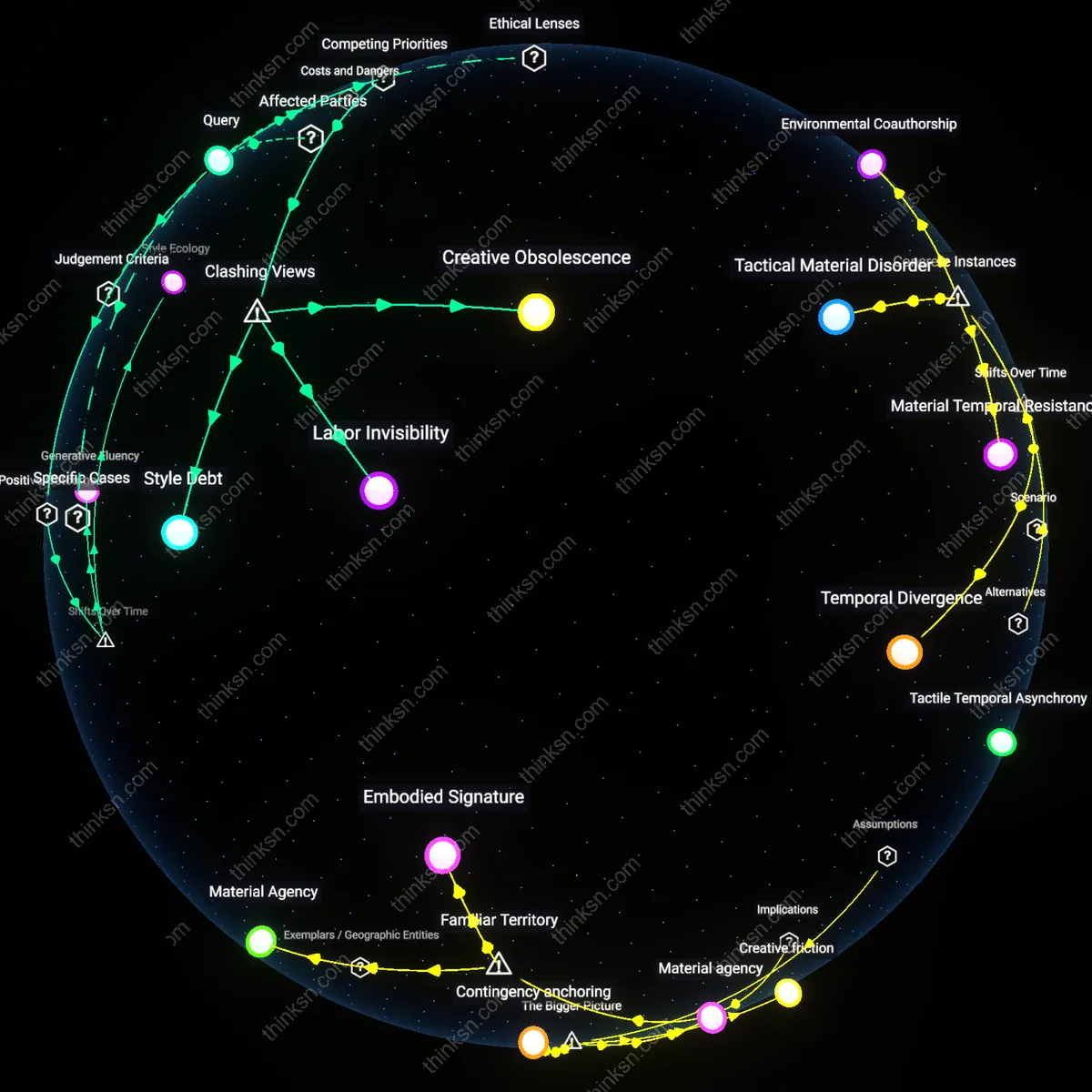
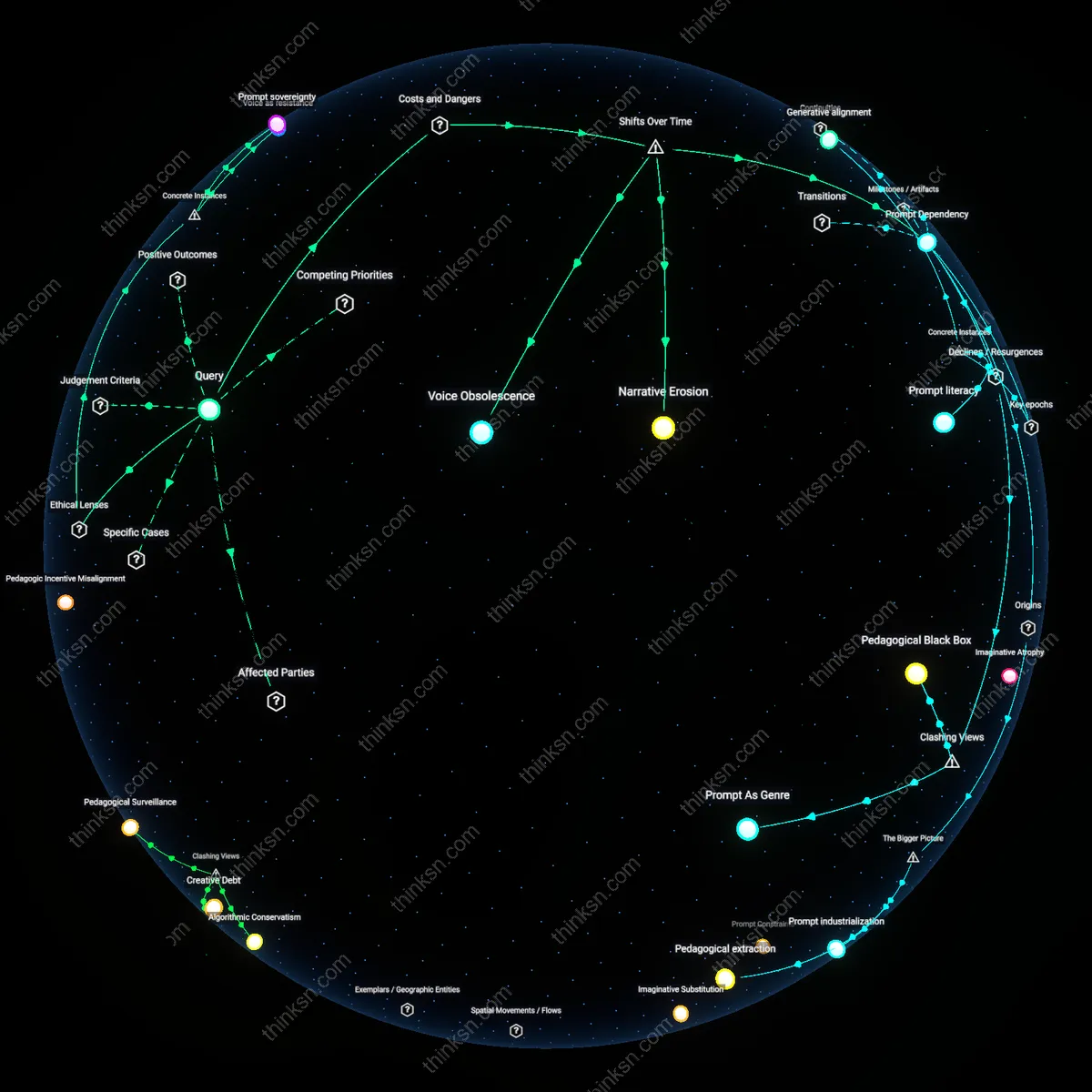
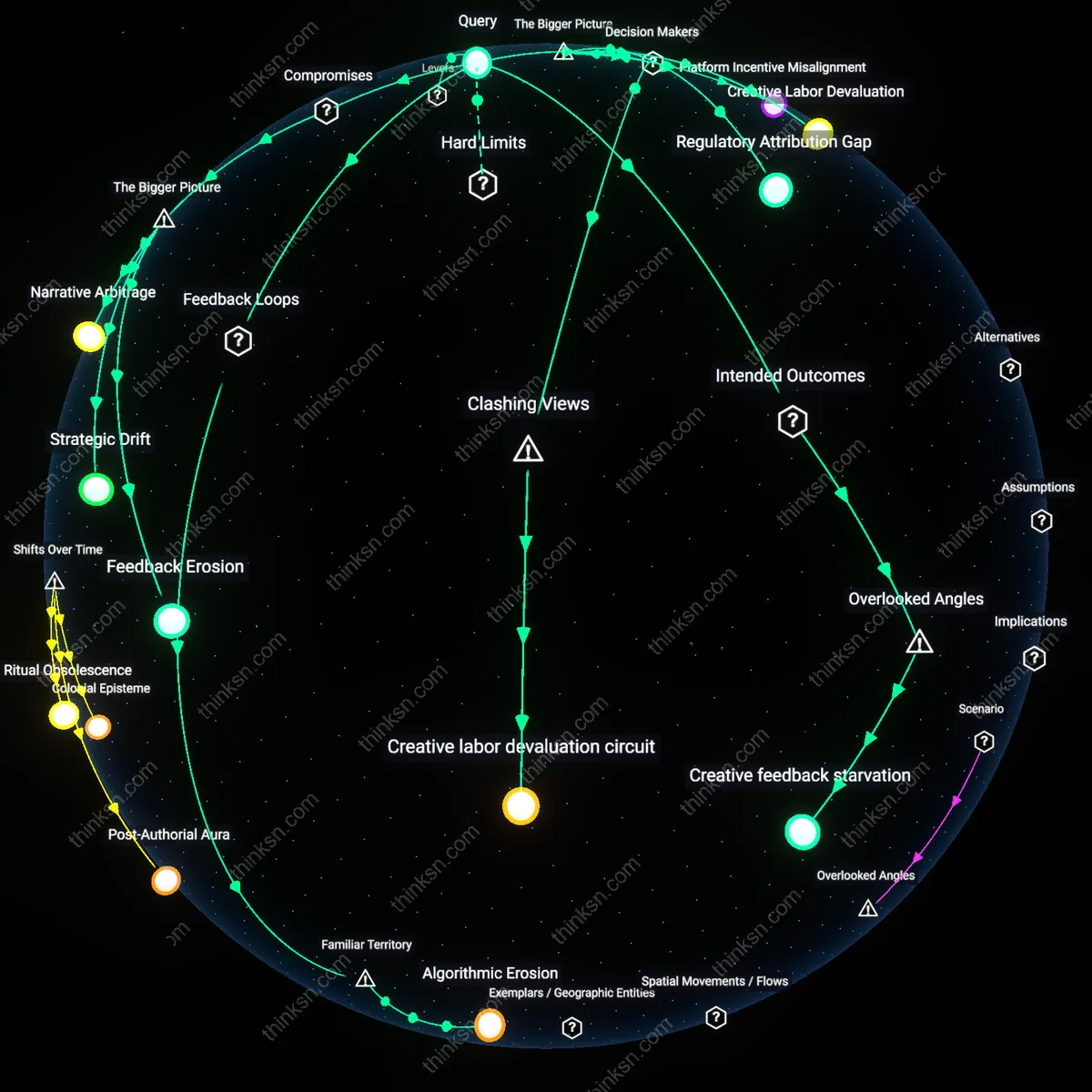
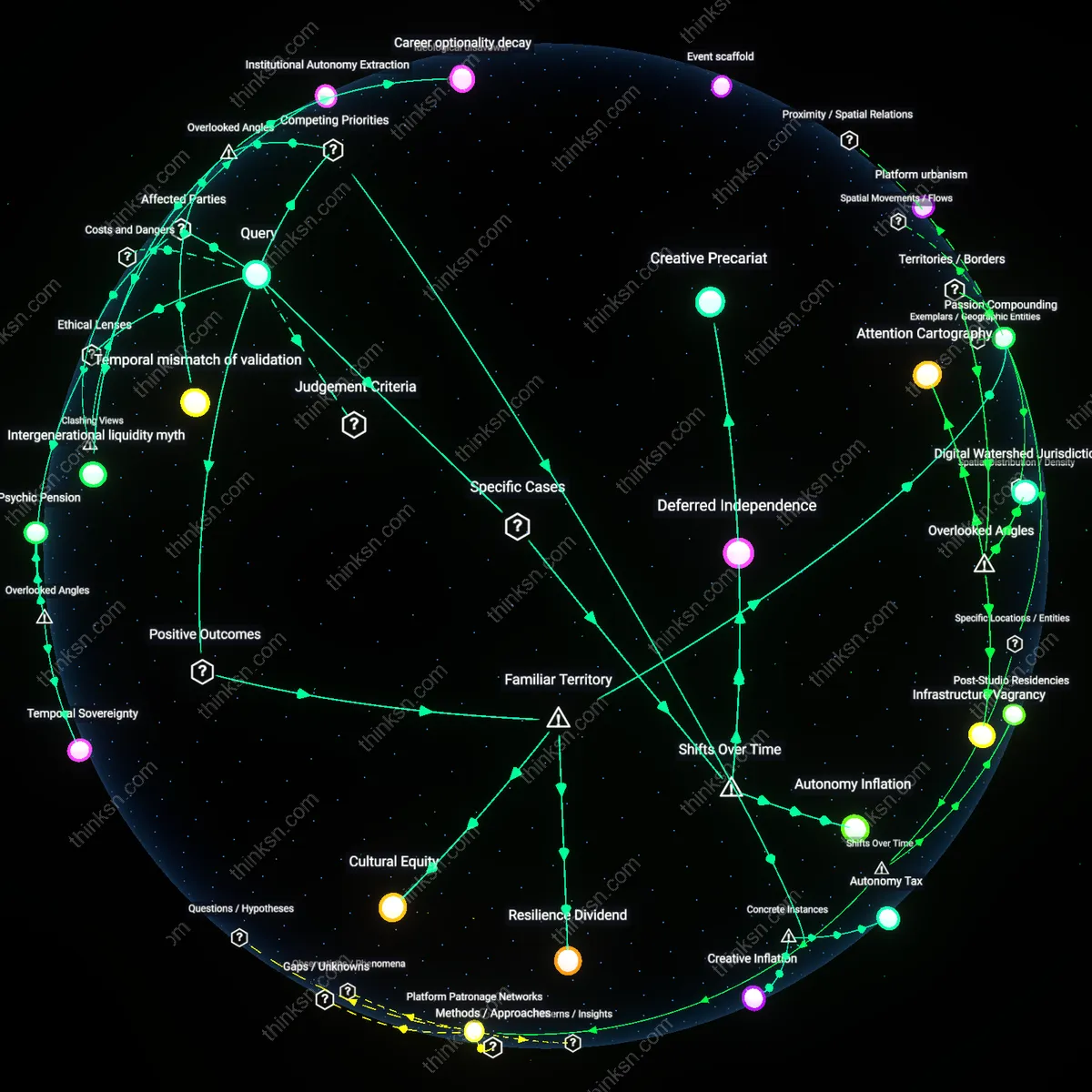
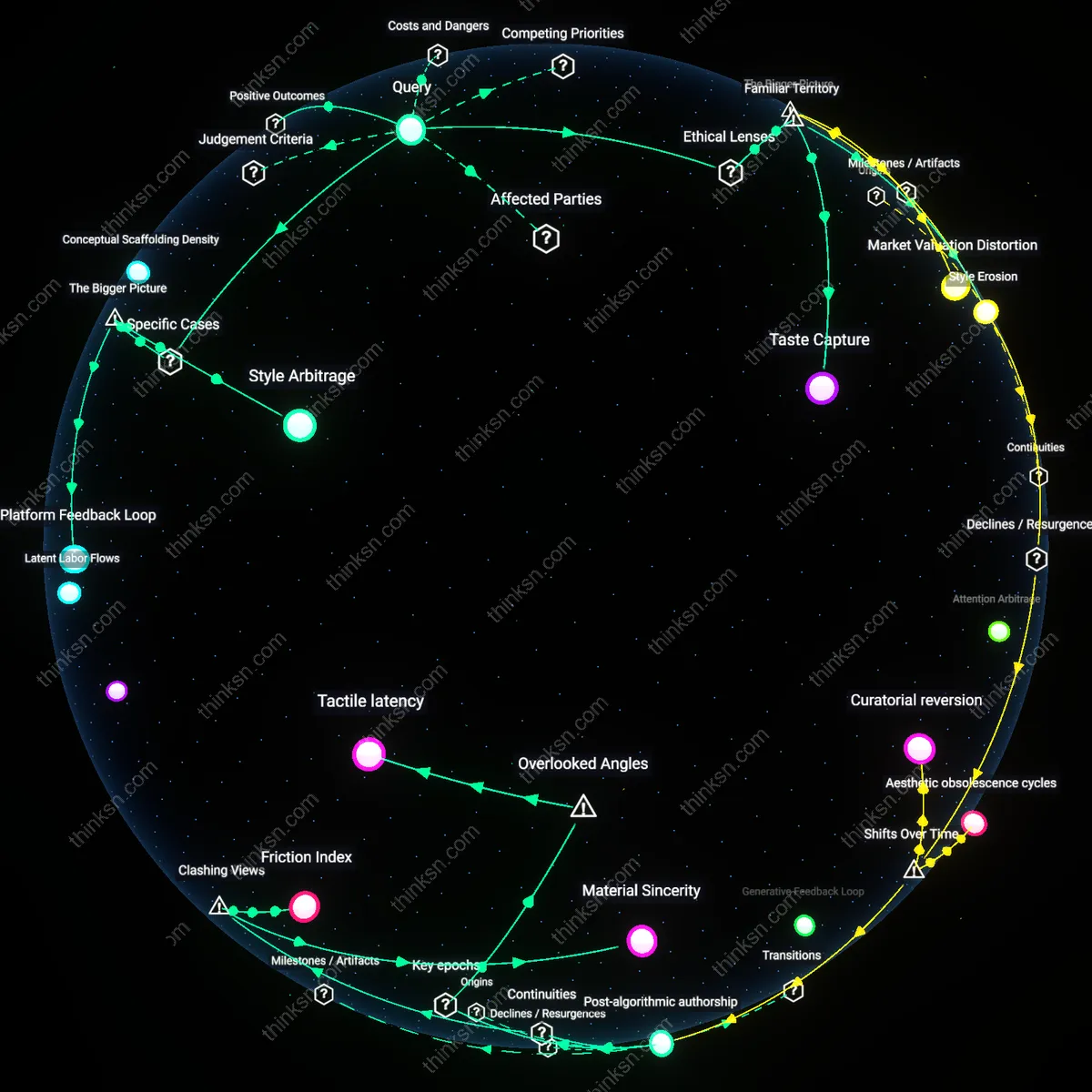
Analysis reveals 7 key thematic connections.
Key Findings
Latent Style Resonance
Using AI to generate visual concepts enhances creativity by surfacing latent style resonance—an alignment between an artist’s implicit aesthetic preferences and emergent patterns in training data that the artist could not consciously articulate. This occurs when AI systems, trained on vast cross-artist datasets, reflect back stylistic micro-signals (e.g., brushstroke rhythm, color adjacency biases) that resonate with an individual’s subconscious tendencies, effectively acting as a mirror for unacknowledged dimensions of personal style. The overlooked dynamic is that AI does not dilute style by imitation, but intensifies self-recognition, allowing artists to refine and amplify signature traits through externalized feedback, as observed in illustrators using style transfer tools to isolate and evolve niche visual idioms.
Conceptual Scaffolding Density
AI-generated visuals accelerate creative productivity by increasing conceptual scaffolding density—the rate at which usable, mid-level design elements (e.g., texture motifs, compositional layouts) become available during early ideation phases. Designers at firms like IDEO and ustwo report that AI tools reduce the 'empty canvas anxiety' of initial sketching by providing structurally diverse starting points that retain stylistic plasticity, allowing rapid iteration without locking into a final aesthetic. The underappreciated factor is that personal style consolidates not during ideation but in judgment and selection; AI expands the field of options without dictating choices, thereby preserving authorial voice while compressing the timeline to execution—something rarely accounted for in discourse centered on final output authenticity.
Style Erosion
Using AI to generate visual concepts accelerates creativity in ways that dilute an artist's personal style, undermining the authenticity expected under deontological ethics where creative authorship entails moral duty to original expression. This occurs through mass imitation of emergent AI aesthetics—driven by platforms like Instagram and MidJourney—that reward speed and virality over intentionality, normalizing homogenized outputs indistinguishable from human creators’ historic signatures. The non-obvious consequence within common discourse is that artists begin self-censoring or reverse-engineering AI trends to remain relevant, not because they lack integrity, but because the feedback loops of engagement metrics reframe creativity as adaptability to algorithmic taste.
Taste Capture
AI-generated visuals amplify aesthetic convergence by optimizing for consensus-driven patterns learned from dominant internet archives, privileging familiar forms over idiosyncratic expression—a process legitimized by neoliberal ideals of market-responsive creativity but ethically suspect under Habermasian ideals of communicative authenticity. This creates a feedback loop where artists adopt AI tools to stay competitive, yet those tools reflect past popularity (e.g., DeviantArt rankings, Pinterest trends), steering new work toward statistically probable outcomes rather than novel visions. The overlooked effect in mainstream debate is that personal style doesn’t fade through laziness or imitation, but because the very definition of 'good design' becomes statistically encoded, making deviation feel commercially risky rather than creatively bold.
Platform Feedback Loop
AI-generated concept art on platforms like ArtStation amplifies stylistic mimicry because trending algorithmic visibility favors familiar aesthetic patterns, as seen in freelance concept artists optimizing outputs for engagement. Midjourney users targeting game studio gigs increasingly replicate dominant styles—such as hyper-detailed cyberpunk cityscapes—not due to intrinsic preference but because studios like CD Projekt Red signal approval through reposts and hires, embedding a feedback loop between AI output and market demand. This dynamic obscures personal style not through AI’s capabilities but through the economic incentive structure of digital art platforms, which systematically reward conformity over differentiation. The non-obvious consequence is that creativity accelerates not in stylistic exploration but in efficient adaptation to algorithmically mediated taste signals.
Labor Substitution Pressure
Graphic design teams at agencies like Wieden+Kennedy adopt AI concept generation to compress ideation timelines, reducing the need for individual artists to produce unique drafts from scratch. When creative directors use AI to rapidly generate multiple visual directions, junior designers are tasked with refinement rather than authorship, shifting their role from originators to editors and diluting the trace of personal style in final outputs. This transformation is enabled not by AI’s aesthetics but by corporate cost-time pressures in branded content production, where speed becomes a proxy for creative productivity. The underappreciated effect is that personal style erosion emerges not from imitation but from reorganization of creative labor hierarchies under efficiency mandates.
Style Arbitrage
Freelance illustrators in Southeast Asian outsourcing hubs—such as those supplying concept art for Chinese mobile game publishers—use AI to emulate signature Western fantasy aesthetics (e.g., Blizzard Entertainment’s Warcraft style) at scale, allowing rapid customization for different markets. These artists leverage AI not to explore but to bypass style acquisition costs, directly sampling and blending visual signatures that previously required years of practice to master authentically. The systemic driver is globalized art markets where regional studios compete on stylistic versatility rather than depth, turning distinct visual identities into interchangeable commodities. The overlooked mechanism is that AI does not dilute personal style per se but facilitates its arbitrage—extracting value from stylistic difference while eroding the artist’s role as its originator.