Is Financial Funding of Research Covertly Shaping Regulations?
Analysis reveals 4 key thematic connections.
Key Findings
Crisis Narratives
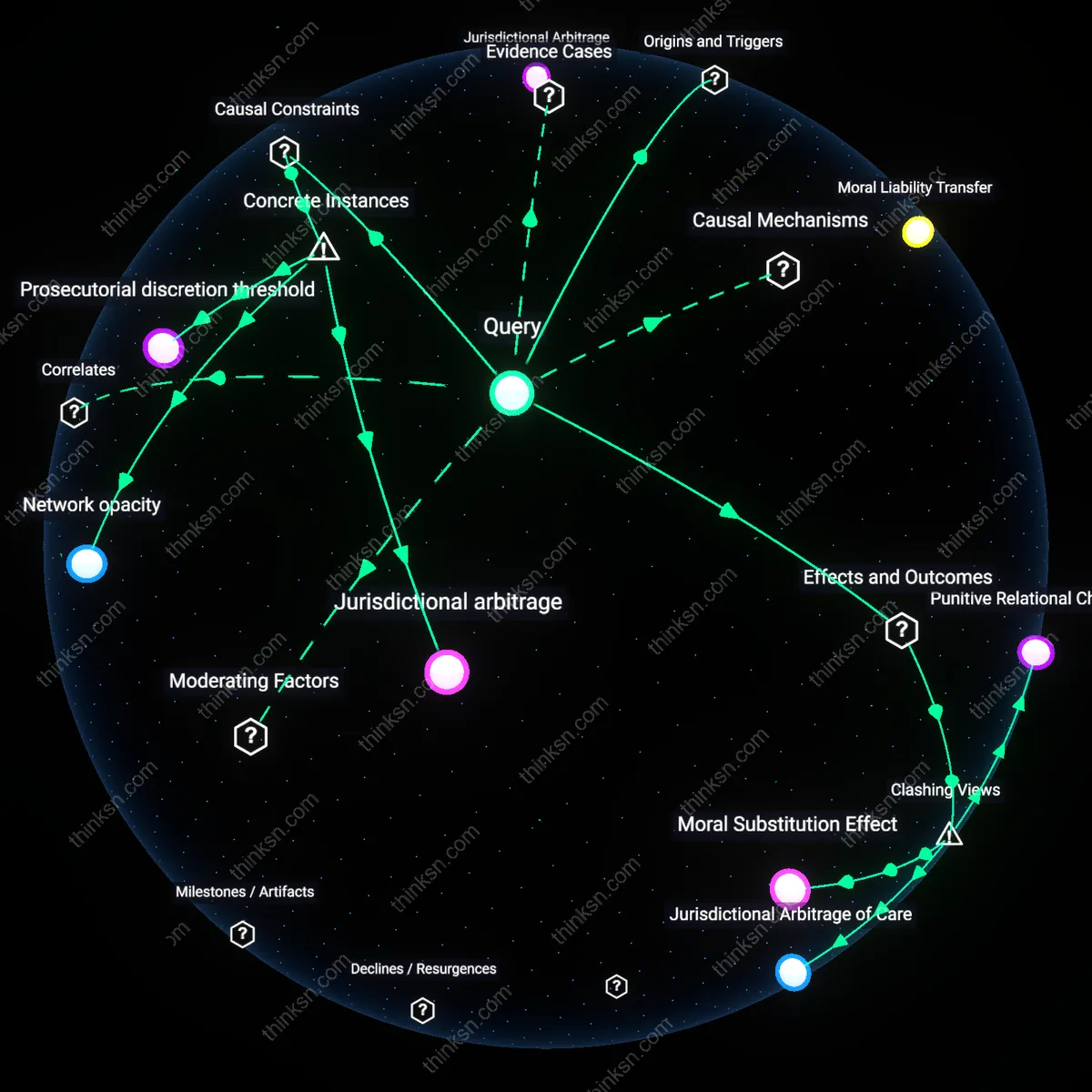
Financial industry funding influences rulemaking when it retroactively defines what constitutes a regulatory failure by sponsoring post-crisis commissions and retrospectives. After 2008, institutions like JPMorgan and Goldman Sachs supported think tank panels that emphasized 'regulatory gaps' rather than speculative excess, shaping subsequent Dodd-Frank implementation around monitoring mechanics instead of curbing incentives. This operates through high-profile reports issued by bodies like the Systemic Risk Council or the Bipartisan Policy Center, which gain media traction and legislative credence precisely because they appear disinterested. The underappreciated point is that influence does not require secrecy—it can be exercised openly by seizing the narrative frame, turning historical interpretation into a regulatory blueprint.
Epistemic Dependency
Financial industry funding of regulatory research becomes covert influence when regulators rely on industry-generated data models to define systemic risk parameters, because agencies like the U.S. Securities and Exchange Commission outsource complex stress-testing methodologies to firms like BlackRock or JPMorgan, embedding proprietary assumptions into public rulemaking; this creates a feedback loop where what counts as 'evidence' is shaped by private incentives, making objectivity structurally unattainable—an outcome rarely visible because oversight focuses on direct lobbying, not the invisibility of baseline knowledge production.
Temporal Preemption
Covert influence occurs when industry-funded research sets the timeline for regulatory feasibility, as seen when credit rating agencies and asset managers finance studies at institutions like the Federal Reserve Bank of New York that emphasize implementation costs and market disruption over public benefit, thereby shifting the debate from whether a rule should exist to whether it can be implemented quickly; this temporal framing marginalizes precautionary regulation, privileging operational urgency over democratic deliberation—a power move disguised as technical logistics.
Methodological Capture
Regulatory research funding becomes covert influence when quantitative frameworks from firms like Goldman Sachs or AIG are institutionalized in Basel III capital adequacy assessments, where value-at-risk models dictate regulatory thresholds; these models assume stable markets and normal distributions, discrediting alternative, more precautionary methods like agent-based simulations—thus industry doesn’t need to lobby outcomes when it controls the analytical machinery that produces them, revealing that methodology is not neutral but a site of quiet domination.
Deeper Analysis
What would happen if public agencies commissioned their own crisis retrospectives instead of relying on industry-funded reports?
Temporal sovereignty
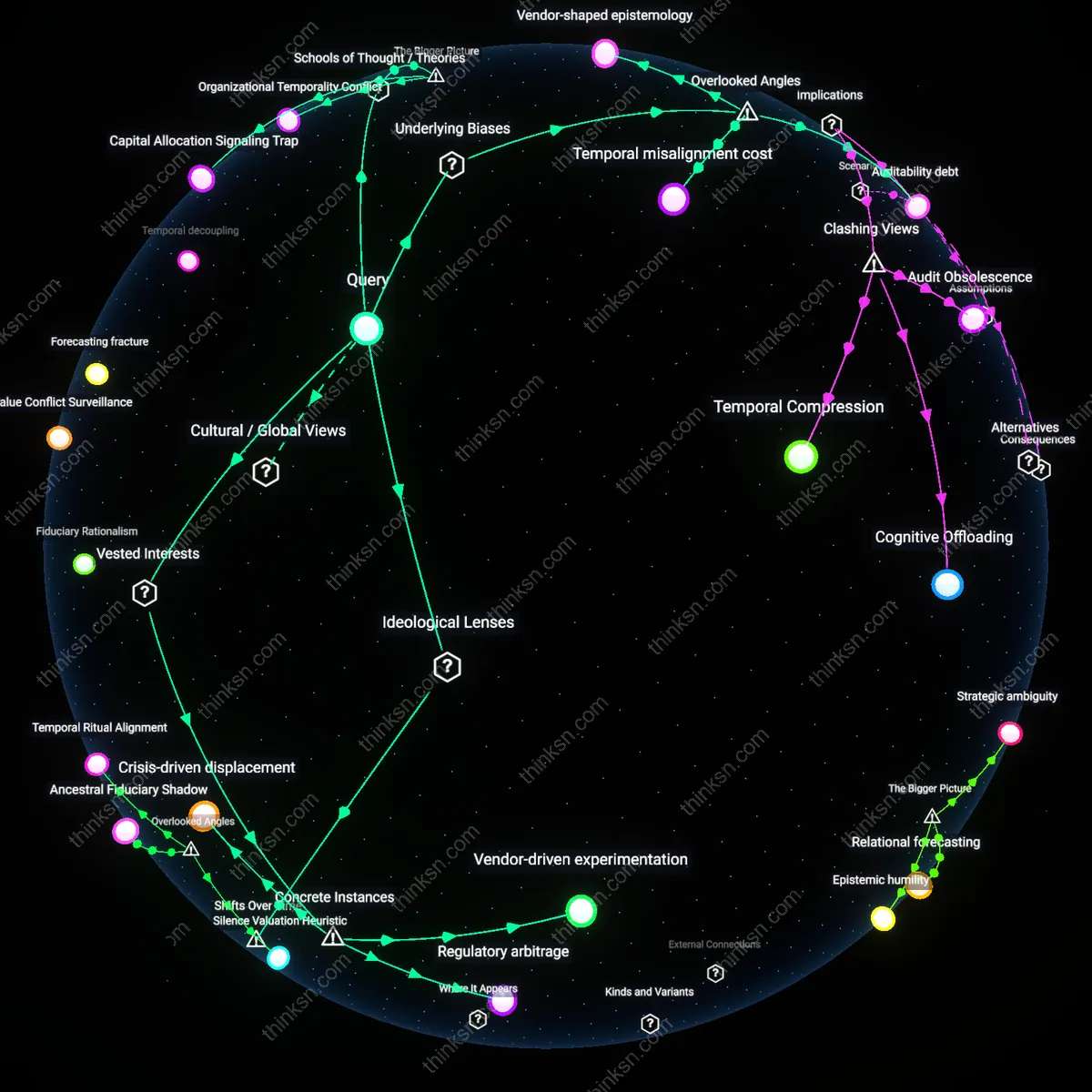
When public agencies produce crisis retrospectives internally, they reclaim control over the narrative timeline of failure and reform, disrupting the pattern established after the 1996 Telecommunications Act, where post-crisis sense-making became synchronized with corporate innovation cycles rather than civic rhythms. The mechanism operates through scheduling—publicly mandated review timelines, declassification protocols, and participatory hearings—allowing democratic actors to define what counts as a 'lesson' and when it becomes actionable. This temporal authority, formerly ceded to industry post-mortem teams operating under patent-protected analytics, reveals that control over pacing and sequence in accountability processes has been a silent determinant of political memory.
Epistemic reparation
A shift to state-commissioned crisis retrospectives since the 2010s would initiate a reversal of the epistemic marginalization of frontline workers and community witnesses, whose testimonies were systematically excluded from industry-produced reports following standardized forensic protocols formalized in the 1970s by bodies like the U.S. Chemical Safety Board. These protocols privileged engineering models and digital telemetry, rendering social and embodied knowledge invisible; reclaiming investigative authority enables agencies to embed ethnographic and participatory methods into official truth-making, not as supplements but as primary evidence. This marks a qualitative repair in what kinds of knowing are recognized as foundational to public safety, reopening closure achieved through technical formalism.
Institutional Epistemic Sovereignty
Public agencies commissioning their own crisis retrospectives would assert control over knowledge production, displacing industry-defined narratives. This shift occurs because state entities gain authority to set investigative parameters, data access protocols, and analytical frameworks—conditions previously mediated by private sector actors with vested interests. The mechanism operates through public funding channels and bureaucratic autonomy, enabling agencies to prioritize public interest criteria like transparency and systemic accountability over market stability or reputational risk management. What is underappreciated is that epistemic authority—not just regulatory power—determines which causes of failure are visible and actionable in post-crisis reform.
Feedback Legitimacy Cycle
When public agencies produce their own crisis analyses, they generate legitimacy through self-referential accountability loops that reinforce institutional credibility. This happens because independently produced retrospectives allow agencies to publicly attribute fault or success to specific policies or actors, creating observable feedback between diagnosis and reform that citizens and oversight bodies can track. The dynamic is driven by legislative mandates, media scrutiny, and electoral accountability, which reward demonstrable autonomy from industry influence. The non-obvious consequence is that the credibility of public institutions may become less dependent on technical accuracy than on the visible performance of critical self-reflection.
Regulatory Horizon Distortion
Publicly commissioned retrospectives would recalibrate the temporal focus of regulatory attention from immediate containment to structural causality. Unlike industry-funded reports, which tend to emphasize operational errors or rogue actors to protect systemic legitimacy, state-led inquiries are more likely to expose chronic underfunding, jurisdictional fragmentation, or policy drift as root causes. This shift is enabled by civil servants’ insulation from shareholder or market pressures and their alignment with long-term governance stability. The overlooked systemic effect is that institutional time horizons—shaped by budget cycles, political turnover, and legal mandates—ultimately determine whether crises are treated as anomalies or symptoms of structural decay.
Epistemic sovereignty
Public agencies commissioning their own crisis retrospectives would assert epistemic sovereignty, reshaping who constitutes authoritative knowledge in policy domains. This shift would alter the evidentiary standards that inform regulatory updates, as agency-led reviews prioritize operational continuity and public legitimacy over market compatibility, embedding public sector logics into the interpretation of failure. The mechanism operates through internal review units gaining mandate and budget, enabling them to set methodological norms that reflect public accountability rather than industry risk tolerance—something rarely acknowledged because most analyses assume data objectivity transcends institutional provenance.
Temporal asymmetry
When public agencies produce their own retrospectives, they introduce a temporal asymmetry in learning cycles, where the pace of institutional memory formation diverges from the rhythm of political oversight. Agency-conducted reviews unfold on operational timelines—aligned with fiscal cycles and staffing capacity—rather than media or electoral urgency, which delays the availability of findings but increases their procedural depth. This lag is typically dismissed as inefficiency, yet it enables more coherent integration of lessons into training and standard operating procedures, a dynamic overlooked in debates that equate speed with impact.
Methodological opacity
Agency-commissioned retrospectives would generate methodological opacity, where the criteria for selecting events, data sources, and causal models remain embedded in internal workflows rather than codified public protocols. Unlike industry reports that must defend their frameworks to investors or regulators, public agencies face no external requirement to standardize their analytical pipelines, allowing tacit norms to shape conclusions. This hidden variation in how causal narratives are constructed undermines cross-case learning—a systemic risk that escapes most reform discussions focused on transparency of findings rather than transparency of sensemaking.
Institutional Self-Accountability
Public agencies producing their own crisis retrospectives would establish a norm of internal critique that bypasses corporate influence. This shift would activate existing inspector general offices and federal review boards to conduct root-cause analyses using civil service expertise, thereby embedding accountability within bureaucratic routine rather than as reactive theater. Unlike industry-funded reports, which often prioritize liability dispersion, this mechanism institutionalizes learning as a replicable function of governance. What’s underappreciated is that the most familiar watchdogs—the GAO, DHS Inspector General, or OSHA—are already structured to do this, but are rarely activated in ways that challenge interagency power.
Crisis Epistemology Gap
Agency-commissioned retrospectives would redefine what counts as valid knowledge after a crisis by elevating procedural adherence over market-friendly narratives. In practice, this means reports generated by FEMA or the CDC would emphasize regulatory compliance and coordination failures instead of technical malfunctions—the dominant explanatory frame in industry-funded versions. While the public commonly associates crisis reviews with technical fixes (e.g., ‘better software’ or ‘stronger materials’), this approach surfaces coordination breakdowns and jurisdictional friction as primary causes. The non-obvious consequence is that blame shifts from vendors to intergovernmental architecture, exposing structural ambiguities no single actor owns.
Accountability Theater
When public agencies author their own retrospectives, the appearance of impartiality risks masking deep institutional loyalties, replicating the symbolic function of industry reports without altering power distribution. This occurs because retrospective units embedded within agencies—like TSA’s Office of Security Compliance—are subject to the same political incentives and budgetary dependencies as their parent organizations. The familiar expectation of ‘government oversight’ collapses into ritualized self-examination that affirms existing hierarchies, especially when findings are channeled through Senate-confirmed appointees. The underappreciated reality is that independence is not guaranteed by origin but by insulation, which most domestic agencies lack by design.
Accountability Insulation
When public agencies commission their own crisis retrospectives, as the UK National Health Service did after the Mid Staffordshire Foundation Trust scandal (2005–2008), they can control narrative boundaries and delay systemic reproach, insulating themselves from immediate political or judicial challenge despite identifying widespread patient harm. The Department of Health’s internal review, while documenting over 1,200 excess deaths, emphasized structural complexity over accountability, allowing leadership to reform without punishment—revealing how self-commissioned retrospectives function less as truth mechanisms and more as reputation management. This obscures the non-obvious role of bureaucratic retrospection as shelter rather than scrutiny, especially when public bodies position themselves as both investigator and subject.
Epistemic Sovereignty
Following the 2010 Deepwater Horizon oil spill, if the U.S. Coast Guard or the Department of the Interior had independently led the forensic analysis instead of relying on BP-funded studies and joint industry panels, they could have asserted interpretive authority over data collection, preventing corporate actors from shaping evidentiary standards. The actual reliance on industry-provided simulations and safety audits allowed BP and Transocean to dominate causal narratives, delaying regulatory reform. This demonstrates that self-originated agency retrospectives secure epistemic control—not necessarily more accurate findings, but the power to define what counts as a ‘failure’ and who bears responsibility, a non-obvious form of institutional sovereignty often forfeited in public-private investigative models.
Temporal Preemption
After the 2012 Sandy Hook Elementary shooting, if the CDC or a federal public health agency had rapidly commissioned its own retrospective on gun violence as a public health crisis—instead of deferring to politically mediated commissions or industry-influenced research constraints—it would have reshaped the discourse before legislative narratives solidified. The Dickey Amendment’s chilling effect on federal gun research created a vacuum filled by advocacy and lobby groups, but a proactive, agency-owned retrospective could have established irreversible evidentiary momentum. This reveals how timing in retrospective authority allows public agencies to preempt political inertia, using procedural initiation as a tool of policy capture rather than response—an underappreciated dimension of administrative power.
Who gets to decide when a financial crisis is over and what lessons society should take from it?
Regulatory Inertia
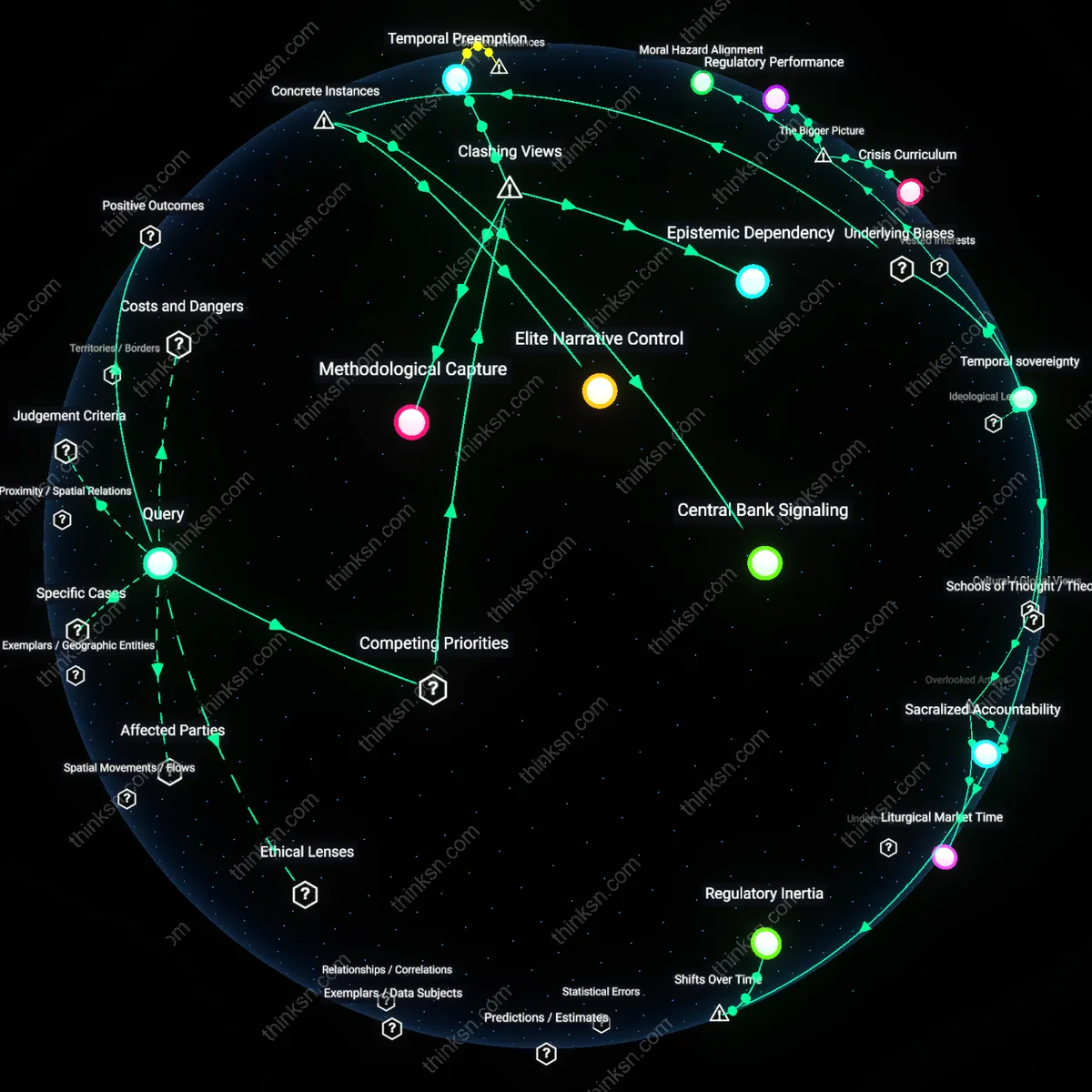
Central banks and international financial institutions gain decisive authority in marking the end of crises after the 1980s, replacing democratic or legislative assessments, because stabilization metrics like inflation and liquidity became codified as technical benchmarks divorced from social cost. This shift, consolidated after the Latin American debt crisis and entrenched during the 1997 Asian financial crisis, established technocratic consensus as the gatekeeper of crisis closure—eliding public deliberation about structural inequities exposed during downturns. The non-obvious consequence is that recovery is now defined not by employment or wage restoration but by market confidence, entrenching a post-crisis normal where financial stability presumes societal healing.
Historical Forgetting
Economic historians and academic economists gained outsized influence in shaping post-crisis narratives only after the 2008 global financial crisis, as institutions like the NBER and central bank research divisions began funding retrospectives that framed lessons in terms of model refinement rather than power realignment. This marks a departure from the immediate post-1929 era, when public commissions and labor inquiries dominated lesson-drawing; now, the selection of what constitutes a ‘lesson’ is filtered through peer-reviewed epistemic communities that privilege quantifiable policy adjustments over institutional accountability. The underappreciated effect is a systemic drift toward interpreting crises as calibration errors, not challenges to legitimacy, thus immunizing core financial architectures from reform.
Sacralized Accountability
Ritual elders in post-crisis Japan—such as Shinto priests and temple-affiliated economists—symbolically close financial trauma by presiding over public ceremonies of economic 'cleansing,' a practice grounded in Shinto notions of ritual purification after societal contamination, which recalibrates public perception of recovery independent of macroeconomic indicators. This mechanism operates through shrine-based community forums where economic regret is vocalized and collectively absolved, a non-Western epistemic model that treats crisis resolution as spiritual reconciliation rather than statistical thresholds. The overlooked dimension is that crisis closure can be socially certified not by central banks but by custodians of moral hygiene, redefining recovery as a culturally synchronized reset rather than a market signal.
Subaltern Memory Banks
In rural Kerala, women’s self-help groups (Kudumbashree) preserve granular oral records of household debt crises and informal lending collapses, forming an alternative archive of financial trauma that resists state or IMF declarations of recovery. These collectives use cyclical storytelling during monsoon-season meetings to reinforce cautionary norms, embedding financial memory in agrarian rhythm rather than fiscal policy timelines. The overlooked mechanism is that crisis aftermath is governed not by return to growth but by the persistence of communal narrative structures—where 'over' is determined by social forgetting, not GDP rebound—making memory custody a silent veto power over institutional narratives.
Liturgical Market Time
In Istanbul, certain Sufi-derived merchant guilds align their financial ethics to the rhythm of prayer cycles, interpreting crisis resolution not through liquidity metrics but through the restoration of time-bound trust practices—such as pre-dawn interest-free loans (qard al-hasan) exchanged during Fajr. These transactions, timed to spiritual discipline rather than credit ratings, signal recovery when reciprocity resumes within sacred temporal frames, making the fiduciary clock subordinate to liturgical time. The hidden dependency is that financial normalcy can be indexed to ritual punctuality, revealing a non-secular temporality that Western models systematically exclude from crisis diagnostics.
Central Bank Signaling
The U.S. Federal Reserve decisively marked the end of the 2008 financial crisis by normalizing interest rates and shrinking its balance sheet starting in 2015, thereby framing recovery as a technical return to monetary orthodoxy. This move privileged financial stability metrics over labor market or inequality indicators, allowing policymakers to declare victory while wage growth remained stagnant and household debt levels high—a framing that benefits creditors and asset holders. The mechanism was institutional authority channeled through market expectations, where the Fed’s credibility made its definition of ‘recovery’ self-fulfilling among investors, corporations, and global markets. What is underappreciated is that this technocratic timing masked ongoing structural distress by equating macroeconomic indicators with societal healing.
Elite Narrative Control
The Institute of International Finance, representing major global banks, promoted the 'Great Moderation' narrative in the mid-2000s, shaping consensus that financial crises were outliers in an era of stable growth and effective risk management. This framing delayed regulatory reforms and normalized deregulation, directly benefiting financial institutions by extending the period of light oversight before the 2008 collapse. The mechanism was an epistemic community of economists, bankers, and policymakers who shared assumptions about market efficiency and self-correction, reinforcing a lesson that markets fail only due to exogenous shocks, not systemic design. What remains hidden is how private sector think tanks and industry-funded experts can pre-define both the beginning and end of crisis periods through intellectual authority rather than empirical reality.
Social Unrest Threshold
In Greece during 2015, the financial crisis was effectively deemed ongoing not by EU institutions or economists, but by mass protests, strikes, and the electoral victory of Syriza, which forced a renegotiation of austerity terms despite official claims of recovery by the Troika. The crisis ended only when political systems responded to societal breakdown, revealing that legitimacy—rather than fiscal metrics—was the binding constraint on crisis closure. This dynamic operated through the feedback loop between public endurance, electoral outcomes, and creditor concessions, challenging the notion that technocrats alone define crisis timelines. The overlooked insight is that crises conclude not when debt is stabilized, but when affected populations either accept or successfully resist imposed solutions.
Regulatory Performance
Central banks declare financial crises over when key financial markets stabilize, using measures like interbank lending rates and asset volatility to signal restored confidence, because their authority to manage monetary stability grants them epistemic privilege in defining systemic risk resolution, which consolidates policy narratives that prioritize market functionality over household or labor recovery, thus obscuring the differential social duration of crisis impacts. The non-obvious consequence is that the technical performance of financial indicators becomes a stand-in for broader societal healing, even as unemployment or inequality may remain elevated.
Moral Hazard Alignment
Large financial institutions shape the perception that a crisis has ended by resuming dividend payments and executive bonuses, using restored profitability as evidence of resilience, because their survival depended on government bailouts whose political legitimacy required demonstrating that exceptional interventions were no longer needed, thereby reinforcing a feedback loop where private gains are re-privatized while systemic vulnerabilities are left structurally unaddressed. The overlooked mechanism is that the restoration of normal corporate financial behavior is treated as proof of systemic recovery, even when it depends on the same risk-taking that precipitated the crisis.
Crisis Curriculum
Academic economists and policy think tanks determine which lessons society takes from a financial crisis by publishing influential post-mortems that attribute causes to specific policy failures or market distortions, because their access to media, congressional testimony, and central bank affiliations allows them to standardize narratives about what went wrong, often privileging models that emphasize rational expectations and liquidity shocks over structural inequality or power concentration, thus entrenching a technocratic memory of the crisis that limits future policy imagination. The underappreciated effect is that epistemic communities codify lessons in ways that reproduce existing institutional power, making certain reforms appear unrealistic even when politically feasible.
Explore further:
- How often do financial crisis investigations funded by industry-linked institutions end up recommending changes that leave major power imbalances untouched?
- If communal memory decides when a financial crisis is truly over, how might regulators' reliance on formal data obscure the lived reality of recovery?
- Where exactly did protests and political resistance grow strong enough to force changes in financial rules during the Greek crisis?