Single Tech Agency: Cure for Red Tape or Risky Power Play?
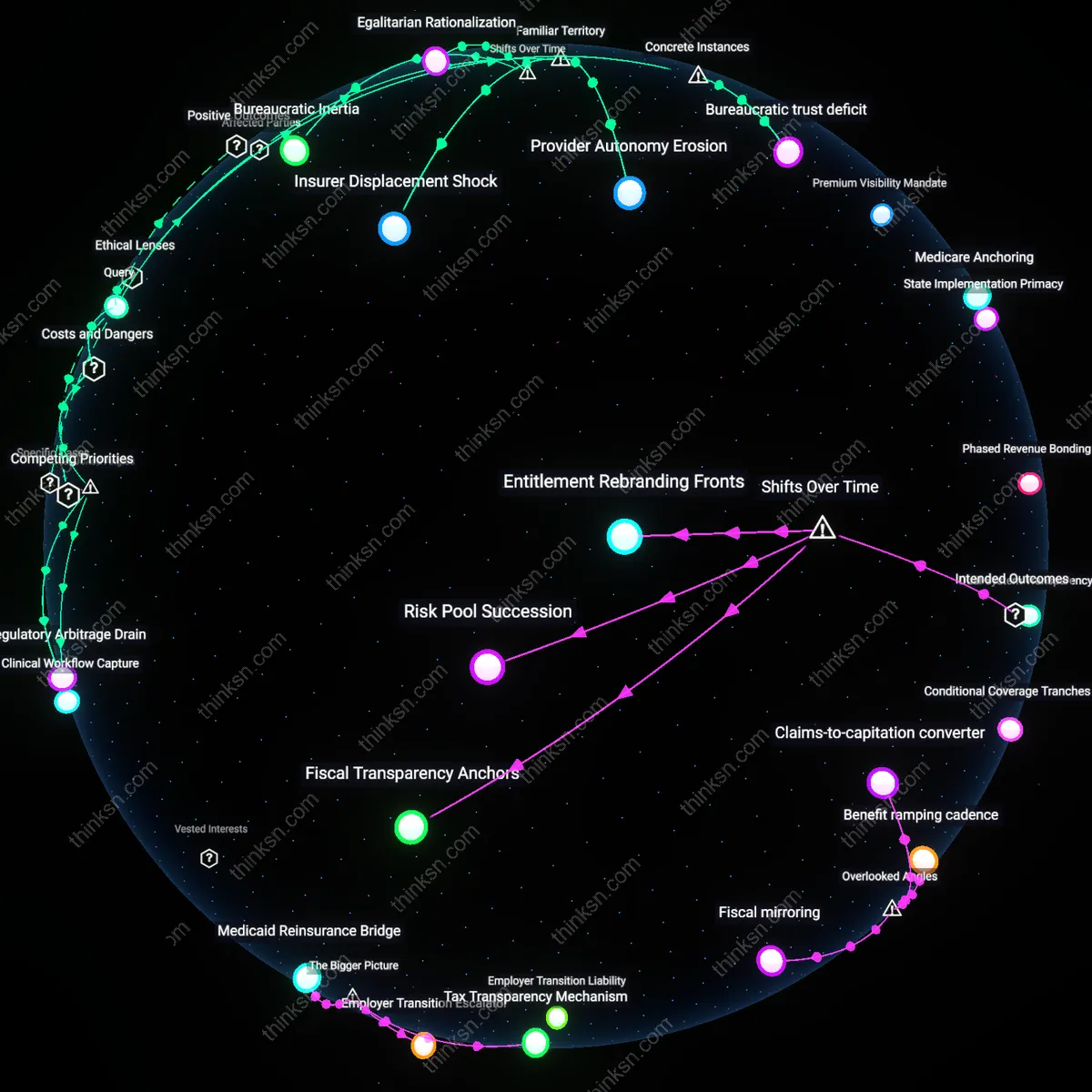
Analysis reveals 9 key thematic connections.
Key Findings
Crisis-Driven Institutional Capture
Federal consolidation of emerging technology oversight becomes politically viable only after high-profile failures, such as autonomous vehicle fatalities or generative AI disinformation campaigns, trigger public demand for accountability. These crises activate media scrutiny and legislative urgency, enabling agencies like the proposed Office of Digital Assets or expanded FTC mandates to absorb regulatory functions previously scattered across NIST, FCC, and sectoral bodies. The non-obvious mechanism is that crisis conditions compress decision-making timelines, weakening oversight from civil society and technical experts who lack rapid-response capacity, thereby allowing well-positioned bureaucratic actors to expand jurisdiction under the guise of coordination. This reveals how emergency framing, not deliberative design, often enables centralization.
Regulatory Inertia
Centralizing oversight of emerging technologies amplifies systemic risk by institutionalizing lag into high-velocity innovation cycles, as seen in the FDA’s delayed engagement with AI-driven diagnostics due to rigid procedural frameworks not designed for iterative deployment. Regulatory bodies prioritize legal defensibility over adaptive responsiveness, embedding conservatism into enforcement mechanisms that treat rapid iteration as noncompliance rather than progress—this misalignment reveals that concentrating authority mistakes administrative coherence for operational fitness, obscuring the need for distributed, feedback-rich governance calibrated to technological tempo.
Capture Drift
Placing singular authority over emerging technologies in one federal agency accelerates regulatory capture not through overt corruption but via asymmetric competence, where only industry insiders possess the technical fluency to navigate or shape emerging rules—evident in the FCC’s historical dependency on telecom expertise sourced directly from regulated firms. This epistemic asymmetry means agency priorities converge with corporate timelines and ontologies, reframing public interest as technical feasibility, thereby exposing that centralization does not consolidate accountability but displaces it into invisible circuits of knowledge control.
Jurisdictional Blindspots
A centralized regulatory body inevitably fails to anticipate cross-domain impacts because its mandate suppresses lateral jurisdictional friction that otherwise forces inter-agency negotiation—illustrated by the absence of environmental or labor safety input in early FinTech oversight by the Treasury Department. The elimination of contested regulatory boundaries creates policy myopia, proving that concentrated power does not enhance precision but reduces cognitive diversity within governance, turning comprehensive risk assessment into a liability rather than a feature.
Regulatory Foresight Capacity
Centralizing regulatory authority accelerates the development of anticipatory governance mechanisms by enabling sustained investment in long-term horizon scanning. A single agency can institutionalize cross-sectoral technology forecasting—integrating signals from AI, biotech, and quantum computing—because it can amortize the cost of specialized analytical units over multiple domains, a capacity ad hoc interagency task forces routinely underfund. This creates a stable epistemic infrastructure for identifying convergent risks before they crystallize, a function overlooked in debates focused on reactive oversight. The non-obvious value lies not in enforcement unity but in cultivating a persistent cognitive advantage over emergent systemic threats.
Vendor Innovation Pathway
Consolidated regulatory authority reduces the innovation tax imposed on startups by fragmented compliance regimes across jurisdictions and sectors. A single agency creates a predictable, repeatable approval trajectory—like the FDA’s breakthrough device program—enabling smaller firms to allocate capital toward R&D instead of regulatory arbitrage. This overlooked dynamic shifts market entry from favoring well-connected incumbents to enabling technically superior but resource-constrained innovators, thereby increasing competitive diversity in high-tech markets. The realignment of entrepreneurial incentives, not just regulatory efficiency, is what makes centralization generative rather than merely administrative.
Public Trust Externalities
A centralized agency generates positive trust spillovers across technology domains by establishing consistent standards for public consultation and ethical review, which in turn strengthens societal legitimacy for high-risk innovations. When one body repeatedly engages communities using transparent, codified processes—such as public algorithmic impact statements—citizens develop calibrated expectations about oversight, reducing reactionary backlash against novel technologies. This cumulative reputational capital, often ignored in institutional design debates, functions as a social shock absorber that enables faster, more stable deployment of beneficial technologies in polarized environments.
Regulatory Monoculture
Centralizing authority in a single federal agency like the FDA for biotech or the FCC for communications creates a uniform standard that simplifies compliance but risks eroding domain-specific nuance. This central body replaces a mosaic of state and sectoral regulators with one hierarchical decision-making logic, often modeled on Cold War-era technocratic governance seen at NASA or the NRC. The non-obvious consequence under familiar framings of efficiency and safety is the gradual extinction of regulatory alternatives—state labs, university review boards, or industry consortia—that previously incubated novel oversight approaches without federal scale.
Principal-Agent Drift
A centralized agency becomes the sole conduit through which legislative intent flows into enforcement, placing immense interpretive power in career bureaucrats insulated by civil service protections and opaque rulemaking procedures. Under public choice theory, this structure incentivizes mission creep as agencies align with concentrated industry stakeholders over diffuse public interests, mirroring the post-1970 EPA-industry capture patterns. The familiar rallying cry of 'accountability' masks the reality that democratic oversight weakens when checks and balances are structurally collapsed into one unelected body.