Who Can Fight Deplatforming When Political Speech Is Silenced?
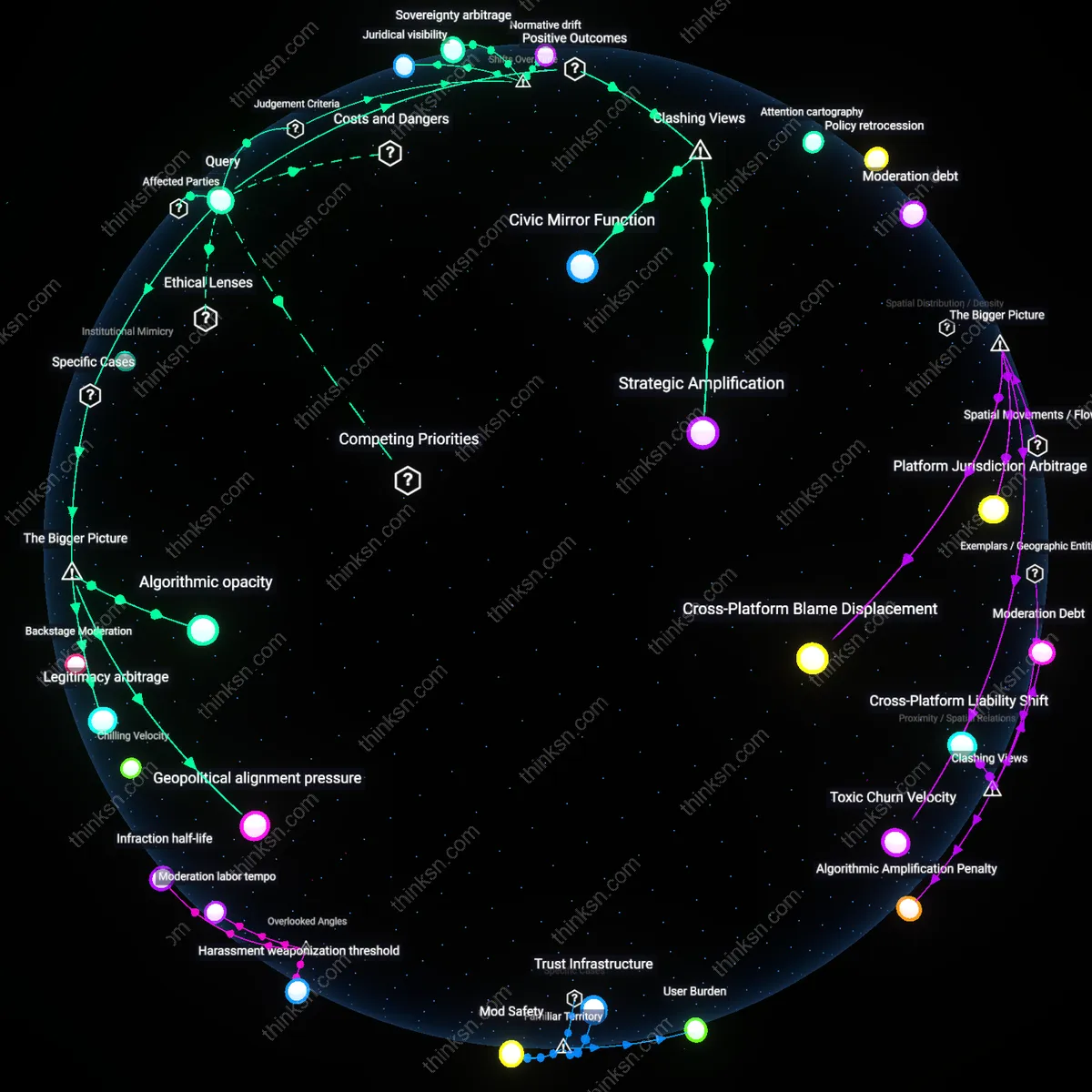
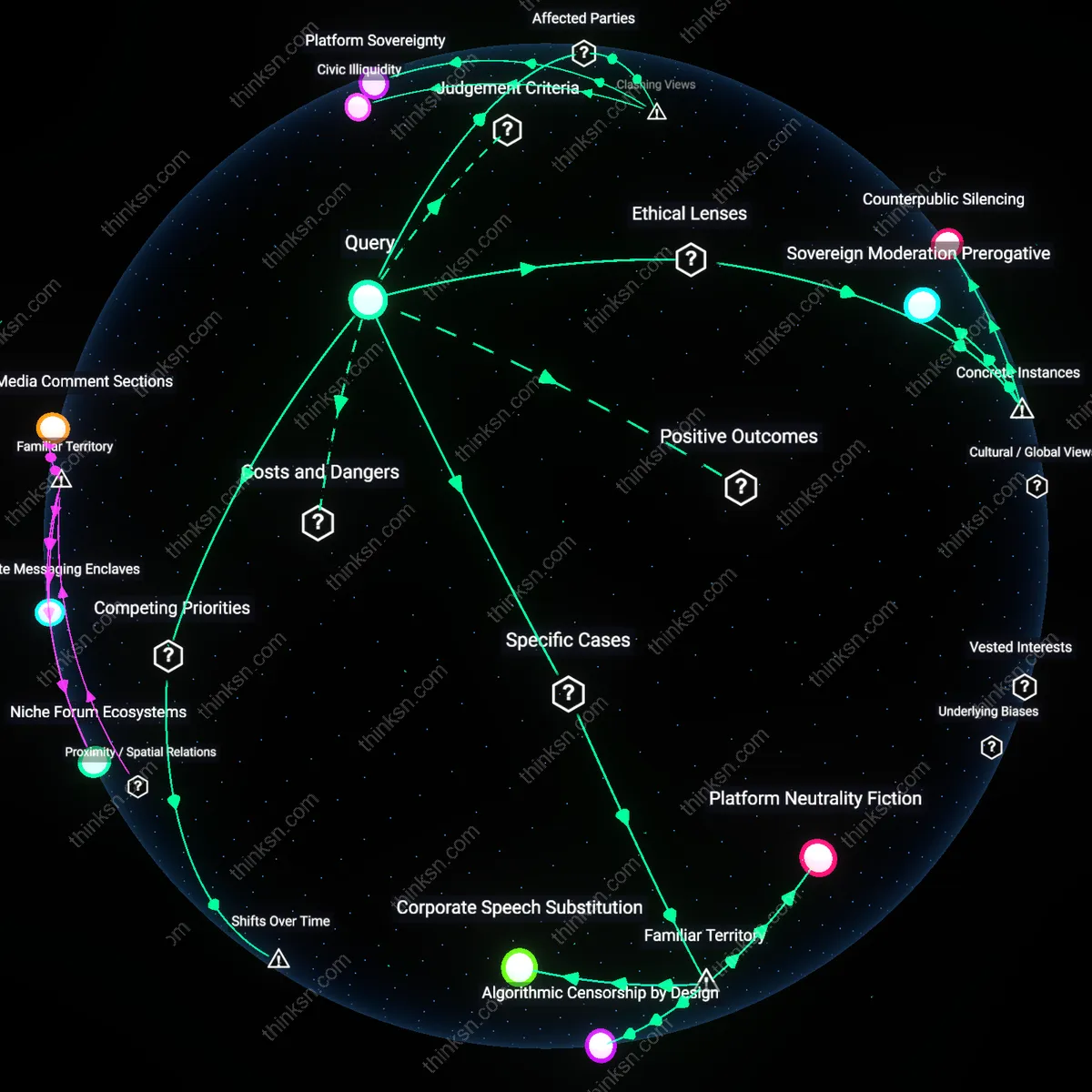
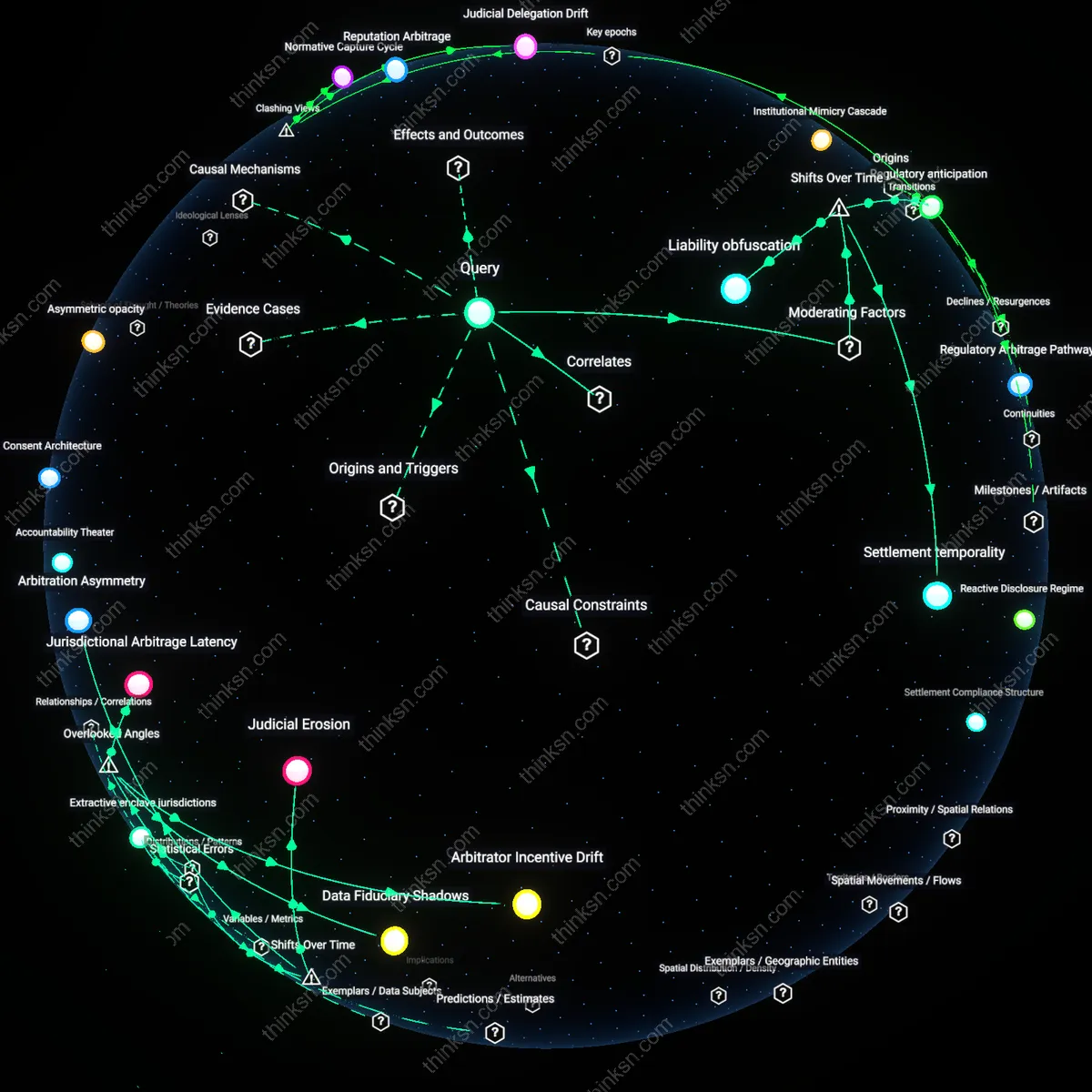
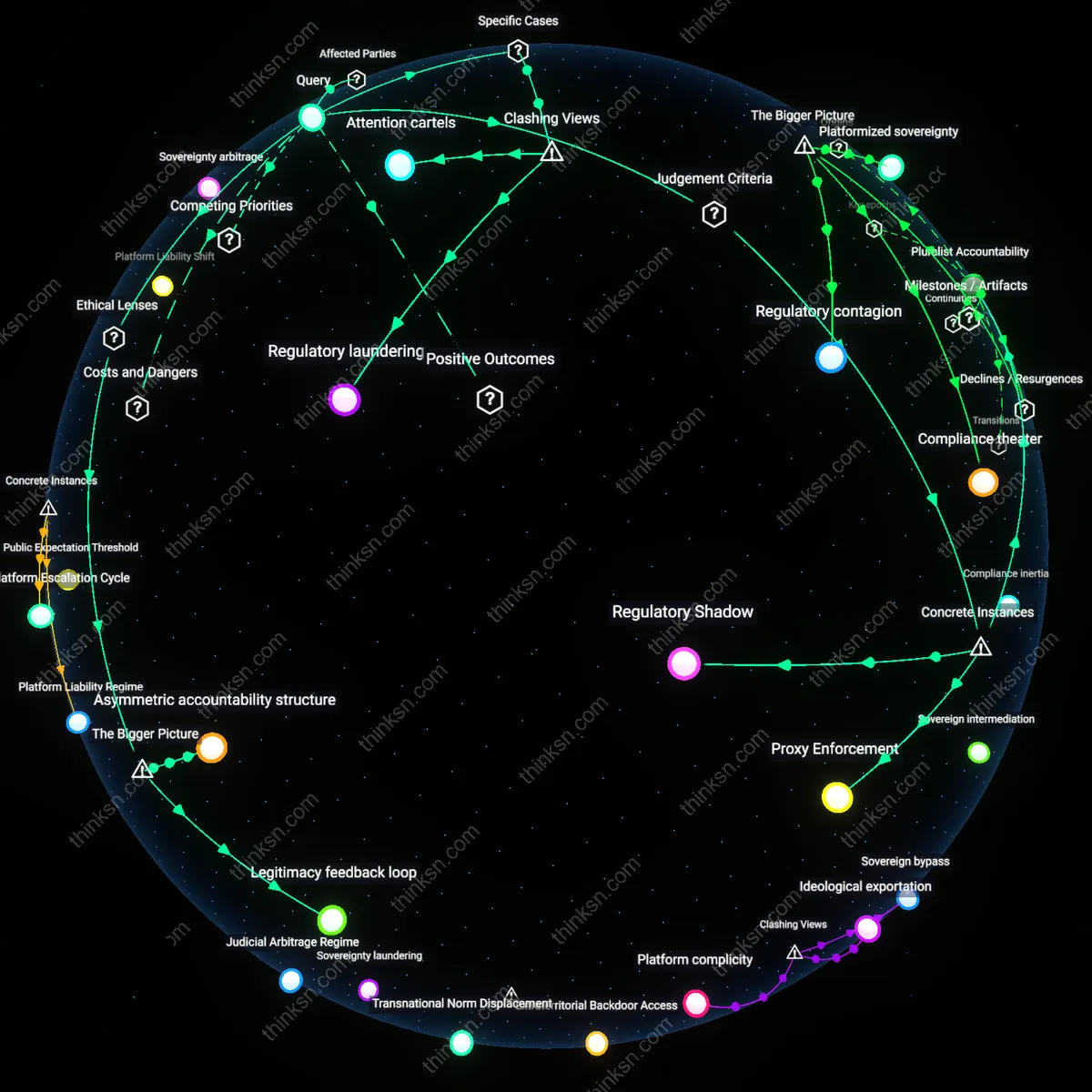
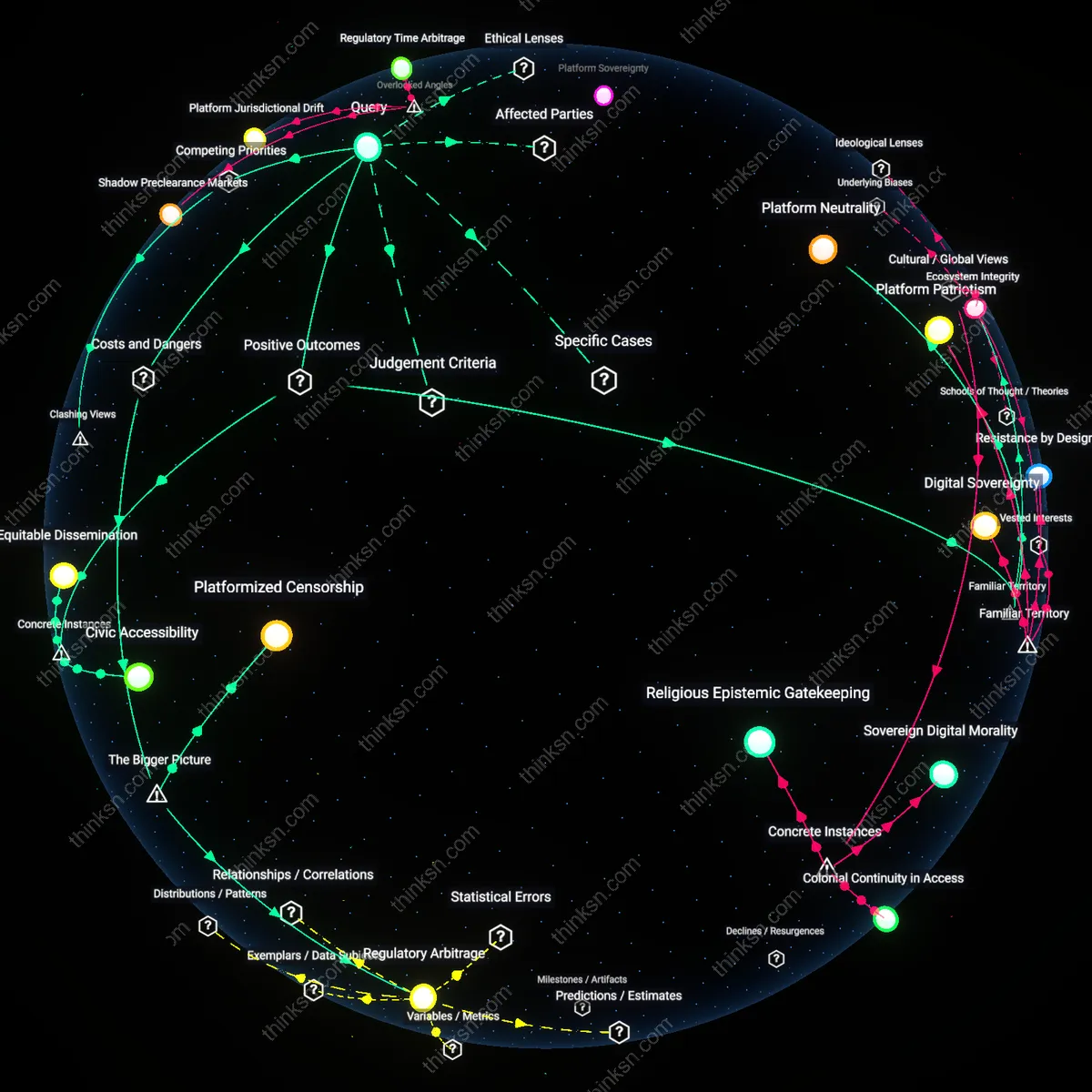
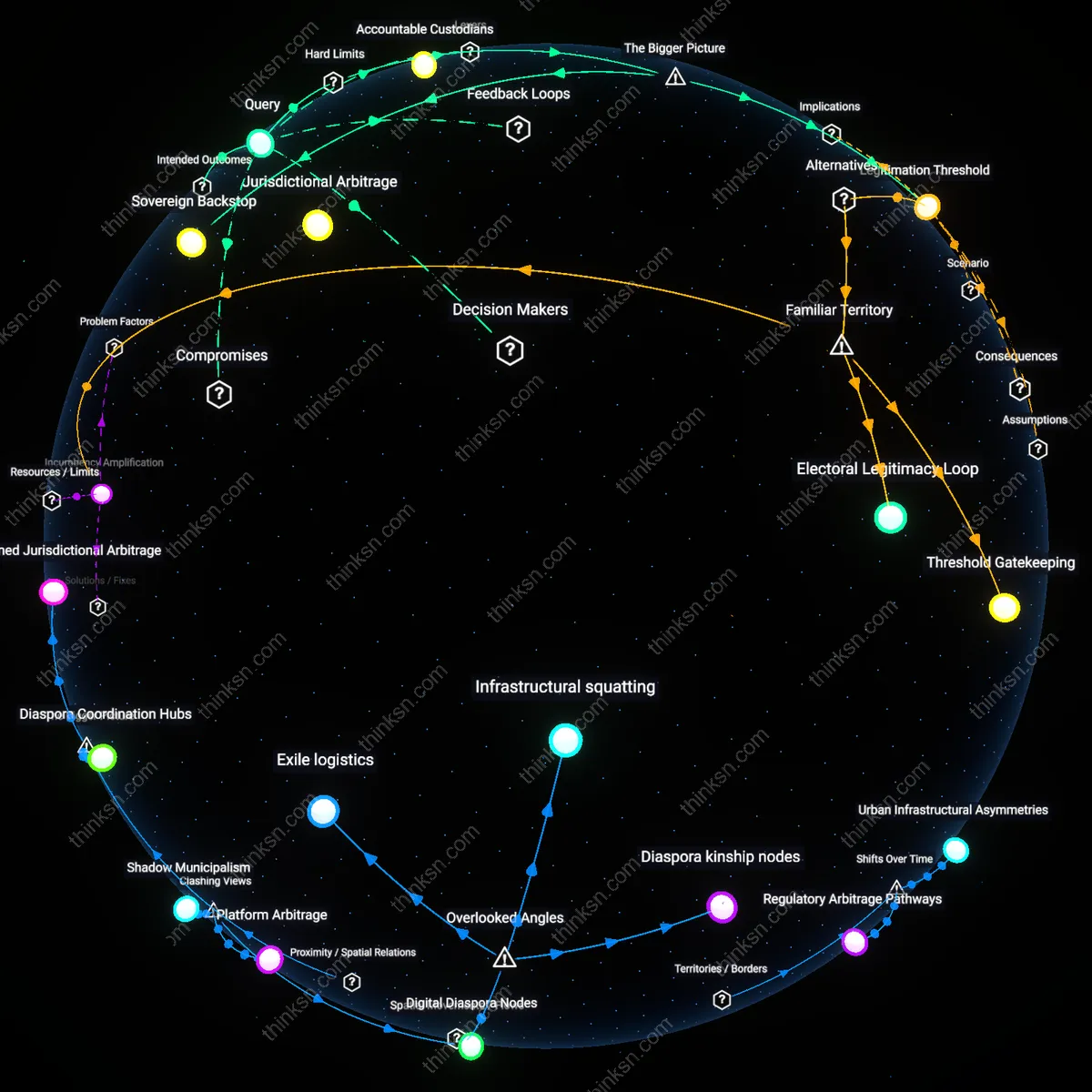
Analysis reveals 5 key thematic connections.
Key Findings
Sovereign Backstop
National judicial authorities should be the default challengers to de-platforming decisions involving political activists, because they are institutionally insulated from platform incentives and capable of enforcing rights-based review under hard constitutional limits. This mechanism functions through standing doctrines and access to binding remedial orders, which only state-established courts possess, making them uniquely able to override private content moderation without delegating regulatory power to unelected intermediaries. The non-obvious insight is that judicial access converts platform accountability from a normative aspiration into an enforceable procedural sequence grounded in jurisdictional authority—bypassing the stalemate between free speech advocacy and content moderation pragmatism.
Legitimation Threshold
Eligibility to challenge de-platforming should hinge on verifiable electoral engagement—such as holding public office or surpassing a vote threshold—because systemic credibility in political speech is conferred not by expressive intent but by demonstrated democratic mandate. This criterion operates within the broader dynamic of legitimacy displacement, where private platforms assume gatekeeping roles once held by electoral institutions, thereby altering the causal relationship between public accountability and speech entitlement. The key insight is that without anchoring contestability in institutional recognition, procedural protections risk equating virality with political significance, thereby inflating performative dissent into indistinguishable political activism.
Accountable Custodians
Users and civil society coalitions should be able to challenge de-platforming when it affects public discourse, as demonstrated by the 2021 Meta Oversight Board ruling that reversed Facebook’s suspension of Donald Trump’s account, a mechanism allowing external review of corporate content decisions that revealed the efficacy of independent adjudication over unilateral platform authority; this matters because it institutionalizes user recourse without requiring state intervention, exposing the non-obvious reality that quasi-judicial bodies hosted by private firms can legitimize takedown decisions if they operate with transparency and binding authority.
Jurisdictional Arbitrage
National regulators must be empowered to challenge de-platforming that suppresses political speech, exemplified by the 2022 German Network Enforcement Act (NetzDG) enforcement that compelled social media platforms to reinstate accounts of far-right activists pending judicial review, establishing binding procedural requirements for notice and justification; this case reveals that legal frameworks mandating state-supervised due process can constrain U.S.-based platforms’ unilateral control, a non-obvious outcome where national sovereignty in digital governance enables enforceable procedural rights even against globally dominant platforms.
Collective Redress
Political activists’ affiliated organizations—not individuals alone—should hold standing to contest de-platforming, as seen in the 2020 Nigerian #EndSARS protests where the Twitter suspension of activist accounts prompted coordinated litigation by civil rights groups like Amnesty International and the Centre for Democracy and Development, leading to regional court interventions; this illustrates that collective legal capacity, rather than individual appeal, can overcome asymmetrical power in platform governance, an underappreciated dynamic where group mobilization creates enforceable procedural footholds absent in individual user contracts.
Deeper Analysis
What would happen if only candidates who received at least 5% of the vote in their last election could challenge being de-platformed?
Threshold Gatekeeping
Only candidates with 5% prior vote share could appeal de-platforming, which means major-party figures and politically connected influencers would retain leverage over content moderation systems while sidelining emerging or niche voices. This mechanism embeds electoral validation into digital speech rights, transforming platforms into semi-public utilities that de facto recognize state-vetted political legitimacy. What’s underappreciated is how this mirrors existing media bias toward established politicians, reinforcing the public’s intuitive association between ‘electability’ and ‘platform worthiness,’ even when the platform is private.
Electoral Legitimacy Loop
When de-platforming appeals require 5% electoral thresholds, platforms outsource legitimacy assessments to past voter behavior, effectively creating a feedback loop where electoral success grants ongoing digital visibility. Political parties, election commissions, and data firms become indirect arbiters of speech rights, as platforms rely on certified vote tallies to validate appeals. This reflects the familiar equation of ‘public support’ with ‘deserving a voice,’ but obscures how prior electoral systems may already be skewed, allowing past distortions to cement future discourse dominance.
Incumbency Amplification
Setting a 5% electoral threshold for de-platforming appeals systematically advantages officeholders and those with access to established campaign infrastructure, turning platform access into an extension of political incumbency. Incumbents benefit from media coverage, donor networks, and ballot access that make reaching 5% more feasible, meaning the rule entrenches a cycle where visibility begets votes, which in turn secures more visibility. The non-obvious consequence is that it transforms social media into a secondary electoral apparatus—one where campaign performance retroactively governs digital free speech.
How did the response to activist de-platforming evolve from individual appeals to organized legal action in the years following the #EndSARS protests?
Litigation Infrastructure
Organized legal action against activist de-platforming emerged through the systematic repurposing of existing human rights litigation networks in Lagos following the 2020 #EndSARS protests, where legal collectives such as YIAGA Africa and the Centre for Human Rights and Accountability (CHRA) began formalizing ad hoc defense of detained protesters into institutionalized court challenges against internet shutdowns and social media takedowns. This shift was not spontaneous but built on pre-existing litigation capacities originally designed for electoral accountability, revealing how crisis conditions can redirect established legal machinery toward digital rights defense—a trajectory overlooked in narratives that frame digital activism as inherently decentralized or informal.
Judicial Entry Point
The Federal High Court in Abuja’s November 2021 ruling in *Balkisu Suleiman vs. Nigerian Communications Commission* established a pivotal precedent by recognizing arbitrary internet restrictions as violations of constitutional free speech, enabling activists previously silenced on platforms like Twitter to pivot from public appeals to rights-based legal claims framed through enforceable regulatory breaches. This case marked a turning point where de-platforming was no longer addressed as a moral appeal but as a justiciable harm, exposing how a single judicial forum can transform diffuse outrage into a structured legal pathway when anchored in statutory interpretations of digital access.
Transnational Advocacy Locus
The collaboration between Nigerian digital rights groups and international bodies such as Article 19 and the UN Special Rapporteur on Free Expression following the Twitter ban in June 2021 created a new axis of accountability, where local activists leveraged transnational pressure to reframe de-platforming as a global free speech crisis rather than a domestic public order issue. This strategic hybridization—using international normative frameworks to amplify national legal strategies—revealed that organized legal resistance was not solely rooted in domestic institutions but depended on a geographically distributed network of legitimacy and expertise often invisible in state-centric analyses.
Litigation Frontiers
The pivot from individual appeals to legal action after #EndSARS was driven not by civil society’s formalization, but by the strategic repurposing of existing human rights litigation infrastructure by tech-literate youth collectives who inserted digital repression claims into constitutional challenges previously focused on police brutality. These groups leveraged procedural openings in Nigerian courts—particularly the Lagos High Court’s expanded interpretation of locus standi—to frame de-platforming as a violation of free assembly, transforming isolated petition efforts into coordinated test cases, such as the challenge against Twitter’s 2021 suspension. The non-obvious insight is that legalization did not follow public outcry but pre-empted it, with litigation acting as a tactical shield to forestall further state encroachment, revealing that the courtroom had become a contestable territory rather than a last resort.
Silence Economies
Organized legal responses to de-platform, not ethical appeals, became the dominant strategy because digital silencing had evolved into a revenue-extractive mechanism—platforms complying with state takedown demands gained preferential regulatory treatment, thus monetizing censorship. This shift was marked by corporate alignment patterns observed in West African data localization policies, where firms like Meta and Google secured market advantages by preemptively moderating activist content, making individual appeals futile. Legal action arose not as a moral escalation but as a counter-financial instrument, exposing that the value of speech now lay less in visibility than in its calculated absence, which could be weaponized in court to demand transparency logs or compensation, thus redefining de-platforming as economic sabotage rather than expression control.
Juridical Personhood
The transformation from fragmented appeals to systemic litigation stemmed from the reconstitution of ‘activist’ as a legally recognizable political subject through digital footprint aggregation—legal standing emerged not from citizenship but from metadata patterns that proved collective digital presence during #EndSARS. Firms like Paradigm Initiative and LEAT did not represent individuals but invoked ‘networked bodies,’ submitting IP clusters, device geolocation convergence, and API logs as evidence of a de facto assembly, thereby compelling courts to recognize activist collectives as juridical persons. This inversion—where identity is derived from data traces rather than self-declaration—challenges the presumption that legal action followed moral recognition, revealing instead that algorithms provided the only credible witness to political existence.
Platform Forensics
Organized legal action against activist de-platforming gained traction only after grassroots digital collectives began systematically documenting takedown patterns using web-scraping tools and metadata reconstruction, a practice that emerged from informal hacker collectives in Yaba and Port Harcourt. These groups, often dismissed as tech hobbyists, created shadow archives of censored content and timeline-verified logs that later became evidentiary cornerstones in court challenges against telecom and social media companies. Their work established a new evidentiary standard for digital repression claims—something individual appeals lacked—while remaining invisible in mainstream accounts that prioritize courtroom drama over data curation. The continuity of evidentiary discipline, rooted in these technical subcultures, shifted the legal arena from moral appeals to procedural accountability, redefining what counts as proof in digital rights cases.
Judicial Signaling
Legal action intensified after lower court judges in Lagos and Abuja began issuing non-public but systematically worded rulings that subtly validated digital rights arguments, creating a feedback loop where activist lawyers interpreted these judicial 'whispers' as green lights to file broader cases. These rulings, often buried in procedural orders or obiter dicta, were not celebrated publicly but were closely monitored and decoded by legal networks who used them to calibrate the timing and framing of subsequent lawsuits. This dimension—judicial signaling as a covert coordination mechanism—remains overlooked because it operates outside formal precedent and public judgment, yet it provided the strategic rhythm that transformed sporadic litigation into a sustained campaign. The continuity lies in the use of implicit judicial cues as tactical anchors, revealing that legal mobilization often follows unseen dialogues between bar and bench rather than public outcry alone.
Judicialization of Protest Rights
The shift from individual appeals to organized legal action after #EndSARS de-platforming was driven by the formal incorporation of digital rights into constitutional litigation strategies by Nigerian civil society groups. Legal NGOs like Media Rights Agenda and pro-bono bar coalitions began reframing social media takedowns as violations of Section 39 of the Nigerian Constitution, leveraging court systems in Lagos and Abuja to issue preliminary injunctions against state-directed de-platforming—transforming ad hoc grievances into enforceable rights claims. This move embedded activist resistance within formal legal institutions, making judicial validation a new frontline of digital dissent. The non-obvious significance lies in how legal infrastructure—rather than public opinion—became the battleground for platform justice, shifting power from streets to courtrooms.
Litigation Infrastructure Networks
Organized legal responses to activist de-platforming grew not from isolated court cases but from pre-existing networks of human rights lawyers and digital security collectives that rapidly coordinated after #EndSARS to document takedowns and build litigation dossiers. Groups such as the Feminist Coalition and Legal Defence Network operationalized decentralized evidence-gathering via encrypted channels, standardizing affidavits and pooling resources across cities—turning episodic outrage into a repeatable legal process. This infrastructure turned reactive defense into a sustained capability, enabling strategic test cases at the Federal High Court level. The overlooked dynamic is that these networks were forged in movement logistics, not legal tradition, making them adaptable and movement-embedded rather than institutionally captive.
Platform Accountability Assemblage
The evolution toward legal action was catalyzed by a transnational alignment of local activists, foreign tech policy institutes, and diaspora-funded trusts that together redefined de-platforming as a systemic governance failure requiring institutional remedies. By channeling funding from global digital rights funders like Access Now into domestic litigation and framing cases around international free expression standards, this coalition elevated Nigerian protest dynamics into a broader normative struggle over platform sovereignty. This assemblage made possible not just legal challenges but a reconceptualization of social media moderation as a public accountability issue. What remains underrecognized is how external legitimacy and financial circuits enabled the domestic legal turn, making sovereignty disputes the hinge of legal mobilization.
Where did the key actors in the pushback against Twitter's ban in Nigeria operate from, and how were they connected across cities and borders?
Diasporic Command Nodes
Key actors coordinating the pushback against Twitter’s 2021 ban in Nigeria operated primarily from diasporic urban centers like London, Toronto, and Atlanta, not within Nigeria itself, marking a shift from historically domestically anchored protest leadership. These hubs became operational bases for organizing global advocacy campaigns, digital mobilization, and legal framing efforts that shaped the domestic response, leveraging transnational media access and political lobbying rights unavailable within Nigeria’s restricted civil space. The mechanism was a decentralized network of Nigerian-origin activists, journalists, and lawyers who used their situated access to foreign policy arenas and digital infrastructures to amplify resistance, revealing a post-2015 transformation in how digital rights contention is externally resourced. This externalization of command is analytically significant because it reflects a new era where digital sovereignty struggles are increasingly steered from beyond the state’s territorial reach—what the 2021 crisis crystallized into a coherent operational model.
Urban Infrastructural Asymmetries
The core resistance to Twitter’s ban emerged from Lagos and Abuja, where high-bandwidth internet access and concentrated tech hubs enabled real-time coordination, marking a shift from earlier nationwide protest models that relied on physical assembly. This urban-centric resistance depended on private broadband networks, co-working spaces, and mobile data redundancy—infrastructure that bypassed state-controlled telecom chokepoints and allowed key actors to sustain presence on alternative platforms despite throttling attempts. The mechanism was the uneven development of digital infrastructure between Nigeria’s urban cores and peripheral regions, which by the early 2020s had produced a class of tech-literate elites capable of tactical digital endurance. This shift is analytically significant because it reveals how post-2017 internet activism became territorially constrained yet technically resilient, consolidating power in urban enclaves that functioned as semi-autonomous digital zones.
Regulatory Arbitrage Pathways
After the 2021 Twitter ban, Nigerian activist-technicians began routing digital operations through legal and jurisdictional gaps in West African regional bodies like ECOWAS and offshore free speech regimes, shifting from direct confrontation to trans-jurisdictional advocacy. This strategy connected Lagos-based litigators with human rights advocates in Banjul and Abuja, then outward to Geneva-based rights monitors, exploiting procedural openings in regional courts and multilateral standards to delegitimize Nigeria’s national platform controls. The mechanism was the repurposing of supranational legal forums and treaty obligations as bypass circuits—pathways that gained strategic salience only after the state severed domestic digital expression avenues post-2020. This evolution is analytically significant because it marks the emergence of a post-sovereign resistance logic, where actors no longer appeal to national reform but instead weaponize cross-border governance fragmentation.
Diaspora Coordination Hubs
Key actors in the pushback against Twitter's ban operated primarily from urban tech hubs in Lagos and Abuja, but their influence was amplified through real-time coordination with Nigerian diaspora communities in London, Atlanta, and Toronto. These transnational nodes enabled rapid dissemination of digital protest tactics, legal resources, and media narratives by leveraging encrypted messaging platforms and diasporic professional networks tied to Nigeria’s socio-political elite. The proximity of local activists to embassies, media houses, and internet infrastructure in Nigeria’s capital cities created operational synergy with externally based campaigners who could mobilize international pressure via foreign policy channels. This configuration reveals how state resistance to digital suppression is increasingly dependent on spatially dispersed yet socially cohesive networks, where physical location determines access to levers of global influence rather than just local mobilization.
Platformed Jurisdictional Arbitrage
The primary actors resisting Twitter’s ban operated across a network anchored in Lagos, but strategically leveraged jurisdictional gaps by coordinating with digital rights lawyers and advocacy groups based in Johannesburg, Nairobi, and Geneva. Their effectiveness hinged on positioning legal challenges and public campaigns in cities where Twitter retained operational presence or where international human rights bodies had jurisdiction, thus converting geographic asymmetry into political leverage. This spatial displacement of advocacy allowed Nigerian civil society to frame the ban as a regional and global free speech issue, drawing on institutional resources beyond the reach of local state retaliation. The non-obvious insight is that digital repression is countered not through uniform resistance, but by exploiting the uneven legal and technological topography of platform governance.
Exile logistics
Key Nigerian dissenters against Twitter’s ban orchestrated cross-border coordination from transit hubs like Cotonou and Lomé, where short-distance mobility enabled secure, deniable assembly just beyond Nigerian jurisdiction. These cities became functional extensions of Lagos’ activist networks not due to scale but because their proximity and weak interdiction thresholds allowed rapid cycling of people and information across porous borders—transforming informal trade routes into encrypted political conduits. This spatial reliance on near-border opacity is typically ignored in digital rights narratives, which privilege online anonymity over physical maneuverability, yet it was decisive in sustaining operational continuity. The resilience of the pushback depended less on virtual infrastructure than on the tactical exploitation of jurisdictional seams in urban West Africa.
Infrastructural squatting
Activists coordinating from Abuja and Port Harcourt repurposed decommissioned ISP maintenance tunnels and abandoned fiber-optic backhaul points to reroute communication traffic circumventing state surveillance during the Twitter blackout. These forgotten technical spaces—preserved due to bureaucratic inertia in the telecom sector—allowed physical access to low-level network layers, enabling localized mesh networking that persisted even when internet throttling peaked. Standard analyses emphasize app-based circumvention tools, but the survival of organized resistance relied on underground access to pre-existing, derelict infrastructure often skipped in national inventory audits. This reveals a hidden dependency on obsolete physical plant that only veteran technicians within state-owned telecoms could locate and reactivate, making institutional memory a covert enabler of digital defiance.
Diaspora kinship nodes
Nigerian expatriates in Peckham (London) and Oslo coordinated financial and informational resupply through familial remittance networks that were already embedded in informal retail corridors, using hawala-like trust chains in phone credit and prepaid SIM flows to sustain activist operations at home. These systems bypassed formal banking scrutiny not through encryption but through social invisibility—leveraging immigrant commerce as a camouflage layer for politically sensitive data routing. Most accounts of transnational digital activism assume institutional NGOs or social media platforms as bridges, but the actual lifeline flowed through aunties running African grocery stores who relayed burner phones and authentication details along kin-based corridors. This kin-embedded logistics reveals that bloodline proximity, not digital tools, anchored the transnational resilience architecture.
Digital Diaspora Nodes
The key actors coordinating resistance to Twitter’s 2021 ban in Nigeria operated primarily from Toronto, Berlin, and Atlanta, not Abuja or Lagos—leveraging transnational networks of Nigerian-origin digital activists who used encrypted group chats and offshore platforms to disseminate counter-narratives and organize global pressure campaigns. These diasporic hubs acted as command centers, bypassing domestic surveillance by routing messages through borderless digital alliances anchored in cities with high concentrations of Nigerian expatriates; this challenges the assumption that online resistance within repressive contexts must originate locally, revealing instead how sovereignty gaps in digital infrastructure enable exiled agency.
Platform Arbitrage
The central nodes opposing the Twitter ban were not activist groups but local fintech entrepreneurs in Lagos and Port Harcourt who used their access to U.S.-based payment infrastructures—like Flutterwave and Paystack—to weaponize transactional dependency, threatening withdrawal of digital revenue flows if the platform remained censored. Their influence stemmed not from political legitimacy but from their embeddedness in cross-border financial circuits, which gave them leverage that civil society actors lacked—contradicting the standard narrative that digital rights advocacy drives platform access, exposing instead how economic gatekeeping in financial tech enables unintended political power.
Shadow Municipalism
Student organizers at the University of Ibadan and Ahmadu Bello University in Zaria coordinated offline mobilizations through decentralized campus nodes that synchronized protests using burner phones and mesh networks, not internet-based platforms—proving that physical university infrastructures operated as autonomous political zones independent of both state control and global tech solidarity. These institutions functioned as de facto city-states with internal communication systems insulated from national blackouts, revealing that resistance was rooted not in global digital solidarity but in localized institutional governance, undermining the myth of the internet as the indispensable artery of digital protest.