Should App Stores Mandate Political Apps to Prevent Bias?
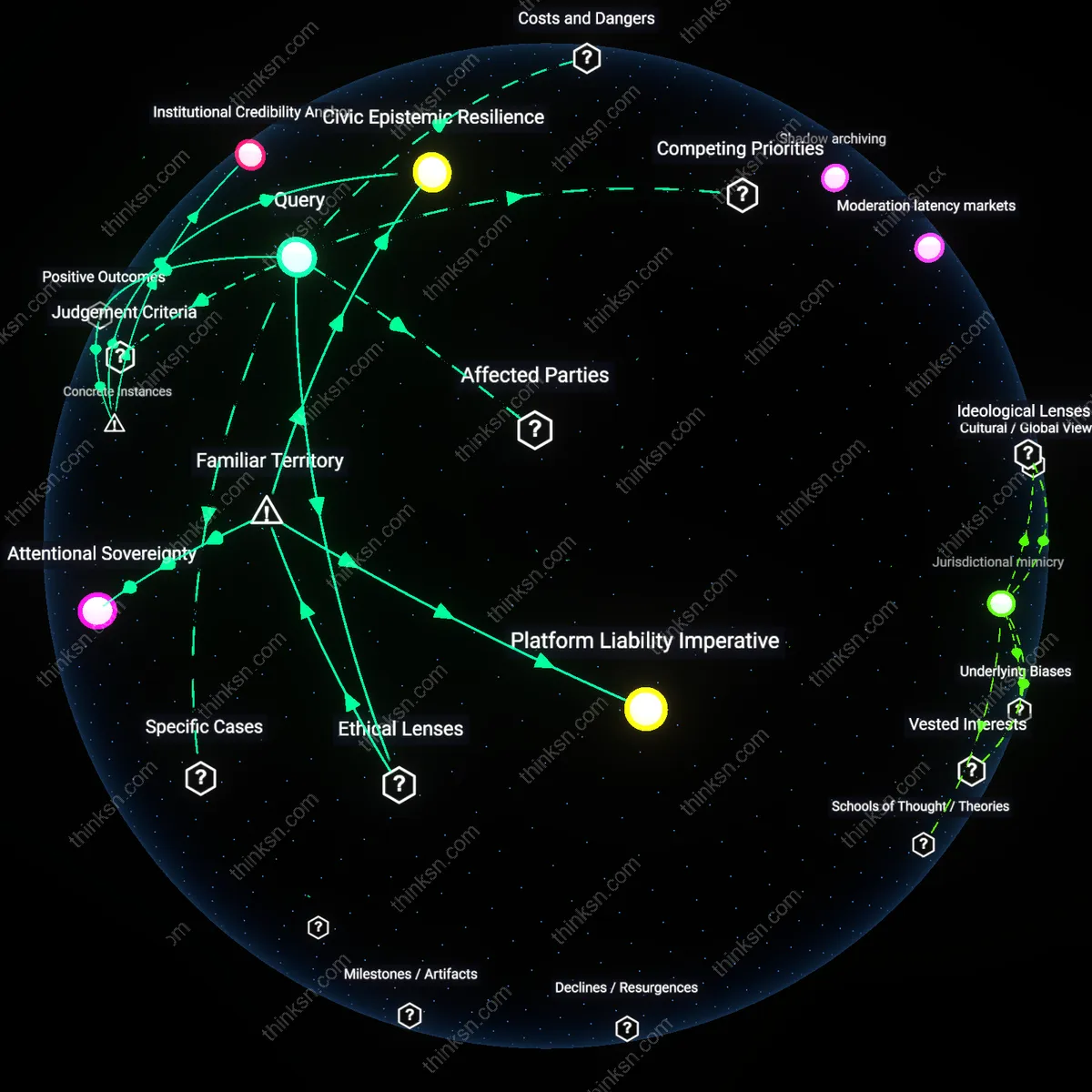
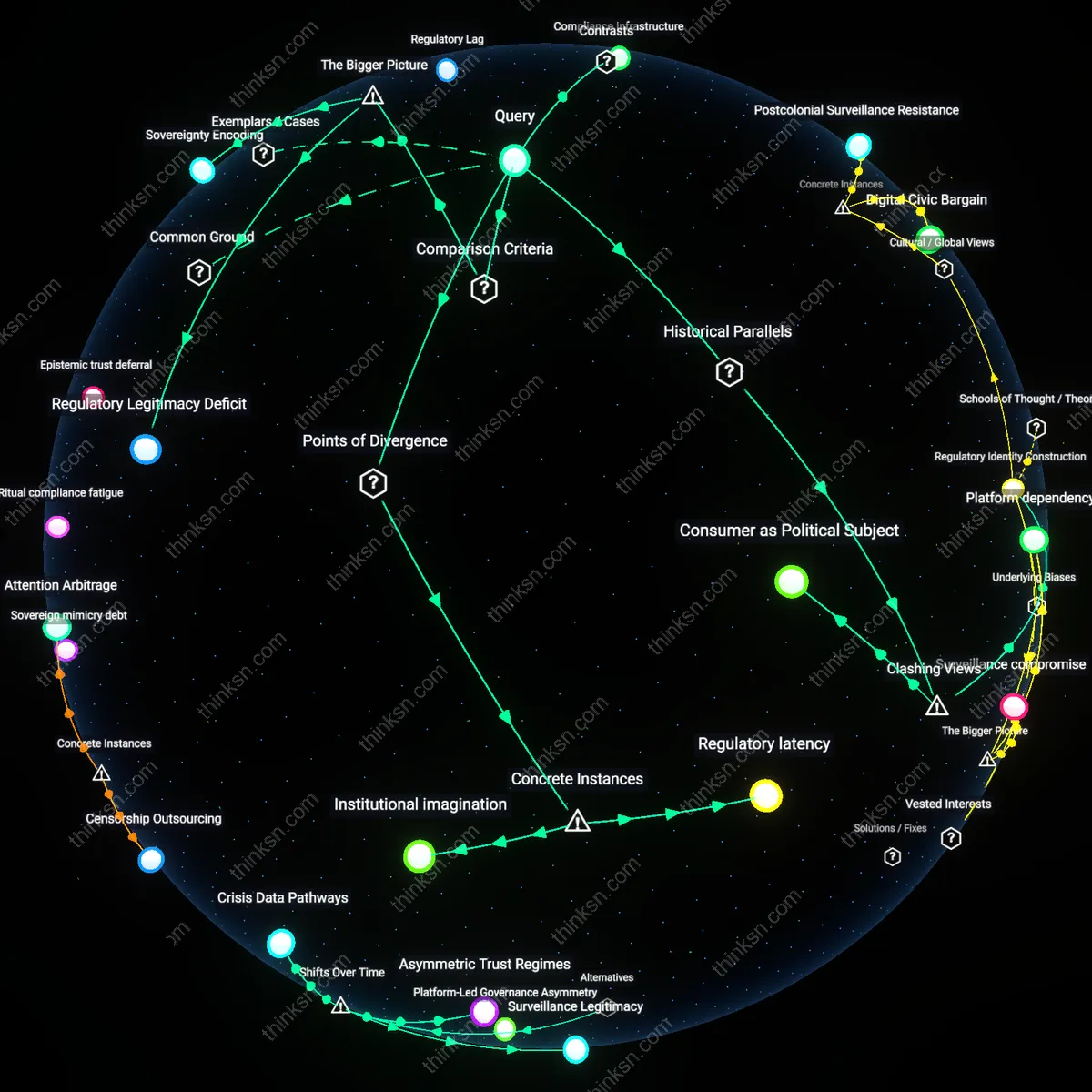
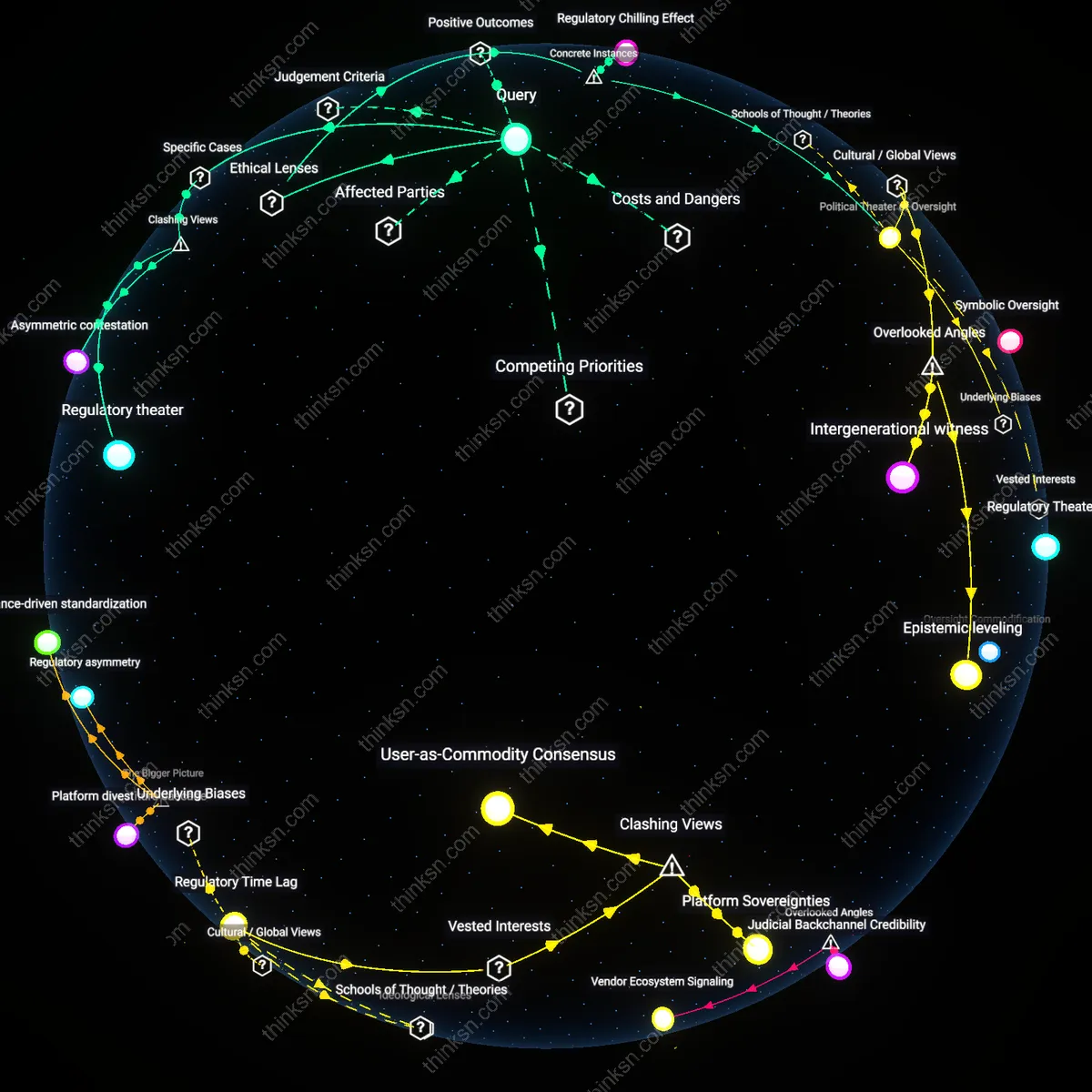
Analysis reveals 9 key thematic connections.
Key Findings
Platform Neutrality
App stores should carry political apps to uphold platform neutrality, ensuring equal access to digital infrastructure regardless of ideological affiliation. Major platforms like Apple's App Store and Google Play control de facto gateways to public communication, and mandating inclusion of political content prevents private entities from arbitrarily excluding viewpoints that challenge power or disrupt consensus. This mechanism treats app stores as public utilities for discourse, where the non-obvious implication is that neutrality isn’t just about fairness—it actively preserves pluralism in societies where digital space has replaced physical forums as the primary arena for civic engagement.
Civic Access
Requiring app stores to host political apps enhances civic access by integrating marginalized voices into mainstream digital participation. In countries like the United States, where protest organizing and voter outreach increasingly happen through mobile tools, blocking apps like those used during Black Lives Matter or election monitoring efforts restricts real-world political action. The overlooked dynamic here is that device ecosystems function as modern town squares, and denying app distribution effectively silences movements in the same way that restricting access to public land would have in earlier eras.
Ecosystem Integrity
Mandating the inclusion of political apps strengthens ecosystem integrity by preventing platform operators from weaponizing technical standards to suppress dissent. When companies like Apple reject apps citing vague content policies or security concerns—such as during the 2020 Belarusian protests or India’s farmer demonstrations—it reveals how control over app distribution can be covertly aligned with state or corporate interests. The underappreciated reality is that perceived 'neutrality' in curation often masks systemic bias, and enforcing inclusivity recalibrates the balance of power between users, developers, and platform gatekeepers.
Civic Accessibility
Requiring app stores to carry political apps enhances voter engagement by ensuring broad access to election information, as demonstrated by the inclusion of BallotReady on the Apple App Store during the 2020 U.S. elections, which provided nonpartisan voter guides to over 3 million users—this availability relied on platform neutrality enforced through public pressure, revealing that mandated access can institutionalize civic infrastructure within commercial gatekeepers without compromising technical standards.
Transparency Enforcement
Mandating carriage of political apps under standardized rules improved accountability in India’s 2019 general elections when the Election Commission required Google Play and Apple App Store to host the official 'cVIGIL' app, enabling citizens to report campaign violations via geotagged photos—this integration transformed private platforms into enforcement auxiliaries, showing that regulated inclusion can turn app stores into conduits for democratic oversight rather than barriers to political participation.
Equitable Dissemination
In Brazil’s 2022 presidential election, the Superior Electoral Court compelled app stores to distribute the official 'e-Título' app despite corporate hesitation, enabling 12 million low-income voters in rural regions to access digital voter registration and polling location data—this mandate corrected market-driven exclusion, exposing that algorithmic gatekeeping often replicates socioeconomic disparities unless overridden by public-interest carriage requirements.
Platformized Censorship
Forcing app stores to carry political apps entrenches state-defined speech norms through private infrastructure, converting corporate content policies into instruments of political enforcement; major platforms like Apple and Google, operating under legal threat or regulatory incentive, will standardize app approval around minimally contestable political expressions to avoid liability, systematically excluding radical or destabilizing movements regardless of legality—this convergence of state and platform risk calculus transforms neutral distribution channels into on-ramps for institutionalized viewpoint control. The mechanism is the delegation of speech governance to risk-averse intermediaries who internalize political exposure as operational cost, thus enabling silent deplatforming of nonconforming ideologies under the guise of neutrality. What is underappreciated is that mandatory inclusion, without structural counterweights, replicates censorship logics not through refusal but through homogenization—making dissent legible only in forms already digestible by power.
Regulatory Arbitrage
Requiring app stores to host political apps incentivizes jurisdictional shopping by developers seeking to embed contentious functionalities under the shield of political classification, thereby eroding content enforcement coherence across global markets; firms like Telegram or TikTok may rebrand engagement-optimized radicalization engines as 'political discourse platforms' to bypass regional moderation laws, exploiting legal carve-outs intended to protect dissent. This occurs through the malleability of 'political' as a category within regulatory frameworks—where definitional vagueness allows strategic repositioning amid conflicting national laws, enabling bad-faith actors to convert speech protections into operational loopholes. The systemic cost is the degeneration of policy exceptions into systemic bypass mechanisms, where the very safeguards meant to preserve democratic speech become tools for undermining platform integrity and public trust.
Governance Externalization
App stores must reject political apps to preserve platform integrity, because allowing state-mandated distribution shifts security liabilities onto private platforms while eroding their operational sovereignty. When governments compel carriage of politically sensitive applications—such as voter coordination tools in contested elections—app stores become de facto arbiters of political speech under legal duress, transforming content moderation into a geopolitical compliance function rather than a user protection mechanism. This dynamic is evident in India’s 2021 tussle with WhatsApp over political chatbot access, where regulatory pressure exposed how neutrality collapses when apps are treated as public utilities without corresponding liability shields. The non-obvious friction here is that enforcing inclusivity can weaken democratic resilience by outsourcing political adjudication to unelected technocrats.