Sensationalism or Science? Economic Data on Partisan Blogs
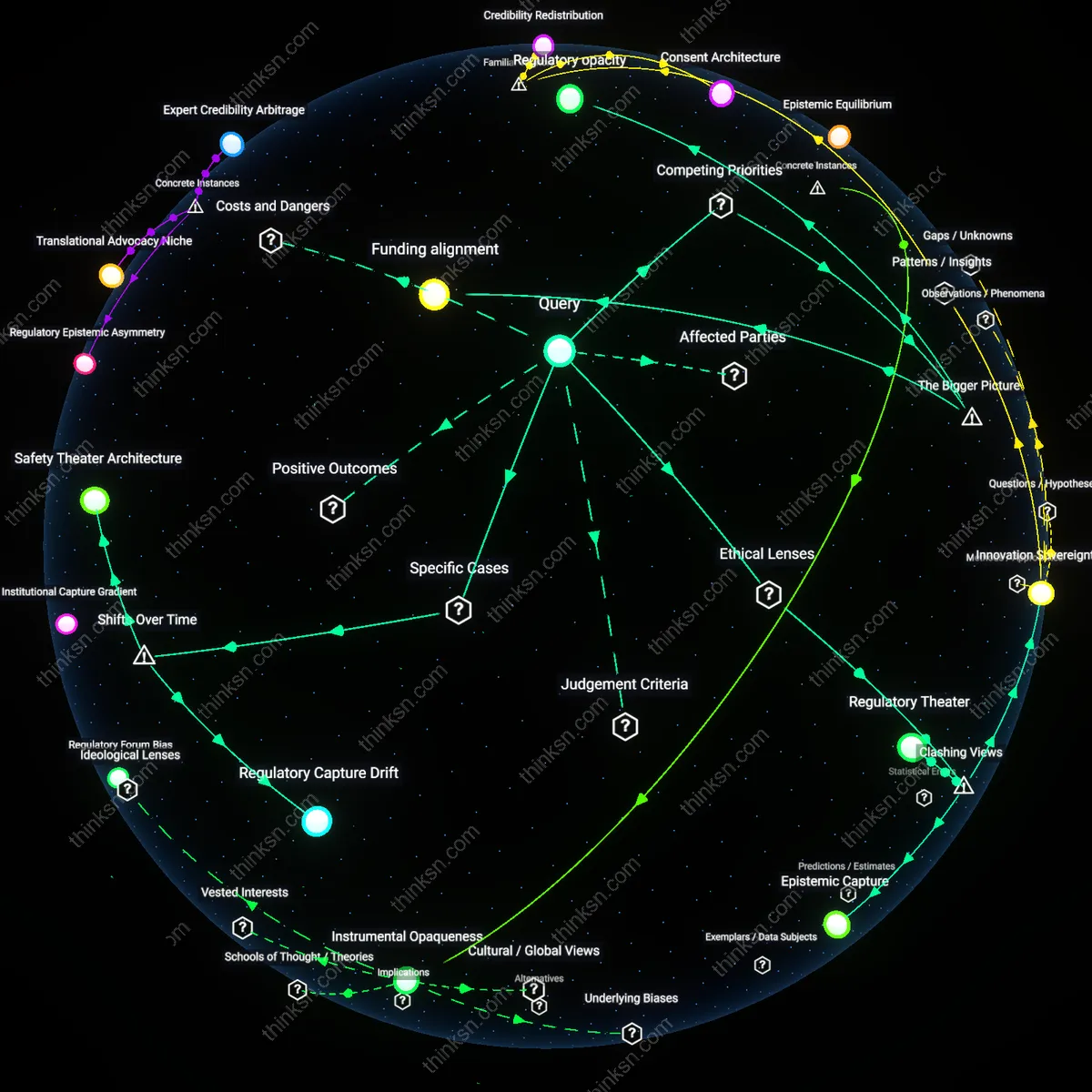
Analysis reveals 5 key thematic connections.
Key Findings
Epistemic Arbitrage
Partisan blogs distort economic data as a form of epistemic arbitrage, leveraging gaps between expert consensus and public uncertainty to assert authoritative claims that align with ideological narratives. Actors such as ideologically aligned commentators and funding-backed content producers exploit the delayed dissemination of technical economic analysis, filling the information vacuum with interpretable but misleading summaries that appear timely and decisive. The significance lies in how this practice thrives not on deliberate falsehood alone, but on the strategic use of ambiguity and selective evidence, positioning blogs as alternative knowledge authorities in real-time discourse.
Credibility Redistribution System
The recurring distortion of economic data on partisan blogs reflects a broader credibility redistribution system, wherein trust in traditional institutions like central banks or statistical agencies is eroded and reallocated to networked political influencers who validate audience beliefs. This shift is enabled by long-term declines in public confidence in neutral expertise, exacerbated by polarization and repeated exposure to conflicting official narratives during crises such as recessions or pandemics. What remains underappreciated is that the blogs do not merely report bias—they function as decentralized certification mechanisms, where credibility is maintained through ideological coherence rather than methodological transparency.
Partisan Utility Function
Patterns of economic data distortion on partisan blogs primarily reflect strategic audience alignment rather than media failure, as editorial teams optimize for loyalty reinforcement among politically segregated readerships. These blogs operate under performance metrics tied to engagement and retention, favoring framing that amplifies preexisting ideological priors—distortion emerges not from ignorance but from precise calibration to audience expectations. The mechanism is algorithmic feedback loops that reward narrative consistency over empirical variance, seen in targeted content experiments by outlets like Breitbart and Daily Kos. What is non-obvious is that distortion functions as a rational adaptation to electoral rather than informational incentives, subordinating analytical rigor to identity preservation.
Credibility Arbitrage
Partisan blogs distort economic data effectively because they exploit asymmetries in audience trust across institutions, positioning themselves as underdog truth-tellers while delegitimizing official sources like the BLS or CBO. This works only when audiences already doubt mainstream expertise due to prior exposure to systemic discredit campaigns—often originating outside media, such as political attacks on civil service neutrality. The bottleneck is not the availability of data, but the pre-existing erosion of epistemic authority, which allows minor distortions to propagate as major revelations. What is typically missed is that the power of distortion depends less on the falsehood’s complexity than on the covert transfer of credibility from withdrawn institutional sources to hyper-partisan interpreters—who act as arbitrageurs of distrust.
Interpretive Load
Sensationalism dominates analytical rigor on partisan blogs because economically literate interpretation requires cognitive labor that most audiences outsource to ideological heuristics under time and resource constraints. Readers confronting complex metrics like real versus nominal wage growth or labor force participation adjustments face high interpretive load, making simplified, emotionally resonant narratives about 'elite lies' or 'hidden crises' function as cognitive substitutes. The causal bottleneck is not misinformation supply but processing scarcity—the scarcity of time, education, and mental bandwidth that would allow non-specialists to interrogate methodology or consider counterfactuals. Rarely acknowledged is that distortions thrive not because audiences prefer lies, but because rigorous analysis demands distributed cognitive labor that partisan ecosystems quietly dissolve by framing complexity as obfuscation.