Is a Humanities PhD Worth It for Non-Academic Jobs?
Analysis reveals 8 key thematic connections.
Key Findings
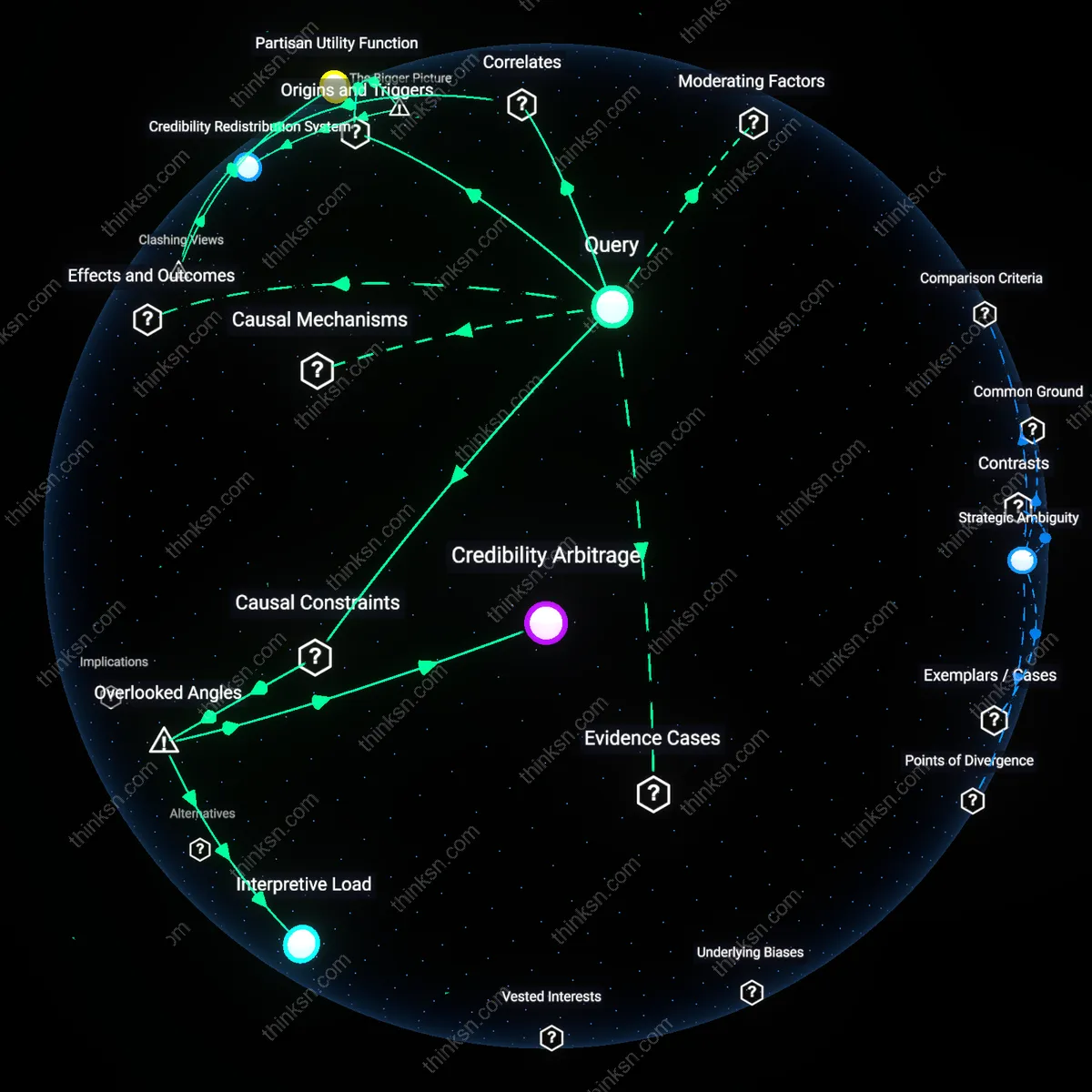
Cognitive Arbitrage
A humanities PhD increases long-term earnings potential by enabling cognitive arbitrage across sectors, where advanced interpretive skills are undervalued in non-academic labor markets despite their utility in high-stakes decision environments. Professionals with deep hermeneutic training—such as analyzing ambiguous texts or deconstructing narrative frameworks—can reframe problems in tech, policy, and finance in ways that evade algorithmic detection and surface blind spots in data-driven models. This edge emerges not from domain knowledge but from a mismatch in how different sectors value sense-making under uncertainty, a dynamic rarely captured in human capital models that prioritize measurable skills. The overlooked mechanism is that elite institutions systematically underprice interpretive reasoning while overinvesting in computational proxies, creating latent earning opportunities for those who can operate bilingually across these regimes.
Temporal Anchoring
Humanities PhDs enhance long-term earnings by providing temporal anchoring—a rare capacity to align organizational timelines with historical precedent and cultural cycles, which becomes critical in industries facing recursive crises like media, education, and public infrastructure. Executives in legacy institutions often suffer from presentism, making reactive decisions during disruption without recognizing analogous past inflection points; PhD-trained thinkers introduce strategic patience by identifying long-wave patterns that justify slower, higher-impact investments. This capability subtly shifts project valuation models in bureaucratic settings, where delayed returns are typically discounted excessively, and it gains financial significance only when traced through budget cycles spanning a decade or more. Most career analyses overlook this because ROI metrics compress time horizons, rendering invisible the stabilization premium conferred by historically grounded judgment.
Narrative Infrastructure
The long-term earnings impact of a humanities PhD is amplified through contributions to narrative infrastructure—shaping the underlying stories that legitimize ventures, brands, and policy reforms in knowledge-intensive economies. In Silicon Valley startups or ESG-driven firms, founders increasingly hire PhDs not to write content but to design foundational myths, ethical frameworks, and cultural positioning that attract investment and talent, particularly in sectors lacking clear technical differentiation. These narrative systems operate as invisible capital, appreciating over time as the organization scales, yet they originate in low-visibility backstage roles that standard labor surveys classify as 'adjunct' or 'communications,' obscuring their causal role in valuation. The underappreciated reality is that storytelling is not supplementary but constitutive of economic value in post-industrial markets, and humanities PhDs function as stealth architects of this bedrock.
Market Distortion
Humanities PhDs from the University of California, Berkeley in the 2010s experienced long-term earnings penalties compared to STEM peers even when entering non-academic roles at tech firms like Google, because their training emphasized interpretive depth over quantifiable output, a mismatch that persisted in performance evaluation systems designed for scalable metrics; this reveals how credential inflation in knowledge economies penalizes qualitatively distinct forms of expertise under ostensibly meritocratic hiring, a trade-off between intellectual range and economic fungibility that is rarely acknowledged in workforce integration policies.
Temporal Arbitrage
The Modern Language Association’s 2015 push to retrain humanities PhDs in digital methods at institutions like the CUNY Graduate Center failed to raise median earnings because the time spent acquiring technical competencies delayed entry into non-academic labor markets, where early-career momentum determines long-term trajectory; this illustrates how efforts to increase career flexibility for humanities scholars require sacrificing the very temporal capital that drives earnings growth in competitive sectors, exposing an overlooked cost structure in retraining initiatives.
Epistemic Discount
When Central European University relocated from Budapest to Vienna in 2019, displaced humanities PhDs entering policy think tanks in Brussels found their long-term earnings capped relative to peers with law or economics backgrounds, not due to skill gaps but because decision-making cultures privileged causal models over hermeneutic reasoning, effectively discounting interpretive rigor in favor of instrumental clarity; this demonstrates how non-academic sectors uphold epistemic hierarchies that systematically devalue certain forms of analytical contribution despite formal inclusion.
Epistemic Privilege Deflation
Holding a humanities PhD diminishes long-term earnings in non-academic sectors because these fields selectively appropriate humanistic concepts while systematically excluding their producers—a dynamic legitimized by epistemic ideologies that separate ideas from their labor conditions. Think tanks, UX research firms, and AI ethics boards commodify critical theory, narrative analysis, and hermeneutic rigor, but hire consultants with adjacent credentials (JDs, MAs, self-taught technologists) who lack the PhD’s depth yet avoid its perceived impracticality, thereby sustaining a market in which the doctorate is both influential and underpaid. Rooted in analytical traditions that equate rigor with disengagement, this system aligns with Weberian instrumental rationality, where efficiency displaces epistemic equity as an ethical norm. The obscured reality is that non-academic expansion doesn’t elevate the PhD’s value but instead enables elite cultural intermediaries to extract its insights while marginalizing its bearers.
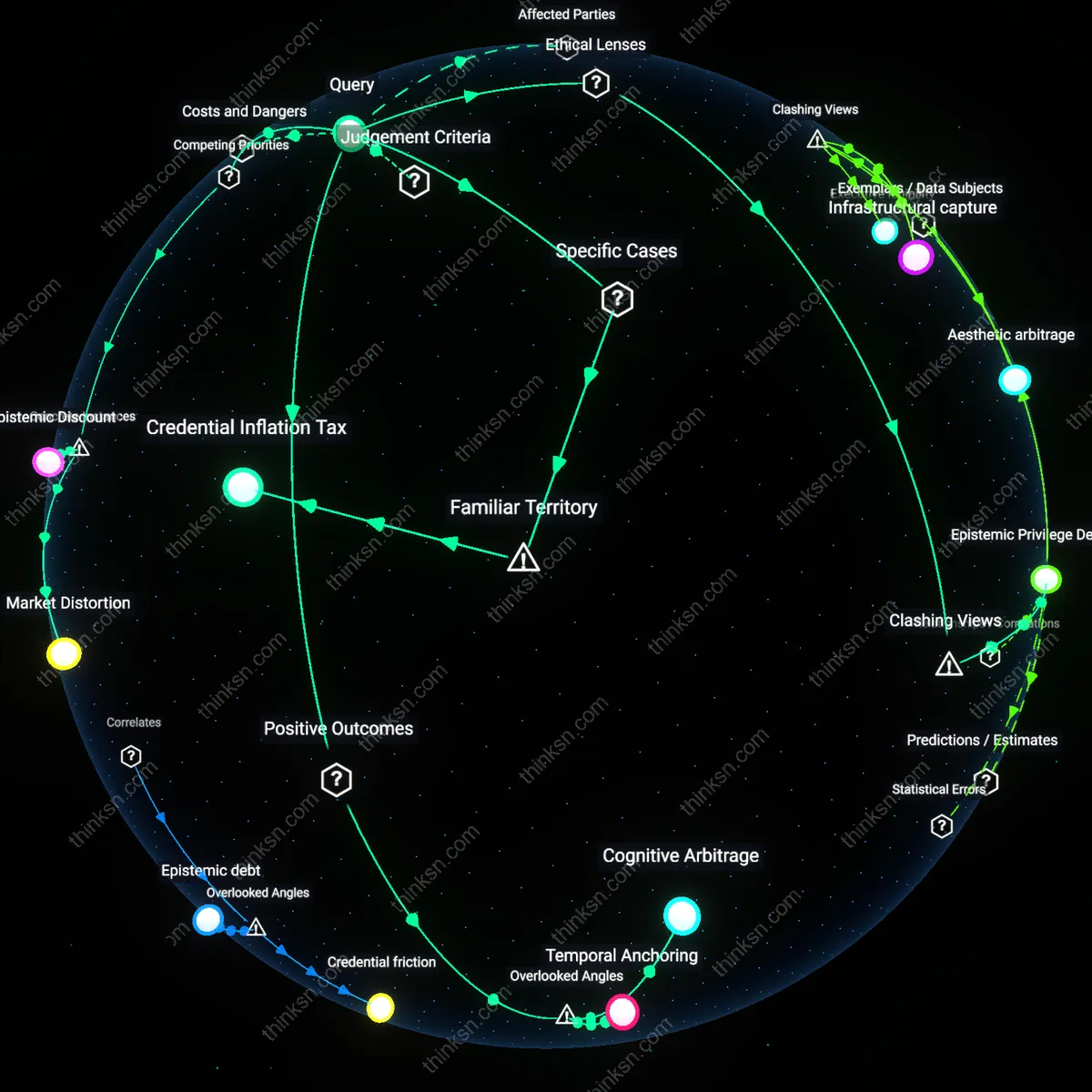
Credential Inflation Tax
A humanities PhD reduces long-term earnings relative to other advanced degrees because the credential lacks transferable signaling power in non-academic markets. Tech firms and consulting agencies in Silicon Valley and Wall Street—where hiring managers equate PhDs in physics or computer science with technical problem-solving—rarely recognize humanities doctorates as proxies for scalable skills, forcing graduates into lower-paid roles despite advanced research capabilities. This effect persists even as more PhDs pursue alt-ac careers, revealing that the degree’s symbolic value is trapped within academic mythology rather than market utility. The non-obvious insight is that the PhD’s prestige within academia actively undermines its repositioning outside it, as institutions continue to reinforce its identity as a path to professorship, not professional versatility.