Do Productivity Gains Justify Surveillance in the Workplace?
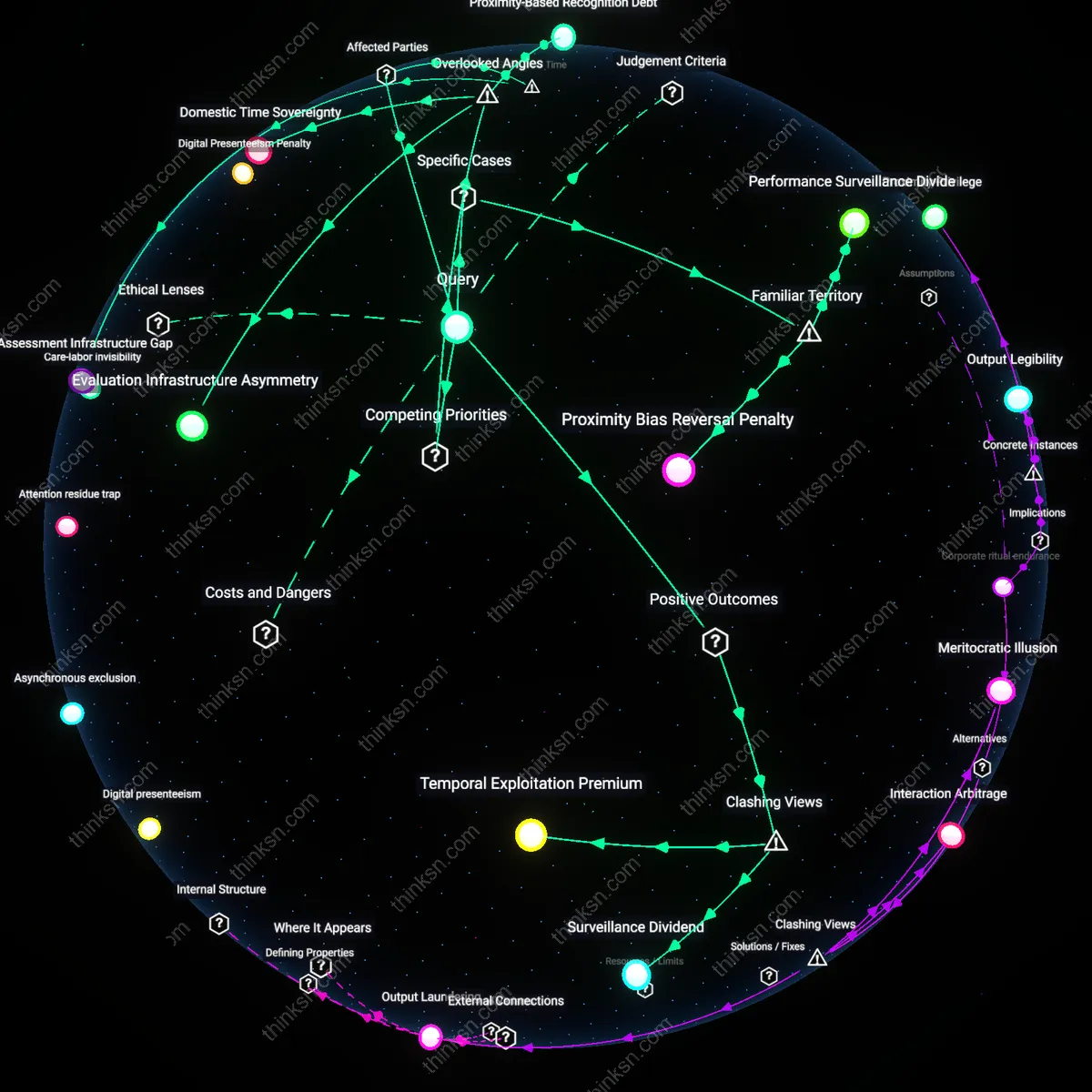
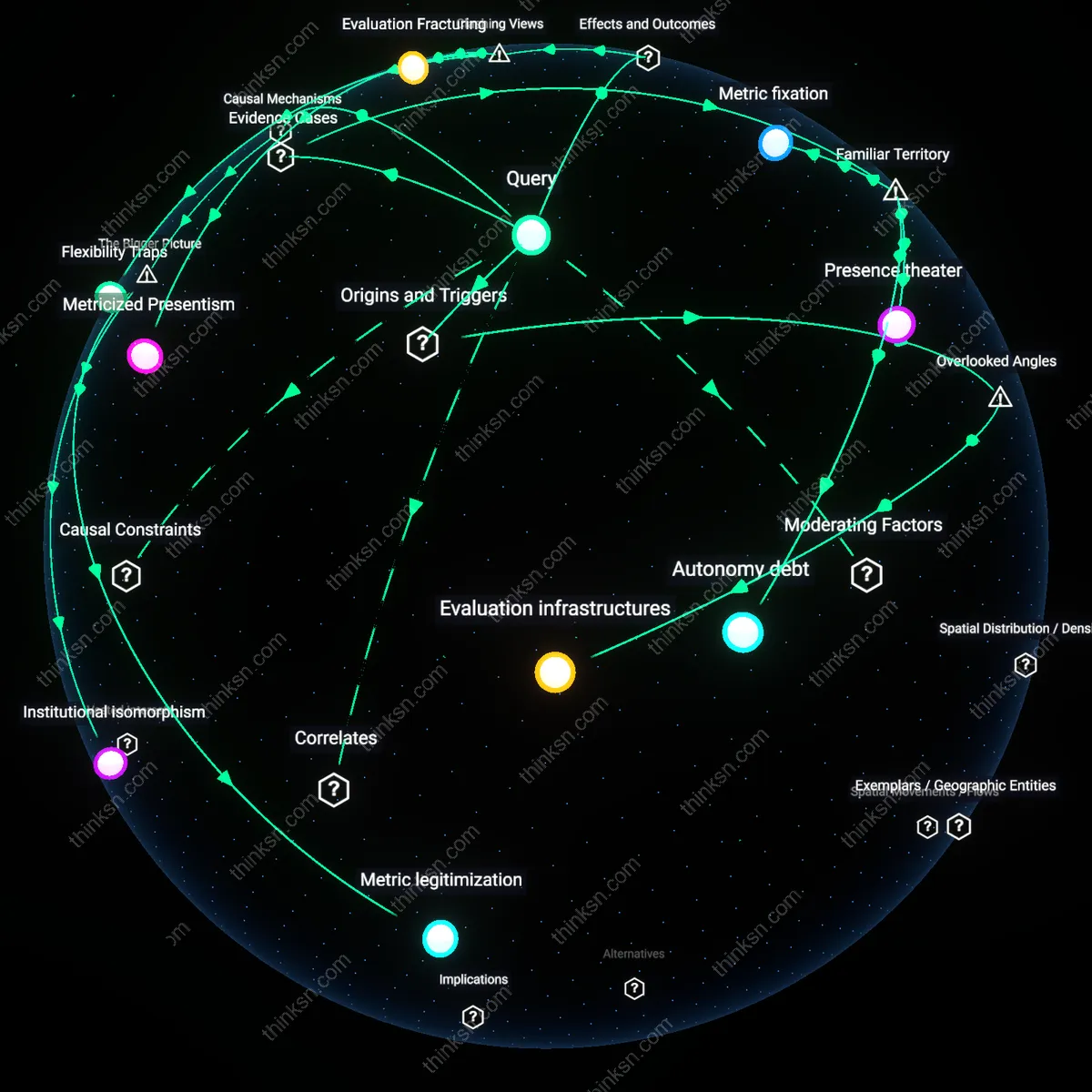
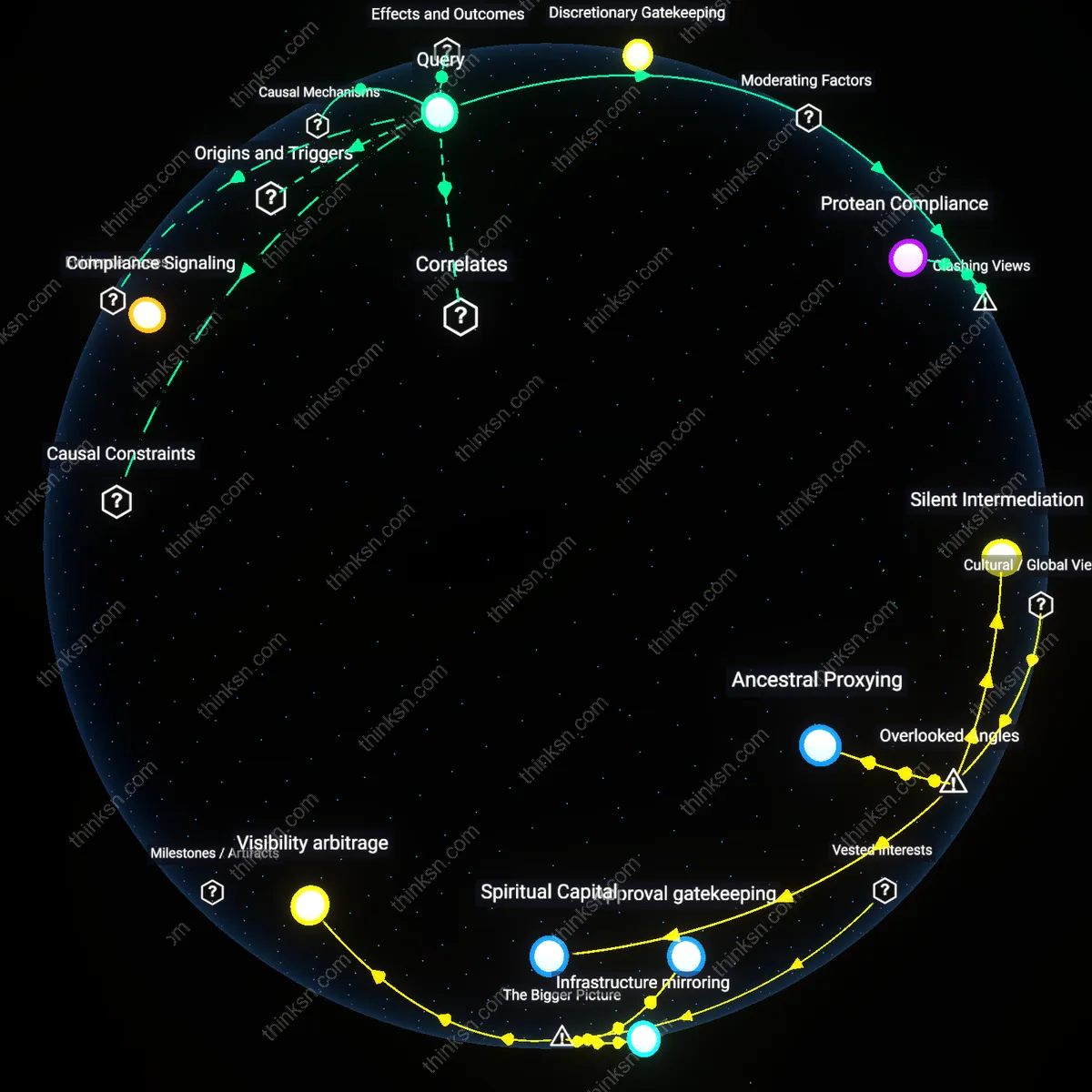
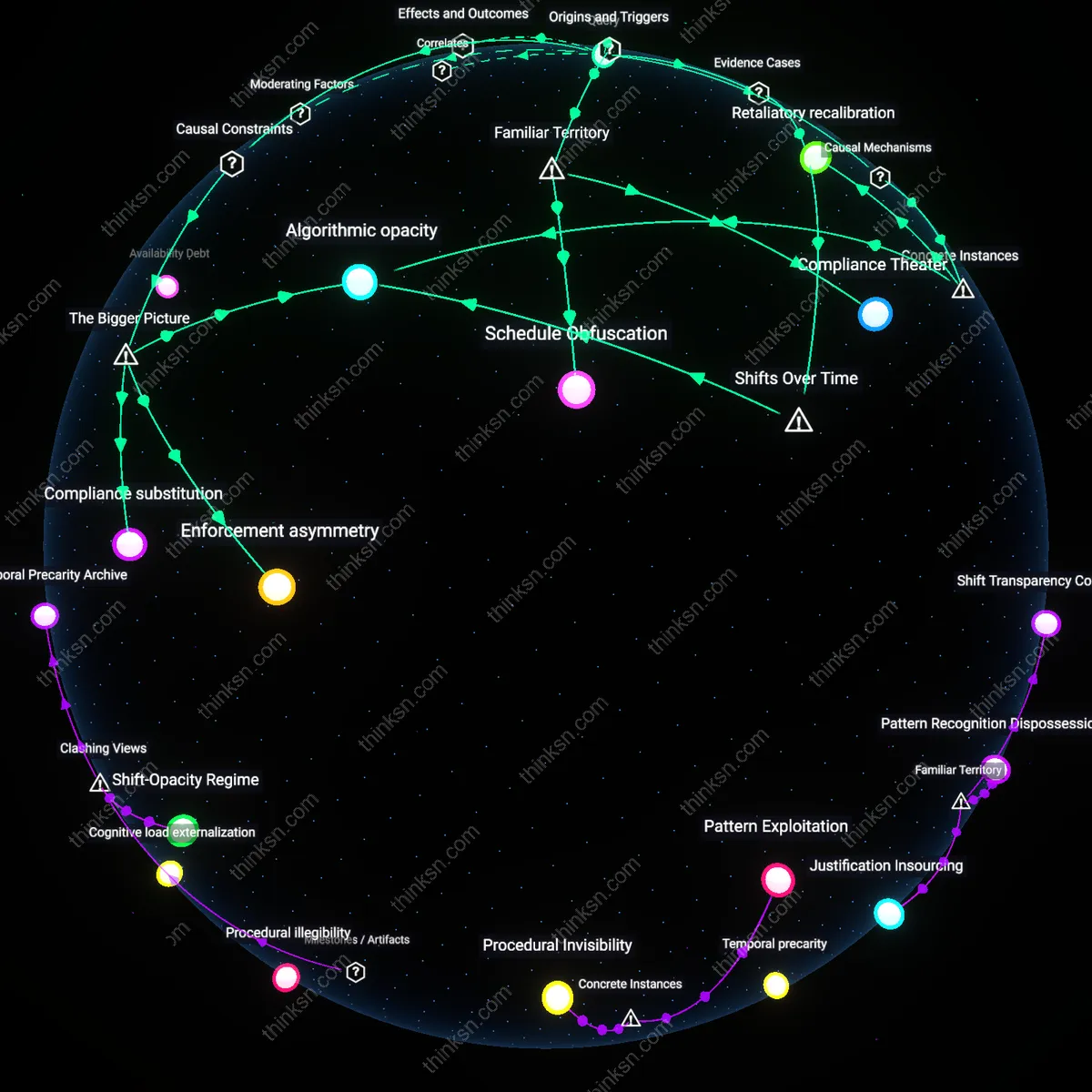
Analysis reveals 9 key thematic connections.
Key Findings
Surveillance Precarity
Continuous employee monitoring institutionalizes a power imbalance that disproportionately affects gig and contract workers, who lack collective bargaining mechanisms and are more vulnerable to algorithmic discipline; this shift intensified after the 2010s as platform-based labor expanded, replacing periodic performance reviews with real-time behavioral tracking embedded in apps and logistics systems, thereby converting productivity gains into automated forms of managerial control; what is non-obvious is that these systems do not merely reflect existing hierarchies but actively produce job insecurity by normalizing constant evaluation as a condition of work itself.
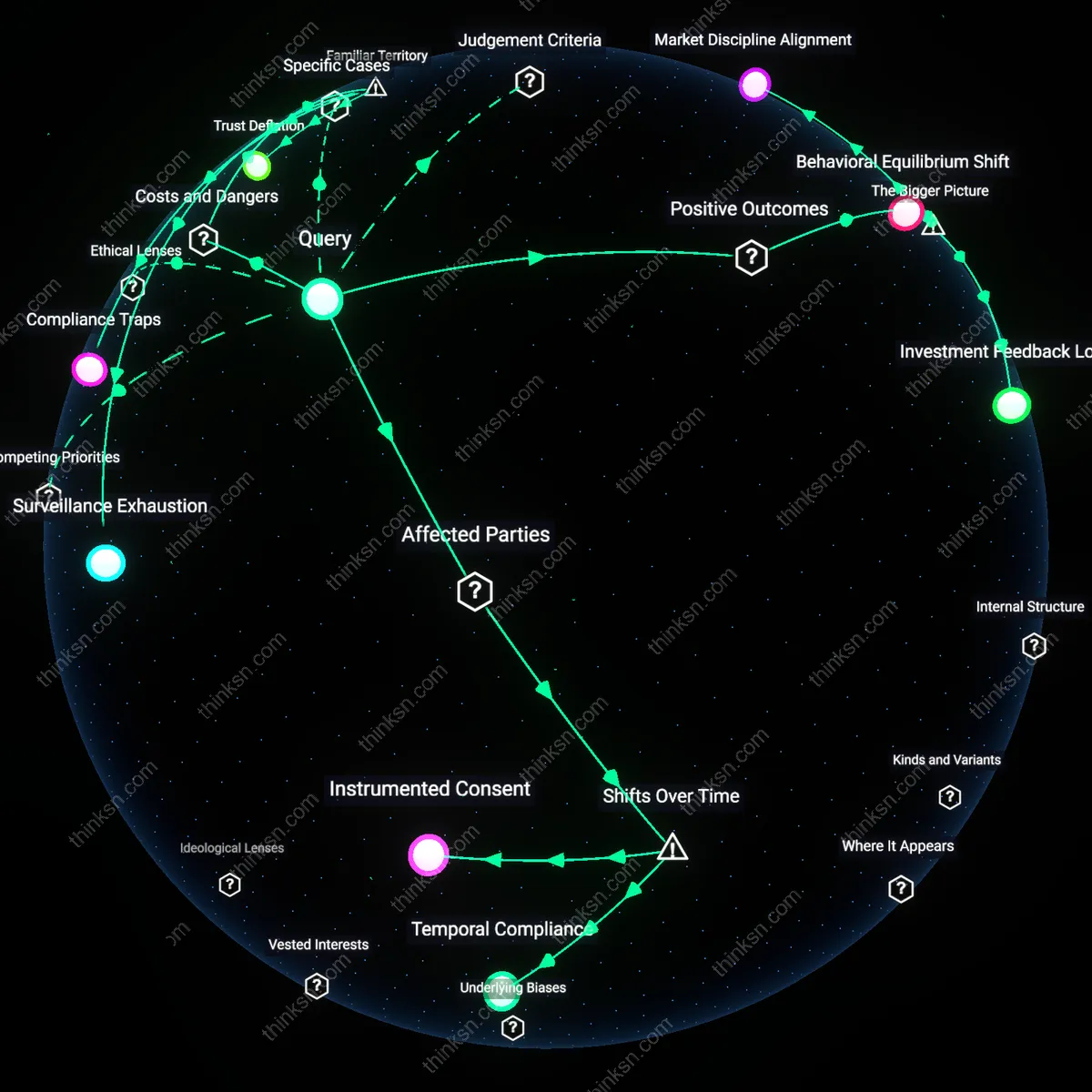
Temporal Compliance
Productivity gains from employee monitoring became structurally inseparable from employer dominance during the transition from industrial time discipline (19th century factory clocks) to digital behavior modulation (post-2000 software analytics), where tools like keystroke logging and screen monitoring translate micro-behaviors into predictive compliance metrics; this dynamic particularly impacts salaried office workers in multinational corporations who now experience time not as hours worked but as continuous performance signaling, a shift often obscured by efficiency rhetoric; the underappreciated consequence is that the historical move from physical oversight to algorithmic surveillance has not reduced managerial power but redistributed it into invisible, real-time feedback loops that preempt dissent.
Instrumented Consent
The normalization of continuous monitoring since the 2010s depends on human resources institutions reframing surveillance as career development, thus enrolling employees in their own oversight through wellness apps, performance dashboards, and ‘growth’ platforms; this shift particularly affects middle management and knowledge workers in tech-adjacent firms who are incentivized to share behavioral data in exchange for promotions or retention, creating a power imbalance masked as mutual benefit; what is rarely acknowledged is that this trajectory transforms employee agency into a metric of organizational trust, making resistance appear not as a labor right but as a failure of personal transparency.
Market Discipline Alignment
Continuous employee monitoring increases productivity by aligning individual performance with market-driven efficiency demands, particularly in global logistics and just-in-time service sectors. This alignment becomes critical in environments like Amazon fulfillment centers, where narrow margins and algorithmic workflow pacing necessitate real-time adjustments to worker output; here, the monitoring system functions as a transmission belt that converts external market volatility into internal operational discipline. The non-obvious mechanism is that employer power is not merely imposed but structurally reinforced by competitive pressures that reward granular performance data with survival advantages in capital markets, thereby making power imbalance a systemic feature, not a managerial choice.
Behavioral Equilibrium Shift
Productivity gains from continuous monitoring justify power imbalances by stabilizing a new behavioral equilibrium in knowledge work, where output is otherwise difficult to measure and underperformance is socially diffused. In digital service firms like remote customer support or freelance platforms such as Upwork, persistent monitoring tools (e.g., keystroke tracking or screen logging) replace managerial trust with algorithmic accountability, reducing free-riding and anchoring effort norms. The underappreciated systemic effect is the emergence of self-regulating work cultures where employees preemptively adjust their behavior to match surveillance expectations, shifting the locus of control from direct supervision to internalized performance scripts shaped by platform design and labor market saturation.
Investment Feedback Loop
The economic justification for monitoring-induced power asymmetry lies in its role within a feedback loop that fuels productivity-related capital investment, particularly in industries adopting Industry 4.0 technologies. In automotive manufacturing plants like those operated by Tesla or Volkswagen, sensor-based employee tracking generates granular workflow data that directly inform automation upgrades and process redesigns, increasing ROI on advanced robotics and AI integration. The critical, overlooked dynamic is that monitoring does not just extract value but generates the data infrastructure that makes further productivity-enhancing investments legible and actionable to financial stakeholders, positioning surveillance as a prerequisite for technological modernization rather than a standalone control mechanism.
Surveillance Exhaustion
Continuous employee monitoring erodes mental resilience by subjecting workers to unrelenting performance scrutiny. Knowledge workers in tech and call center employees in India or the Philippines experience chronic stress as algorithmic dashboards track keystrokes, idle time, and response speeds, triggering anxiety even during non-peak hours. The non-obvious outcome is not increased output but reduced cognitive bandwidth—employees divert mental energy from problem-solving to performance theater, weakening long-term innovation and adaptability within firms that prioritize visible compliance over actual contribution.
Compliance Traps
Productivity metrics from constant monitoring incentivize employees to game the system rather than improve real performance. Warehouse pickers at logistics firms like Amazon alter their workflows to avoid algorithmic penalties for 'idle' moments, even if it means skipping safety checks or delaying communication with coworkers. The unappreciated cost is the inversion of organizational goals—workers optimize for avoiding reprimand, not efficiency or quality—creating compliance traps where the appearance of productivity becomes more rewarded than its substance, ultimately distorting operational integrity.
Trust Deflation
Persistent monitoring signals employer distrust, triggering reciprocal withdrawal of commitment from employees. In mid-sized financial services offices in the U.S. and Germany, union surveys and internal HR audits show that teams under constant screen surveillance report higher disengagement and lower knowledge-sharing, even when productivity metrics rise marginally. What goes unnoticed is how this dynamic degrades workplace reciprocity—the erosion of mutual obligation—leading to a brittle labor environment where employees disinvest emotionally and cognitively, increasing turnover costs and vulnerability to systemic failures during crises.