Opaque Remote Approval: Power Imbalance at Work?
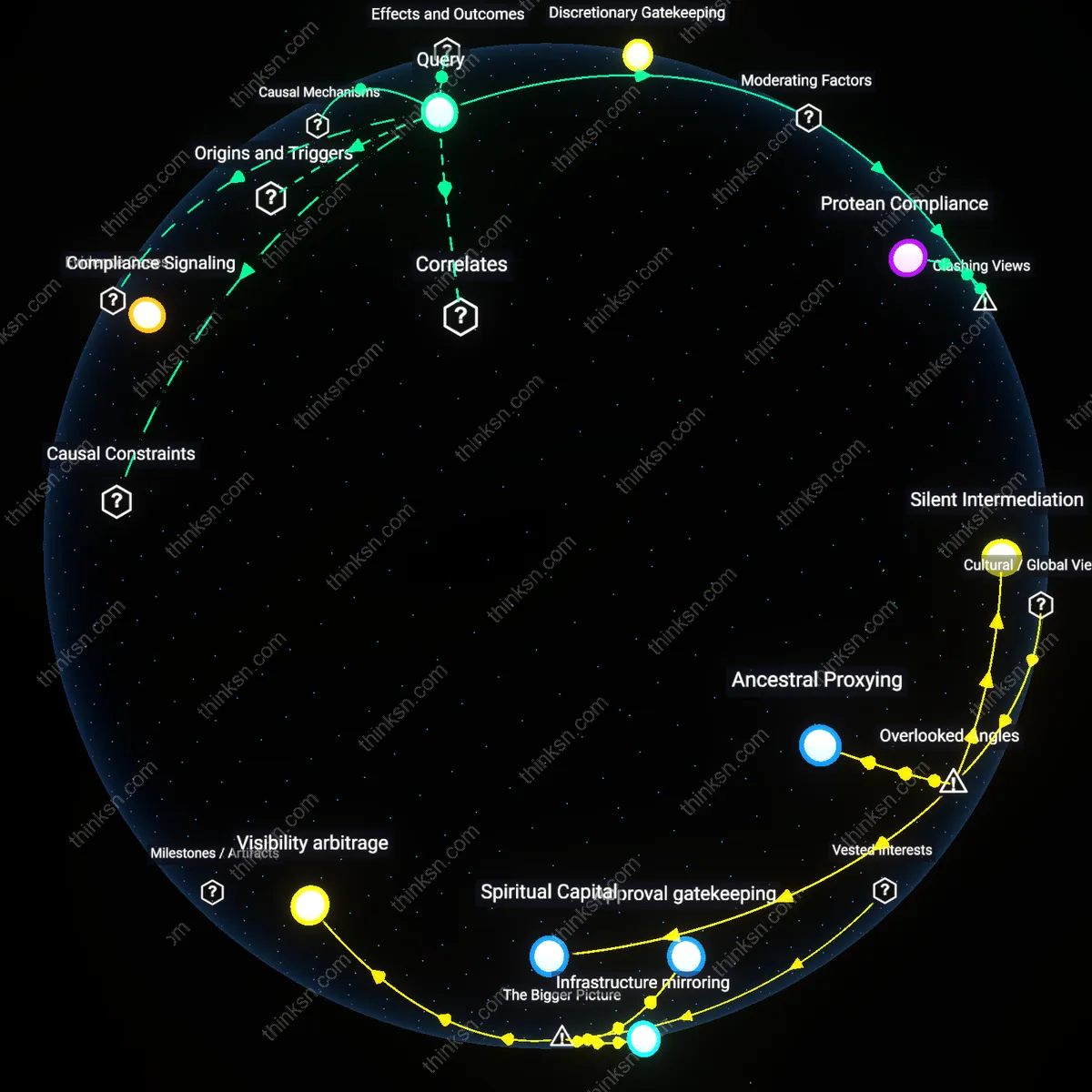
Analysis reveals 5 key thematic connections.
Key Findings
Discretionary Gatekeeping
At Tesla’s Fremont factory in 2020, managers inconsistently approved remote work for salaried engineers following executive mandates to return onsite, where personal relationships and informal expectations—rather than written policy—determined who could work from home. This uneven application turned middle managers into de facto gatekeepers who could reward loyalty or penalize dissent under the cover of ambiguous guidelines, reinforcing hierarchical control through procedural opacity. The non-obvious insight is that unclear discretion doesn’t merely create inequity—it actively transforms routine administrative decisions into tools of power consolidation.
Policy Vacuum Exploitation
During the rollout of Amazon’s ‘WorkStyle’ initiative in 2022, leadership declared flexible remote options but delegated final approval to directors without standardized criteria, resulting in Seattle-based tech teams securing hybrid arrangements while satellite offices in Baltimore saw near-universal denials. This fragmentation allowed leaders to exploit the absence of codified rules to preserve centralized operational control, effectively using ambiguity as a lever to maintain geographic and labor hierarchies. The overlooked dynamic is that unstructured discretion enables top-down power preservation not through overt refusal but through strategically uneven implementation.
Compliance Signaling
In the UK’s National Health Service during 2021, clinical managers exercised unchecked judgment over remote administrative roles, granting exceptions primarily to staff who had previously volunteered for extra shifts or voiced public support for leadership policies. Employees learned to perform organizational loyalty—through visible availability and public alignment—to increase their chances of approval, turning remote work access into a currency for behavioral reinforcement. The hidden mechanism is that ambiguous discretion transforms policy implementation into a feedback loop that rewards performative compliance over merit or need.
Protean Compliance
Managers exploit ambiguous remote-work discretion to demand symbolic availability, where employees perform visible responsiveness—such as attending non-essential meetings or replying late at night—not to enhance productivity but to signal loyalty, thereby reinforcing hierarchy through performative accommodation. This dynamic intensifies when organizational trust is low and surveillance technologies are present, as leaders interpret compliance with unspoken norms as a proxy for reliability, effectively shifting the burden of proof onto employees to demonstrate commitment. This reframes remote work not as a logistical arrangement but as a theater of obedience, revealing that unclear discretion functions less as managerial inefficiency and more as a covert mechanism for reproducing authority through arbitrary expectations.
Shadow Bureaucracy
Remote work decisions governed by managerial whim generate informal adjudication channels—such as backchannel requests to HR allies or familial appeals to senior leaders—that bypass formal policies and allow entrenched insiders to monopolize flexibility. When discretion is neither documented nor audited, access to remote approval becomes mediated by social proximity rather than job function, enabling cliques to emerge where compliance with cultural norms, rather than performance, determines eligibility. This subverts the presumed meritocratic distribution of autonomy, exposing how ambiguity in authority can calcify power into invisible procedural gatekeeping rather than dissolve it through flexibility.