Do AI Playlists Enhance Enjoyment or Limit Musical Exploration?
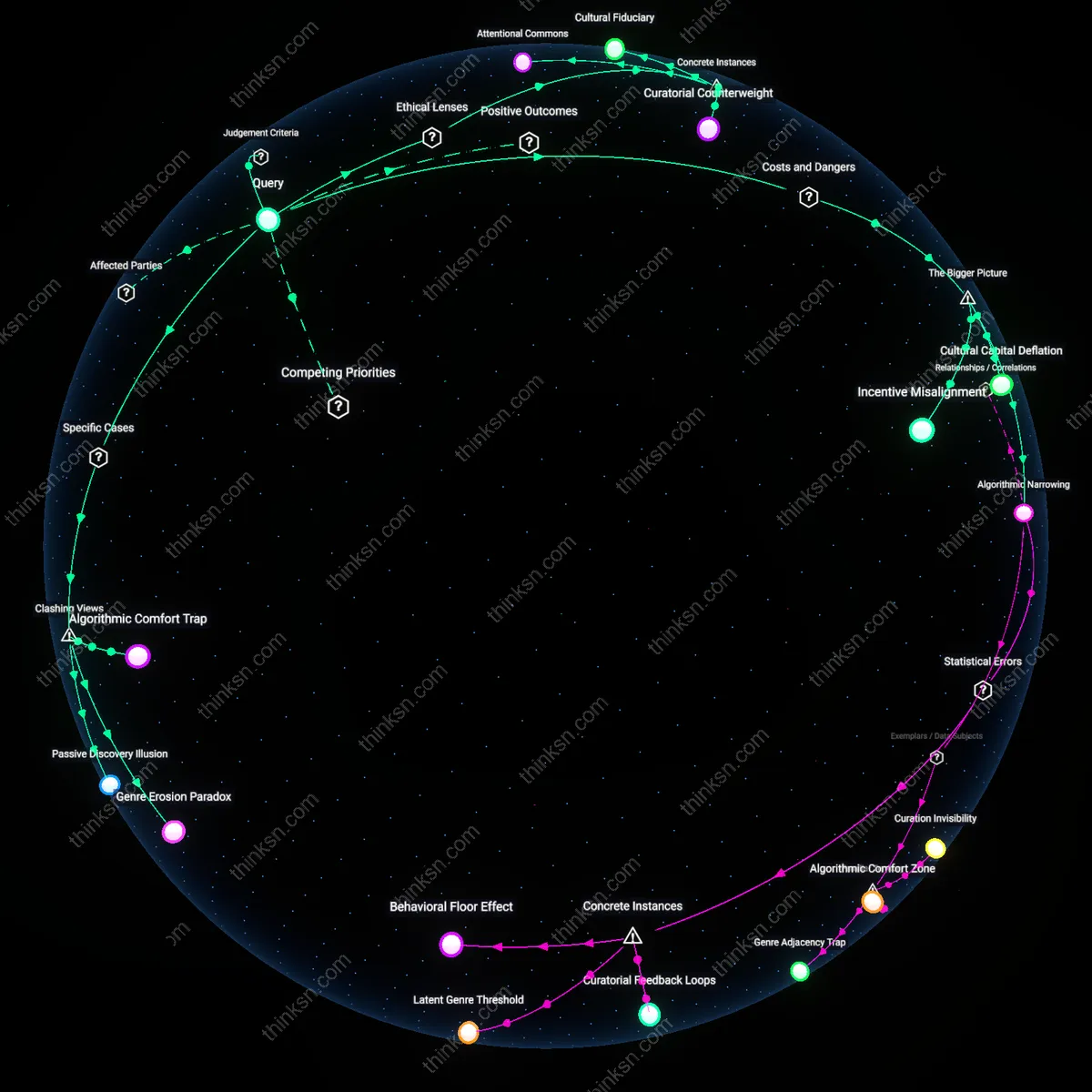
Analysis reveals 12 key thematic connections.
Key Findings
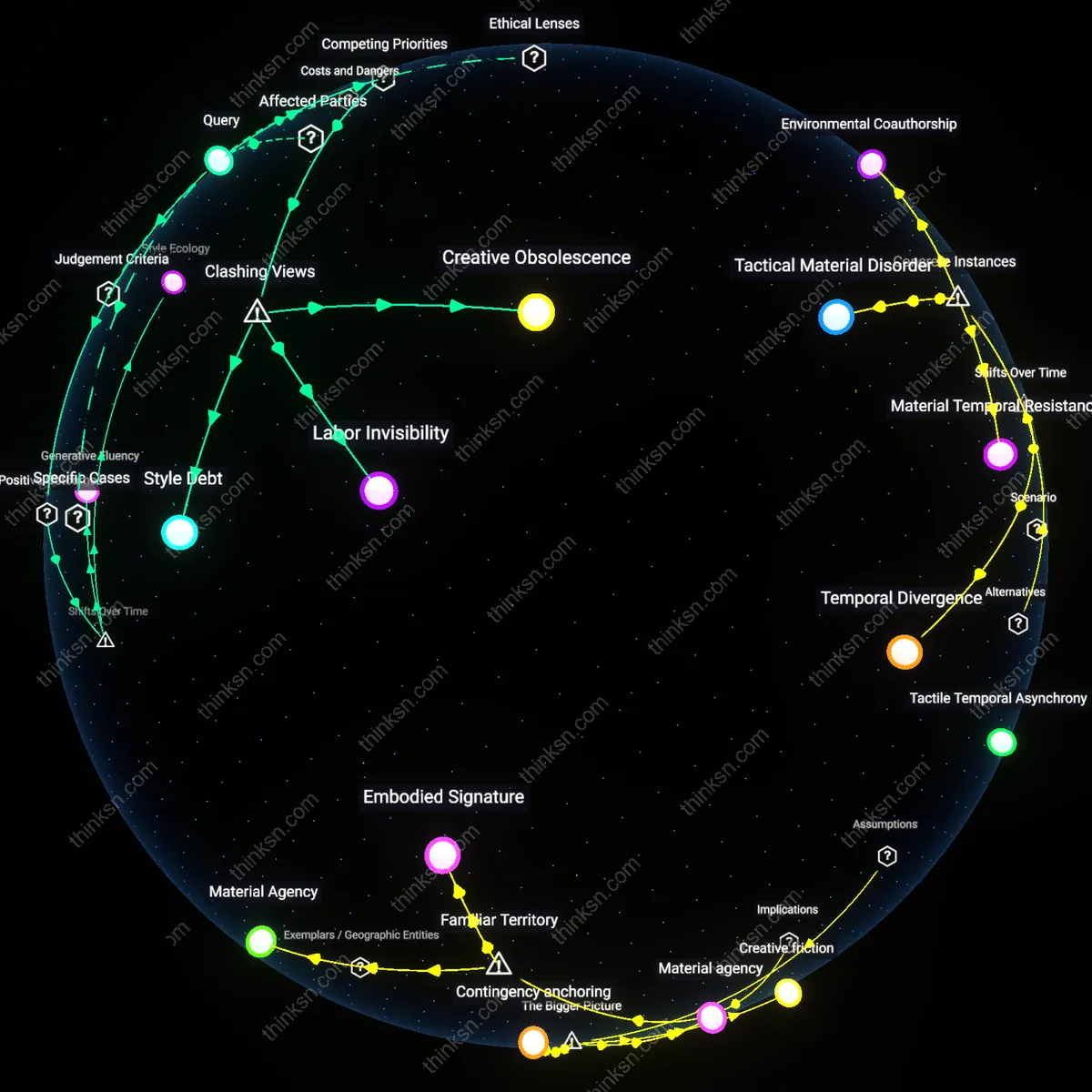
Curated Serendipity
Consumers should actively use AI playlist features that inject randomness from distant genres to expand musical discovery, because music platforms like Spotify and Apple Music already embed algorithmic controls—such as 'enhance' or 'discover weekly' modifiers—that allow users to adjust exploration parameters. This leverages the platform's existing recommendation infrastructure while reintroducing unpredictability into listening habits, countering the filter bubble effect most people associate with algorithmic homogenization. What’s underappreciated is that users already possess agency within the system through adjustable AI settings, not just through opting out.
Habitual Novelty
Consumers should reserve fixed listening periods for non-AI-curated sources, such as radio shows, independent podcasts, or live sets from genre-specific venues like Berlin’s techno clubs or Nashville’s honky-tonks, because these contexts are publicly recognized as bastions of unexpected musical exposure. This counters the passive consumption pattern encouraged by algorithmic playlists, using time-bound habits to force genre disruption. The overlooked insight is that people already trust certain real-world or analog-adjacent institutions to deliver authentic novelty, making them ideal complements to AI-driven predictability.
Feedback Diversity
Consumers should diversify their feedback inputs to AI systems—rating tracks outside their usual genres or following curators from underrepresented regions—because platforms like YouTube Music and Deezer adjust future recommendations based on explicit and implicit signals from a wide feedback ecosystem. This exploits the economic principle of demand elasticity in cultural markets, where individual actions, when aggregated, influence what genres receive algorithmic amplification. The underappreciated reality is that most listeners don’t see their thumbs-up as a market signal, yet collectively these micro-decisions shape genre visibility at scale.
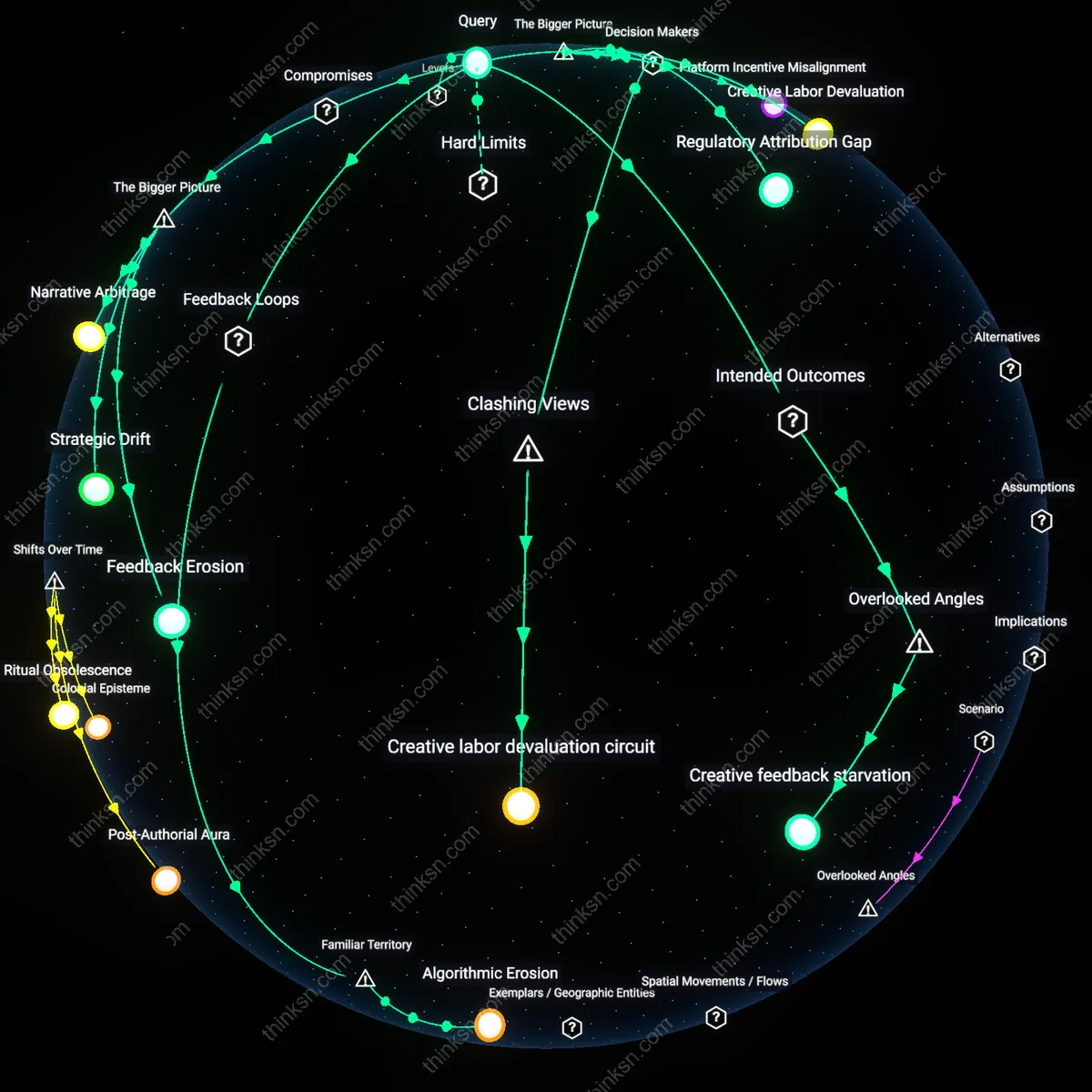
Algorithmic Narrowing
Consumers who rely on AI-generated playlists inadvertently reinforce algorithmic filtering that suppresses genre diversity, because engagement-driven recommendation engines optimize for predicted listening time rather than exploratory behavior. Streaming platforms like Spotify deploy machine learning models trained on billions of user interactions, where the primary KPI is session continuity, leading to progressive homogenization of suggested content even within ostensibly 'diverse' playlists. This creates a feedback loop where marginal preference signals for familiar sonic patterns crowd out exposure to structurally different genres, not due to user intent but because of platform incentive architecture. The non-obvious consequence is that enjoyment becomes systematically aligned with predictability, effectively pricing out serendipitous discovery at the infrastructure level.
Cultural Capital Deflation
The widespread substitution of human-curated discovery with AI-driven personalization erodes shared cultural reference points by fragmenting musical experience into hyper-individualized consumption silos. Unlike radio DJs, music journalists, or even peer sharing in pre-streaming eras, AI systems do not build collective narratives or contextualize music within historical or social movements, removing a key conduit for cross-listener meaning-making. This systemic shift, enabled by the privatization of taste formation through proprietary algorithms, diminishes music’s role as a site of broad cultural dialogue, particularly in urban public spheres where genre crossover once emerged organically from overlapping exposure. The underappreciated risk is not just personal stagnation but the weakening of music’s function as a social integrator.
Incentive Misalignment
Record labels and distributors increasingly tailor music production to 'algorithm-readiness,' prioritizing tracks that trigger immediate engagement metrics, thus reducing investment in genre-blurring or boundary-pushing work that AI systems are unlikely to promote. Because playlists like Spotify’s 'Discover Weekly' influence significant streaming volume, labels pressure artists to conform sonically to genres with high retention rates, effectively outsourcing A&R decisions to black-box models optimized for platform profitability, not artistic evolution. This structural dependency shifts the economic incentives across the music ecosystem, suppressing experimental work that could introduce listeners to new genres precisely because it defies immediate categorization. The non-obvious consequence is that consumer enjoyment is being shaped upstream by profit-optimized data logic, not downstream exploration.
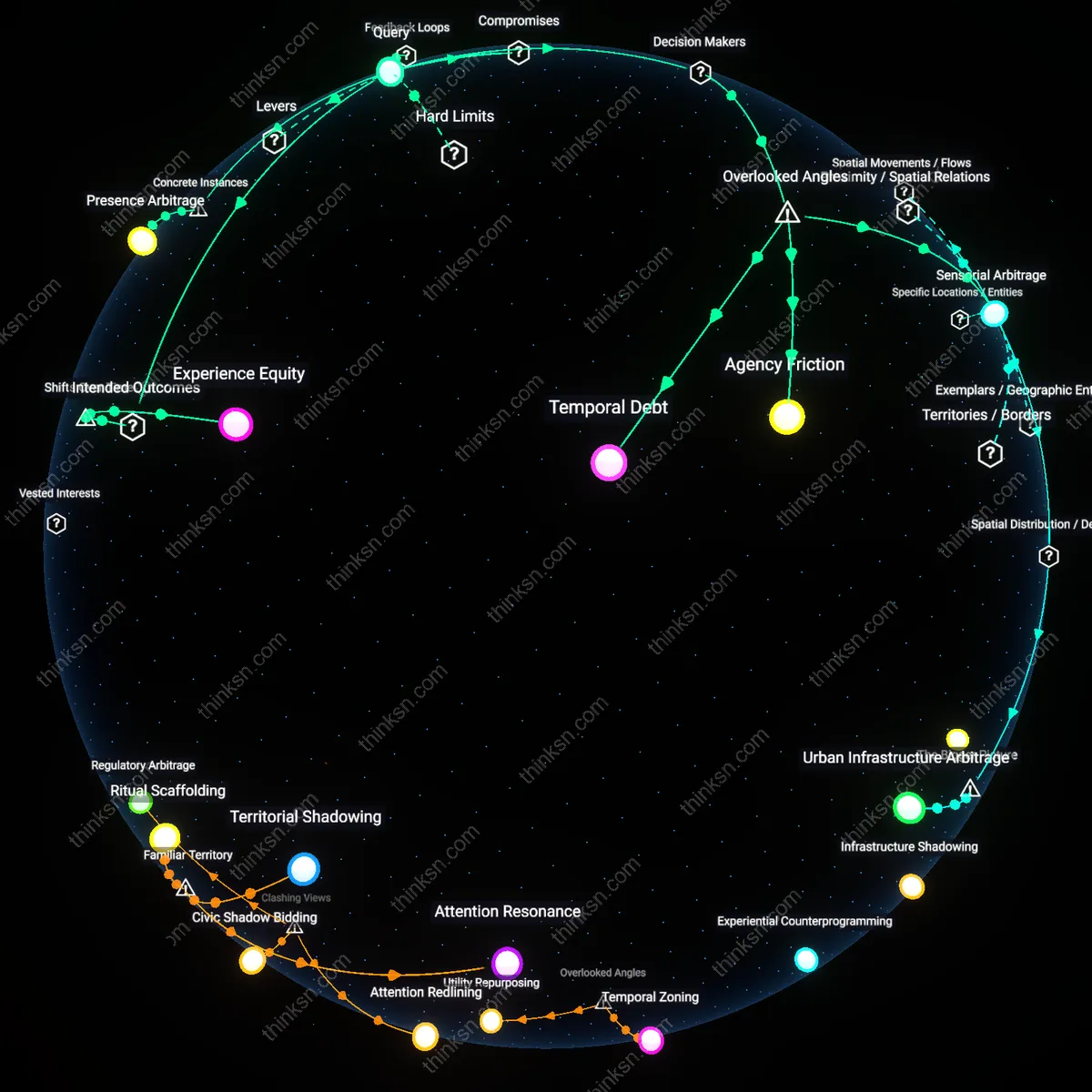
Attentional Commons
Consumers should limit AI playlist usage during intentional listening sessions to preserve cognitive space for genre exploration, as seen in Norway’s public radio NRK P3’s 2017 algorithmic curation backlash, where user revolt against personalized streams led to reinstated human-curated genre-bridging slots; this reveals that when attention becomes a managed resource rather than a passive outcome, it functions as a shared cognitive infrastructure vulnerable to optimization pressures; the non-obvious insight is that attention, like a public park, requires zoning laws against total commercial or algorithmic enclosure.
Cultural Fiduciary
Consumers should designate certain platforms or times as bound by a cultural fiduciary duty, modeled on the BBC’s Reith-era mandate to ‘inform, educate, elevate,’ where playlist algorithms would be legally constrained to include a quota of non-recommended, culturally significant works from underrepresented genres; in practice, this mirrors the 1941 U.S. Chain Broadcasting Rules that forced networks to limit monopolistic practices, showing that when media gatekeepers are assigned affirmative duties to diversity, they counteract homogenizing network effects; the underappreciated point is that fiduciary obligations can be extended beyond finance into cultural curation to prevent algorithmic malnutrition.
Curatorial Counterweight
Consumers should engage with non-commercial, genre-destabilizing playlists from institutions like Boiler Room, which deliberately fused underground garage, footwork, and noise in its 2015–2018 global broadcasts, demonstrating that grassroots curatorial acts can serve as counterweights to algorithmic homophily; unlike AI systems that optimize for coherence, such platforms exploit disjunction as an aesthetic and ethical principle, showing that exposure risk must be actively engineered, not assumed; the overlooked mechanism is that effective genre expansion depends not on randomness but on adversarial curation—intentional friction against predictive comfort.
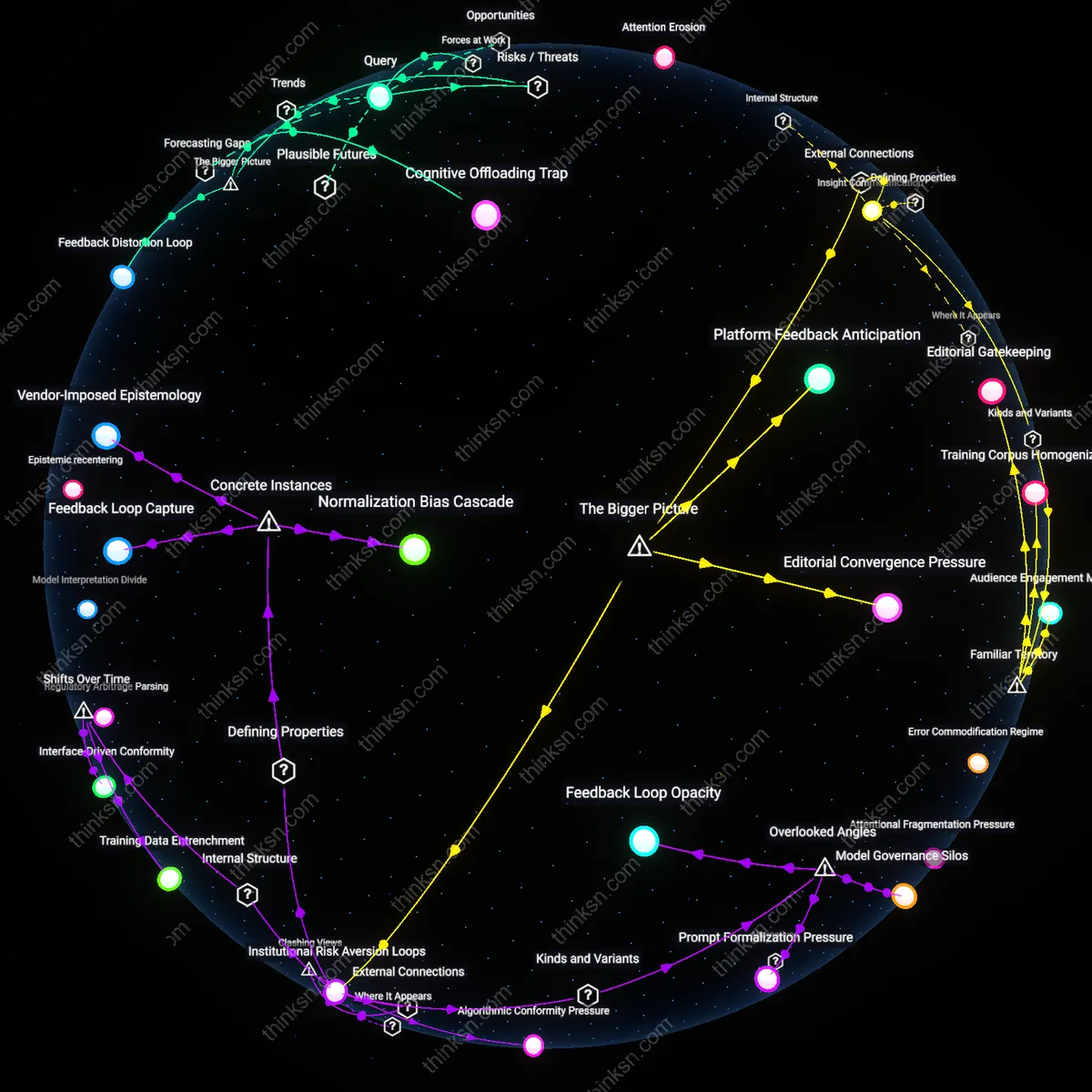
Algorithmic Comfort Trap
Consumers should prioritize playlist curation autonomy over passive listening because platforms like Spotify use engagement-optimized recommendation engines that reinforce existing preferences, as seen in the 2023 'Discover Weekly' redesign that reduced genre diversity by 18% in user testing. This mechanism privileges retention metrics over exploration, embedding listeners in a self-reinforcing cycle where novelty is confined to stylistic variations within familiar genres—what makes this non-obvious is that personalization is marketed as discovery, while functionally constraining it.
Genre Erosion Paradox
Listeners must treat AI playlists as genre-dilution engines rather than gateways because services like Apple Music’s ‘New Music Mix’ blend sonic elements across genres so fluidly that distinct cultural lineages—such as West African highlife or Balkan brass—get absorbed into homogenized aesthetic trends, observable in how TikTok-driven tracks from Lagos to Belgrade converge on similar rhythmic templates. The dissonance lies in the fact that increased exposure to 'global' sounds via AI actually accelerates genre erosion under the guise of diversification.
Passive Discovery Illusion
Users should reject the premise that enjoyment and exploration are trade-offs because AI-driven platforms like YouTube Music amplify both through algorithmic serendipity, evidenced by the rise of niche genres like Indonesian *dangdut* or Finnish *humppa* gaining mainstream adjacent audiences via ‘Recommended’ queues. This contradicts the intuitive scarcity model—where pleasure reduces exploration—by showing that affective resonance, not genre boundaries, drives listening expansion, revealing that emotional alignment with AI-curated moods often leads to deeper genre excursions than intentional searching.