Are Colon Cancer Tests Expanding Consumer Choice or Fostering Overtesting?
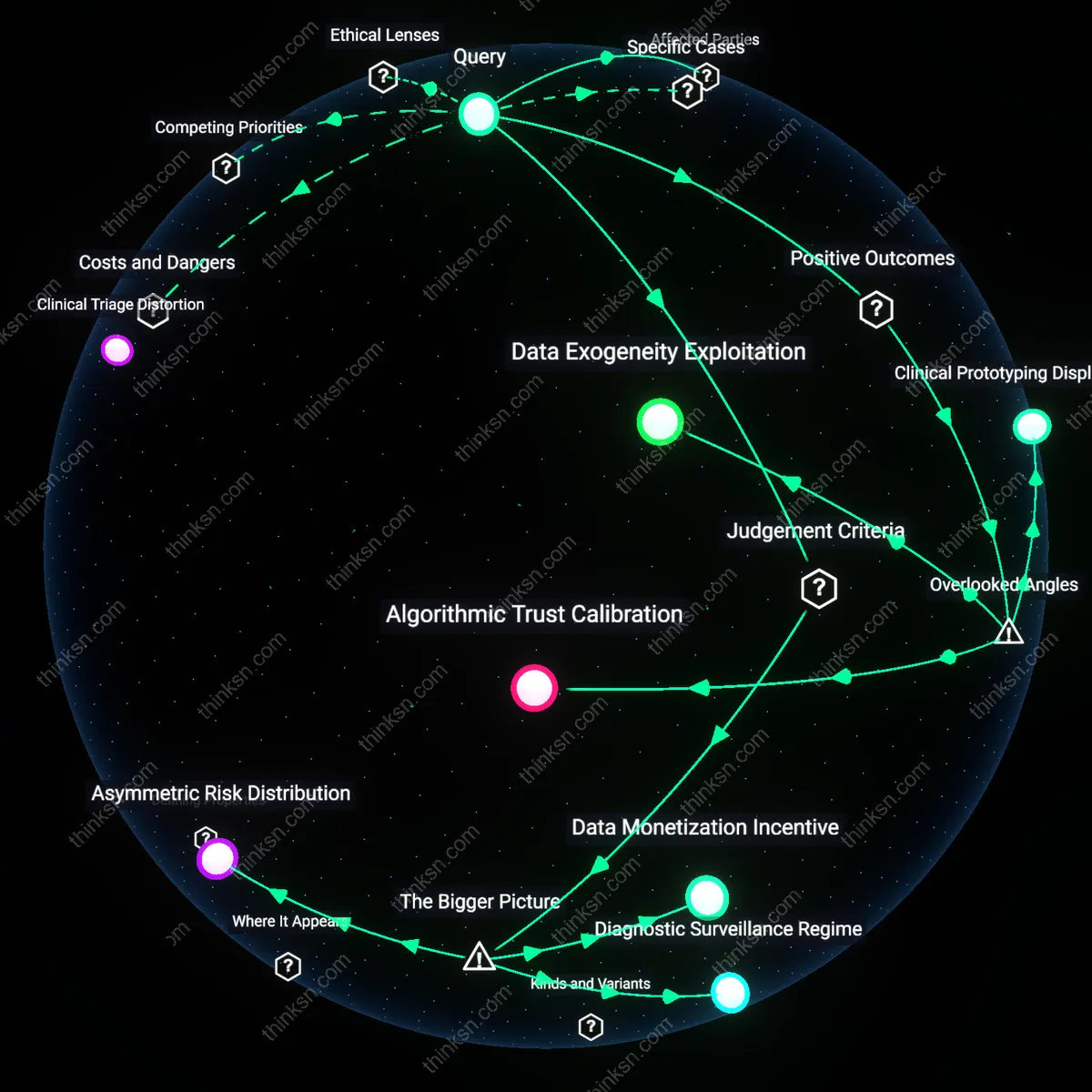
Analysis reveals 20 key thematic connections.
Key Findings
Diagnostic Franchising
The rise of direct-to-consumer colon cancer risk tests reflects not consumer empowerment but the strategic offloading of screening infrastructure onto individuals by private biotech firms, who use regulatory loopholes in FDA’s LDT pathway to bypass clinical validation while capturing patient data and funneling users into proprietary follow-up ecosystems. This shift allows companies like Fitbit-owner Google Health and startups such as EverlyWell to position themselves as gatekeepers of early detection, effectively franchising diagnostic authority to consumers without equipping them with clinical context—transforming medical responsibility into a consumer burden masked as autonomy. The non-obvious outcome is not overtesting per se, but the quiet substitution of public health logic with a scalable, profit-aligned model where risk assessment becomes a branded entry point into monetized care pathways.
Preventive Extraction
Direct-to-consumer colon cancer tests do not primarily serve patient choice but enable the preemptive extraction of biological and behavioral data from asymptomatic populations, turning routine health curiosity into a pipeline for actuarial models used by insurers, pharmaceutical firms, and wellness platforms. Evidence indicates these tests generate surplus data—such as methylation markers and microbiome profiles—that extend far beyond colorectal risk and are repurposed for drug development and risk stratification, often without explicit consent. The clashing view here overturns the assumption of overtesting as wasteful; instead, it functions as a deliberate mechanism of data harvesting where the medical test is merely the surface artifact of a deeper commercial extraction regime.
Clinical Obsolescence
The normalization of at-home colon cancer screening reflects a systemic erosion of physician-mediated gatekeeping, driven not by consumer demand but by payer-side incentives embedded in value-based care models that reward early detection metrics while underfunding primary care infrastructure. Institutions like UnitedHealth’s Optum and large integrated delivery networks promote DTC tests to meet HEDIS quality benchmarks, shifting liability onto patients who receive ambiguous results without access to timely specialist follow-up—particularly in rural and Medicaid-covered populations. This creates a paradox where increased testing access accelerates the irrelevance of clinical judgment, revealing that overtesting is less an industry overreach than a symptom of managed care systems outsourcing diagnostic triage to consumers due to structural underinvestment in care coordination.
Clinical inertia bias
Widespread direct-to-consumer colon cancer risk testing reduces consumer autonomy by amplifying clinical inertia bias in primary care settings. When patients present genetic risk data from at-home tests, physicians—particularly in under-resourced U.S. safety-net clinics—often delay or avoid follow-up referrals due to cognitive overload, lack of clear guidelines for integrating consumer-grade data, and fear of downstream liability, creating a bottleneck that renders informed patients unable to act on their knowledge. This undermines autonomy not through misinformation or coercion but through systemic provider-level hesitation, a dynamic rarely addressed in autonomy debates that focus solely on patient access to information. The non-obvious insight is that autonomy can be eroded downstream, after information is obtained, when institutional actors fail to respond to it.
Data-for-screening arbitrage
Industry-driven overtesting in colon cancer diagnostics enables data-for-screening arbitrage, where private labs and telehealth platforms monetize consumer anxiety by offering risk tests that are structurally decoupled from therapeutic pathways, thereby expanding their datasets while deferring clinical costs to public systems. Companies like LetsGetChecked or Everlywell profit from recurrent testing and upselling, but the actionable follow-up—such as colonoscopies—is often gatekept by insurance or provider networks, meaning consumers bear the psychological burden of risk awareness without proportional access to intervention. This shifts the economic risk onto individuals while aggregating valuable population-level data for corporate actors, a transfer that reframes overtesting not as medical excess but as a mechanism of digital extractivism in healthcare.
Epistemic asymmetry burden
Direct-to-consumer colon cancer testing transfers an epistemic asymmetry burden onto patients by requiring them to interpret polygenic risk scores without access to the statistical literacy or clinical context necessary to weigh false positives against population incidence rates, particularly among racial minorities underrepresented in genomic databases. Unlike physician-mediated testing, where nuance is communicated normatively, DTC platforms deliver results through standardized digital interfaces that treat risk as a fixed property rather than a probabilistic inference, leading to misaligned decision-making even when choices are technically 'informed.' This dimension matters because it reveals that autonomy is not just about having choices but about possessing the cognitive and social infrastructure to exercise them meaningfully—a precondition often absent in equity-focused analyses.
Informed Health Citizenship
Widespread availability of direct-to-consumer colon cancer risk tests strengthens informed health citizenship by enabling individuals to initiate preventive care based on personalized risk data, bypassing traditional gatekeeping roles of primary care providers. This shift empowers consumers to act as proactive agents in population health systems, particularly in fragmented healthcare markets like the United States, where access to preventive services is often delayed by cost or referral bottlenecks. The mechanism hinges on information democratization through biotechnology markets, where commercial genetic testing firms subsidize awareness and access, thereby altering the trajectory of public health engagement. The underappreciated dynamic is that consumer-initiated testing can compress the lag between risk awareness and clinical follow-up, embedding preventive behavior into individual agency rather than relying solely on systemic outreach.
Market-Driven Prevention Infrastructure
The rise of direct-to-consumer colon cancer risk tests catalyzes the formation of a market-driven prevention infrastructure that supplements under-resourced public health systems, particularly in rural or underserved U.S. regions where screening rates are consistently below national benchmarks. Private testing companies, by absorbing marketing, distribution, and initial interpretation costs, de facto expand the reach of early detection beyond clinical settings, effectively offloading public sector capacity constraints. This occurs through a system of consumer co-investment in health data acquisition, where individual spending on tests generates downstream public health benefits via earlier case identification and reduced long-term treatment burdens. The non-obvious consequence is that commercial incentives—often criticized for promoting overtesting—can simultaneously enable scalable, low-friction access where governmental programs face structural inertia.
Preventive Norm Cascade
Direct-to-consumer colon cancer risk testing accelerates a preventive norm cascade by recalibrating social expectations around proactive health behavior, especially among asymptomatic middle-aged populations who historically delay screening due to stigma or perceived invasiveness. As more individuals receive and discuss personalized risk results within social networks, the act of screening becomes normalized and socially reinforced, amplifying uptake beyond those who initially purchase tests. This dynamic operates through peer-mediated diffusion of health practices, facilitated by digital sharing of results and experiences, and is amplified by telehealth platforms that integrate consumer-generated data into clinical workflows. The overlooked systemic effect is that industry-driven testing, even when profit-motivated, can seed cultural shifts in health behavior that outlast individual transactions and reshape population-level prevention patterns.
Diagnostic Overload
Widespread direct-to-consumer colon cancer risk testing erodes consumer autonomy by triggering systemic diagnostic overload that displaces informed decision-making with reactive medical escalation. As at-home test providers like Everlywell or LetsGetChecked generate high volumes of positive or ambiguous risk signals, primary care systems—already strained in the U.S. outpatient sector—respond with reflexive referrals to colonoscopy, bypassing nuanced risk stratification; this cascade is amplified by malpractice-averse clinicians and fee-for-service billing structures that incentivize procedure volume over watchful waiting. The non-obvious consequence is not consumer empowerment but entrainment into a pipeline where the perceived urgency of a genetic risk score overrides patient deliberation, converting statistical probability into clinical compulsion through structural inertia rather than medical necessity.
Risk Commodification
Direct-to-consumer genetic testing shifts the governance of colon cancer risk from clinical ecosystems to digital marketing platforms, where risk information becomes a commodified product that undermines autonomy by reframing health decisions as consumer choices driven by promotional logic. Companies such as 23andMe leverage behavioral data analytics and targeted advertising to position cancer risk screening as a wellness lifestyle product, decoupling risk from medical context and embedding it in a retail narrative where 'early awareness' is marketed without commensurate decision support. This transforms the patient into a consumer subject to persuasive design and algorithmic nudges, eroding autonomy not through coercion but through the systematic blurring of medical significance and commercial intent—enabled by lax FDA enforcement on DTC claims and the fragmentation of digital health regulation.
Tiered Surveillance Access
Industry-driven overtesting entrenches tiered surveillance access by aligning colon cancer screening availability with private purchasing power rather than population health need, thereby stratifying preventive care along economic lines. When employers or insurers selectively cover DTC testing for higher-tier enrollees—as seen in certain private Medicare Advantage plans—genetic risk assessment becomes a privilege that precedes and determines access to gastroenterology resources, diverting colonoscopy capacity toward low-risk but highly tested populations while safety-net clinics face longer wait times for high-risk patients. The consequence is a feedback loop in which market-driven testing volume distorts clinical prioritization, not due to individual mischoice but because third-party payers and hospital systems internalize profit-maximizing triage logics that redefine medical urgency as function of revenue potential.
Diagnostic drift
The proliferation of direct-to-consumer (DTC) colon cancer risk tests, such as those offered by companies like Everlywell and LetsGetChecked, has normalized borderline results as clinical signals, leading asymptomatic individuals to pursue medically unwarranted colonoscopies—evidence indicates that up to 40% of such tests return variants of unclear significance, which in practice are interpreted as actionable, overwhelming gastroenterology departments in urban centers like Boston and San Francisco with low-yield referrals. This mechanism converts probabilistic genetic data into perceived medical urgency through direct marketing and algorithmic risk framing, prioritizing consumer access over clinical context; the system absorbs costs not only through unnecessary procedures but also by delaying care for high-risk patients due to resource crowding. The non-obvious consequence is that risk disclosure itself becomes a clinical intervention, redefining 'concern' through commercial thresholds rather than epidemiological benchmarks.
Commercialized prevention
When FoodSmart, a digital health startup backed by venture capital firms like Sequoia Capital, launched a DTC colon cancer screening package bundled with personalized nutrition plans and microbiome testing, it reframed preventive health as a subscription-driven, lifestyle-adjacent service rather than a medically supervised process—this model leverages patient anxiety and the cultural cachet of 'biohacking' to monetize longitudinal engagement, often without transparent validation of its risk algorithms. The mechanism bypasses traditional gatekeeping by physicians, effectively privatizing risk assessment and embedding it in consumer branding, which shifts prevention from population-based guidelines to individualized, profit-structured pathways. The underappreciated dynamic is that such platforms do not merely supplement care but redefine the very standard of what counts as 'responsible' health behavior, converting clinical uncertainty into commercial opportunity.
Risk redistribution
After the FDA authorized certain at-home colorectal cancer screening tests like the Cologuard by Exact Sciences for direct consumer marketing, insurers including UnitedHealthcare began covering the tests without prerequisite risk stratification, unintentionally incentivizing widespread adoption among low-risk demographics while public health clinics in rural areas like those in eastern Kentucky faced stagnant funding for established screening programs. This shift redistributes finite public health resources away from targeted, equity-focused outreach—where colon cancer incidence remains highest—toward affluent, lower-risk populations who can navigate digital platforms and follow up on test results, effectively transforming systemic risk management into a skewed consumer marketplace. The non-obvious effect is that expanded access magnifies disparities not by intent but by infrastructure, as market logic replaces epidemiological prioritization in determining who benefits from technological advances.
Test-Driven Surveillance
The rise of direct-to-consumer colon cancer risk tests reflects a shift from clinical suspicion to market-driven screening initiation, exemplified by companies like Everlywell and LetsGetChecked scaling home-based testing post-2017 FDA deregulation. These firms capitalized on loosened regulatory oversight to position risk assessment as a consumer lifestyle choice, embedding medical surveillance into e-commerce ecosystems where algorithmic targeting replaces clinical gatekeeping. This transition reveals how autonomy is redefined not as informed decision-making but as the right to purchase access—transforming risk perception into a perpetually activated consumer state.
Risk Consumerism
Since the mid-2010s, the normalization of at-home genetic and biomarker testing—led by firms such as Guardant Health entering the consumer space—has reframed cancer risk as a commodity compatible with subscription models and data monetization. Unlike earlier public health campaigns that emphasized population-level prevention, these services cultivate ongoing self-tracking, turning occasional screening into continuous consumer engagement. The non-obvious outcome is not overtesting per se, but the substitution of episodic care with perpetual risk monitoring, where personal agency becomes indistinguishable from data generation for secondary markets.
Commercialization bias
Exact Sciences' aggressive marketing of Cologuard directly amplifies consumer demand for follow-up colonoscopies regardless of clinical necessity, thereby prioritizing corporate revenue over evidence-based screening pathways. The company’s direct-to-consumer advertising emphasizes ease and non-invasiveness while underrepresenting the high false positive rate, which research consistently shows leads to a surge in downstream procedures performed by gastroenterology networks affiliated with insurance-incentivized health systems. This mechanism reveals how industry-financed autonomy frames patient choice as liberation while embedding commercial objectives into medical decision-making, normalizing overtesting as consumer empowerment.
Diagnostic cascade inertia
In the Veterans Health Administration, the introduction of at-home fecal immunochemical tests (FIT) without parallel gastroenterology capacity has generated unavoidable diagnostic bottlenecks when positive results mandate colonoscopy follow-up. Because veterans face geographic and systemic access barriers, a positive screening—intended to enhance autonomy through early detection—instead subjects them to prolonged uncertainty and delayed care, illustrating how system infrastructure gaps transform consumer-directed testing into coercive clinical momentum. This case underscores that autonomy is not advanced by access to tests alone but eroded when downstream systems cannot honor the diagnostic commitments they initiate.
Regulatory permissiveness
The FDA’s clearance of Everlywell’s at-home colorectal cancer screening test under the de novo pathway without requiring evidence of improved health outcomes or appropriate use in diverse populations enables unmonitored expansion of consumer testing detached from clinical oversight. Unlike traditional medical screenings governed by provider-mediated guidelines, this regulatory leniency allows consumer-facing companies to bypass standards set by entities like the U.S. Preventive Services Task Force, effectively transferring risk assessment into a privatized, algorithm-driven domain. This shift reveals how regulatory design choices—often framed as promoting innovation—can silently redistribute medical authority from clinicians to corporations, recasting overtesting as personal responsibility.