Institutional Proximity
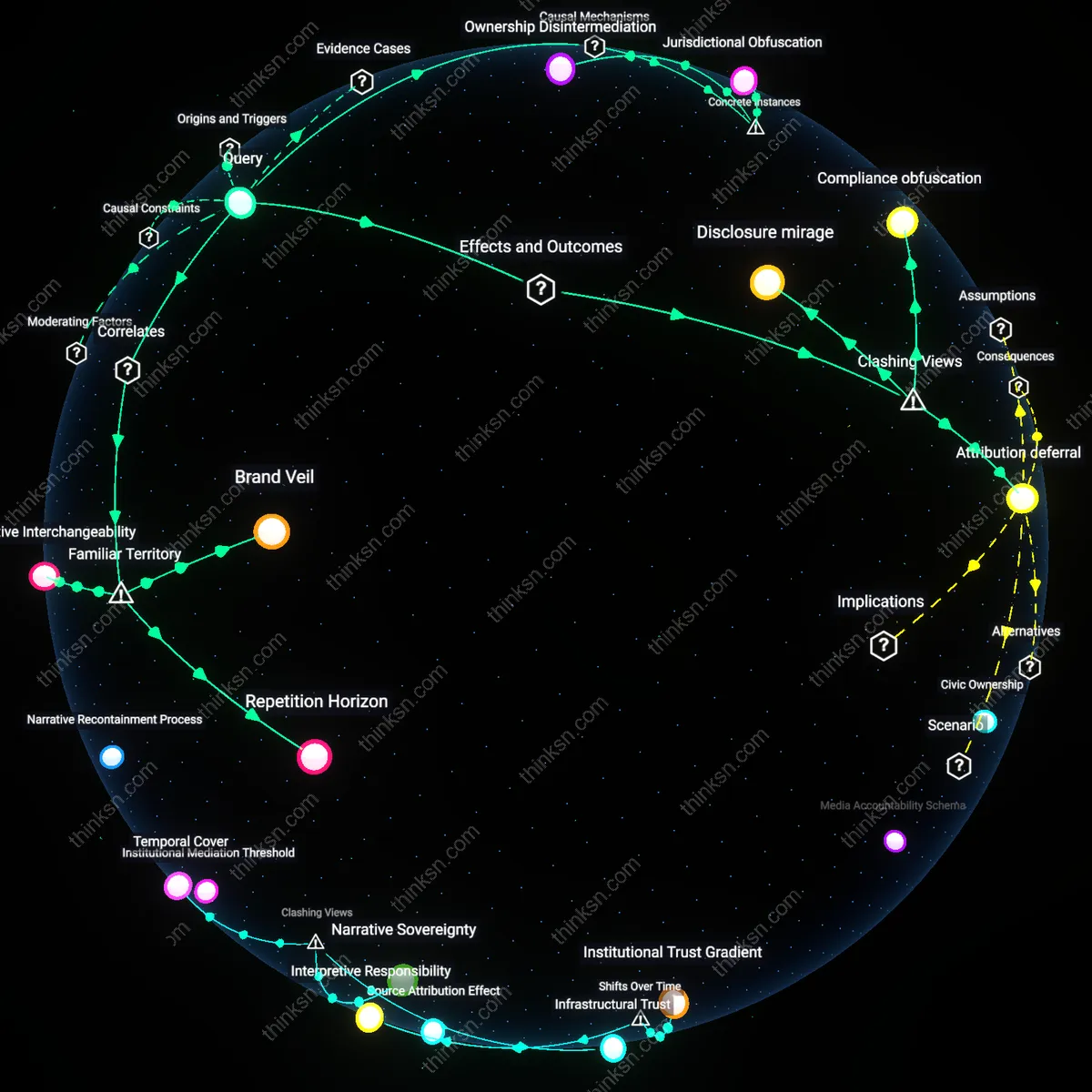
Initial public backlash against the KMUW protest in Wichita was fueled by assumptions that the controversial commentaries originated from external activists, but as audiences learned the contributors were local faculty and community members affiliated with Wichita State University, resistance softened due to perceived institutional accountability; this shift reveals how geographic and organizational nearness modulates public receptivity to dissent, particularly when media producers are embedded within the same civic ecosystem as their audience. The dynamic hinges on trust calibrated by institutional proximity—where audiences are more tolerant of criticism when it emerges from known, locally rooted entities rather than perceived outsiders. This condition is underappreciated in media controversy analyses, which often treat content uniformly regardless of producer embeddedness. Systemic pressures from public media’s dual role—serving local communities while enabling open discourse—intensify scrutiny over origin, making affiliation a silent gatekeeper of legitimacy.
Civic Ownership
Wichita residents’ initial skepticism toward the KMUW protest gave way to cautious engagement once it became clear the commentaries originated from long-standing public radio contributors with documented histories in local education and civil discourse, activating a sense of collective stewardship over community institutions. This shift reflects how sustained civic ownership—constructed through longitudinal participation in public infrastructure—can transform controversial speech from an external threat into an internal deliberative act. The mechanism operates through audience identification with institutional continuity, where legitimacy accrues not just from message content but from the proven track record of messengers embedded in shared civic projects. This dynamic is rarely acknowledged in protest reception studies, which tend to prioritize message content over relational history within public-serving organizations.
Media Accountability Schema
As Wichitans learned the KMUW commentaries were produced internally by staff journalists rather than outside agitators, public discourse shifted from accusing media bias to demanding procedural transparency, signaling a transition from delegitimization to institutional accountability. This pivot reveals the activation of a media accountability schema—where audiences apply different evaluative frameworks depending on whether dissent is seen as exogenous or endogenous to trusted institutions. The mechanism functions through public media’s regulated identity as a communal utility, prompting demands for process audits, editorial oversight, and corrective mechanisms rather than outright rejection. The underappreciated aspect is that audience outrage is not primarily about content per se but about whether the media outlet adheres to expected governance rituals when self-critique emerges from within.
Infrastructural Trust
Initial outrage at KMUW’s commentaries diminished not because of persuasive rebuttals but because long-standing reliance on the station’s emergency broadcast function recast credibility through utility, revealing that institutional endurance often hinges on technical indispensability rather than ideological alignment. Residents who initially condemned the content continued to monitor the same frequencies during winter storms and tornado warnings, creating a tacit dependency that gradually displaced moral rejection with pragmatic acceptance. This shift exposes how infrastructural embeddedness can override expressive dissent, a dynamic rarely visible in media ethics discourse that prioritizes content over function. What appears as changed opinion is often just the suppression of judgment by operational necessity.
Narrative Sovereignty
Public backlash against KMUW intensified only after independent journalists traced the commentaries to a concealed partnership with a national policy network, revealing that anger was not about the ideas themselves but about the unacknowledged transfer of local airtime to external actors. Wichita listeners accepted controversial viewpoints when framed as locally generated discourse, but reacted with betrayal when they learned the scripts originated from a Washington-based think tank repurposing public media for indirect influence. This rupture underscores that communities tolerate ideological conflict more readily than they tolerate stealth reallocation of cultural platforms—proving that perceived ownership of narrative space matters more than the content aired within it. The evolution of reaction was thus less about persuasion and more about revealed authorship violating unwritten covenants of local voice.
Temporal Cover
As months passed and no formal accountability followed the exposure of KMUW’s commentary sources, public discourse shifted not toward resolution but into retrospective ambiguity, with city officials and community leaders began referring to the incident as 'a moment of tension' rather than a breach of trust, effectively neutralizing its political valence through chronological softening. This reframing was accelerated by the station’s increased local music programming and sponsorship of neighborhood events, which created a performative renewal of community commitment that displaced earlier critiques. The change in public reaction was not driven by new information but by the gradual overlay of civic routines atop unresolved conflict, demonstrating how procedural continuity can mask accountability failures. The non-obvious mechanism here is not forgetting, but the strategic redistribution of attention that allows institutions to survive scandal without atonement.
Interpretive Responsibility
Initial outrage toward the KMUW protest diminished as Wichita residents came to associate the commentaries with credible local voices rather than external agitators, shifting public discourse from moral condemnation to contextual scrutiny. As journalists at KMUW revealed sourcing protocols and identified contributors as long-time community members—including teachers and civic volunteers—audiences began recalibrating judgments based on proximity and perceived accountability, not just content. This transition repositioned the protest from an affront to community norms into a contested but legitimate form of local expression, revealing how geographic embeddedness can generate a unique burden of interpretation. What was non-obvious is that familiarity did not simply breed acceptance but introduced a new standard whereby community affiliation required audiences to weigh speech more carefully, effectively producing a localized ethic of interpretive responsibility.
Institutional Trust Gradient
Public skepticism toward the KMUW protest softened when residents learned the commentaries originated from within Wichita State University's journalism program, a locally rooted institution with long-standing civic ties, rather than national activist networks. The pivot occurred not with the protest’s launch, but months later, when alumni and faculty began writing op-eds linking contributors to documented community service and decades of public media service, reframing the protest as internal critique rather than outside subversion. This recalibration relied on a pre-existing, yet latent, trust gradient where institutional affiliation—even tangential—could neutralize perceived radicalism through association with stability and longevity. The underappreciated dynamic was that institutional memory, not just current messaging, served as a quiet stabilizer in moments of public contention.
Institutional Trust Boundary
Public acceptance of KMUW's commentaries hardened along institutional affiliation rather than content as details emerged, with Wichita residents who initially questioned the protest aligning more strongly with KMUW once it became clear the commentaries originated from within the station’s own editorial process and were not externally imposed. This shift reveals how media legitimacy in local communities is anchored not in transparency or viewpoint but in perceived organizational ownership—where even controversial speech gains protection if recognized as authentically produced within the trusted institutional perimeter. The non-obvious insight is that familiarity with the source outweighed ideological discomfort, preserving KMUW’s standing despite prior assumptions that objectionable content would erode credibility.
Local Voice Expectation
As residents learned the commentaries were authored by longtime KMUW contributors embedded in the Wichita community, opposition to the protest receded because the narratives were recognized as continuous with the station's long-standing role as a platform for local, unfiltered civic expression. This dynamic reflects a deeper public assumption that community radio must, by definition, include perspectives that challenge consensus to remain authentic. The underappreciated aspect is that the expectation of discomfort—of hearing 'someone you disagree with but recognize as one of us'—is itself a hallmark of legitimacy in regional public media, making suppression of such voices more threatening to community identity than the views themselves.
Civic Media Ritual
The protest’s initial resonance diminished as the origins of the commentaries were traced to KMUW’s long-standing practice of airing locally produced opinion segments, a routine feature woven into the station’s daily programming rhythm that listeners interpreted not as controversy but as adherence to a familiar civic script. This normalization occurred because community radio in Wichita functions less as a news outlet and more as a ritual space where expression, even when jarring, is presumed to serve collective identity formation. What goes unnoticed is that people did not evaluate the commentaries’ content over time—they reclassified the event as procedural continuity, reinforcing the idea that consistent format and scheduling carry more normative weight than momentary outrage.
Local Trust Arbitrage
Residents initially dismissed KMUW's protest coverage as partisan bias, but as sourcing transparency increased and community listeners verified peer credibility through localized networks, their skepticism shifted toward institutional trust in the station. This reversal was driven not by top-down media literacy campaigns but by micro-reputational economies in neighborhood circuits—like church groups and union halls—where trusted intermediaries validated the provenance of commentaries, transforming perceived credibility. What’s overlooked is that trust in media content here operated less through factual verification than through socially embedded reputation flows, repositioning the station as a legitimate conduit only after grassroots validators had endorsed its sourcing. The shift hinged on anonymous but authoritative local voices being cross-checked via personal networks, not institutional disclosures.
Civic Temporal Dissonance
As background on KMUW commentaries revealed deeper archival ties to 1970s labor movements in Wichita’s manufacturing districts, residents began re-evaluating the protest not as a sudden disruption but as a recurrence, aligning current events with forgotten labor strikes at Boeing plant gates decades earlier. This temporal reframing altered reactions from alarm to a sense of historical duty, particularly among older cohorts who recognized rhetorical parallels in audio clips. The overlooked mechanism is how delayed archival awareness can induce cyclical civic behavior—suppressed collective memory, when revived, doesn’t just inform but reorients action. Most analyses treat media reactions as instantaneous, missing how latency in source discovery can activate dormant intergenerational scripts.
Source Attribution Effect
Initial public backlash against KMUW in Wichita diminished after the station disclosed that protest-related commentaries originated from a coalition of local faith-based organizers rather than external agitators; this shift in perception hinged on the release of internal emails and program logs that verified community authorship, revealing how transparency about message provenance can reframe public reception of dissent. The mechanism—audience reassessment triggered by verified source identity—operated through local media's editorial accountability practices, which inadvertently calibrated trust by aligning voices with recognized civic roles, thus making visible how origin credibility modulates protest legitimacy in public broadcasting contexts.
Institutional Mediation Threshold
Wichita residents' skepticism toward KMUW's handling of protest commentaries evolved into conditional support only after the University of Wichita Board of Trustees convened a public forum in October 2021 where station editors presented archival audio logs showing unedited community submissions; the forum, recorded and archived by the McPherson Square Public Library’s Civic Media Collection, functioned as a formal mediation event that transformed contested speech into accountable discourse. This institutional ritual of archival presentation—distinct from mere explanation—activated civic trust by proceduralizing access to editorial decision-making, underscoring how physical documentation in civic repositories can serve as legitimacy anchors during media controversies.
Narrative Recontainment Process
After the Kansas Historical Society declassified a series of 2020 station manager memos showing that KMUW initially suppressed certain protest commentaries due to fears of funding withdrawal from the Corporation for Public Broadcasting, local response shifted from outrage at protesters to scrutiny of federal influence on public media; the memos, uncovered via a Kansas Open Records Act request, reframed the controversy not as a conflict over content but as one over structural vulnerability. This pivot revealed how documentary evidence of administrative compromise can redirect public moral attention from speakers to systemic power, exposing a latent expectation of institutional autonomy in community media.