Are Early Settlement Deals After Breaches Coercive or Considerate?
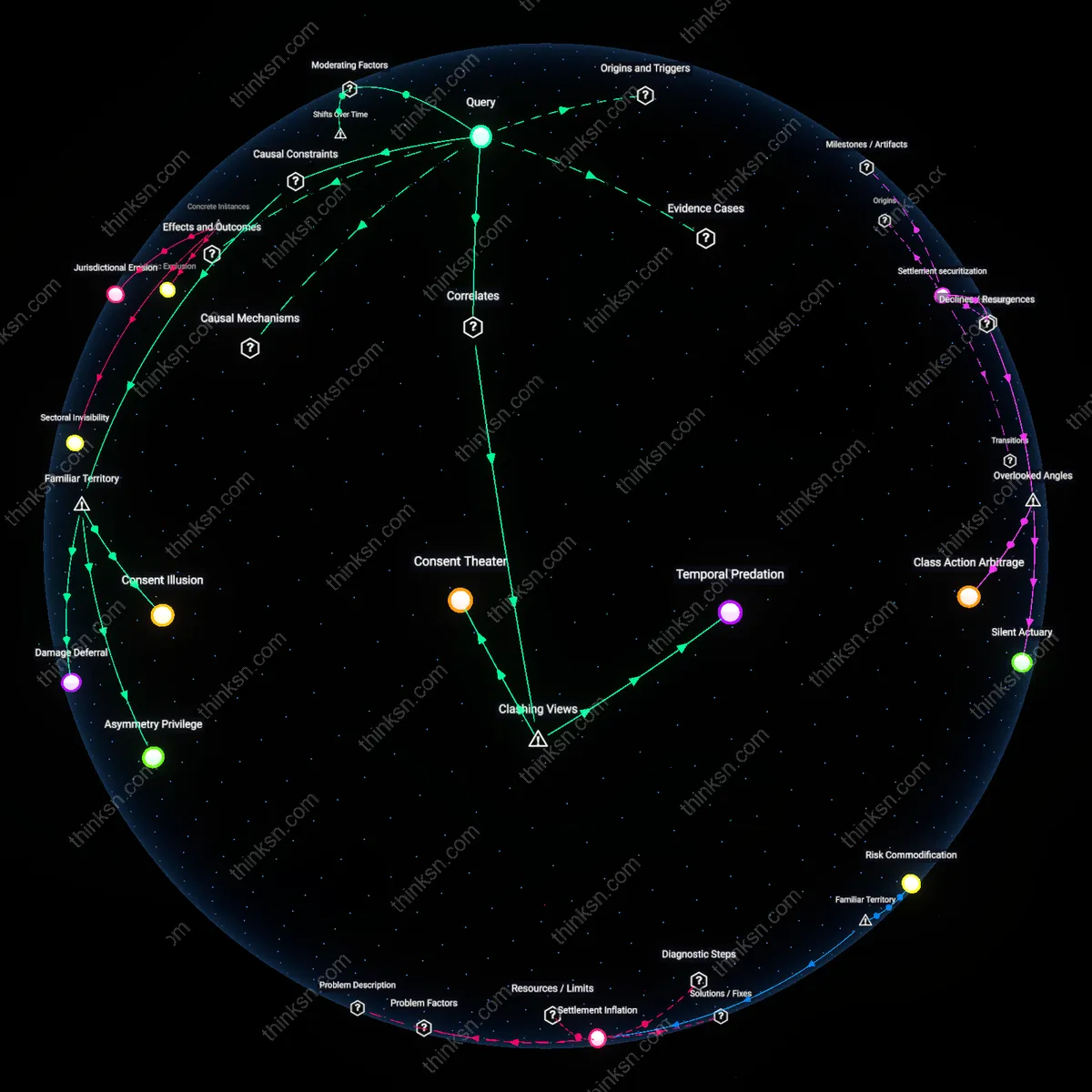
Analysis reveals 6 key thematic connections.
Key Findings
Injury Deferral
Since the early 2010s, courts have increasingly required proven financial harm to validate data breach claims, prompting corporations to offer early settlements that preemptively define injury as short-term inconvenience rather than systemic exposure. This legal condition pressures consumers to consent to minimal compensation—often credit monitoring—before downstream harms like algorithmic discrimination or reputational damage materialize, effectively capping liability through temporal disjunction. As a result, the corporate practice of time-limited redress reframes consent as acceptance of a narrowly defined injury, one that suppresses future claims by locking in a judicially palatable narrative of harm. The underappreciated shift is that consent is no longer just undermined at collection but actively recalibrated in hindsight, through a court-endorsed timeline that dissociates cause from consequence.
Consent Theater
Offering limited-time early-settlement deals after data breaches functions not as a gesture toward consumer redress but as a procedural performance that simulates accountability while neutralizing legal exposure. Companies like Equifax and Uber deploy these time-bound offers in the immediate aftermath of public disclosure, exploiting the cognitive burden and informational asymmetry consumers face when assessing long-term risks of data exposure. This mechanism operates through regulatory safe harbors and class-action opt-in dynamics, where the appearance of choice substitutes for meaningful agency—what feels like consent is structurally pre-empted by urgency and opacity. The non-obvious insight is that the ritual of offering settlement terms replicates the form of negotiation without its substance, thereby licensing corporate impunity under the guise of participation.
Temporal Predation
The compressed timelines in early-settlement offers weaponize the immediate post-breach period, when consumers are most confused and least equipped to evaluate future harms, turning temporal pressure into a tool of extraction rather than resolution. Firms such as Facebook in the Cambridge Analytica aftermath and Experian in its own breach settlements leverage milliseconds-to-market with settlements to lock in liability caps before regulatory investigations mature or damages become quantifiable. This operates through the legal architecture of standing and precedent-based compensation, where speed displaces evidence, and the court of public perception replaces judicial scrutiny. Contrary to the intuitive view that early deals reflect corporate responsibility, they instead reveal a strategic exploitation of temporal asymmetry—consent here is not informed but captured in the fog of crisis.
Consent Illusion
Limited-time early-settlement deals after data breaches exploit the urgency-pressure bottleneck, where consumers must act quickly or lose compensation, yet lack access to full information about the breach or long-term risks. This mechanism operates through legal deadlines imposed unilaterally by corporations, privileging corporate timelines over consumer deliberation, and it reveals that the familiar expectation of informed choice collapses when time is weaponized—what feels like voluntary agreement is actually coerced by design. The non-obvious insight is that the very structure of the offer undermines the validity of consent, even though the public still interprets signing as personal responsibility.
Asymmetry Privilege
Corporations control both the disclosure of breach details and the timing of settlement offers, creating a knowledge-access bottleneck that prevents consumers from assessing the true value of their compromised data. This operates through non-disclosure agreements and opaque claims processes embedded in the settlements themselves, which are enforced in jurisdictions favorable to the company. While the public assumes consent reflects mutual agreement, the reality is that the imbalance in information and legal resources means agreement is functionally extracted, not given—highlighting how familiar notions of fairness in contracts obscure systemic advantages baked into their execution.
Damage Deferral
Early-settlement deals function only because future harm from data misuse is uncertain and diffused, creating a plausibility-denial bottleneck that makes immediate compensation appear generous despite long-term risks. This mechanism relies on the fact that identity theft or reputational damage may emerge years later, beyond the legal horizon of the settlement, and it operates through standard liability-shifting clauses in the fine print. The public equates accepting a payout with closure, but the non-obvious consequence is that companies convert open-ended liability into fixed, minimal costs by exploiting consumers’ rational preference for certain small gains over uncertain large losses—consent thus becomes a tool for burying future claims before they can form.