Is Relying on Credit Scores for Liability Insurance Fair?
Analysis reveals 11 key thematic connections.
Key Findings
Actuarial Injustice
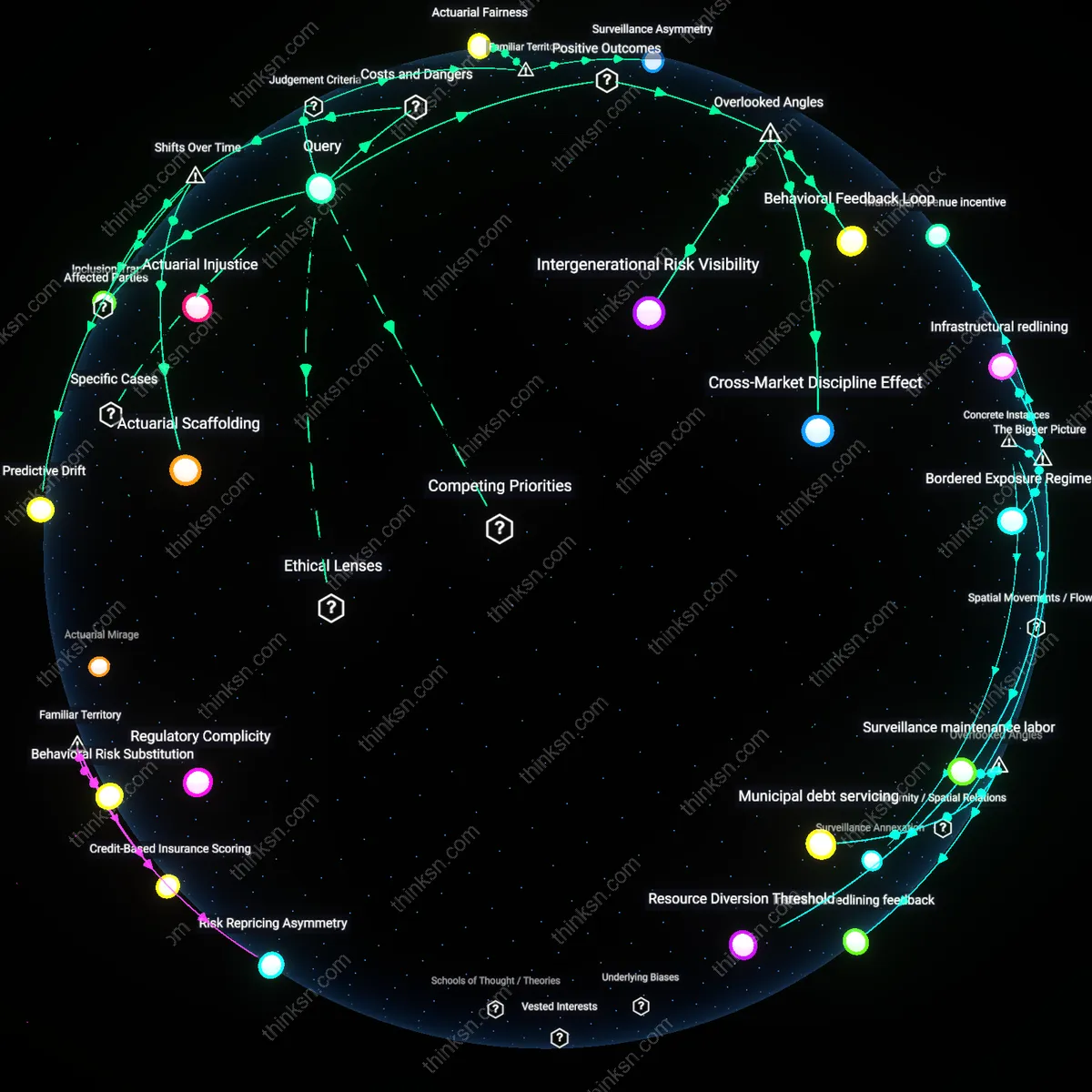
Using credit scores in personal liability insurance underwriting perpetuates actuarial injustice, as seen in the 2018 California Department of Insurance audit of Farmers Insurance, which found that low-income ZIP codes—disproportionately Black and Latino—paid up to 25% more in premiums due to credit-based scoring despite similar claim rates; this mechanism codifies historical redlining into risk assessment, normalizing discrimination under the guise of statistical objectivity, a dynamic often obscured by the technical opacity of underwriting algorithms.
Regulatory Complicity
State insurance regulators enable structural inequity by permitting credit-based underwriting, exemplified by the Texas Insurance Commission’s 2015 decision to reject proposed rules limiting credit score use in favor of industry-backed risk models; this institutional alignment between regulators and insurers transforms socioeconomic disadvantage into actuarial risk, revealing how regulatory frameworks can legitimize exclusionary practices under the banner of market efficiency.
Predictive Extraction
Insurance firms extract profit from marginalized populations by repackaging poverty as behavioral risk, demonstrated by Progressive’s 2012 Snapshot program, which, while branded as usage-based innovation, disproportionately penalized urban drivers—who are more likely to be low-income and reliant on cars for work—through driving pattern proxies correlated with creditworthiness; this reveals how datafication allows capital to monetize social vulnerability under the neutral veneer of technological progress.
Actuarial Fairness
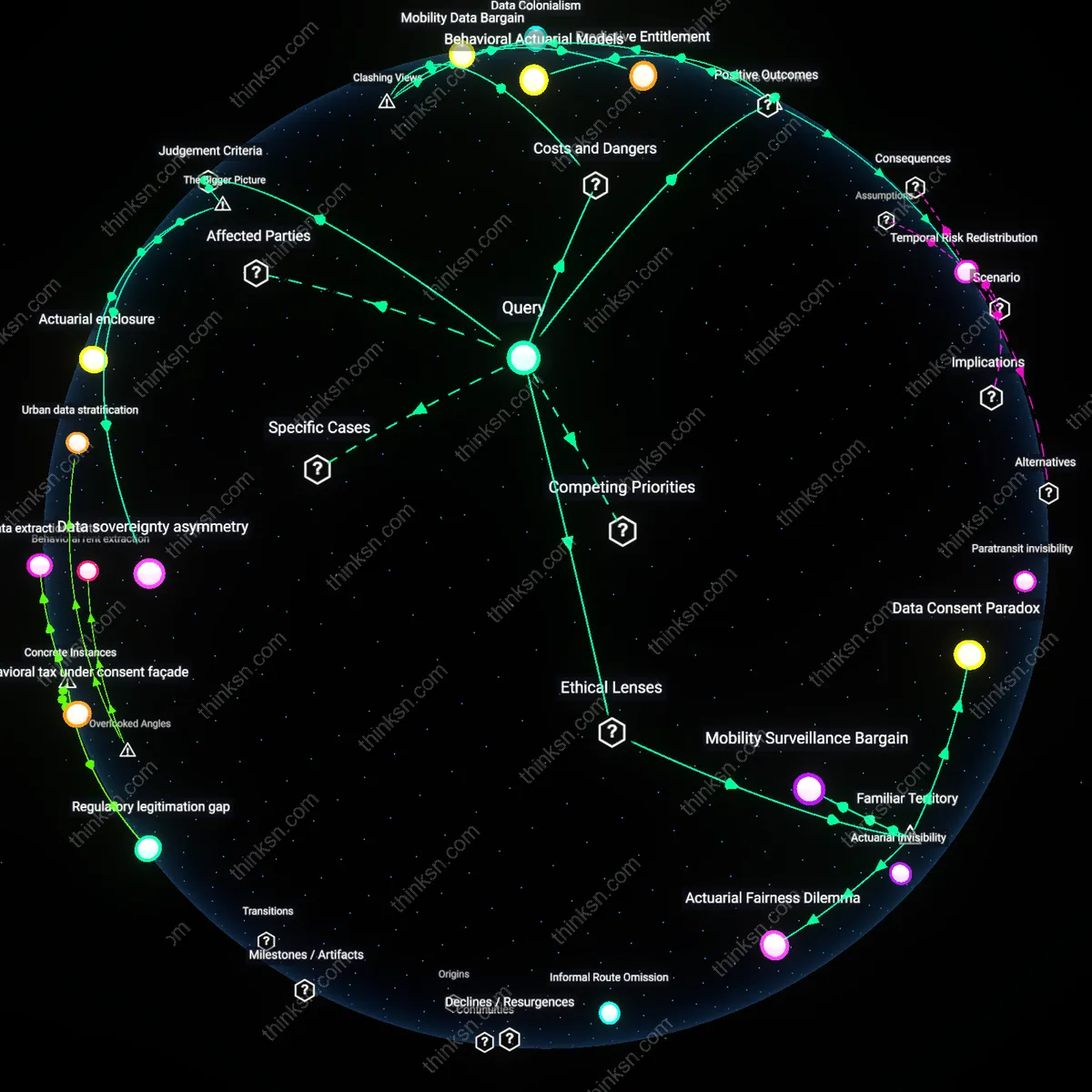
Yes, credit score-based underwriting is ethically and socially justifiable because it aligns premiums with statistically observed risk, ensuring that insurers price policies according to expected loss, which maintains market solvency and fairness across risk pools. This system involves actuaries, insurance carriers, and regulatory bodies who rely on large-scale claims data showing correlations between credit behavior and liability claims frequency, operating through predictive modeling systems that prioritize risk segmentation. The non-obvious aspect is that the public typically frames credit scoring as a social equity issue, yet the foundational justification rests on actuarial neutrality—treating all individuals as statistical proxies rather than economic actors—thereby depoliticizing disparities as technical artifacts rather than moral failures.
Surveillance Asymmetry
The use of credit scores in liability underwriting is socially unjustifiable because it entrenches a surveillance asymmetry where corporate actors extract behavioral traces from financially marginalized populations to predict and price their risk, while those individuals receive no reciprocal insight or control over the models shaping their access. This operates through data brokerage ecosystems—like FICO score vendors and insurance analytics firms—that convert routine financial interactions into risk capital, administered by actuaries and underwriters who are insulated from the lived consequences of misclassification. While public discourse focuses on fairness or accuracy, the residual issue is that surveillance flows upward and profits accrue to institutions, while accountability flows downward—making the score a one-way mirror of control rather than a transparent contract.
Behavioral Feedback Loop
Using credit scores in liability insurance underwriting improves long-term financial literacy and risk-awareness among low-income applicants by creating a recursive incentive structure that links everyday financial behavior to tangible insurance outcomes. When individuals see their credit-improvement efforts directly reduce premiums or increase coverage access, they are more likely to engage in budgeting, debt management, and timely payment behaviors—actions that compound across households and generate downstream benefits like reduced reliance on predatory lending. This feedback mechanism is typically overlooked because policy debates frame credit scoring as a static gatekeeper rather than a dynamic behavioral guide; yet in cities like Memphis and Detroit, community-insurance partnerships have harnessed this loop to align underwriting data with financial capability building. The significance lies in reframing credit scores not as exclusionary filters but as pedagogical tools embedded in broader financial socialization processes.
Cross-Market Discipline Effect
Credit-based underwriting indirectly enforces accountability in informal economic sectors by pressuring gig workers and cash-based small businesses to formalize financial records to qualify for affordable liability coverage. For example, food truck operators in Los Angeles who accept credit card payments and report income see improved credit profiles, which in turn lower their vendor liability premiums—creating a latent incentive to exit gray-market practices. Most analyses ignore how insurance pricing can function as a regulatory nudge into formal financial systems, especially where direct regulation fails; this cross-market discipline effect makes credit scoring a stealth mechanism for institutional integration. The overlooked consequence is that insurers, unintentionally, become arbiters of market formalization, reshaping economic participation beyond their stated role.
Intergenerational Risk Visibility
Incorporating credit history into liability underwriting reveals intergenerational patterns of financial risk management that otherwise remain hidden in traditional actuarial models, enabling insurers to identify resilient low-income households that merit lower premiums despite income volatility. For instance, multigenerational households in South Texas with strong rent-payment consistency and shared credit responsibility demonstrate risk profiles comparable to higher-income single-generation units—data that credit scoring captures more effectively than ZIP code or occupation proxies. This visibility is rarely acknowledged because equity critiques assume credit scores uniformly penalize poverty, but in reality, they can spotlight sustainable financial practices within structurally disadvantaged communities. The consequence is a more nuanced risk distribution model that rewards familial financial stewardship, altering the assumption that credit-based underwriting is inherently regressive.
Actuarial Scaffolding
The incorporation of credit scores into personal liability underwriting since the mid-1990s transformed actuarial logic from risk-based categorization to systemic disadvantage reproduction, as insurers and credit bureaus aligned with financial deregulation to treat creditworthiness as a proxy for behavioral reliability, embedding historical redlining effects into actuarial models; this mechanism operates through proprietary algorithms that obscure correlation from causation, making it analytically significant that risk assessment now codifies past discrimination as present necessity, a shift made possible only after the dismantling of Glass-Steagall and the rise of data brokerage ecosystems that repurposed consumer debt records for risk prediction.
Predictive Drift
The use of credit-based underwriting became entrenched in the 2000s not because of superior risk prediction but because of regulatory permissiveness following the Financial Modernization Act of 1996, which allowed insurers to adopt financial data practices previously restricted to banks, thereby shifting liability risk assessment from observed behavior to statistical extrapolation from economic vulnerability; this created a feedback loop wherein low-income policyholders are priced out or denied coverage not due to actuarial accuracy but because models conflate financial stress with risk propensity, revealing that the historical shift from experience-rated pools to algorithmic exclusion has destabilized the social contract of insurance as mutual protection.
Inclusion Trap
Post-2010 expansion of credit-score reliance in personal liability markets under the guise of financial inclusion paradoxically deepened disadvantage by reclassifying poverty as calculable risk, leveraging FinTech partnerships to package exclusion as personalized pricing, a transformation made visible when state insurance departments accepted credit scoring as 'neutral' despite longitudinal data showing persistent racial and income disparities; this marks a decisive shift from underwriting as loss forecasting to underwriting as socioeconomic sorting, where access to basic coverage becomes contingent on financial surveillance compliance, masking structural inequity as individual financial hygiene.