Is Free Ride-Sharing Worth the Risk of Higher Insurance?
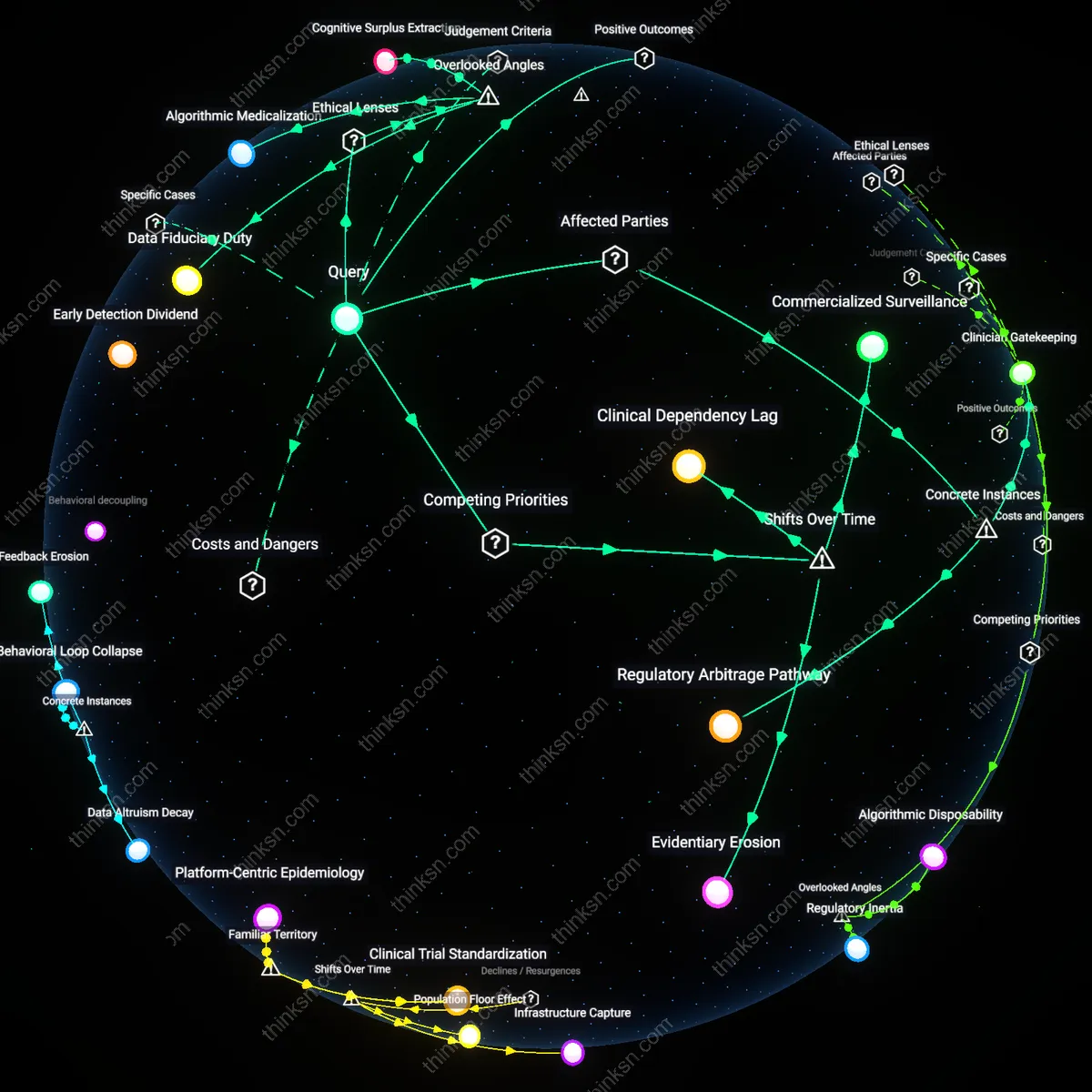
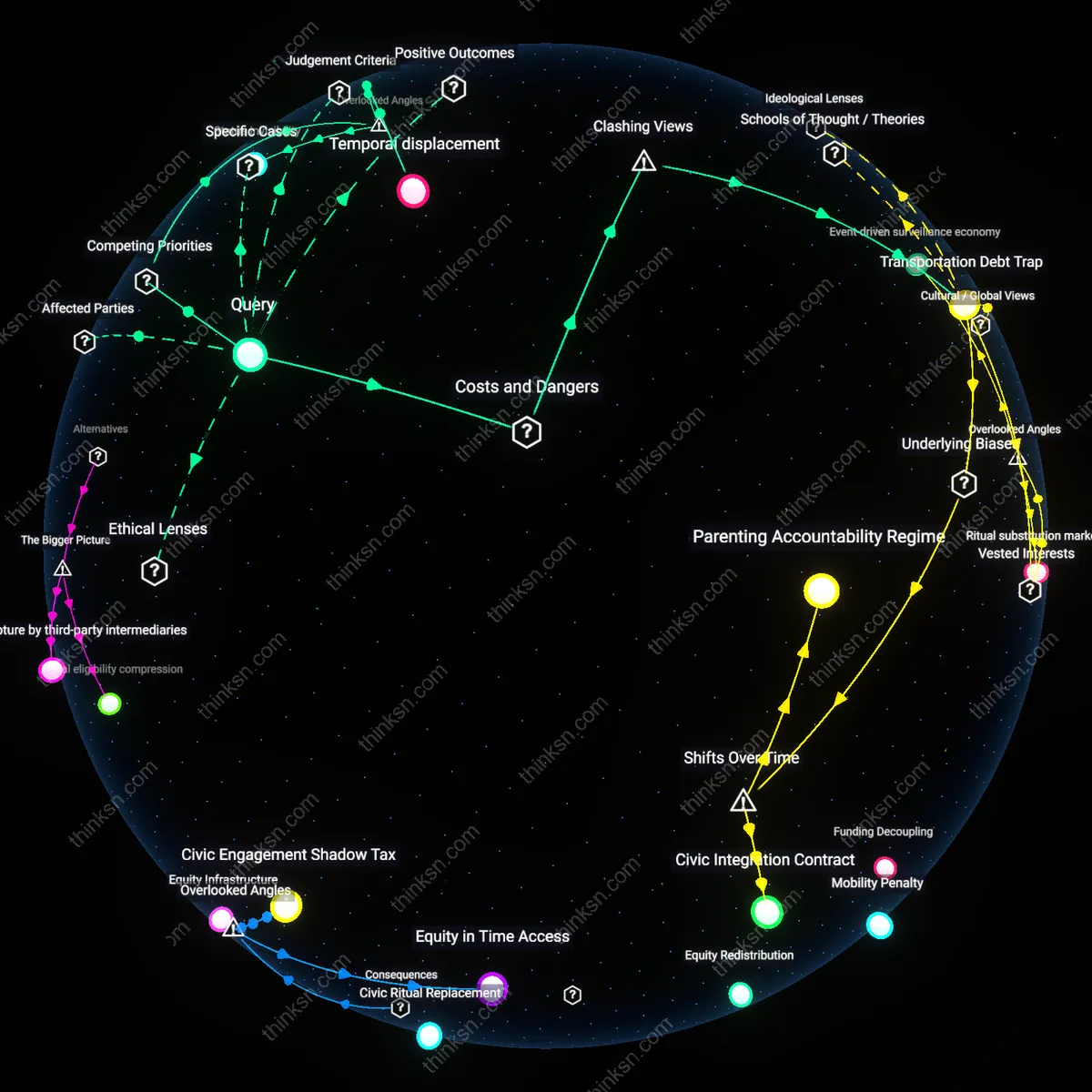
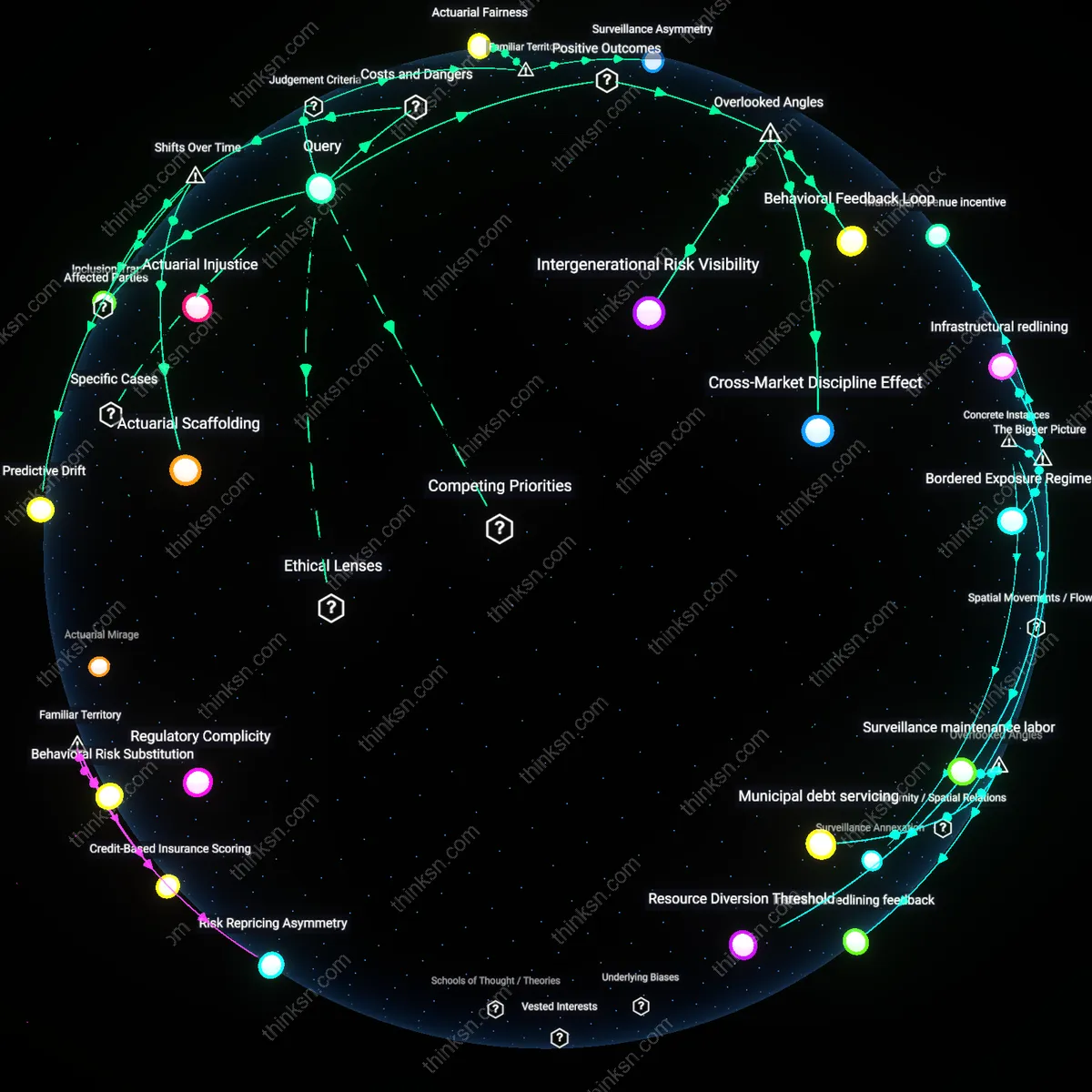
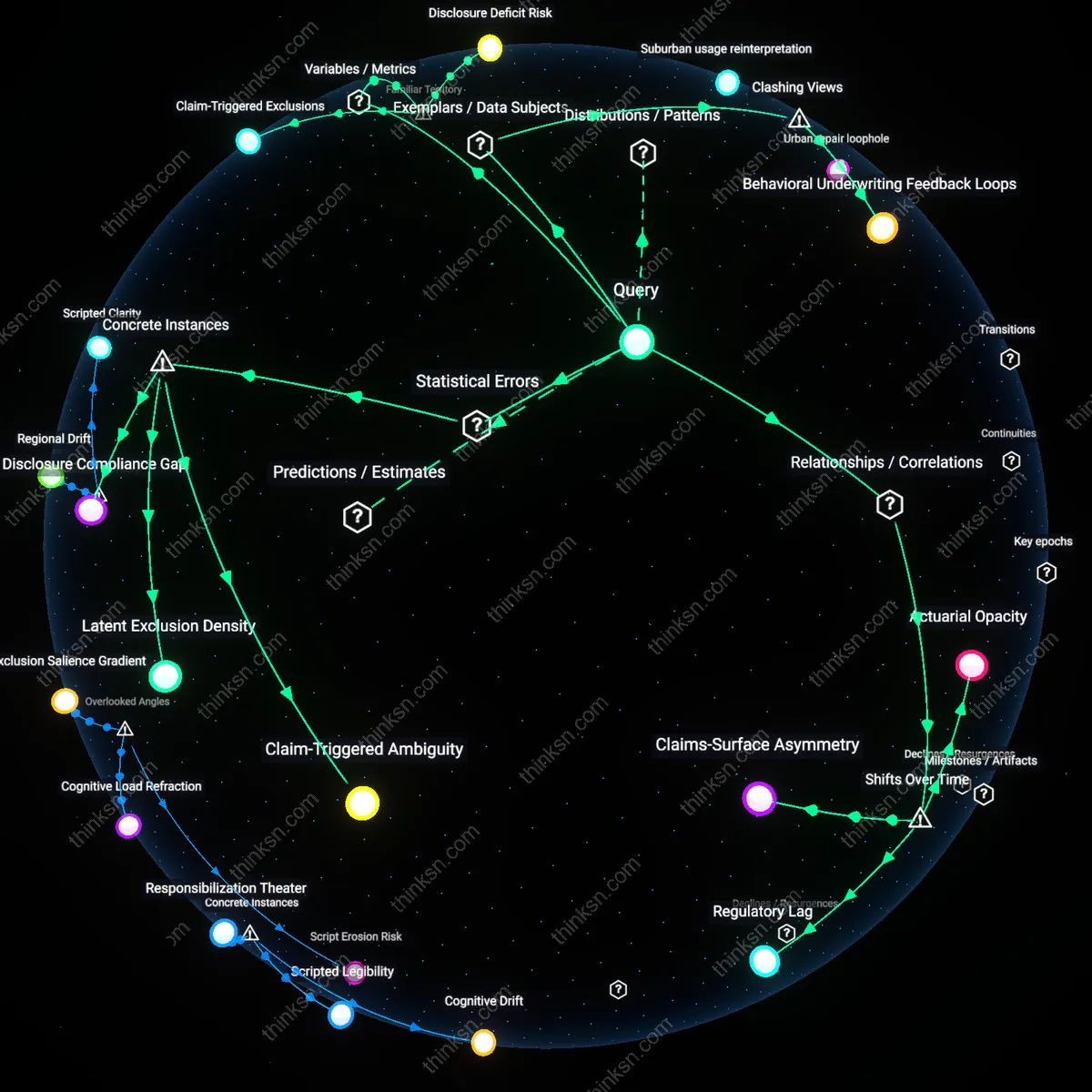
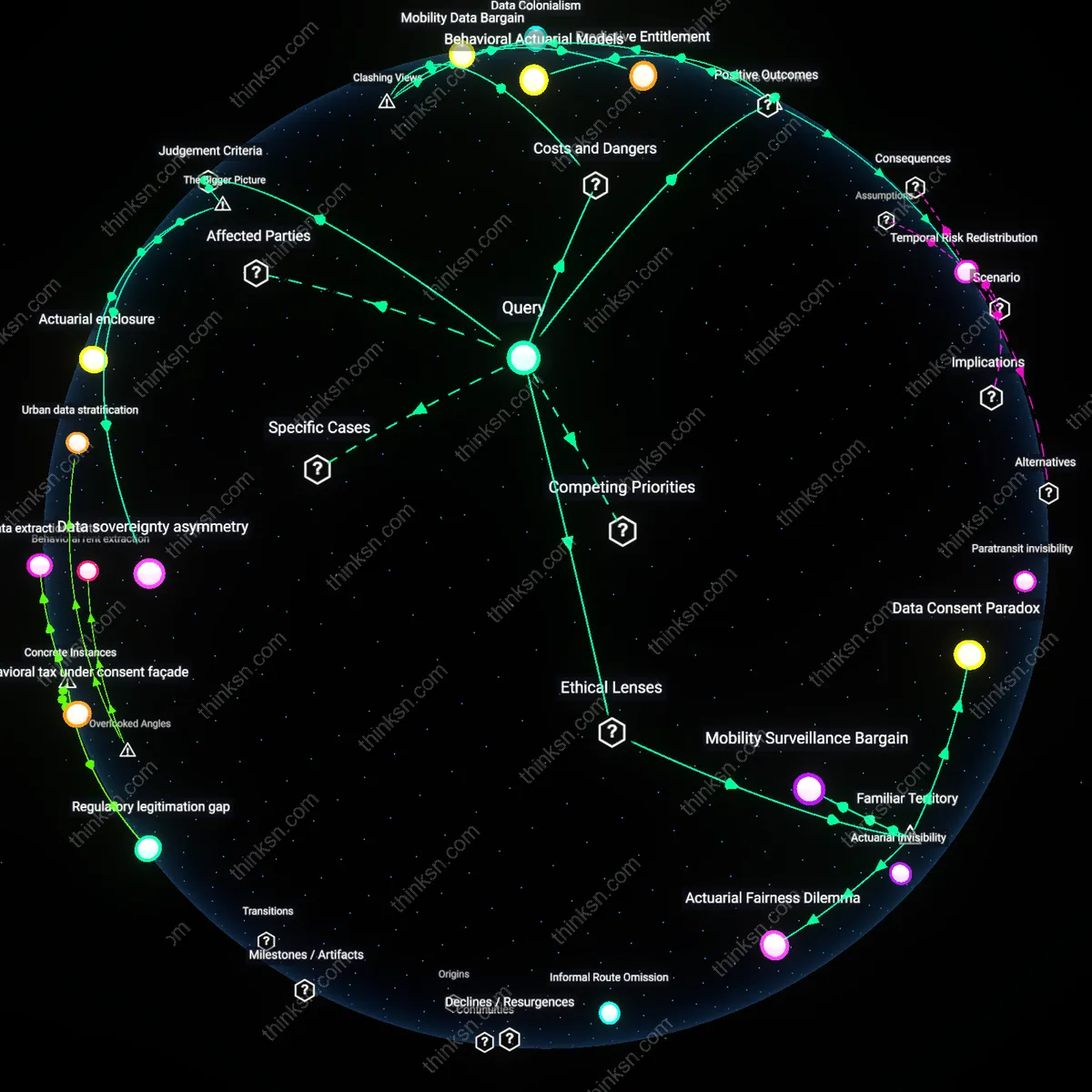
Analysis reveals 12 key thematic connections.
Key Findings
Data sovereignty asymmetry
Regulators should mandate user ownership of raw location data to rebalance power between ride-sharing platforms and third-party insurers, because current legal frameworks treat aggregated mobility patterns as corporate assets rather than personal records. This condition persists because app providers act as de facto data stewards under terms of service that preauthorize secondary data use, enabling insurance firms to access behavioral proxies through data brokers without explicit consent—creating a systemic loophole where privacy protections terminate at the app boundary. The non-obvious insight is that the threat isn't tracking per se, but the one-way transfer of behavioral data into risk-assessment ecosystems governed by different regulatory logics.
Actuarial enclosure
Insurance models must be prohibited from incorporating mobility-derived behavioral indicators, since the efficiency gains from personalized pricing are outweighed by the injustice of penalizing users for data exhaust generated during routine service use. This dynamic is driven by reinsurers like Munich Re and Swiss Re who incentivize granular risk segmentation through algorithmic underwriting tools, which treat frequent ride-share use near high-incident zones as a proxy for individual recklessness—despite such patterns reflecting urban inequality rather than personal risk. The overlooked consequence is that actuarial models quietly reinscribe spatial stigma by converting neighborhood-level data into individual premiums, effectively punishing users for navigating unequal geographies.
Infrastructural moral hazard
Cities should subsidize anonymized, aggregated mobility data collection through public transit APIs to reduce private app dependence, because the current convenience monopoly of apps like Uber and Lyft creates a feedback loop where municipal planning defers to corporate data silos. As transportation infrastructure evolves around privately controlled usage patterns, governments unintentionally enable data-driven rent extraction by insurers who align policy costs with behaviors optimized for app efficiency rather than user welfare. The underappreciated mechanism is that public reliance on proprietary mobility data legitimizes its repurposing in adjacent markets, transforming urban logistics into a vector for behavioral monetization.
Behavioral Actuarial Models
Adopting ride-share app data for insurance pricing in the 2010s shifted risk assessment from static demographics to dynamic mobility patterns, enabling insurers to reward low-risk driving behaviors observed in real time. This transition—from questionnaire-based underwriting to continuous behavioral monitoring—was made possible by smartphone ubiquity and GPS tracking infrastructure, which reframed movement not as isolated trips but as aggregable behavioral signals. The non-obvious consequence is that actuarial fairness now depends on data density rather than actuarial cohorts, privileging those whose mobility generates favorable algorithmic footprints.
Mobility Data Bargain
The normalization of location tracking in ride-sharing apps after 2015 established an implicit exchange where users gain frictionless transportation access in return for passive data contribution, a shift from deliberate data-sharing to ambient surrender. This bargain emerged as platforms like Uber and Lyft scaled, embedding GPS collection into routine urban mobility and redefining privacy as a background cost of convenience. The underappreciated shift is that users no longer negotiate data terms at the point of service but inherit them systemically—making mobility itself a continuous enrollment in surveillance economies.
Temporal Risk Redistribution
Following the integration of real-time location data into insurance models post-2020, risk is no longer calculated annually but recalibrated continuously, shifting the temporal logic of insurance from retrospective pooling to prospective steering. Insurers now use ride-share-derived mobility histories to project future risk exposure, altering policy terms dynamically based on movement patterns. This transition reveals that insurance is evolving from a compensatory mechanism to a behavioral governance tool, where premiums function not just to price risk but to shape it over time.
Data Colonialism
The convenience of a free, location-tracking ride-sharing app should be rejected because it institutionalizes data extraction from low-income urban riders who cannot opt out without losing mobility access, turning their movement patterns into a resource for third-party actuarial models that reinscribe spatialized risk. Municipal transportation deserts make these apps functionally essential, especially in post-industrial U.S. cities like Detroit or Birmingham, where public transit gaps force reliance on apps whose 'free' cost is paid in behavioral surplus; this creates a de facto extractive regime where mobility itself becomes a vehicle for profiling. Insurance firms then license anonymized mobility datasets from app intermediaries—such as Uber’s Movement or proprietary APIs—to model neighborhood-level risk, which indirectly raises premiums for entire ZIP codes regardless of individual driving records. This mechanism reveals that the real cost of 'free' apps isn't personal privacy loss alone, but systemic risk redistribution onto marginalized geographies under the guise of algorithmic neutrality, a process rarely acknowledged in consent dialogues.
Predictive Entitlement
Users should not accept the trade of convenience for location tracking because the profiling generated feeds into insurance risk algorithms that retroactively penalize behavior deemed 'predictively deviant'—such as frequent late-night rides—even when no accident or claim occurs. Insurers like Progressive and Allstate increasingly use third-party mobility data to adjust risk scores via partnerships with data brokers such as LexisNexis or Arity, which classify regular use of ride-sharing in high-crime areas as a proxy for personal recklessness, irrespective of actual risk exposure. This transforms routine, rational mobility choices—like avoiding drunk driving—into markers of actuarial suspicion, incentivizing a new form of behavioral compliance where users must conform to algorithmic expectations of 'safe' spatial citizenship to retain affordability. The non-obvious danger is not surveillance per se, but the erasure of intent and context in risk modeling, producing a system where preventive actions are misread as indicators of danger.
Frictionless Coercion
The balance skews decisively against users because the structural design of ride-sharing apps makes refusal of tracking functionally impossible, rendering informed consent a procedural fiction masked by seamless UX—meaning the convenience itself is the mechanism of exploitation. In cities like Los Angeles or Atlanta, where gig work is concentrated and workers depend on multiple apps simultaneously, disabling location permissions breaks core functionality, forcing acceptance of terms that permit long-term behavioral archiving across platforms such as Lyft, DoorDash, and Uber. These datasets are aggregated by data brokers like SafeGraph and sold to reinsurers such as Munich Re, who develop cross-platform mobility risk indices that correlate ride frequency with health or auto insurance risk, even when users never file claims. The underappreciated reality is that frictionless design doesn’t just encourage usage—it enforces data surrender, positioning ease-of-use as a coercive tool that neutralizes resistance under the guise of consumer choice.
Data Consent Paradox
Users should accept location tracking in ride-sharing apps because they implicitly consent through terms of use, a mechanism legitimized by liberal contract ideology and enforced through private governance regimes like app licensing agreements. This operates through the user’s trade of personal data for convenience, a bargain normalized by digital platforms’ dominance in urban mobility ecosystems, where opting out means functional exclusion. What’s underappreciated is that the ‘freedom to agree’ masks structural coercion—consent becomes meaningless when the alternative is losing access to essential transport services, especially in cities with weak public transit, revealing the illusion of choice under algorithmic capitalism.
Actuarial Fairness Dilemma
Insurance costs should reflect behavioral risk, so ride-sharing data that reveals frequent late-night travel or high-risk zones should ethically adjust premiums under utilitarian risk-pooling models common in actuarial science. This mechanism functions through statistical adjudication of risk groups, justified by neoliberal insurance doctrines that frame fairness as proportional liability. The non-obvious insight is that while most people assume insurance adjusts for overt behaviors like driving records, the quiet integration of mobility profiling redefines ‘behavior’ to include routine, legal movement—turning ordinary patterns into penalized risk signals without individual wrongdoing.
Mobility Surveillance Bargain
The convenience of instant ride access should be restricted when data is repurposed for insurance underwriting, because such secondary use violates the public’s tacit understanding of situational privacy rooted in contextual integrity theory. This dynamic operates through institutional drift—companies collect data for service logistics but later monetize it across domains like insurance, facilitated by weak data minimization laws in jurisdictions like the U.S. The underappreciated reality is that people tolerate tracking for ride accuracy but don’t expect it to alter financial futures, exposing a hidden breach in the social contract of digital convenience.