Who Bears the Brunt When Science Is Neither Here Nor There?
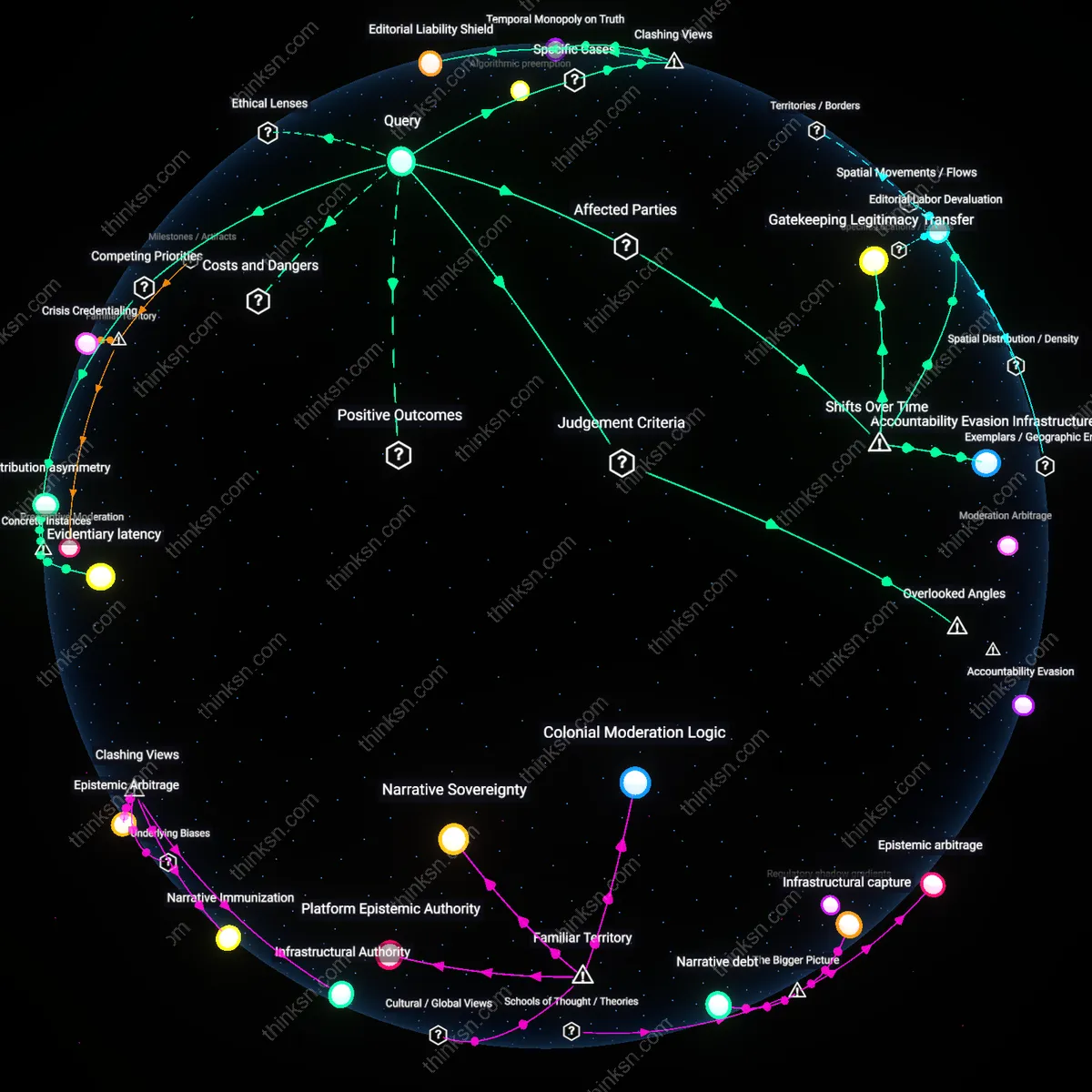
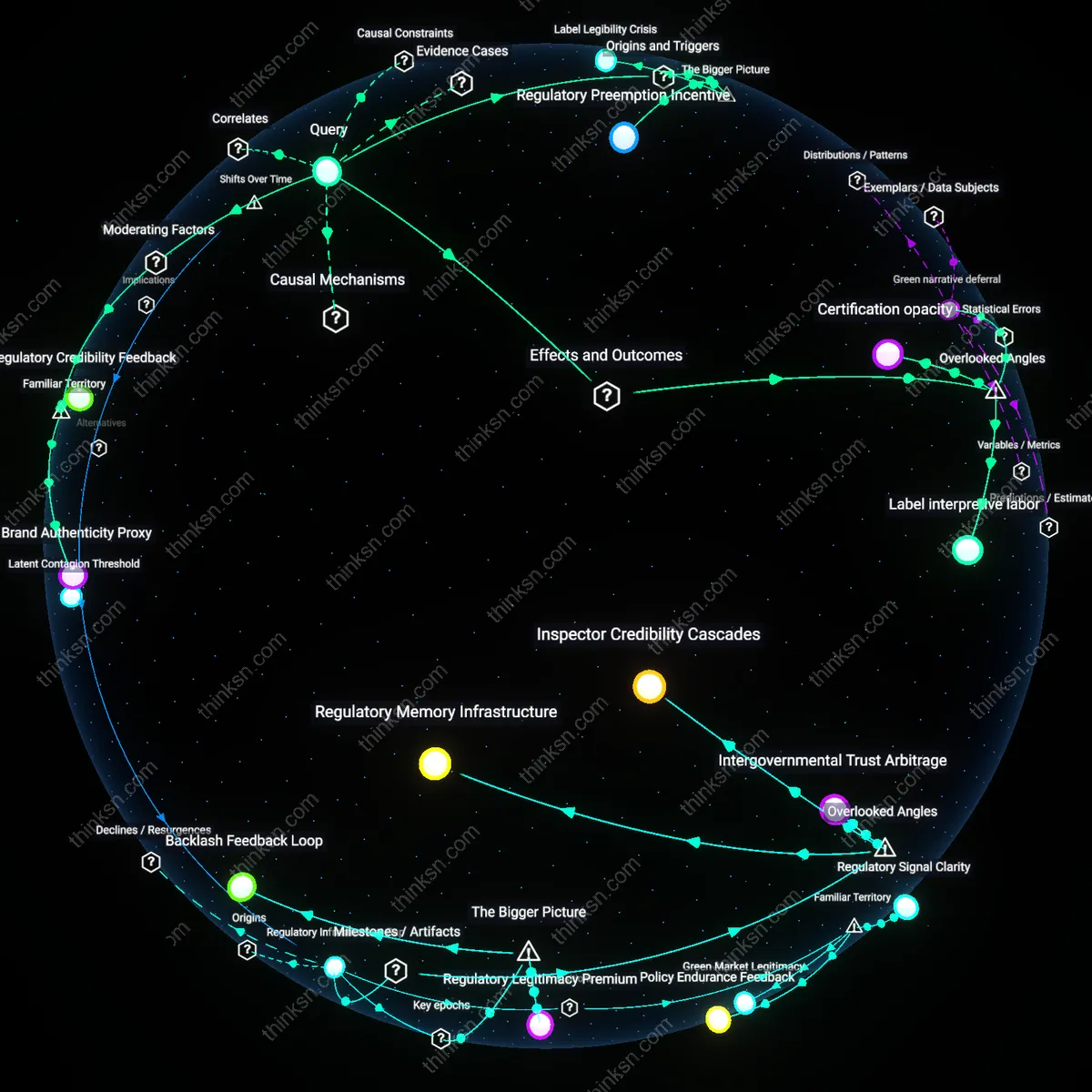
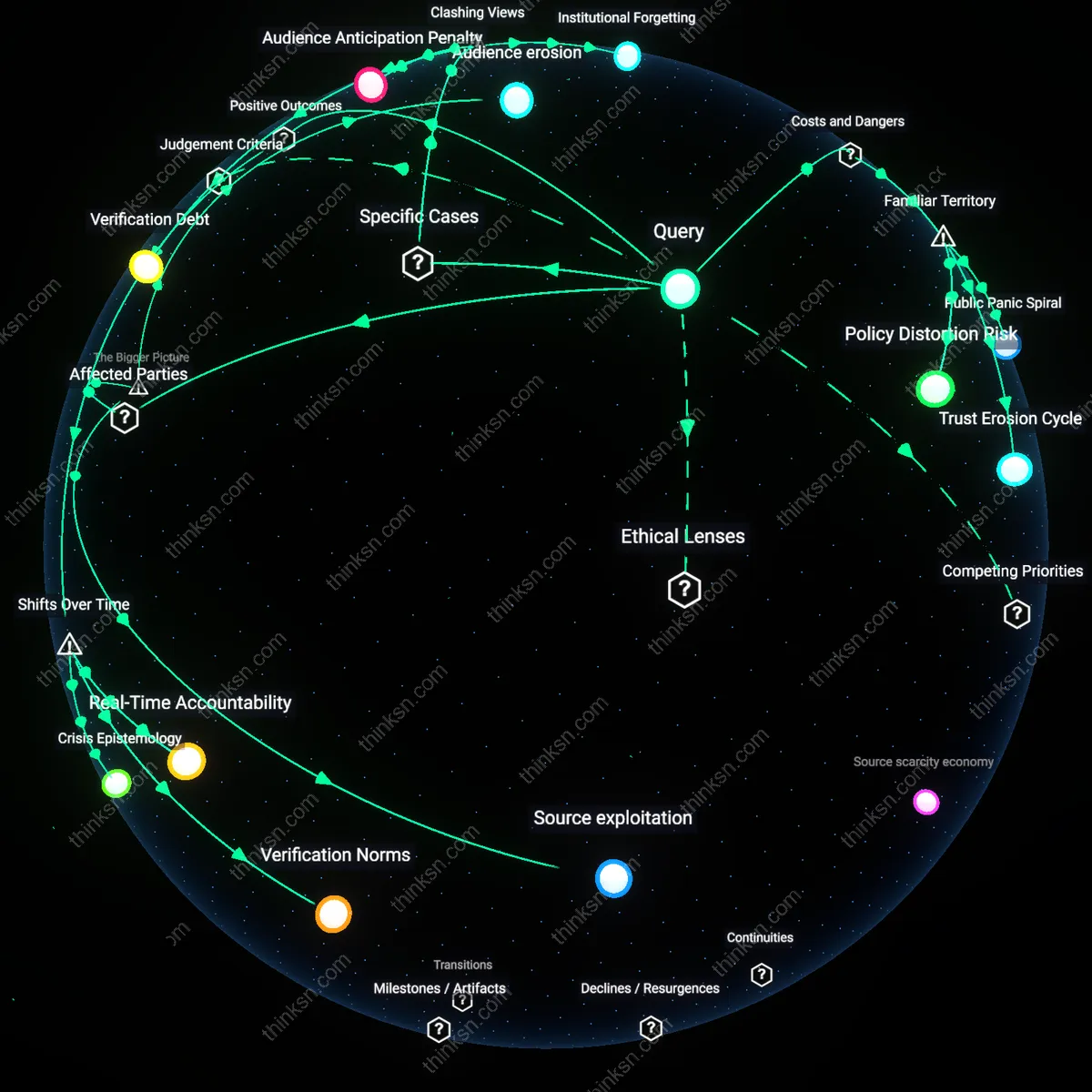
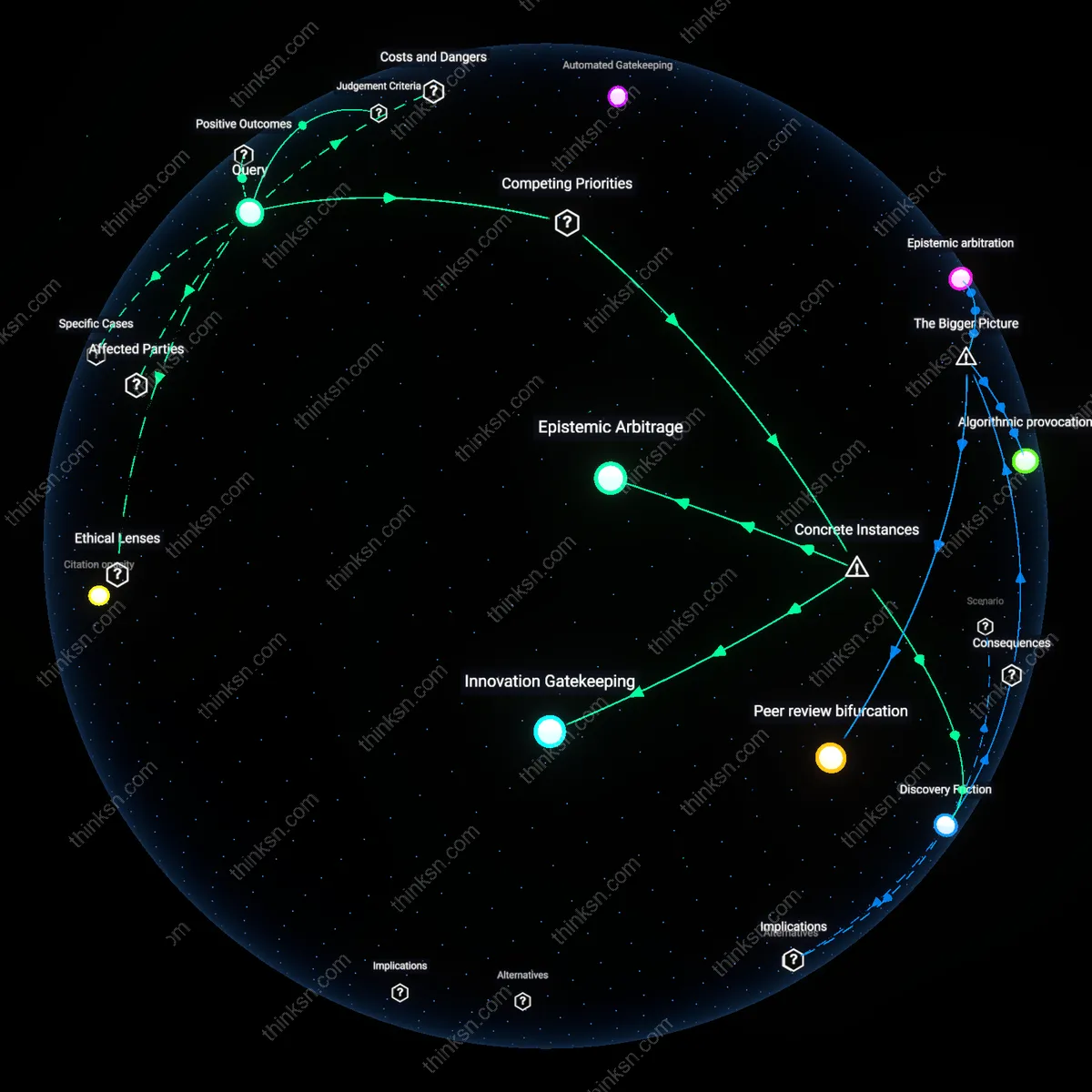
Analysis reveals 7 key thematic connections.
Key Findings
Peer review reification
Academic journals bear greater responsibility because their post-1970 shift toward high-impact publishing transformed peer review from a quality filter into a gatekeeping ritual that legitimizes claims as settled through visibility and citation economies. Starting with the expansion of the Science Citation Index in the 1980s, journal prestige became tied to selectivity and attention capture, incentivizing editors to publish striking, positive results that imply closure—especially in fields like climate science or nutrition where policy relevance increases influence. This system rewards the appearance of consensus, as seen in the selective publication of anthropogenic climate studies in *Nature* and *Science* during the 1990s, which compressed scientific debate into a monolithic front before public discourse began. The non-obvious effect is that journals don’t just reflect consensus—they produce it through archival authority, making peer-reviewed status synonymous with 'settled' in legal, political, and public arenas.
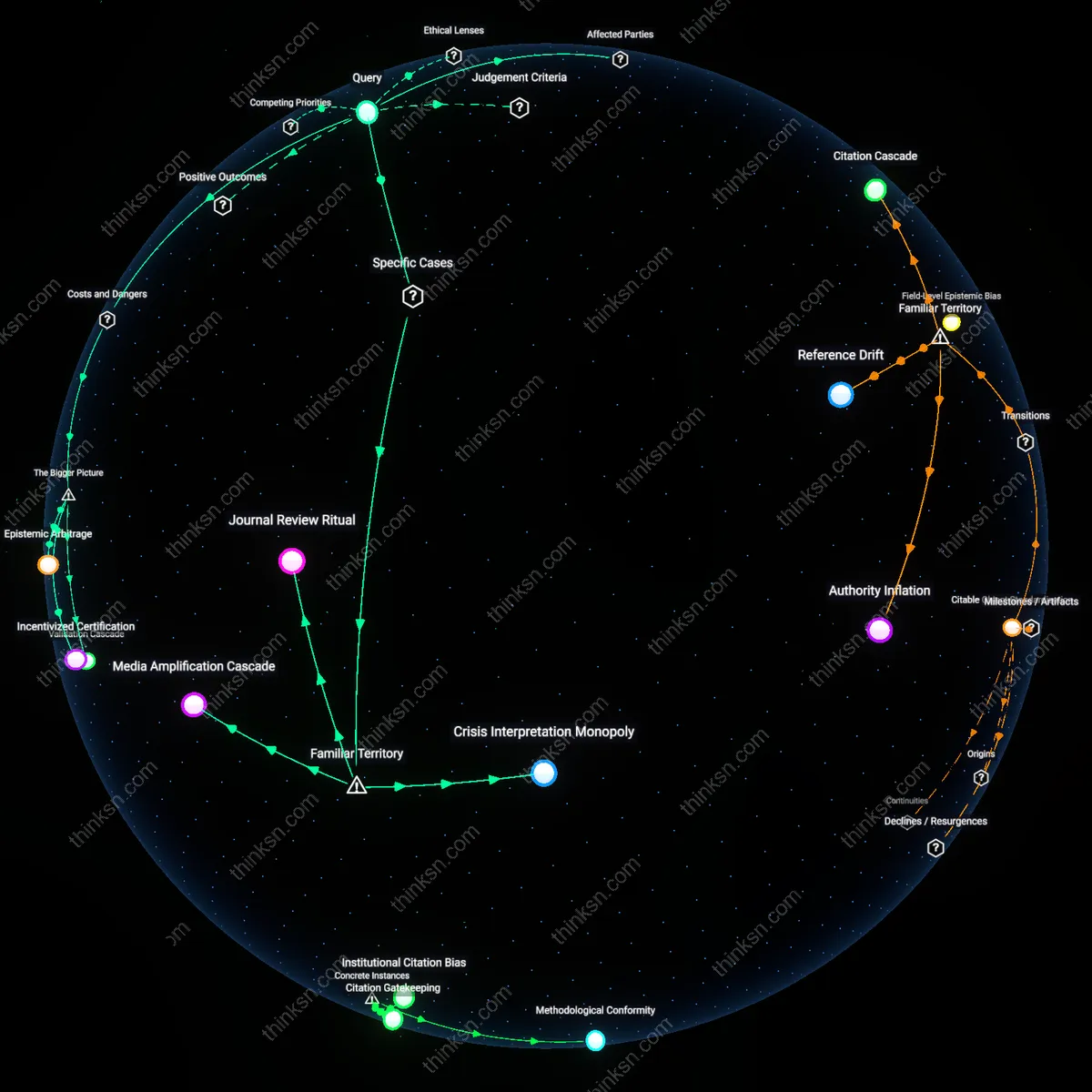
Incentivized Certification
Mainstream media bears greater responsibility because it transforms tentative scientific findings into narrative certainties to satisfy audience demand for clarity and resolution, a process amplified by algorithmic distribution systems that reward engagement over nuance. This dynamic is driven not by scientific actors but by media institutions under economic pressure to produce shareable content, where inconclusive claims are reframed as settled to maintain attention in crowded information ecosystems. The non-obvious consequence is that the media’s role becomes one of *certification by amplification*—a systemic function originally belonging to peer-reviewed journals—thereby hijacking epistemic authority without accountability, which erodes public trust when oversimplified claims later collapse under scrutiny.
Validation Cascade
Academic journals bear greater responsibility because their peer-review process confers legitimacy on claims that are later interpreted as 'settled' by downstream actors, including media and policymakers, even when editors and reviewers acknowledge methodological limitations. The systematic issue arises when journals prioritize novelty and impact over reproducibility, incentivizing the publication of statistically marginal or context-specific results that are structurally insulated from correction due to low retractions and minimal post-publication scrutiny. This creates a *validation cascade*, where the journal’s imprimatur is treated as a terminal signal of truth, despite internal awareness of uncertainty—making journals the unseen originators of misclassification that media merely disseminates.
Epistemic Arbitrage
The institutions funding high-profile research bear greater responsibility because they actively promote early-stage findings as breakthroughs to justify continued investment, creating conditions where both journals and media are fed pre-packaged narratives of certainty. Universities, government agencies, and private funders issue press releases that exaggerate consensus and minimize dissent, strategically timing announcements to coincide with funding cycles or political opportunities, thereby converting provisional knowledge into policy-relevant 'facts'. This *epistemic arbitrage*—exploiting the gap between scientific caution and institutional self-interest—systematically distorts the scientific record before it reaches either journals or media, positioning funders as the hidden architects of premature closure.
Media Amplification Cascade
Mainstream media bears greater responsibility for labeling inconclusive scientific claims as 'settled science' by rapidly disseminating preliminary findings with definitive framing. News outlets like CNN or The New York Times, under pressure to generate high-traffic content, often report single-study results—such as early COVID-19 treatment claims—as conclusive public knowledge before peer consensus forms. This mechanism operates through the news cycle’s velocity and reach, which overrides scientific uncertainty in favor of narrative clarity, making media the dominant force in public perception of scientific finality. While audiences expect media to summarize science, the underappreciated effect is how editorial simplification actively collapses probabilistic findings into binary truths.
Journal Review Ritual
Academic journals bear greater responsibility for labeling inconclusive scientific claims as 'settled science' by granting publication legitimacy to studies that lack replication or broad methodological consensus. High-impact journals like Nature or Science prioritize novelty and statistical significance over robustness, allowing findings such as social priming effects or failed replication studies in psychology to enter the scientific canon with undue authority. This occurs through the peer review system, which functions more as a gatekeeping ritual than a verification engine, rewarding splashy results over caution. Although the public sees journals as neutral arbiters, the underappreciated reality is that their prestige confers 'settled' status even when internal scientific debate is ongoing.
Crisis Interpretation Monopoly
Mainstream media holds greater responsibility during public health emergencies by seizing interpretive authority over what counts as settled science when scientific uncertainty is highest. During the early months of the pandemic, outlets widely presented aerosol transmission of SARS-CoV-2 as unproven despite mounting expert dissent, aligning instead with narrow institutional messaging from the CDC and WHO. This mechanism functions through the media’s role as a sense-making intermediary, which in crisis favors official consensus over emerging evidence to avoid public confusion. The non-obvious consequence is that media, not journals, become the de facto arbiters of scientific finality when speed outweighs caution—effectively settling science by omission and timing.