Why Retaliation Fears Trump Discrimination Claims in Academia?
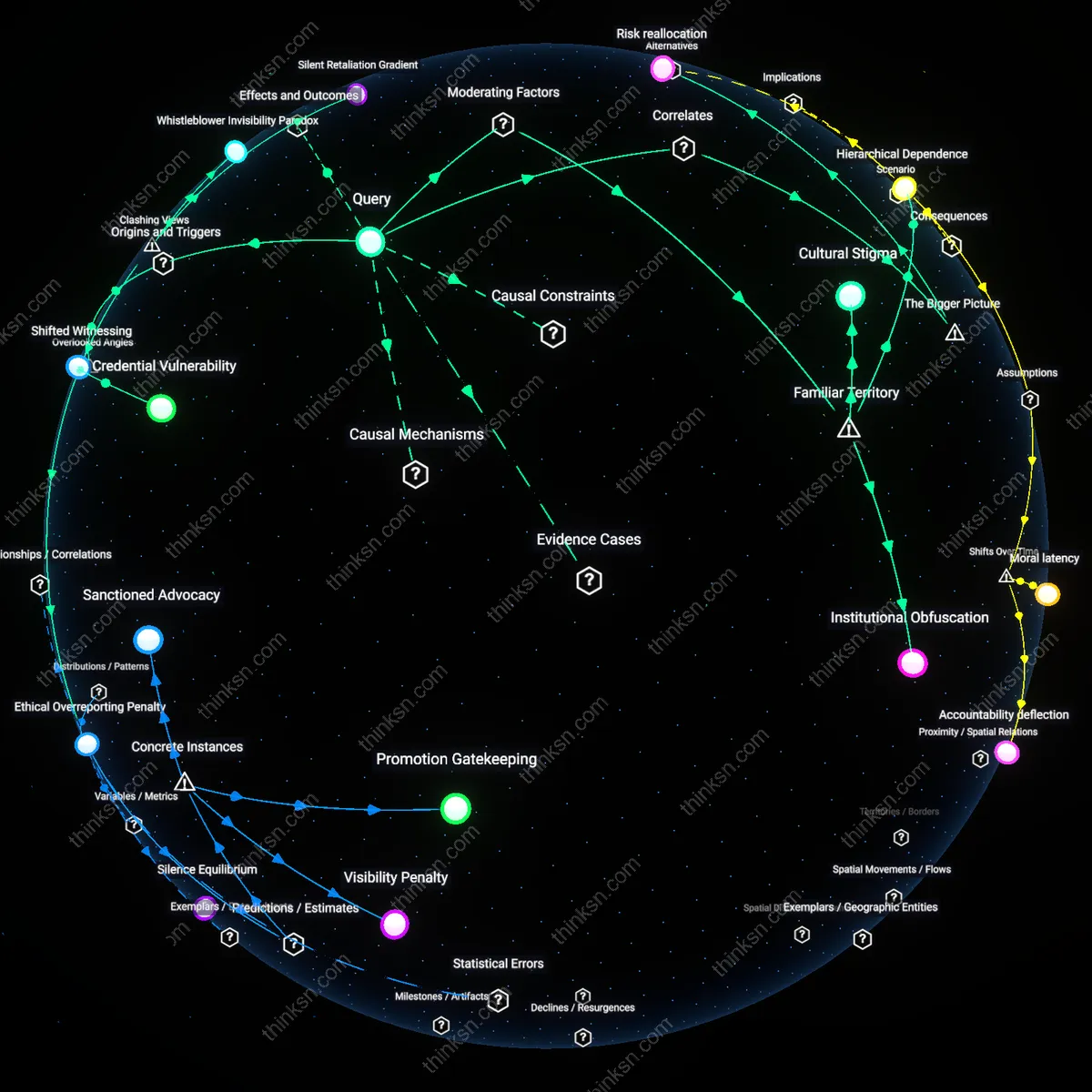
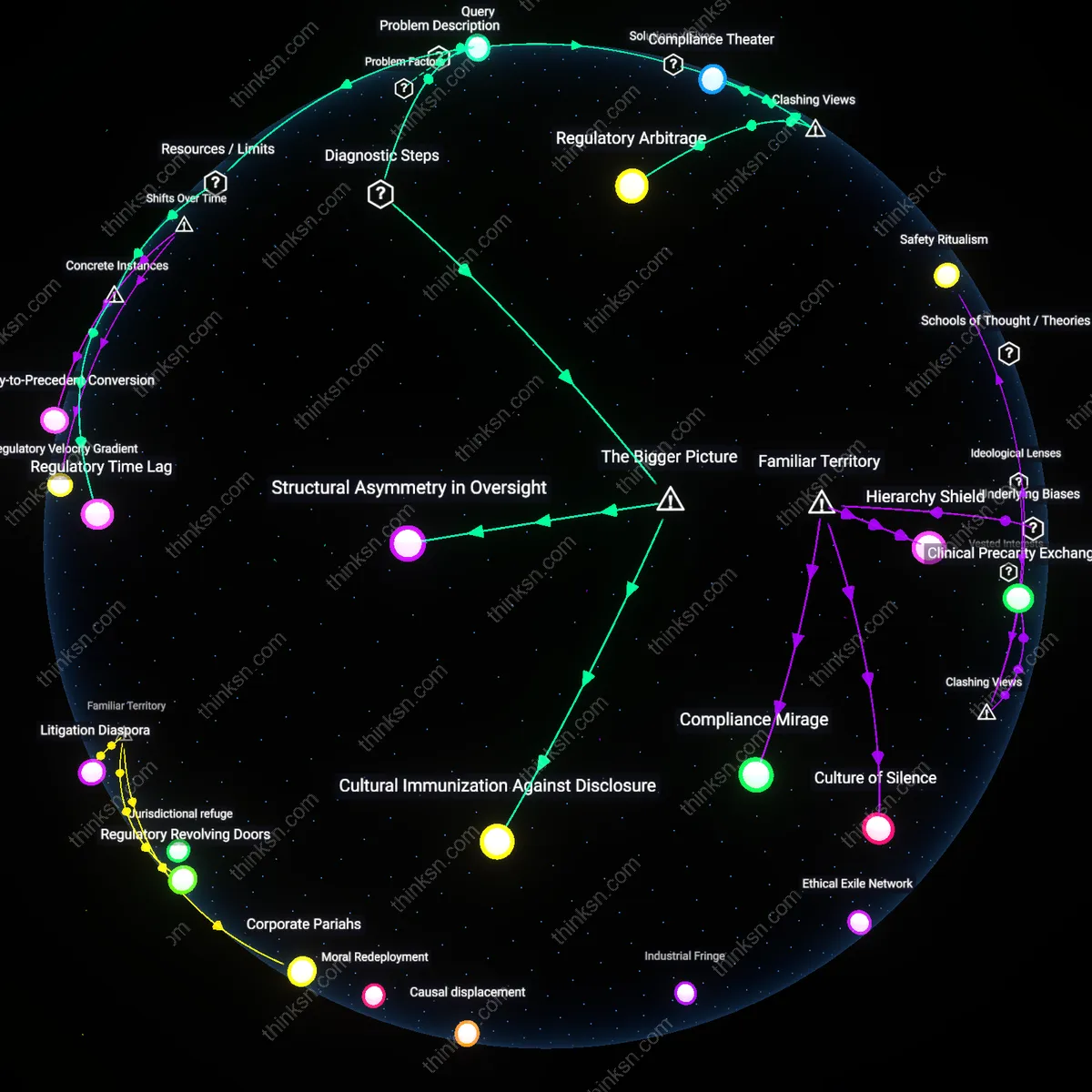
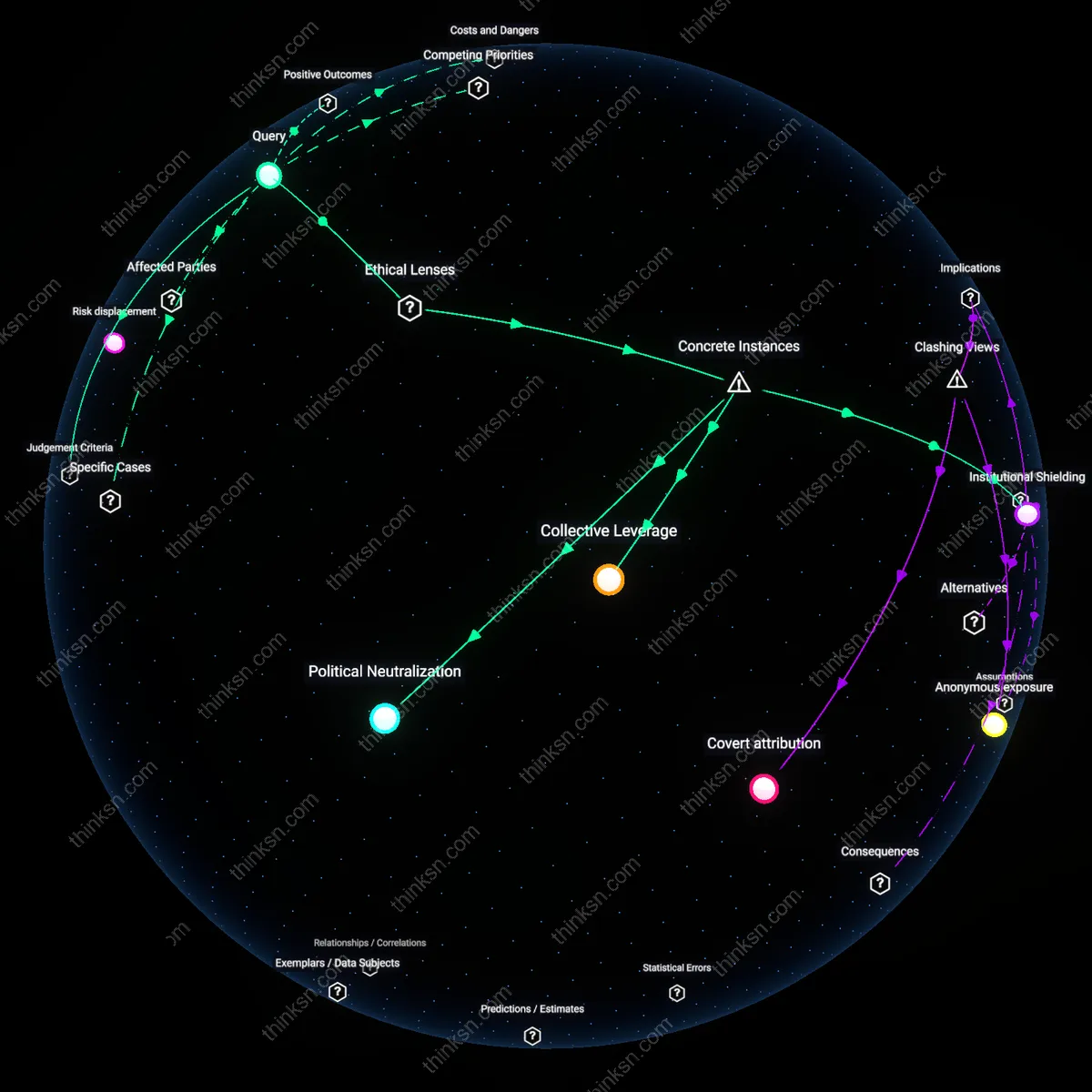
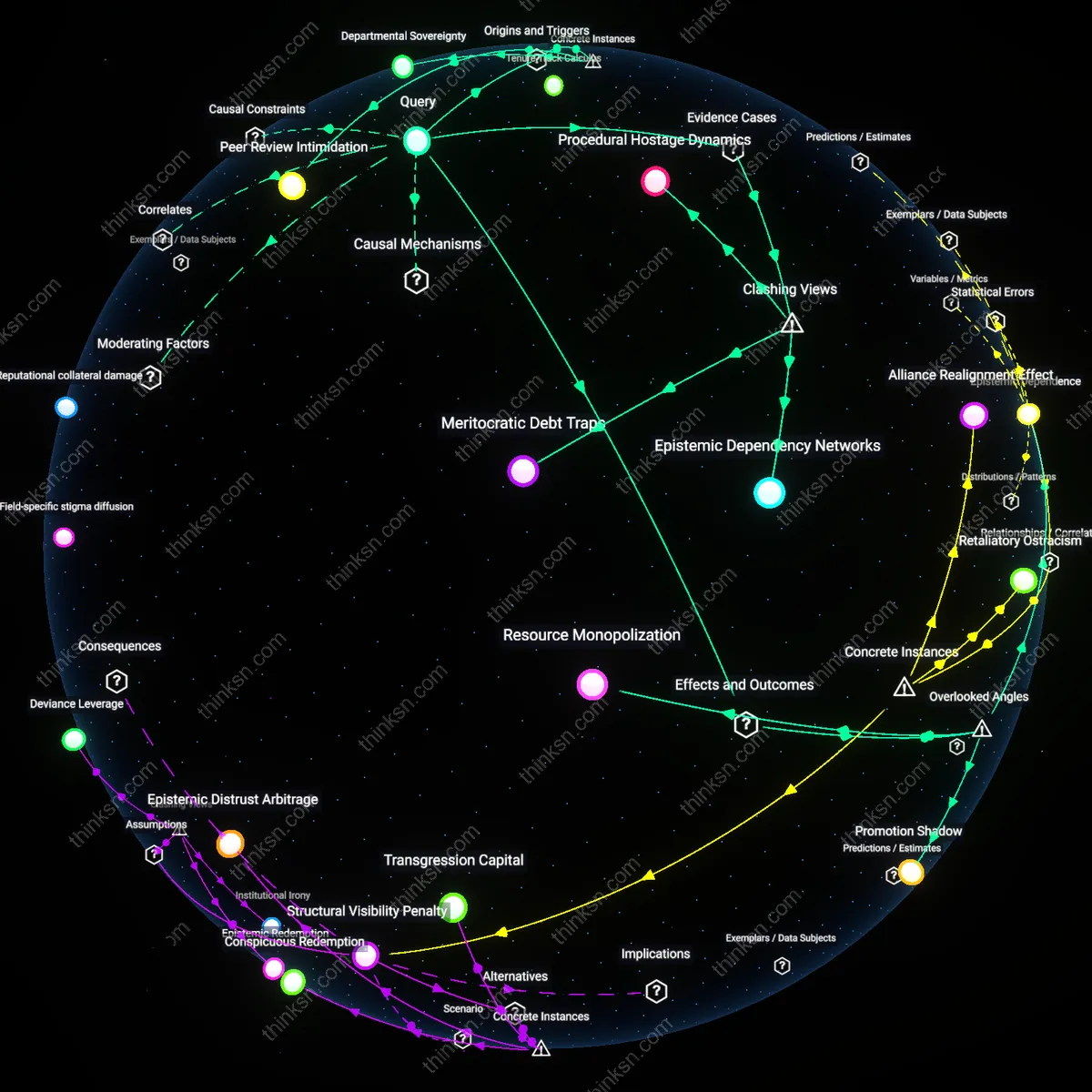
Analysis reveals 9 key thematic connections.
Key Findings
Tenure Monopoly
The concentration of promotion power in tenured senior faculty at the University of California, Berkeley’s physics department enables direct career retaliation against junior faculty who challenge discrimination, as seen when a junior researcher's funding was quietly redirected after reporting gender bias in 2015—revealing that tenure creates a permanent hierarchy where accountability is structurally suppressed because accusers remain dependent on the goodwill of the very evaluators perpetuating inequity.
Peer Review Intimidation
In the 2018 case at Harvard Medical School involving geneticist George Church’s lab, postdoctoral fellows refrained from reporting racially biased lab practices because authorship and publication recommendations were controlled informally by senior investigators—demonstrating that academic peer review operates as a covert surveillance system where silence is enforced through the conditional granting of scholarly visibility, a mechanism that renders formal complaint channels irrelevant when professional credibility is distributed through opaque, retaliatory networks.
Departmental Sovereignty
After a racial discrimination complaint was filed in 2020 by graduate students in the University of Chicago’s Political Science department, internal adjudication was delayed for over a year under the justification of 'academic autonomy,' allowing the accused faculty to remain in supervisory roles—exposing how university administrations delegate moral authority to departments, turning them into self-policing fiefdoms where the ideal of intellectual independence becomes a shield against external accountability, especially when elite status is tied to perceived institutional exceptionalism.
Promotion Shadow
The proximity of tenure review cycles suppresses discrimination complaints because junior faculty perceive that any formal grievance—regardless of merit—will be silently weighted in upcoming evaluations by senior colleagues who control promotion committees. This effect operates not through explicit threats but through the unspoken accumulation of professional 'credit' tied to collegiality, where raising conflict depletes goodwill needed for advancement, particularly in small, reputation-sensitive departments where consensus voting determines outcomes. The non-obvious mechanism is that retaliation is not enacted as punishment but as the withholding of necessary affirmation, a dynamic obscured by formal policies that assume retaliation requires overt action.
Epistemic Dependence
Junior researchers depend on senior faculty not only for promotion but for validation of their scholarly legitimacy, creating a condition where challenging a superior’s behavior risks being framed as epistemically unstable or professionally immature—thus discrediting the complainant before any formal process begins. This operates through informal networks of peer review, citation practices, and conference invitations, where reputation is incrementally built through inclusion, and exclusion follows perceived breaches of implicit loyalty. The overlooked aspect is that the risk lies less in official sanctions than in subtle delegitimization that makes future work appear less credible or marginal within the field.
Resource Monopolization
Departmental control over scarce research resources—such as lab access, grant signatory authority, or graduate assistant assignments—creates silent leverage points through which retaliation can be exercised without detectable administrative trace, as denials are justified under operational discretion rather than explicit reprisal. This dynamic functions most strongly in STEM fields where principal investigators act as gatekeepers to equipment and funding pipelines, allowing retribution to be masked as project reallocation or budget constraints. The underappreciated reality is that formal complaint systems assume retaliation is personal and punitive, not structural and bureaucratic, making such acts nearly impossible to contest under current discrimination frameworks.
Procedural Hostage Dynamics
Hierarchical academic departments disincentivize discrimination complaints because junior faculty and staff perceive investigative processes as controlled by the accused’s allies, rendering outcomes predetermined. At institutions like the University of Rochester following accusations against neuroscientist Florian Jaeger, complainants reported that delays, exclusion from proceedings, and reliance on internal mediators aligned with department leadership amplified fears of career sabotage, not resolution—revealing that the formal process functions less as a protective mechanism and more as an enforcement lever for existing power. This undermines the intuitive assumption that institutional procedures offer neutral recourse, exposing how procedural design can entrench rather than mitigate retaliation risk.
Meritocratic Debt Traps
Employees avoid filing complaints because they fear losing hard-won legitimacy in systems that frame diversity as an individual burden rather than structural obligation. At elite departments like those in the MIT School of Science, underrepresented faculty who do speak up often face implicit penalties in award nominations, committee appointments, or lab space allocation—subtle but decisive forms of exclusion that reframe their advocacy as 'divisive' rather than ethical. This contradicts the dominant narrative that meritocracy protects victims by rewarding truth-telling, instead showing how the rhetoric of merit intensifies self-censorship among those already pressured to prove their belonging.
Epistemic Dependency Networks
Discrimination reporting is suppressed because junior researchers depend on senior figures not only for employment but for intellectual validation, citation, and access to collaborative networks—making retaliation a threat to professional identity, not just position. In fields like evolutionary biology, where access to field sites and specimen collections is concentrated in a few labs (e.g., Harvard’s Museum of Comparative Zoology networks), complainants risk being written out of scientific lineages altogether. This challenges the common view that retaliation is primarily material or career-based, revealing how control over knowledge production itself becomes a silent instrument of deterrence.