Is Facebook Feeding Your Anxiety or Are You Vulnerable?
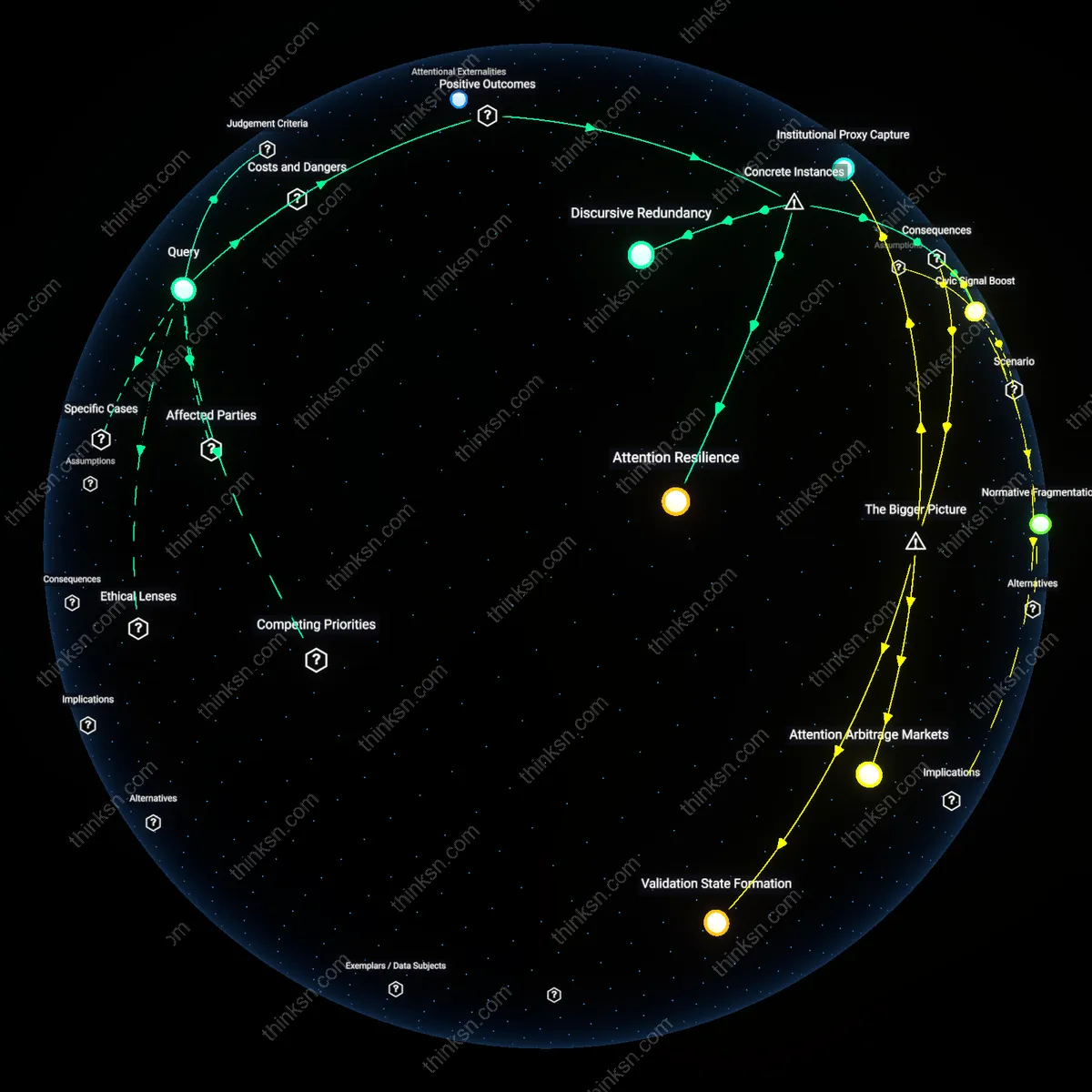
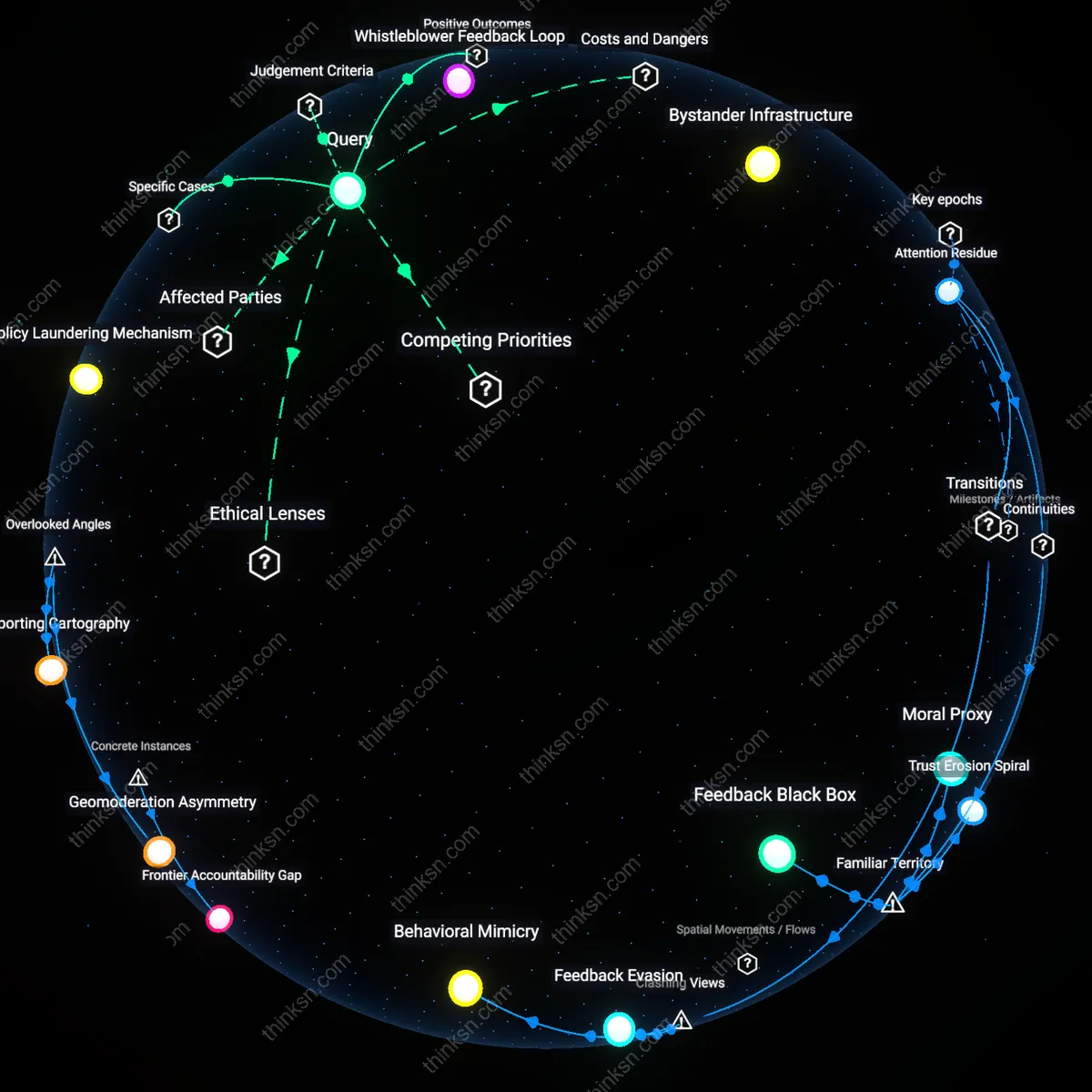
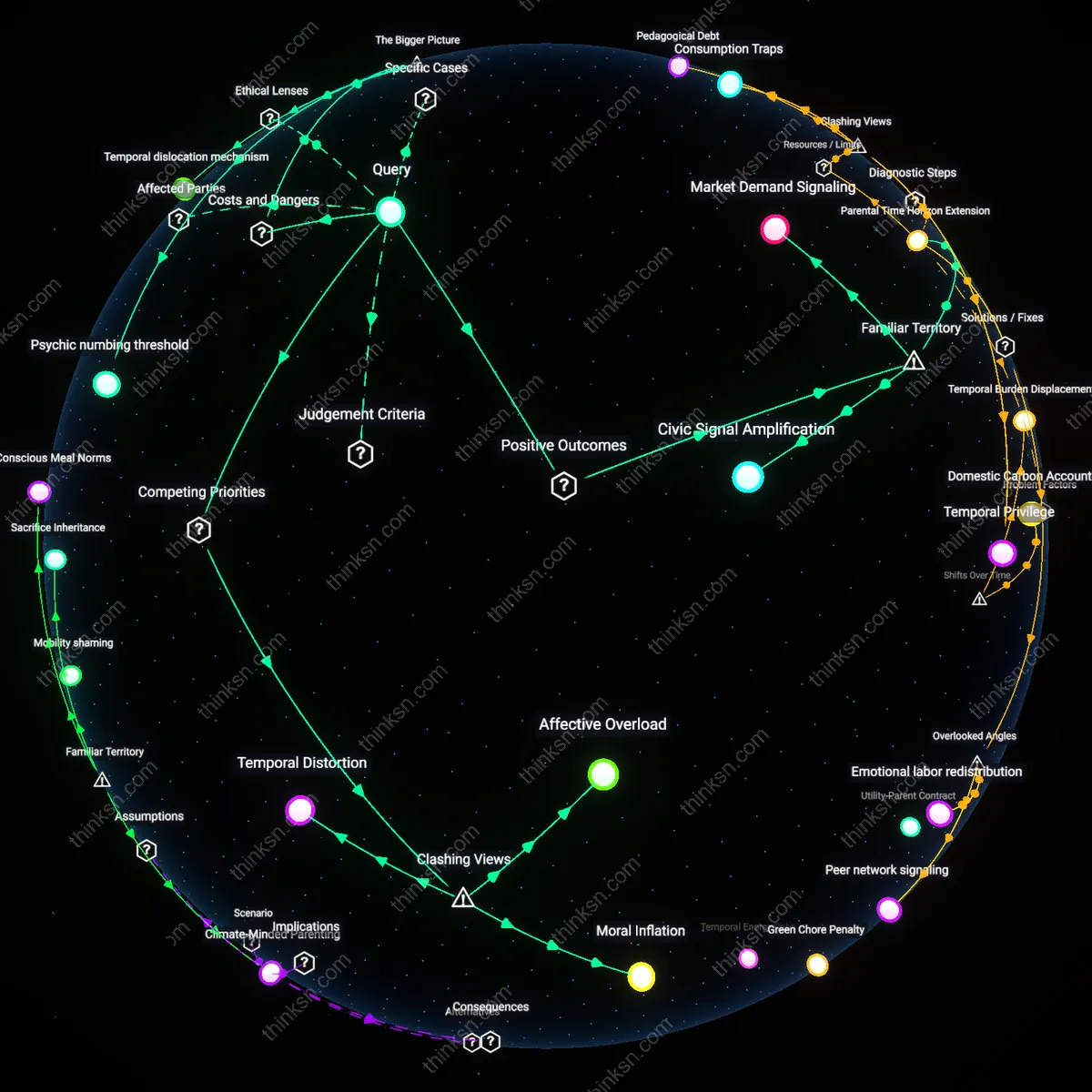
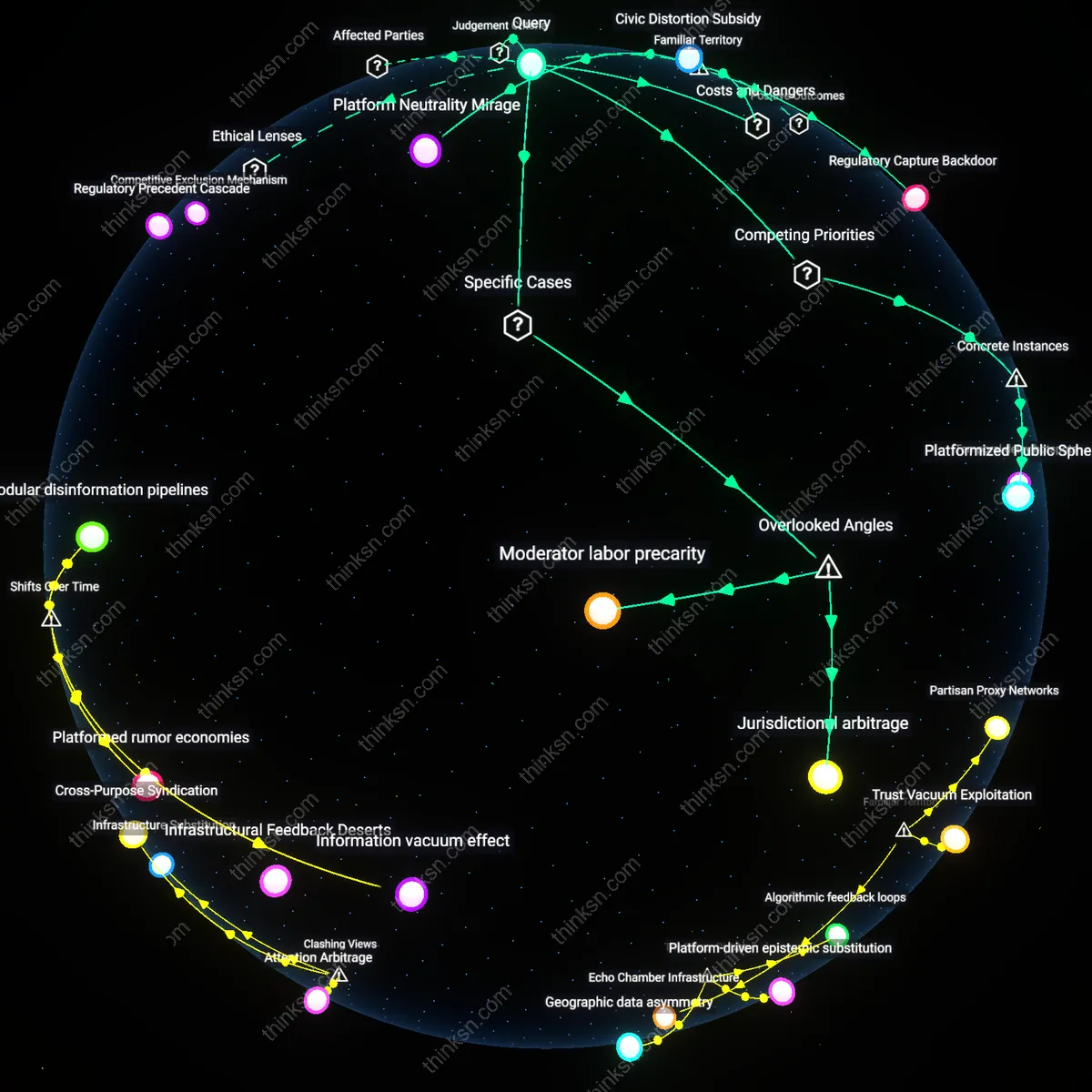
Analysis reveals 10 key thematic connections.
Key Findings
Feedback Loop Intensity
Facebook's algorithmic amplification of emotionally charged political content during the 2016 U.S. election intensified user anxiety by prioritizing engagement over psychological safety, as seen in the disproportionate visibility of alarmist posts from hyper-partisan pages like 'Occupy Democrats' and 'Right Wing Watch' in users' news feeds. This mechanism operated through real-time behavioral feedback, where clicks, shares, and prolonged viewing time trained the platform's AI to deliver progressively more fear-inducing content, effectively transforming passive scrolling into an anxiety-inducing loop. The non-obvious insight is that user anxiety stems not from political content per se, but from the velocity and repetition with which the system reinforces emotionally reactive patterns—a systemic driver encoded in engagement-based ranking.
Emotional Contagion Exposure
During the 2019 Hong Kong protests, frontline participants and diaspora communities reported acute anxiety after prolonged exposure to curated Facebook posts depicting police confrontations and peer arrests, where the emotional tone of shared content—rather than factual accuracy—predicted distress levels. This dynamic operated through emotional contagion, a phenomenon amplified by the platform’s design to prioritize content with strong affective signals (e.g., urgent language, graphic imagery), effectively transmitting distress across networks irrespective of the viewer’s physical safety. The overlooked insight is that Facebook functions as a vector for psychological transmission, where anxiety arises from the affective charge of content selection, not personal vulnerability alone, revealing a structural feature of digital public spheres.
Cognitive Load Susceptibility
In Germany during the 2015 refugee crisis, longitudinal surveys by the Bertelsmann Foundation showed that adults with high political interest but low media literacy experienced disproportionate anxiety from Facebook political posts due to an inability to parse source credibility amid conflicting narratives from actors like AfD-linked pages and humanitarian NGOs. This susceptibility operated through cognitive overload, where the platform's flattening of authoritative and fringe content eroded users’ capacity to manage information ambiguity, especially when posts leveraged moral urgency without context. The underappreciated factor is that personal susceptibility is not a fixed trait but emerges from the mismatch between individual cognitive frameworks and the unstructured, high-volume information environment engineered by the platform.
Feedback Loops
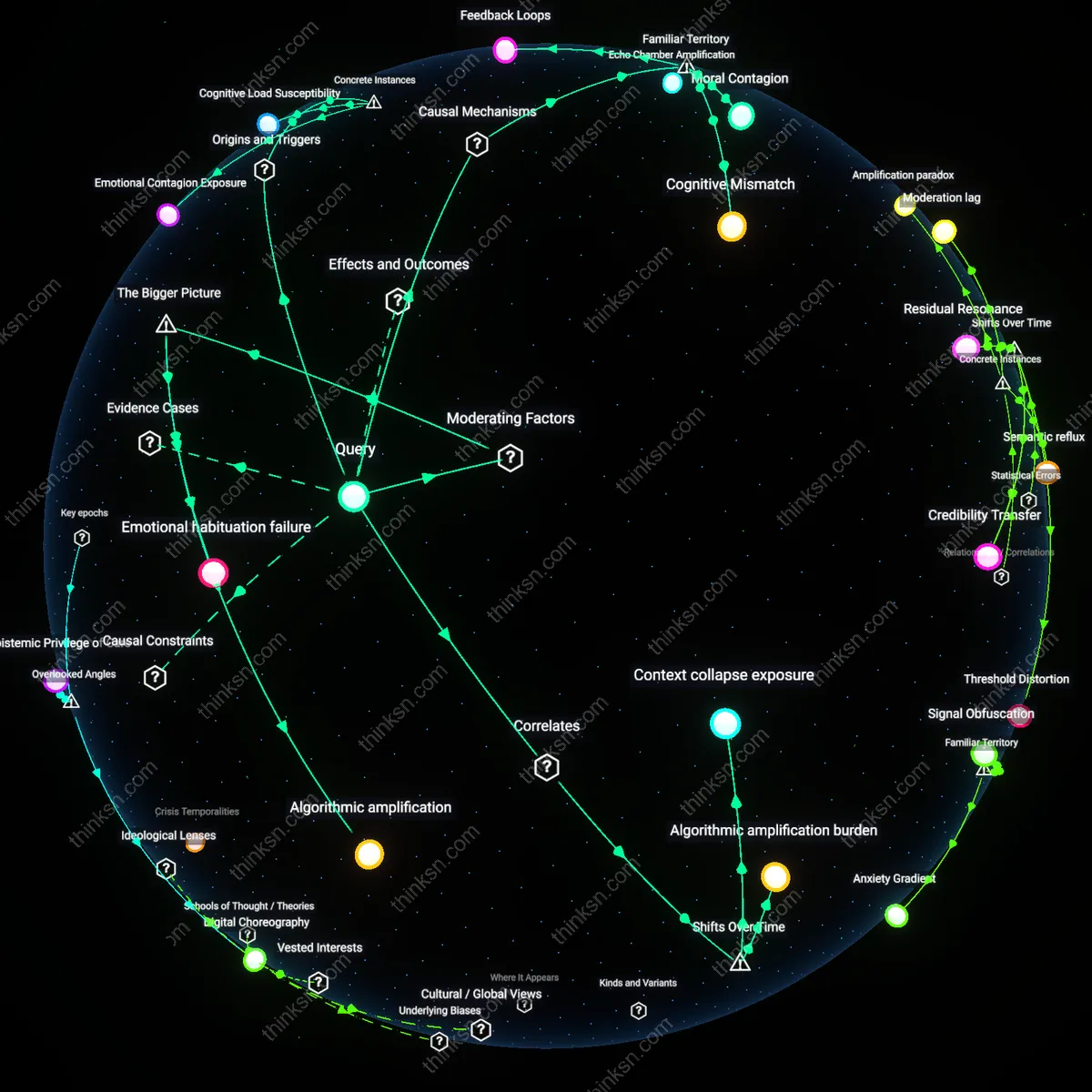
Facebook’s algorithm amplifies emotionally charged political content because it drives engagement, which in turn elevates users’ exposure to conflict-laden posts that heighten anxiety. The platform’s design prioritizes watch time and interaction through automated ranking systems that detect affective resonance—where outrage or fear generates more clicks—thus creating cycles in which users see increasingly extreme content, regardless of intent. This mechanism is non-obvious in that most people blame either their own reactions or the politicians featured in posts, when in fact the recursive pattern of content delivery is engineered into the interface itself, making anxiety a systemic byproduct rather than an incidental effect.
Moral Contagion
Political posts on Facebook spread anxiety because they are linguistically and semiotically coded with moral urgency—phrases like 'They’re coming for our rights' or 'This must be stopped' trigger evolved cognitive sensitivities to tribal threat. These signals activate pattern recognition in social cognition that interpret political speech as ethical boundary enforcement, causing users to feel personally implicated in collective defense even when disengaged. The non-obvious insight is that anxiety arises not from frequency or platform logic alone, but from how vernacular expression leverages universally recognized moral grammar, turning abstract policy debates into visceral existential warnings through a process that spreads like emotional osmosis across densely connected networks.
Cognitive Mismatch
Adults experience anxiety from political content on Facebook because human neurobiology evolved to process social threats in small, geographically bounded groups, not the vast, asynchronous, and affectively saturated streams of modern networked discourse. The brain's threat detection systems, optimized for face-to-face coalitional dynamics, misfire when exposed to constant, unresolvable social conflict presented as immediate moral imperatives without spatial or temporal closure. This creates a persistent stress state that feels personal even when the content is impersonal—what’s underappreciated is that the source of anxiety isn’t weak willpower or bad actors, but a fundamental evolutionary lag between our cognitive heritage and the artificial social environments platforms now host.
Algorithmic amplification
The anxiety adults feel from political content on Facebook is primarily intensified by the platform’s engagement-optimized recommendation algorithms, which systematically elevate emotionally charged and divisive material. These algorithms, driven by Facebook’s central machine learning systems, reprioritize content based on historical interaction patterns, disproportionately surfacing posts that trigger strong reactions—even if the user does not explicitly seek them. This mechanism operates through personalized feed curation in real time, where emotional valence (such as outrage or fear) becomes a proxy for relevance. The non-obvious insight is that anxiety arises not from content alone but from a latent architectural decision to treat user attention as the primary metric of success, embedding invisible amplification pathways that bypass conscious choice.
Emotional habituation failure
Adults experience anxiety from political posts on Facebook not merely due to content or design, but because sustained exposure to unpredictable, high-intensity political stimuli prevents the development of emotional regulation routines—habituation fails under conditions of intermittent cognitive threat. Unlike traditional media with predictable schedules and formats, Facebook delivers political content sporadically and without contextual containment, disrupting psychological coping mechanisms that depend on temporal and cognitive boundaries. This systemic disruption is amplified by mobile notifications and infinite scroll, which dissolve the structural buffers between private life and public conflict. The underappreciated mechanism is that anxiety reflects a breakdown in temporal regulation of exposure, where the platform’s design undermines the psychological infrastructure necessary for resilience.
Algorithmic amplification burden
An adult should attribute anxiety from reading political posts on Facebook primarily to platform design because the shift from user-curated feeds (pre-2009) to algorithmically ranked content (post-2009 EdgeRank overhaul) systematically prioritizes emotionally arousing material, especially political content that triggers moral outrage, not random user susceptibility. This mechanism operates through Facebook’s engagement-driven machine learning systems, which reinforce exposure to incendiary political posts not because users seek them, but because the platform's infrastructure rewards retention over well-being. The non-obvious insight is that the design shift externalized psychological risk from individual coping strategies to systemic architecture, producing a new form of labor—the user’s emotional regulation now compensates for algorithmic provocation.
Context collapse exposure
An adult should attribute anxiety from reading political posts on Facebook to content selection because the platform’s historical shift from intimate, school-based networks (2004–2007) to algorithmic public squares (post-2012 News Feed expansion) dissolved boundaries between personal and political identity performance. This transition enabled politically charged content to flood formerly social spaces through friend-of-a-friend dissemination and cross-network virality, making political exposure involuntary even when not sought. The key mechanism is content selection via weak-tie propagation and intergroup visibility, where political posts gain traction not through deep resonance but through broad, context-free distribution—turning incidental exposure into persistent stressor. The underappreciated consequence is that anxiety stems less from the ideology expressed than from the rupture of social context, as users confront politicized versions of people they know only casually or personally.