Is Climate Anxiety Driving Change or Paralysis?
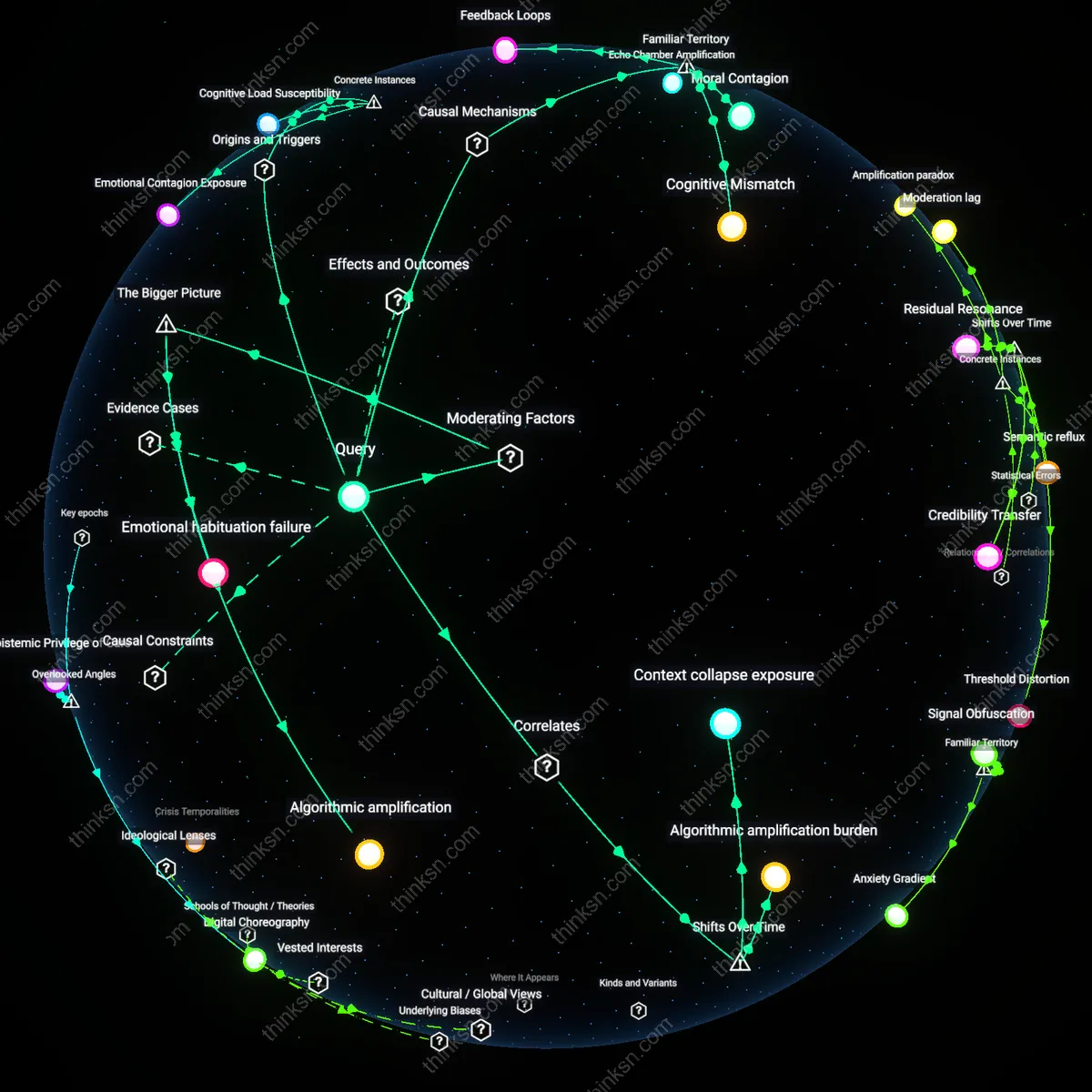
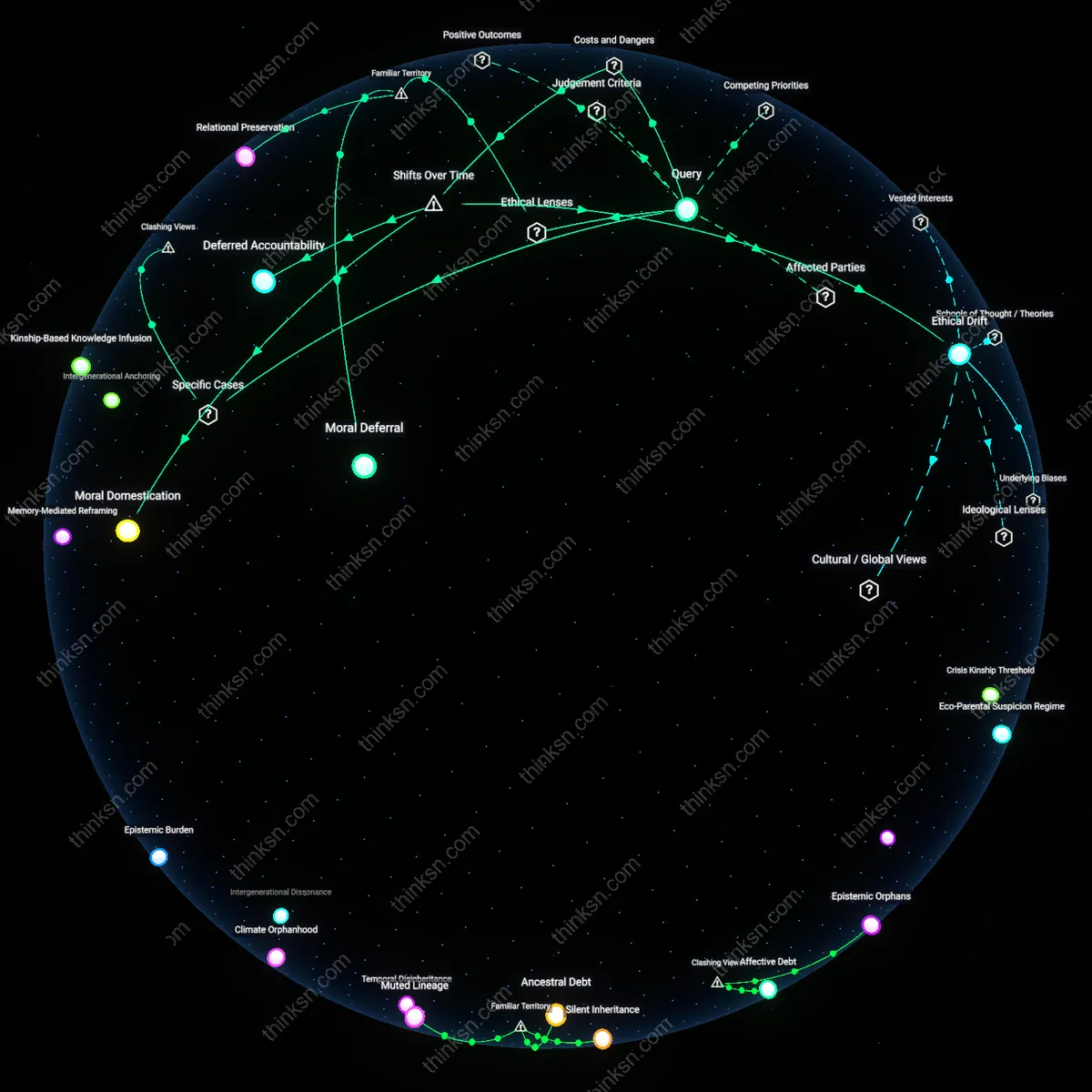
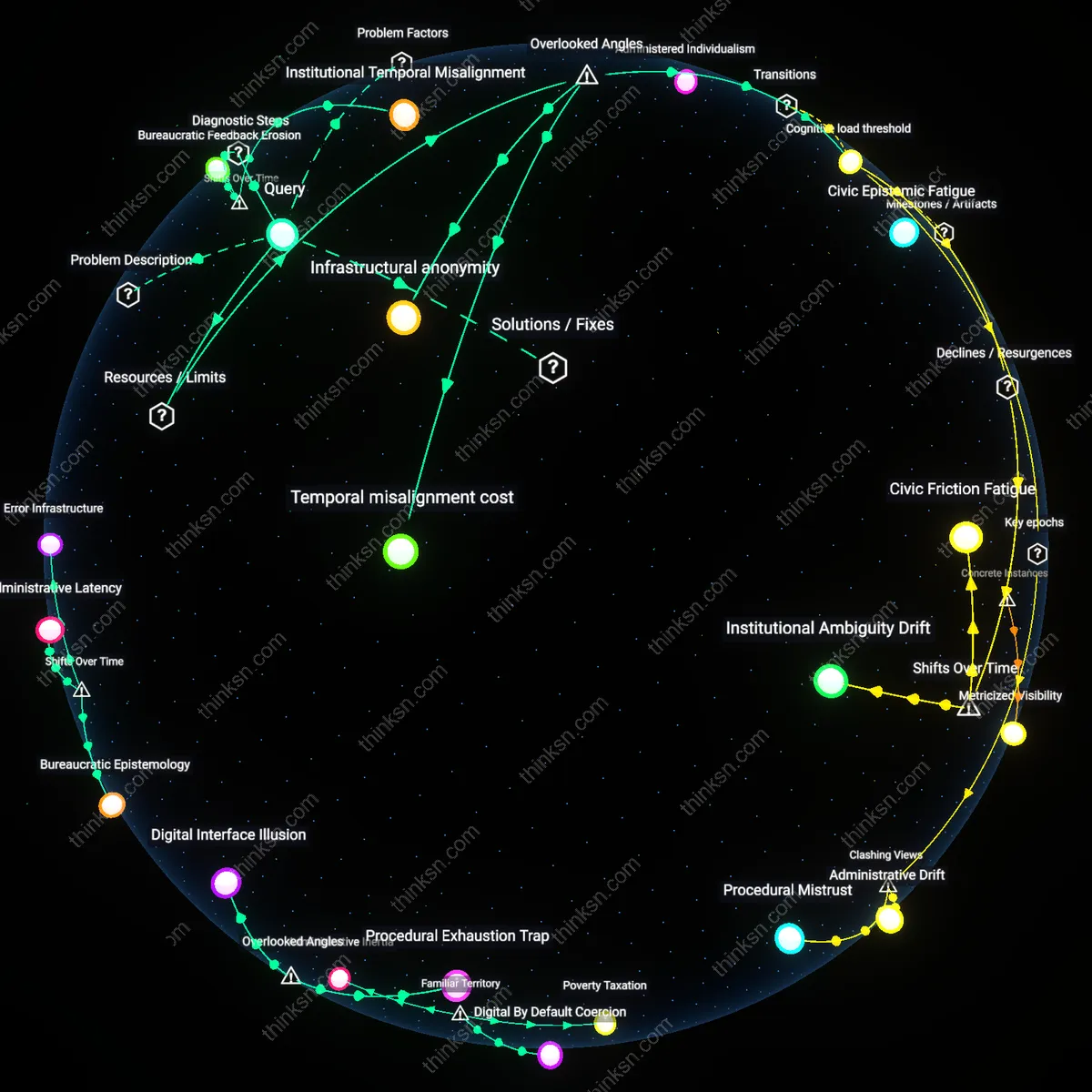
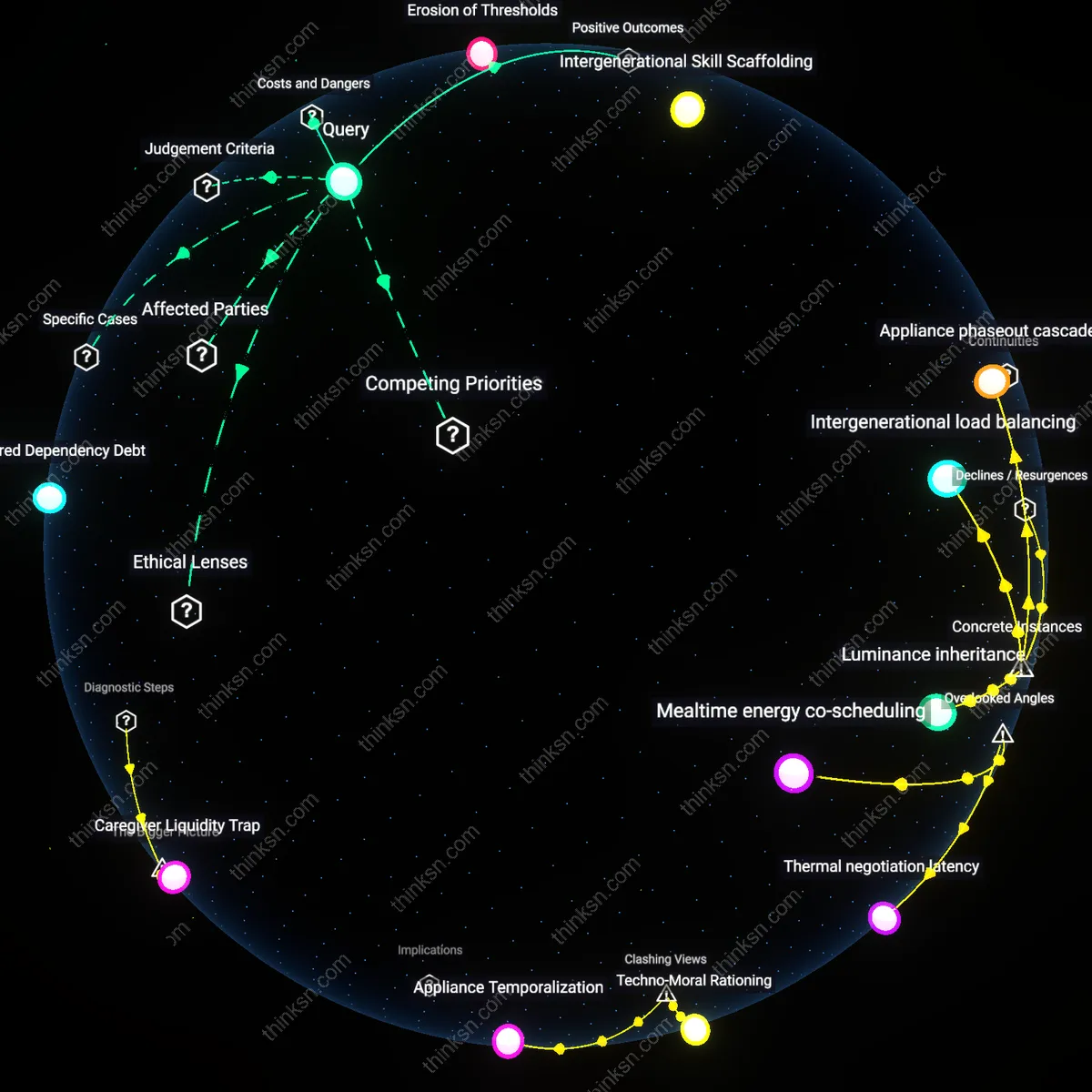
Analysis reveals 9 key thematic connections.
Key Findings
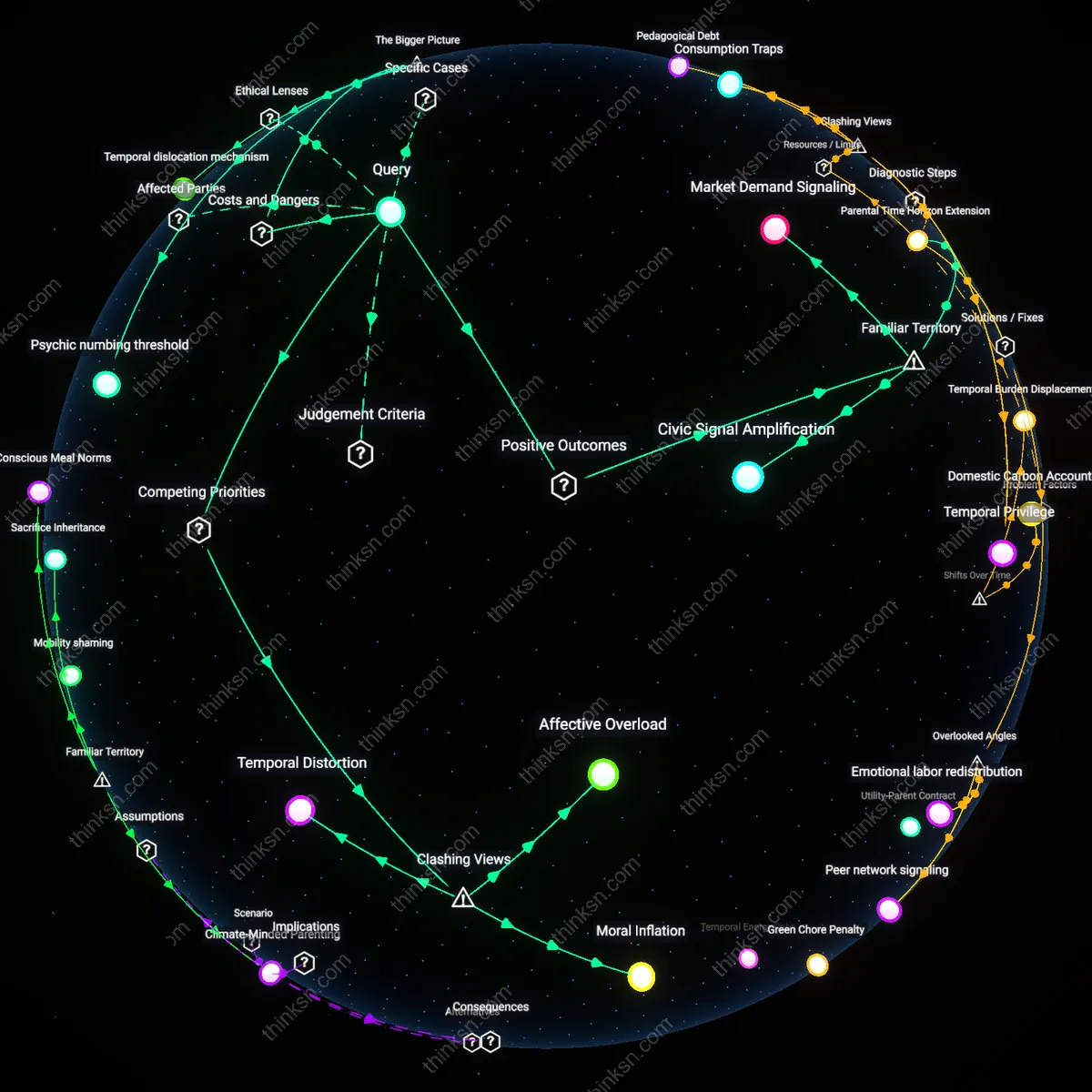
Civic Signal Amplification
Climate anxiety can rationally motivate lifestyle changes by activating civic engagement through visible behavioral shifts in communities. When individuals adopt sustainable habits—like reducing meat consumption or electrifying transport—it creates socially legible signals that recalibrate perceived social norms, especially in suburban and urban middle-class settings where peer observation is high. This mechanism works not through isolated action but through the cumulative visibility of many such changes, which lowers the psychological barrier for others to act and sustains collective momentum. The underappreciated element is that these behaviors function less as direct emissions reductions and more as civic cues—akin to wearing a mask during a pandemic—that validate concern and coordinate group response within familiar, everyday contexts.
Parental Time Horizon Extension
Anxiety about climate tipping points can constructively motivate lifestyle changes when experienced as parental responsibility, particularly among caregivers in high-consumption countries. Parents often reinterpret distant risks as proximate moral imperatives when imagining their children's futures—transforming existential dread into concrete household decisions like energy efficiency upgrades or school activism. This operates through the domestic sphere as an emotional infrastructure where long-term risks become actionable via near-term routines. What's overlooked is that climate anxiety, when anchored in familial care roles, doesn’t just enable engagement but extends the perceived time horizon of decision-making in a culture typically oriented toward immediate returns.
Market Demand Signaling
Climate anxiety drives rational lifestyle changes by accelerating consumer demand for low-carbon alternatives, which in turn reshapes product availability and pricing in retail and service economies. For instance, anxious individuals shifting to plant-based diets directly increase supermarket sales of meat substitutes, prompting larger supply chain investments—exactly as seen in the U.S. and Northern European grocery sectors between 2018 and 2023. This works through the feedback loop of individual choice and corporate responsiveness in branded consumer markets, where volume thresholds trigger scalable industrial shifts. The underappreciated reality is that personal anxiety, when aggregated across millions, becomes a market signal more powerful than policy mandates in certain sectors, especially where private enterprise moves faster than public regulation.
Psychic numbing threshold
Anxiety about climate tipping points can rationally motivate lifestyle changes only up to a point, beyond which it systematically triggers disengagement due to cognitive overload. When individuals perceive thresholds like Amazon dieback or Greenland ice sheet collapse as inevitable or irreversibly breached, the emotional and cognitive cost of sustained dread overwhelms agency, particularly in populations already strained by economic precarity or information fatigue. This dynamic is amplified by media narratives that emphasize catastrophic finality without scaffolded pathways for intervention, activating psychological defense mechanisms such as denial or fatalism. The non-obvious consequence is that the same factual awareness meant to spur action becomes structurally disempowering when decoupled from collective leverage points.
Inequity of affective burden
Climate anxiety functions as a regressive emotional tax that skews risk perception and behavioral response along lines of socioeconomic and geopolitical privilege. Those in high-emission, resource-secure nations experience anxiety as a choice-laden psychological state, while populations in climate-vulnerable regions—such as smallholder farmers in the Sahel or coastal communities in Bangladesh—live the material realities of tipping points without the luxury of abstract worry. This bifurcation distorts global discourse, where the emotional labor of 'anticipatory grief' among affluent actors can crowd out material solidarity, substituting lifestyle tweaks for structural mitigation. The systemic danger is that anxiety-driven individual behavior change becomes a moralized proxy for political inaction, laundering systemic risk through privatized guilt.
Temporal dislocation mechanism
Focusing on distant yet irreversible tipping points like permafrost methane bursts dislocates ethical urgency from actionable present-time politics into an abstract future horizon, weakening feedback loops between behavior and outcome. This temporal gap is exploited by institutional inertia—particularly in federally fragmented systems like the U.S. or EU—where delayed consequences normalize policy deferral and dilute accountability. As a result, anxiety does not translate into sustained civic pressure but instead collapses into episodic consumer gestures, such as purchasing carbon offsets or plant-based diets, which are symbolically satisfying but statistically negligible. The underappreciated risk is that cognitive fixation on nonlinear thresholds disables linear but cumulative solutions that require long-term institution-building rather than emergency reflexes.
Affective Overload
Anxiety about climate tipping points rationally motivates lifestyle changes only when contained within institutional scaffolding that converts emotional arousal into routinized action, because without such structures—like municipal decarbonization programs or workplace sustainability mandates—individuals default to cognitive triage, where escalating dread crowds out agency. In cities like Malmö or Portland, residents exposed to both climate risk modeling and community adaptation plans show higher engagement in behavior change not because of anxiety alone, but because local governance absorbs emotional charge into procedural pathways, revealing that unchecked affect functions as a private burden rather than a political catalyst. This undercuts the intuitive belief that stronger emotional responses naturally lead to greater action, exposing how unmediated anxiety disables the very agency it seems to prompt.
Moral Inflation
Anxiety over climate tipping points undermines lifestyle change by triggering a zero-sum recalibration of moral attention, where the scale of catastrophe inflates personal responsibility to metaphysical proportions, eclipsing tractable behaviors in favor of symbolic or totalistic gestures. When Greenlandic ice sheet instability becomes a nightly fixation, everyday acts like recycling or reducing air travel collapse into perceived futility, as the mind treats moral credit as a finite currency now devalued by planetary-scale risk. This dynamic, observed in climate-anxious cohorts in Berlin and Boulder, flips the assumption that urgency enhances commitment—instead, it reveals that moral systems, like economies, suffer inflation when denominations grow too large, rendering small actions meaningless.
Temporal Distortion
Climate anxiety disables lifestyle change not by overwhelming individuals, but by collapsing future time horizons into a singular, irreversible threshold event—such as Amazon dieback or permafrost methane burst—thereby displacing sustained behavioral investment with fatalistic or crisis-mode reasoning. In regions like the Pacific Northwest, where wildfire seasons are framed as 'tipping point markers,' residents increasingly interpret sustainability practices as either urgent triage or pointless ritual, disrupting the slow-time logic of habit formation. This challenges the dominant view that existential threat naturally cultivates long-term stewardship, instead showing how apocalyptic temporal framing erodes the incrementalism upon which durable lifestyle change depends.