Why Proof of Loss Deadlines Hurt Insurance Claims?
Analysis reveals 5 key thematic connections.
Key Findings
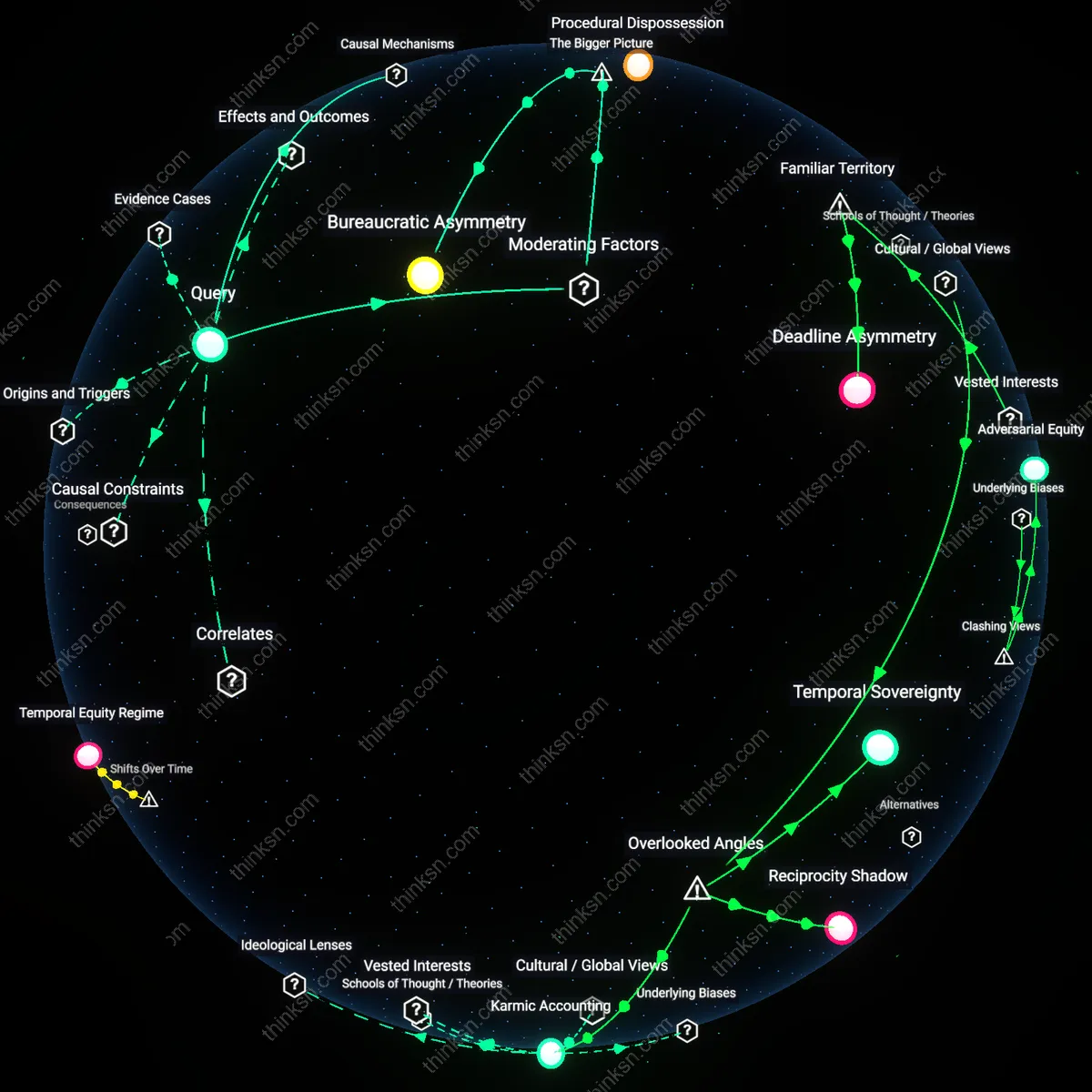
Procedural Dispossession
Strict proof-of-loss deadlines dispossess policyholders by converting procedural noncompliance into denial of substantive claims, as seen in post-Hurricane Katrina cases where FEMA-managed NFIP claims were rejected en masse if paperwork was not filed within 60 days of damage assessment, a deadline imposed without regard for whether claimants had re-established residency or access to mail; this mechanism privileged bureaucratic closure over equitable recovery, disproportionately affecting low-income renters in New Orleans’ Lower Ninth Ward who lacked stable addresses or legal counsel. The non-obvious insight is that the deadline functioned not as a neutral administrative tool but as a structural filter that redefined eligibility based on post-disaster stability, which itself correlated with pre-existing vulnerability.
Documentation Gatekeeping
Insurance companies in Puerto Rico after Hurricane Maria in 2017 enforced 90-day proof-of-loss deadlines requiring notarized inventories and receipts for damaged property, a burden that fell heavily on rural and elderly residents whose records were destroyed and for whom notary services were inaccessible due to island-wide infrastructure collapse; adjusters from mainland-based firms processed claims remotely using missing-document flags, mechanically closing files without human review. This reveals that the deadline operates as a documentation gatekeeping mechanism—its analytic significance lies in how it shifts the burden of proof to claimants at their most incapacitated moment, transforming logistical disruption into permanent claim denial.
Temporal Arbitrage
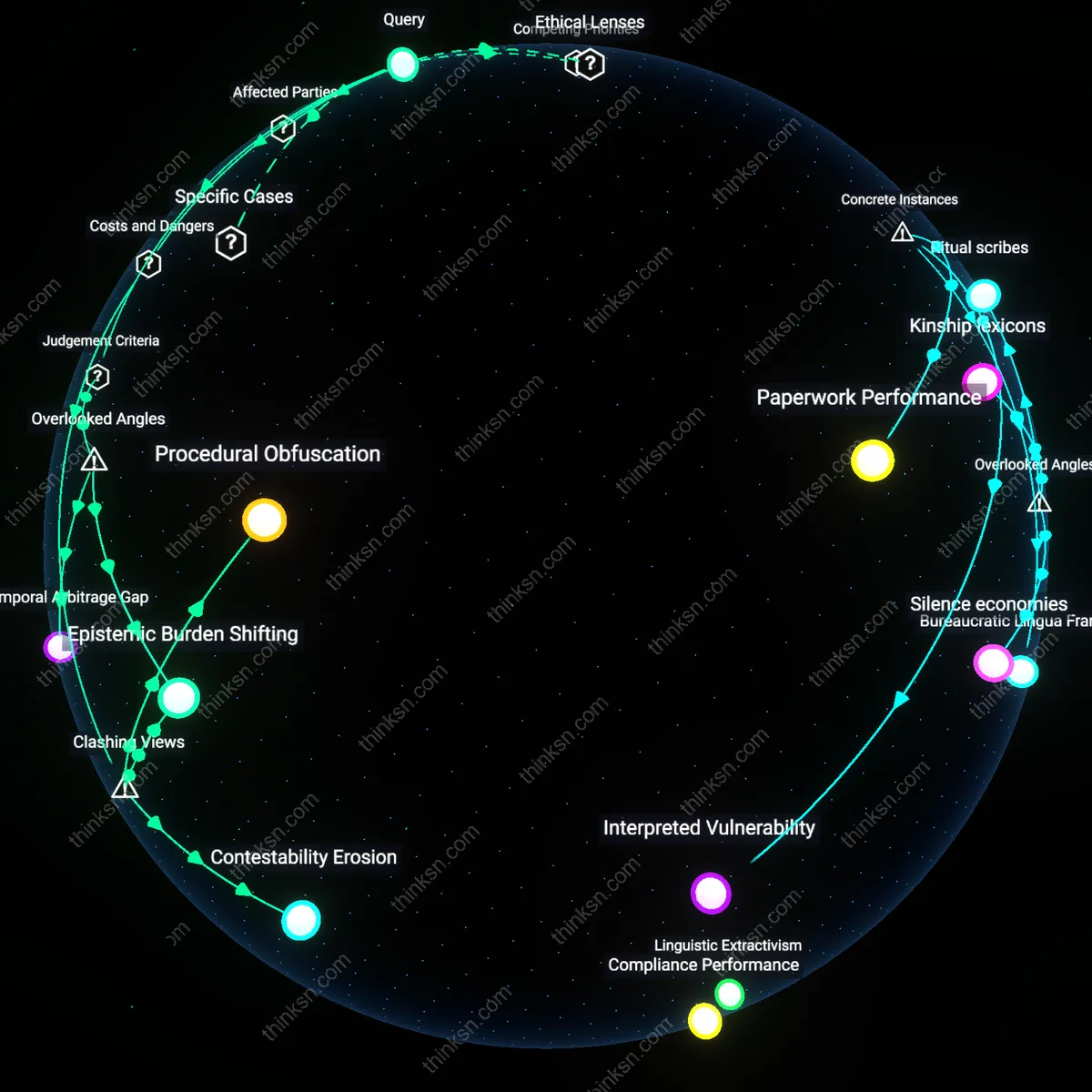
In California’s 2017–2018 wildfire claims, insurers like State Farm leveraged strict 180-day proof-of-loss deadlines to accelerate internal valuation models that undervalued structures based on pre-fire market data, while simultaneously delaying engineering inspections, creating a time asymmetry where policyholders faced fixed deadlines but insurers faced no reciprocal urgency; this dynamic was exposed in Sonoma County lawsuits showing that claims submitted just past the deadline were often accepted if accompanied by litigation notices, indicating the deadline served as a selective enforcement lever. The underappreciated reality is that temporal arbitrage allows insurers to exploit time-bound obligations strategically, using the deadline less as a rule than as a tactical instrument of cost suppression.
Procedural Exclusion
Strict proof-of-loss deadlines systematically shift risk toward policyholders in jurisdictions with fragmented social safety nets, because insurers rely on precise documentation windows to close claims that might otherwise expose gaps in medical or financial recordkeeping among low-income claimants, and this mechanism is amplified when public services fail to generate timely, court-admissible evidence — a dynamic underappreciated because it frames insurance as an enforcement layer of welfare retrenchment rather than risk mitigation.
Bureaucratic Asymmetry
Proof-of-loss deadlines intensify power differentials when claimants must navigate interdependent systems—such as healthcare billing, legal aid, and insurance—on divergent timelines, because insurers operate within vertically integrated case management ecosystems that can generate compliant documentation in days, whereas individuals depend on slow, siloed public and private institutions to produce equivalent records, exposing how systemic discoordination becomes a liability transfer mechanism disguised as administrative neutrality.