Why Just-Cause Evictions Fail Tenants Without Legal Aid?
Analysis reveals 5 key thematic connections.
Key Findings
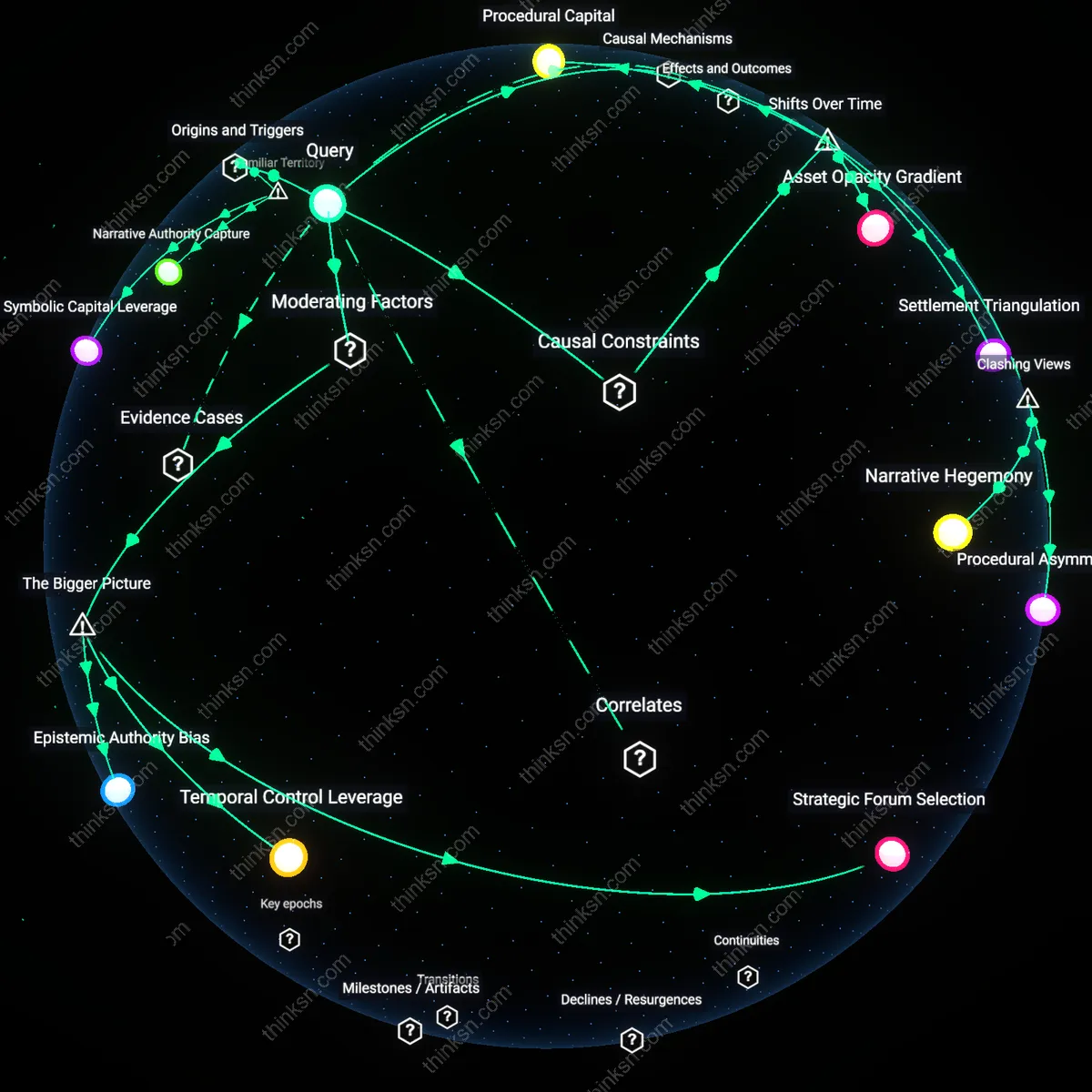
Burden of Proof Asymmetry
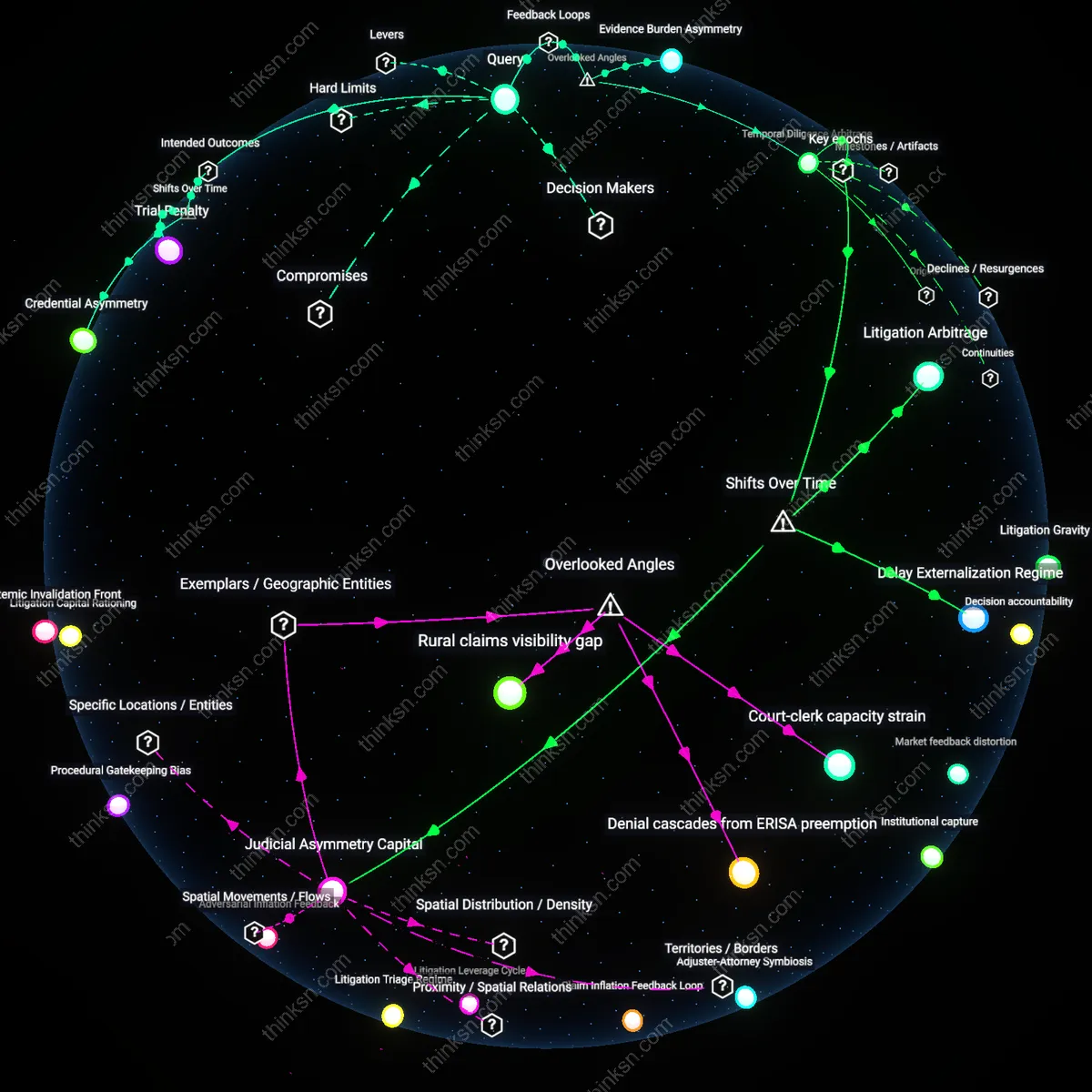
Just-cause eviction laws fail in New York City when tenants lack legal aid because the onus to prove a non-covered reason for eviction falls on tenants, who must navigate complex court procedures without representation while landlords have legal counsel present; this structural imbalance means that even valid defenses under the law, such as lack of repair records or retaliatory motive, are often forfeited due to procedural default. The Housing Court Resource Center observed that in 2018, over 90% of tenants in eviction cases appeared without counsel, compared to 90% of landlords who were represented, turning legal mandates into performative rituals rather than protections. This reveals that the law’s protective function collapses not from absence of rights, but from their activation requiring adversarial parity that does not exist.
Procedural Weaponization
In San Francisco, landlords exploit just-cause ordinances by using minor lease violations—like late payments of a few dollars—as technical justifications for eviction, a tactic known as 'paper evictions,' which depend on tenants failing to contest claims in time due to lack of legal guidance. Though the city’s Rent Ordinance requires 'substantial compliance' for such evictions, tenants without counsel rarely assert this defense, allowing legally dubious but procedurally correct filings to proceed unchalleng?d. This instance shows that legal aid gaps allow the procedural form of law to be weaponized, transforming protective regulations into tools of strategic displacement.
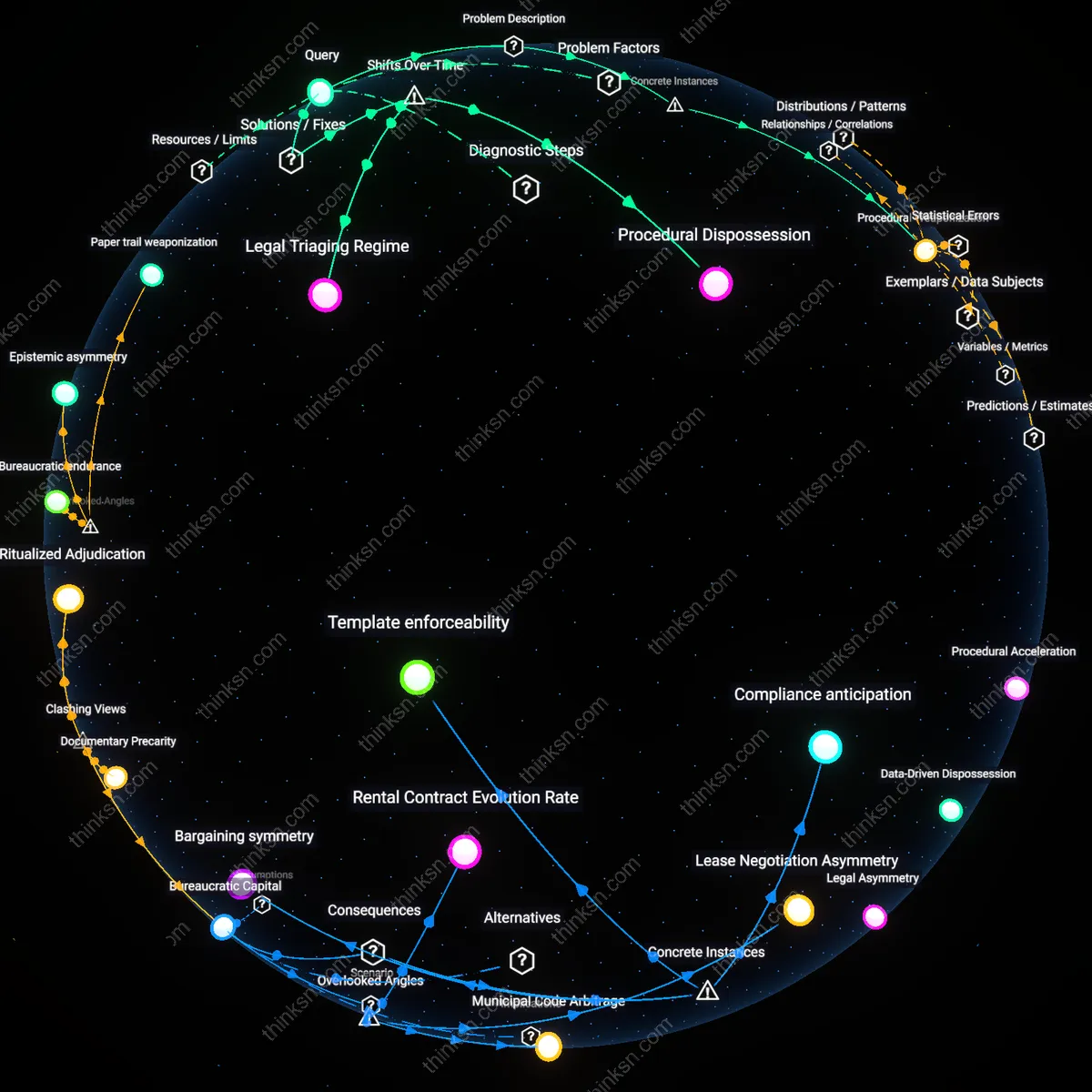
Procedural Dispossession
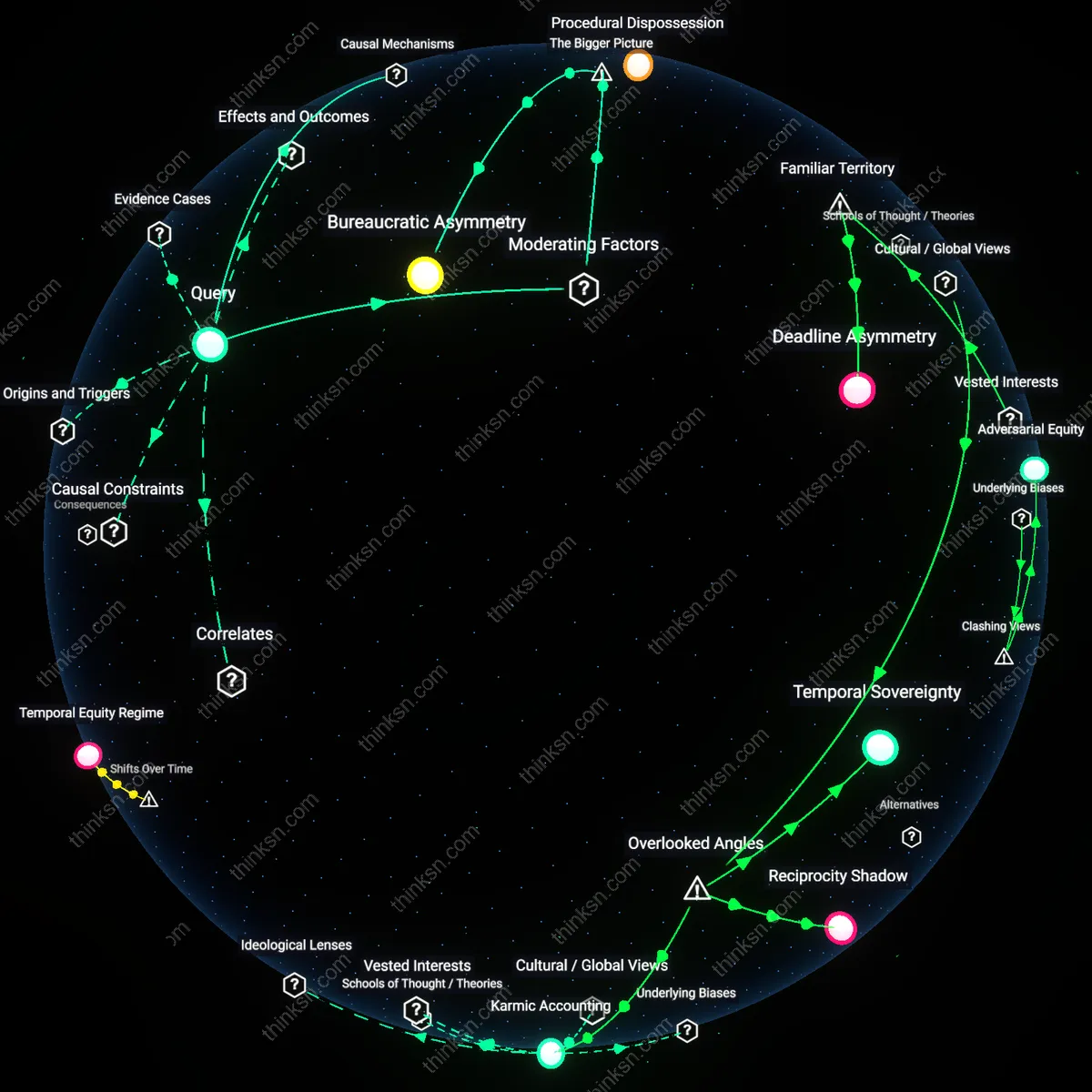
Expand court-based legal aid to automatically trigger when an eviction complaint is filed, because the shift from informal landlord-tenant norms to formalized legal evictions in the 1980s transformed housing disputes into procedural minefields that tenants cannot navigate alone. After the 1980s, as cities centralized eviction proceedings and landlords gained access to faster filing systems, the burden shifted from informal negotiation to rigid compliance with legal deadlines and documentation—mechanisms that favor legally represented parties. Unrepresented tenants, despite having statutory 'just cause' protections, lose primarily due to missed filings, misunderstood timelines, or failure to present evidence in admissible form, not because their claims lack merit. This reveals that the law's protective function eroded not through weakening statutes but through the procedural intensification of enforcement mechanisms, making representation a de facto requirement for right assertion.
Legal Triaging Regime
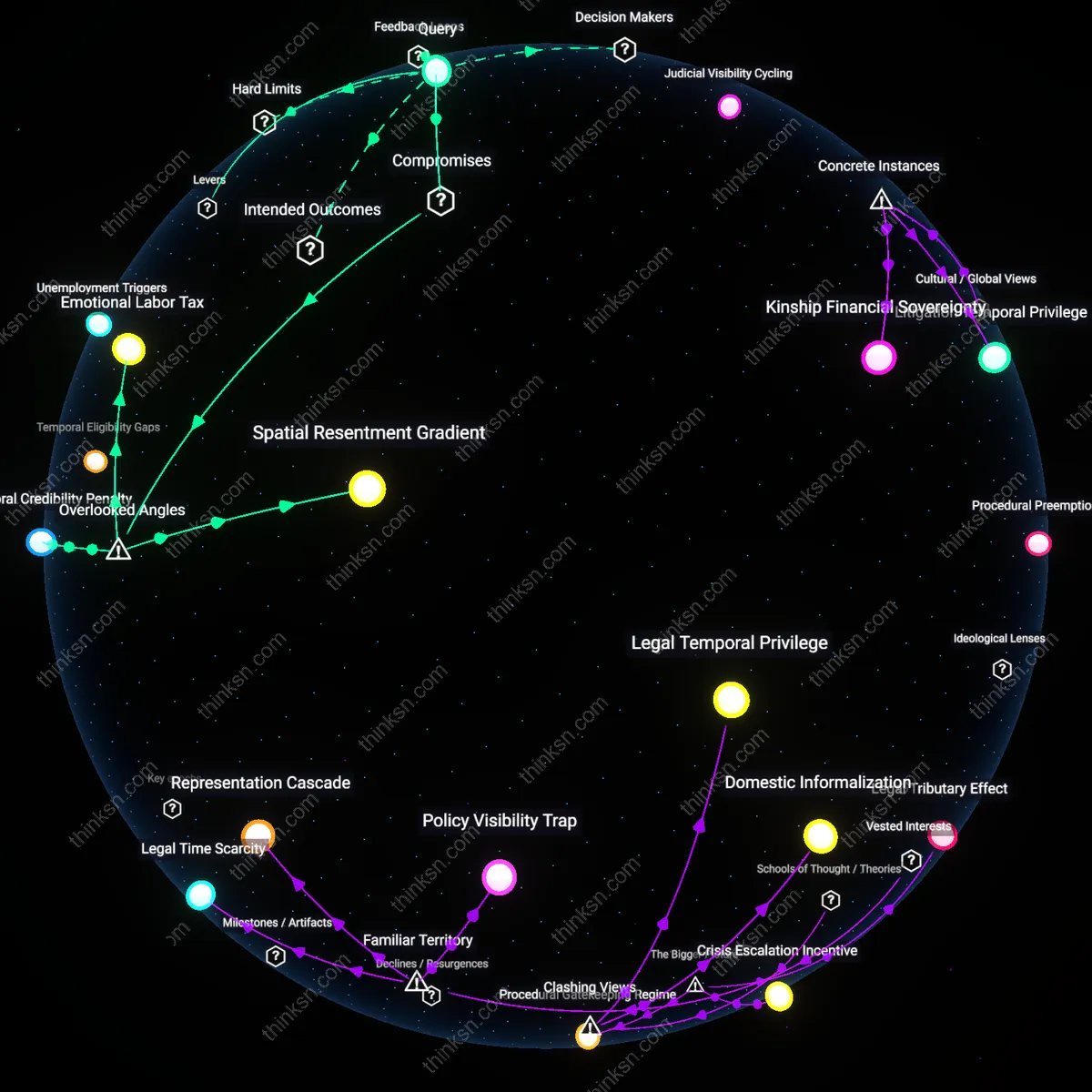
Institutionalize screening and prioritization protocols in public defender-style tenant services based on the post-2008 shift toward eviction as a volume business model among corporate landlords. After the financial crisis, the rise of institutional investors in single-family rentals and the scaling of property management platforms led to an increase in standardized, high-volume eviction filings—often automated and formulaic—changing the nature of tenant defense from individualized advocacy to systemic litigation resistance. Without triage systems that identify strategic cases—such as unlawful lockouts or retaliation—legal aid programs waste scarce resources on late-stage hearings where outcomes are nearly predetermined, rather than deploying counsel where they can shape precedent or halt cascading evictions. This shift exposes a misalignment between traditional legal aid delivery and the economies of scale now driving displacement, turning legal scarcity into a structural vulnerability.
Tenancy Bureaucratization Gap
Mandate landlord submission of compliance dossiers—proof of rent registration, inspection history, and lease documentation—at the moment of filing an eviction, in response to the post-1990s transition from tenancy as a social relationship to one governed by fragmented regulatory regimes. As local housing codes, rent stabilization laws, and voucher programs proliferated, the ability to prove 'just cause' increasingly depended on verifying whether landlords themselves met prior legal obligations—a burden historically placed on tenants to uncover during active proceedings. Shifting that verification ex ante onto landlords, using administrative enforcement infrastructure, would reverse the power imbalance created when regulatory complexity outpaced tenants’ capacity to respond. This change highlights how tenant protection laws were undermined not by hostility to tenants, but by a silent transfer of regulatory labor onto the most vulnerable party in an increasingly paper-heavy system.