Self-Petition Visas: The Legal Counsel Loophole?
Analysis reveals 7 key thematic connections.
Key Findings
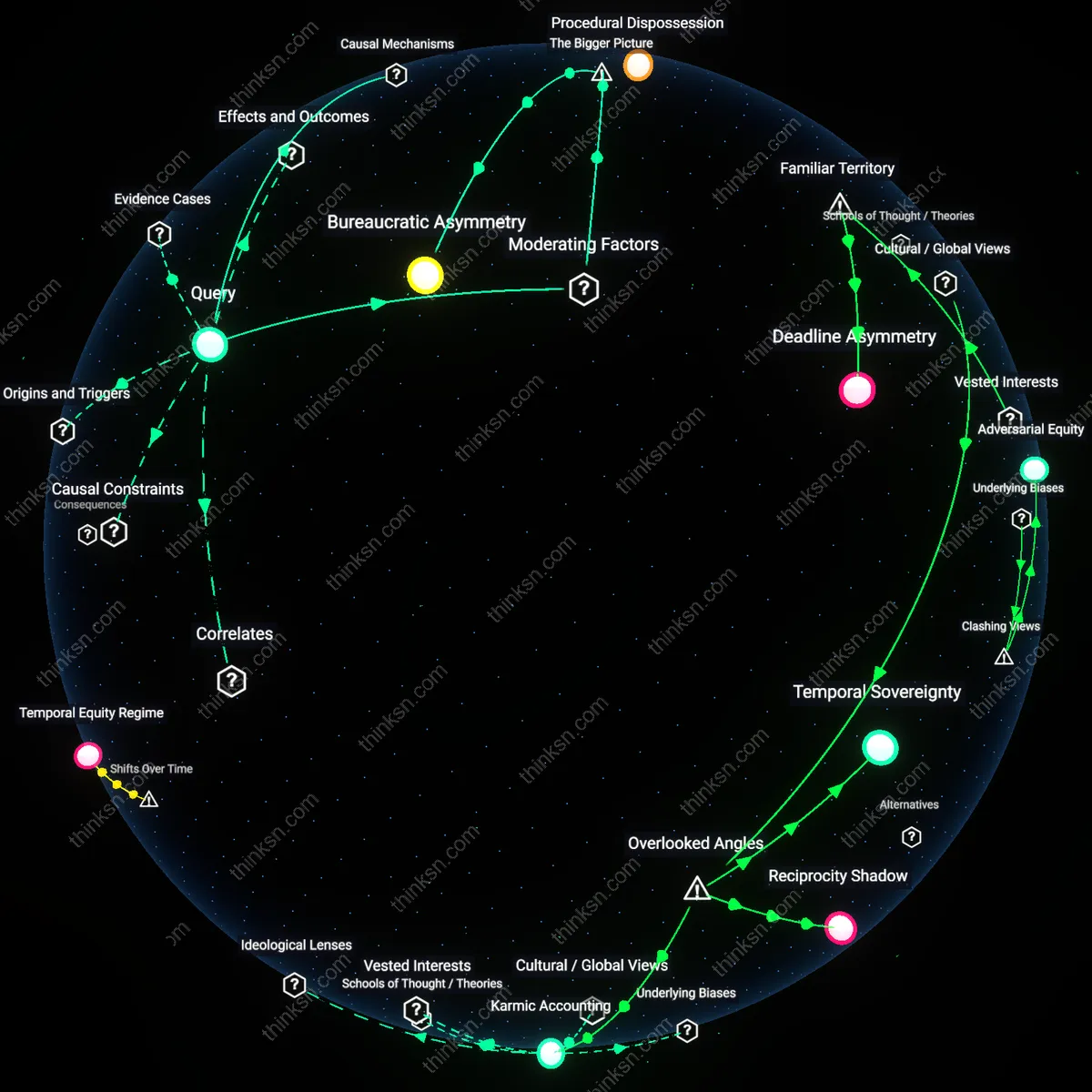
Procedural Gatekeeping
Self-petitioning in immigration law requires applicants to navigate complex regulatory pathways without institutional guidance, placing those without legal counsel at immediate disadvantage. The U.S. Citizenship and Immigration Services (USCIS) processes self-petitions—such as those under the Violence Against Women Act (VAWA) or U visa categories—through rigid procedural frameworks that prioritize technical compliance over equitable access, meaning minor errors in form completion, evidence submission, or deadline tracking result in outright denial. This dynamic functions through standardized administrative review rather than discretionary leniency, amplifying consequences of inexperience. What is underappreciated in public discourse is not merely that legal help is useful, but that the system is structured to outsource navigational labor to private attorneys by design, making procedural adherence the de facto mechanism of exclusion.
Documentation Burden
Self-petitioners must independently gather, authenticate, and organize sensitive evidentiary materials—such as police reports, medical records, or affidavits—often while facing ongoing trauma, displacement, or language barriers, and without access to legal aid organizations that could assist. The immigration system treats documentation as both proof of legitimacy and threshold filter, where incomplete dossiers are rejected regardless of merit, particularly in humanitarian categories like U visas for crime victims. This mechanism operates through a formalized evidentiary economy in which credibility is equated with paper trails, disadvantaging those with unstable housing, limited literacy, or fear of exposing personal histories. While the public commonly associates 'paperwork' with bureaucratic hassle, the non-obvious reality is that documentation functions not just as verification but as an asymmetric filter that naturalizes exclusion under the guise of neutrality.
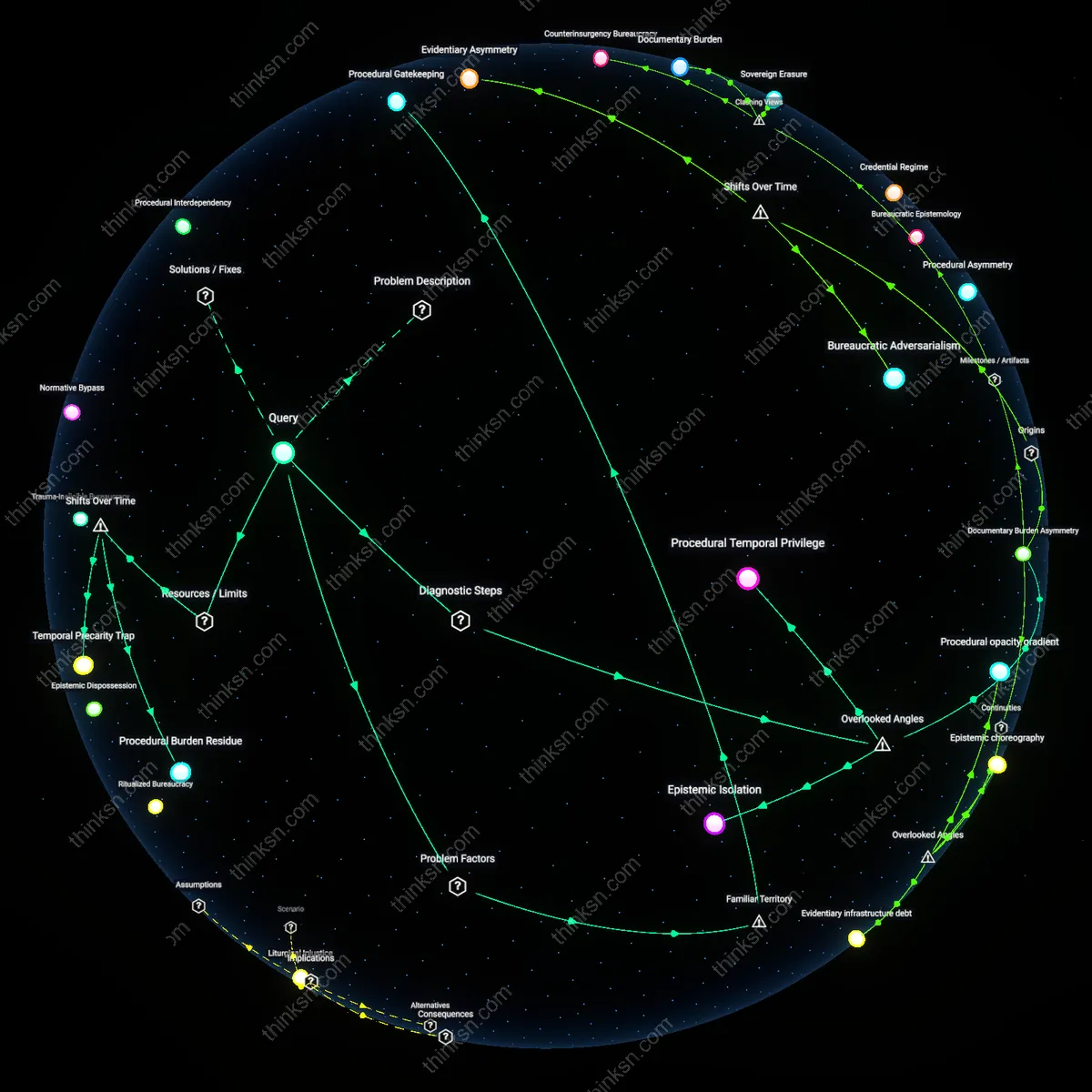
Documentary Burden Asymmetry
Self-petitioning in immigration law presumes equal capacity to produce institutional-quality documentation, but unrepresented applicants systematically lack access to the archival networks required to generate acceptable evidence of abuse or hardship. This creates a hidden procedural barrier where eligibility is contingent not on statutory criteria but on the applicant’s proximity to formal record-keeping systems—such as medical providers who document domestic violence or employers who issue verifiable contracts—which marginalized immigrants often engage through informal or cash transactions. The asymmetry reveals that the system conflates legal standing with documentary legibility, privileging those whose lives are already bureaucratically embedded, while disqualifying those whose marginalization is compounded by invisibility in state and corporate archives. This dependency on pre-existing institutional validation, rather than substantive merit, is rarely acknowledged in access-to-justice discourse, which tends to focus on courtroom representation rather than the upstream production of admissible proof.
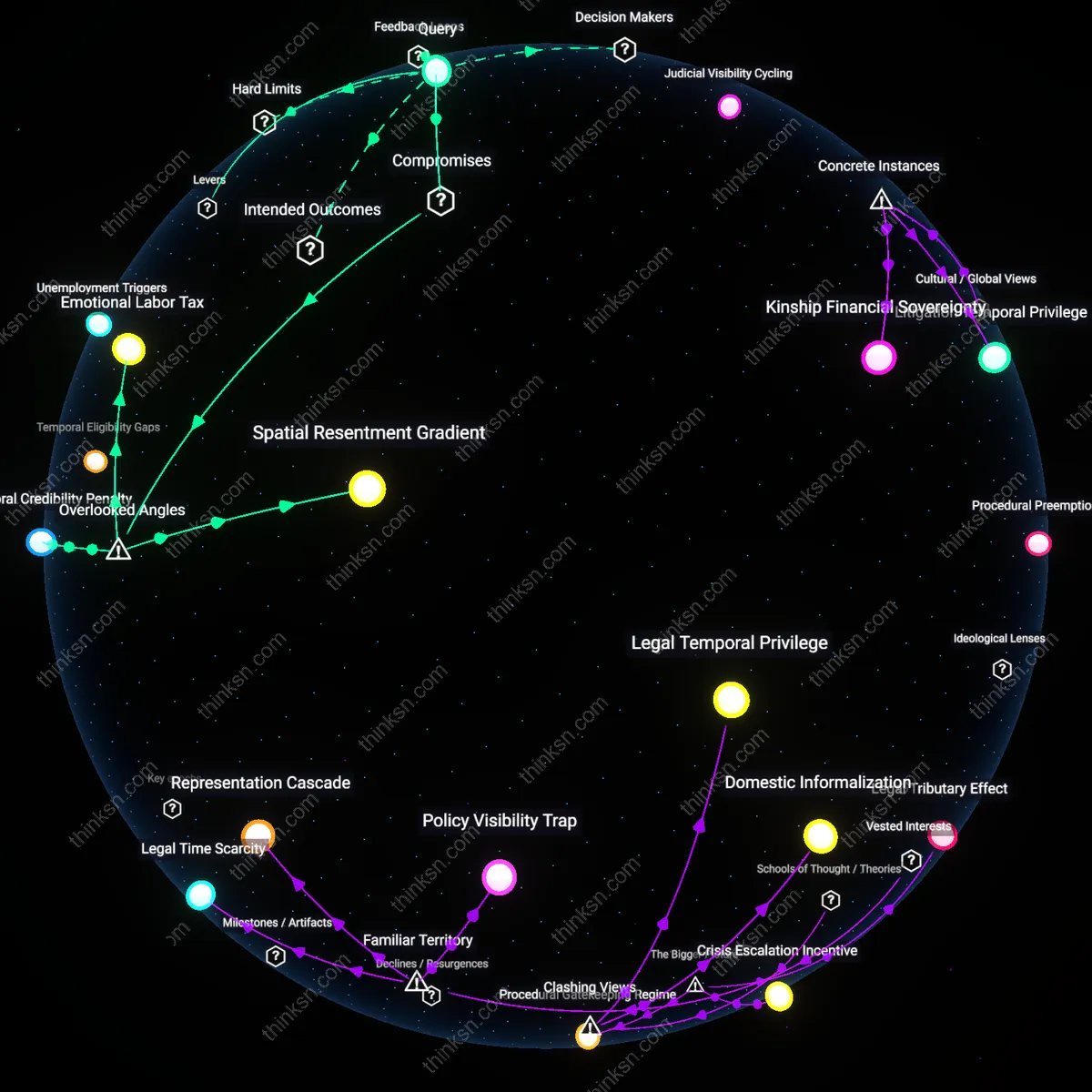
Procedural Temporal Privilege
Self-petitioning mechanisms assume a temporally flexible applicant who can sustain prolonged administrative engagement across years-long processing cycles, but undocumented individuals without lawyers lack the protected status that buffers against disruptive state interventions like detention or worksite raids, which abruptly terminate their ability to respond to RFEs or attend biometrics appointments. The system thus covertly conditions successful self-petitioning on uninterrupted physical and procedural presence—a stability that immigration enforcement itself systematically undermines for unrepresented persons. This reveals that the timeline of administrative due process operates not as a neutral framework but as a silent gatekeeper reliant on enforcement discretion to refrain from interference, a precondition never codified yet essential for compliance. Most analyses overlook how the durability of bureaucratic procedure depends on the suspension of adjacent state violence, turning temporal continuity into an unacknowledged asset.
Epistemic Isolation
Unrepresented self-petitioners are structurally excluded from the informal knowledge circuits—such as bar association networks, legal aid workshops, or accredited representative referrals—where interpretive norms of immigration adjudication are disseminated, leaving them unable to anticipate how officers weigh discretionary factors like 'extreme cruelty' or 'exceptional and extremely unusual hardship.' This epistemic gap means that even meticulously completed forms often fail because applicants cannot align their narratives with the uncodified evidentiary hierarchies that shape adjudicator expectations. The system functions as a closed epistemic community where rule application depends on access to tacit procedural culture, not just statutory text, rendering self-representation a form of participation without intelligibility. This dimension is routinely ignored in access-to-justice frameworks that treat legal information as publicly available rather than socially mediated through professional enclaves.
Procedural Burden Residue
Self-petitioning under the Violence Against Women Act (VAWA) places the full weight of documentation and legal argumentation on survivors of abuse who must now act as their own attorneys, a shift from the pre-1990s era when immigration relief required third-party sponsorship and left applicants with no independent legal pathway. The elimination of sole reliance on abusers for status—while progressive—transferred procedural complexity directly onto vulnerable individuals, who must now navigate evidentiary thresholds, form accuracy, and timelines without legal infrastructure or expertise, often under duress. Research consistently shows that lack of counsel drops approval rates significantly, especially in cities like Atlanta or Phoenix, where pro bono capacity is below demand; this reveals that the expansion of self-petitioning rights assumed a neutral procedural landscape, when in fact the system rewards those who can contractually substitute legal skill. The underappreciated shift is that access to justice became redefined not by eligibility but by navigational capacity—something the post-1990s legal framework quietly presupposed but never resolved.
Temporal Precarity Trap
The rise of self-petitioning options in U visa and VAWA applications since the mid-2000s has amplified time-bound vulnerabilities for unrepresented applicants, whose admissibility frequently hinges on meeting narrow filing deadlines while simultaneously gathering evidence of abuse or criminal cooperation—tasks that require institutional coordination they cannot access. Unlike represented petitioners who can leverage paralegal networks or law firm infrastructure to meet 30-day response windows or file extensions, unrepresented individuals face escalating risks of procedural default due to postal delays, form errors, or trauma-related memory gaps. Evidence indicates that backlog growth in Immigration Courts since 2016 intensified this time pressure, transforming self-petitioning from a statutory right into a de facto race against bureaucratic depreciation of claims. The critical shift is that procedural autonomy expanded faster than temporal equity, creating a system where survival of claims now depends more on timing consonance than factual validity—what remains is a system calibrated to discard entire categories of legitimate pleas not on merits, but on irreversible time loss.