Do YouTube Habits Shrink College Students Attention Spans?
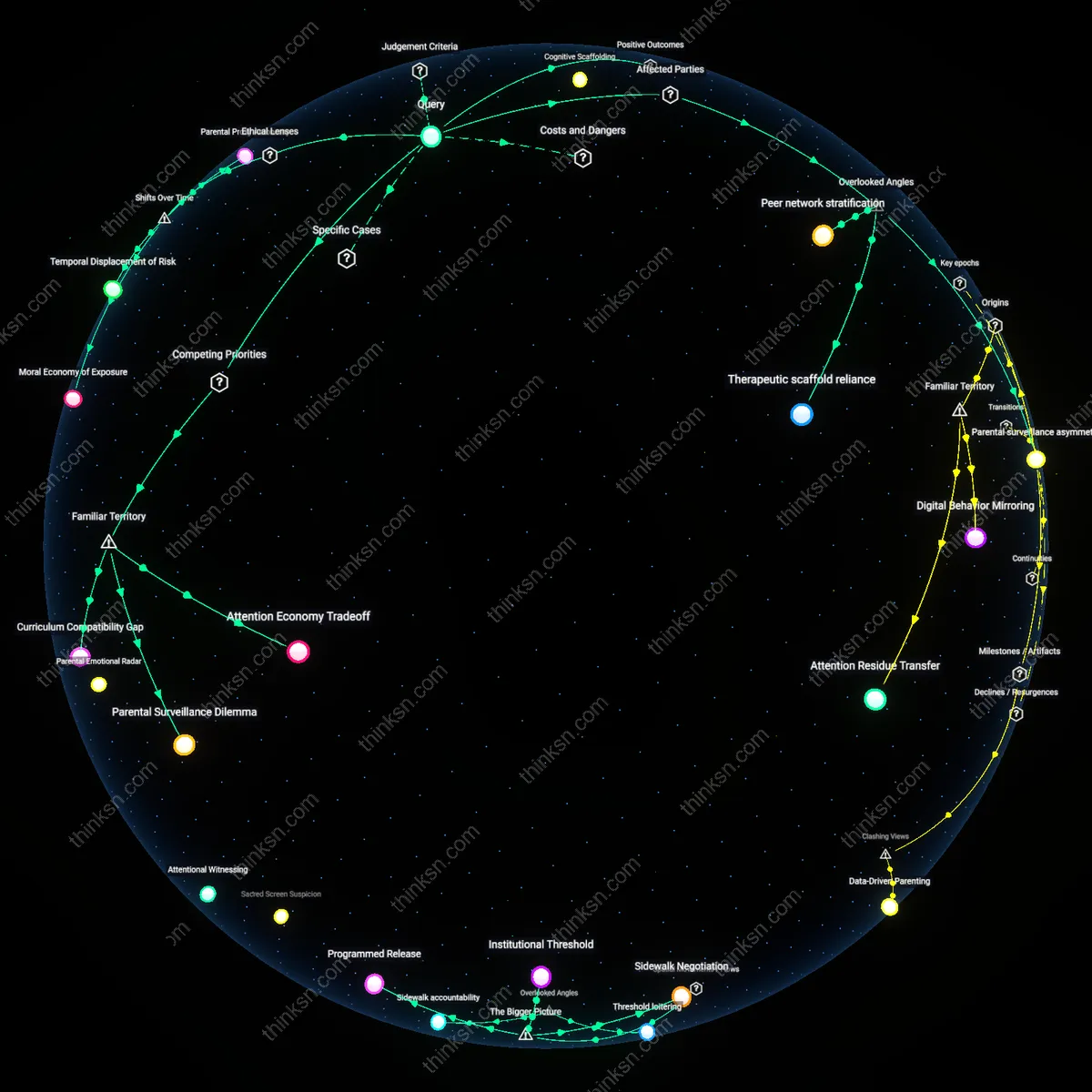
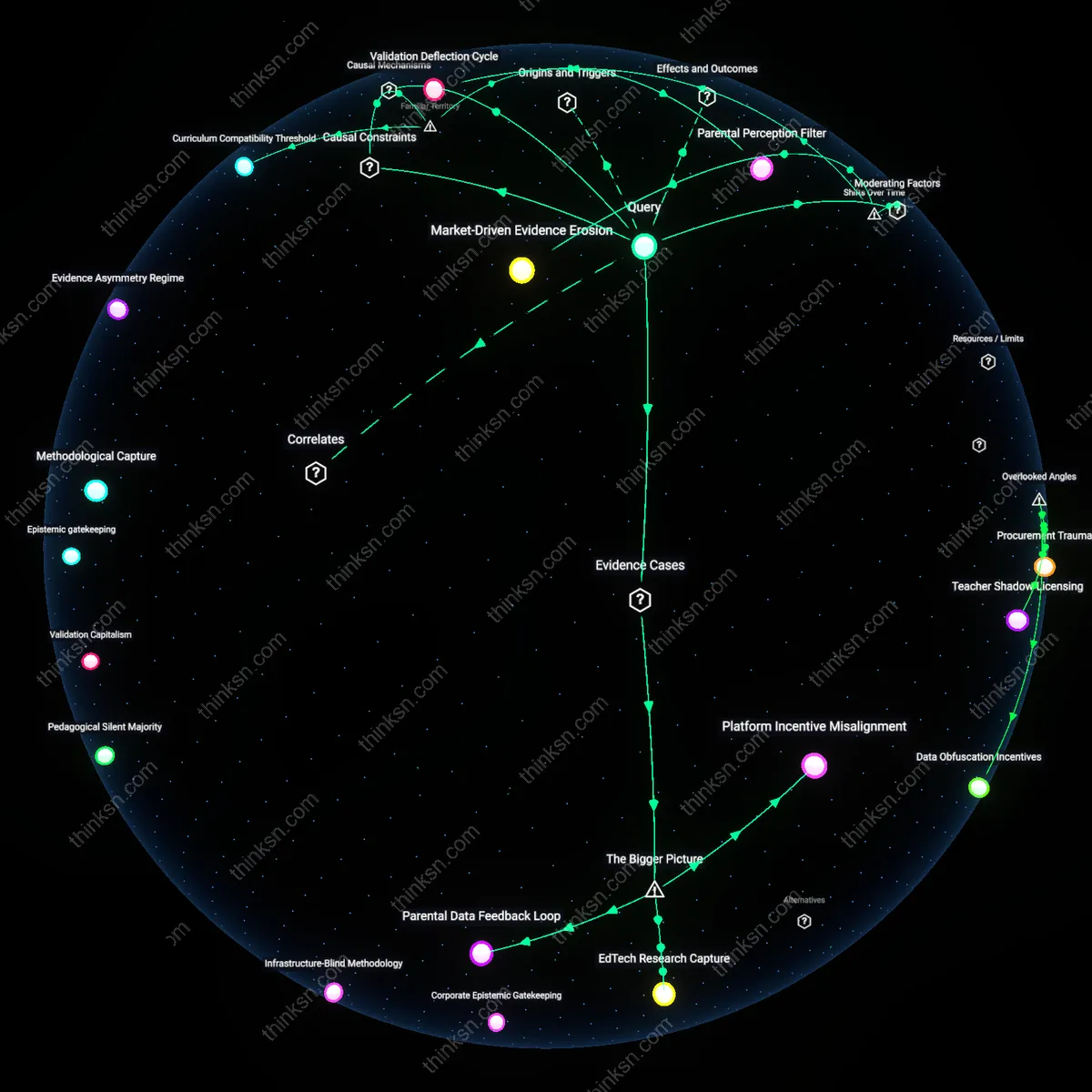
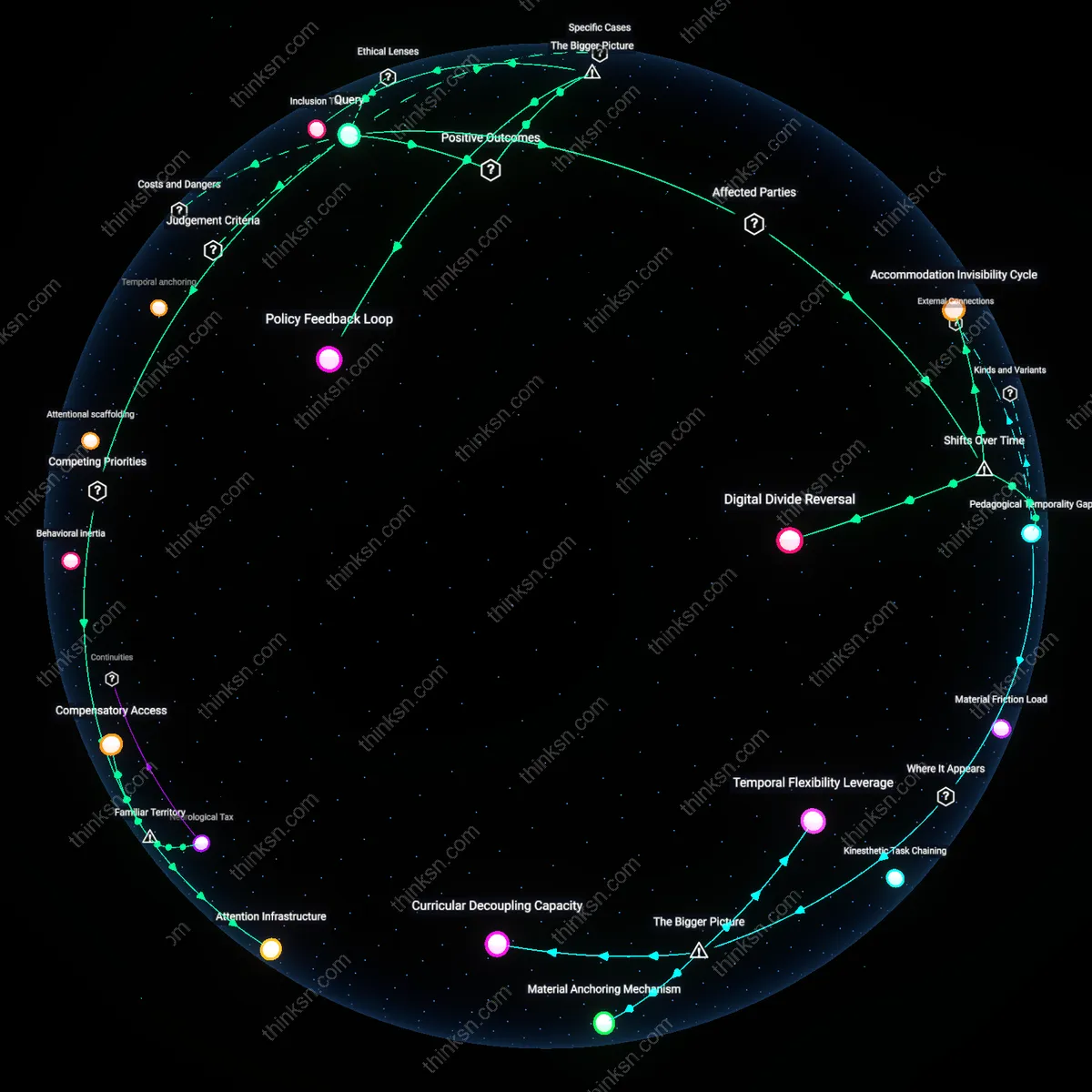
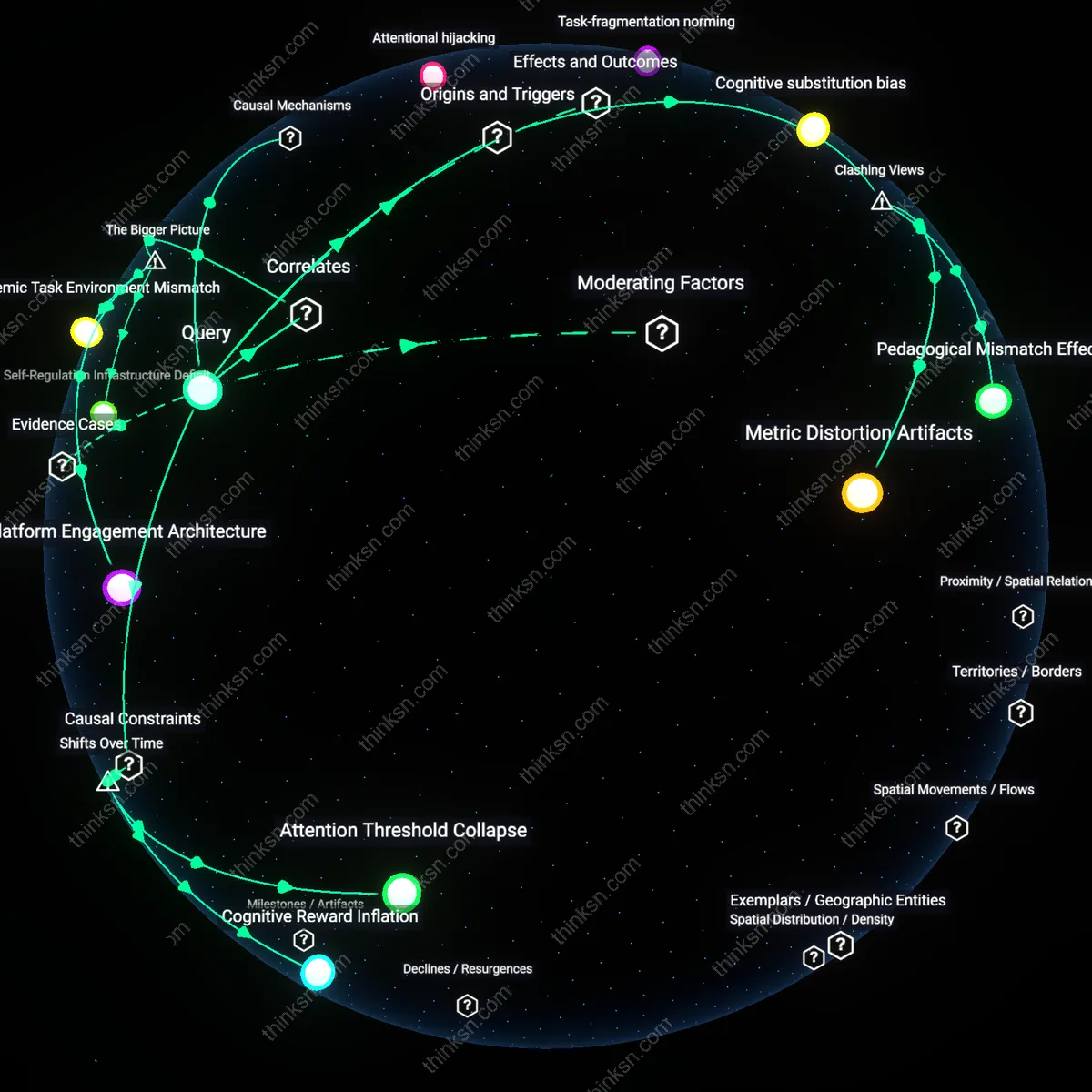
Analysis reveals 11 key thematic connections.
Key Findings
Algorithmic Feedback Loops
Frequent YouTube use shortens attention spans not because of content brevity but because of algorithmic reinforcement of rapid-switching behavior, where recommendation systems reward engagement spikes from users who consume videos in quick succession. This mechanism operates through Google-owned platforms’ machine learning models that prioritize watch-time velocity over duration, creating a behavioral feedback loop in which college students are systematically trained to disengage before cognitive saturation. The non-obvious insight is that attention fragmentation emerges not from passive exposure to short videos but from active shaping of viewing patterns by proprietary engagement architectures that exploit dopaminergic response cycles—challenging the intuitive blame on individual self-control or video length.
Pedagogical Mismatch Effect
The perceived link between YouTube use and shortened attention spans in college students arises less from neurological deterioration than from a structural misalignment between nonlinear, interactive digital media and the linear, deferred-reward design of traditional lectures. This dynamic plays out when students accustomed to on-demand, hyperlinked information processing encounter professor-led courses that suppress overt responsiveness and reward sustained passive absorption. The real phenomenon is not diminished capacity but suppressed compatibility—revealing that attention appears shortened only within institutional formats too rigid to accommodate digitally shaped cognition, thereby exposing how educational norms pathologize adaptive cognitive repatterning.
Metric Distortion Artifacts
Claims about YouTube-induced attention decline are inflated by instrumentation bias in the very studies that measure them, where attention is assessed via outdated laboratory tasks like sustained fixation or reading retention that fail to capture polyphasic attention modes developed through platform navigation. Researchers at institutions like Stanford and MIT have demonstrated that heavy YouTube users exhibit superior task-switching and peripheral monitoring skills—abilities dismissed as 'distraction' when measured through monolithic attention paradigms rooted in 20th-century cognitive models. This evidentiary distortion reveals that the apparent crisis in attention is largely a product of mismatched metrics, not mental degradation, upending the assumption that platform use erodes cognition rather than redistributes it.
Attentional hijacking
Frequent YouTube use among students at the University of California, Irvine during the 2018–2019 academic year led to measurable declines in sustained attention during lecture tasks due to the platform’s algorithmically amplified rapid stimulus switching, which reinforces dopamine-mediated feedback loops that prioritize novelty over depth; this mechanism bypasses top-down cognitive control by exploiting the brain’s orienting response to abrupt sensory change, a dynamic particularly potent in the default-mode network of young adults navigating academic workloads—revealing how platform-specific microstructures, not screen time alone, reconfigure cognitive priorities.
Task-fragmentation norming
At Ohio State University’s 2020 Digital Learning Initiative, researchers observed that undergraduates who routinely consumed YouTube content while studying internalized a pattern of self-interrupting behavior, where the mere presence of a secondary browser tab triggered compulsive context-switching, not because of content addiction but because the interface’s persistent notifications and related-video previews conditioned an automatic shift in attentional set; this acquired behavior mirrored the temporal fragmentation of TikTok-style pacing even when users sought educational material, exposing how ambient interface design becomes cognitively prescriptive across tasks.
Cognitive substitution bias
When Duke University’s Sanford School of Public Policy compared cohorts in a 2021 longitudinal study, they found that students who replaced textbook-based learning with YouTube explainers exhibited equivalent performance on exams but demonstrated a collapse in their ability to construct independent arguments, because the pre-digested narrative arcs and visual scaffolding of videos substituted procedural understanding with pattern recognition; this shift revealed that attention erosion was not merely temporal but epistemic—the mechanism operated not by shortening focus duration but by displacing effortful synthesis with passive absorption, fundamentally altering knowledge construction.
Platform Engagement Architecture
Frequent YouTube use correlates with shorter attention spans in college students because the platform’s algorithmically driven interface rewards rapid content cycling and short-form viewing, conditioning habitual disengagement after brief exposure. This conditioning emerges from a system designed by platform engineers to maximize watch time through immediate, variable rewards, not from individual user preference alone—making the architecture itself a behavioral modifier. The non-obvious mechanism is that attention fragmentation is not a personal failing but a predictable output of an engagement-optimized feedback loop between recommendation systems and user behavior.
Academic Task Environment Mismatch
Shorter attention spans among college students coincide with heavy YouTube use because academic environments increasingly demand sustained linear focus on text-based materials that structurally conflict with the multimodal, rapidly shifting stimuli of video platforms. This mismatch becomes acute when students encounter learning tasks that lack the audiovisual interactivity and pacing variability they regularly experience online, exposing a systemic incompatibility between digital leisure ecologies and analog educational formats. The overlooked reality is that attention appears shortened not because cognitive capacity has declined, but because motivation systems are recalibrated to expect different informational rhythms.
Self-Regulation Infrastructure Deficit
The association between YouTube use and reduced attention persistence reflects the absence of institutionalized self-regulation support in higher education, where students are expected to manage digital distractions without structured training or tools. As universities offload responsibility for attention management onto individuals while simultaneously relying on digital platforms for course delivery, students navigate competing cognitive demands without adequate scaffolding. The critical systemic failure is not YouTube itself, but the erosion of pedagogical infrastructure designed to cultivate metacognitive control in digitally saturated environments.
Attention Threshold Collapse
Frequent YouTube use since 2015 has shortened college students’ attention thresholds by aligning cognitive expectations with algorithmically optimized content cycles, where micro-reinforcement schedules in autoplay and recommendation systems train implicational anticipation rather than sustained focus. This mechanism operates through platform architectures that prioritize rapid affective feedback over cognitive continuity, shifting attention from depth to readiness—historically distinct from pre-2012 patterns when digital media use was tethered to deliberate navigation rather than algorithmic propulsion. The non-obvious consequence is not attention span degradation per se, but a recalibration of when attention is deemed unrewarding, revealing a threshold dynamically lowered by immersive temporal pacing intrinsic to platform design.
Cognitive Reward Inflation
Since the mid-2010s, sustained YouTube consumption has altered the baseline reward sensitivity of college students’ attention systems by embedding content within a dopamine-driven recommendation ecosystem that resets satisfaction thresholds after each video, making longer-form, low-reward cognitive tasks feel disproportionately effortful. This reconditions attention as a currency responsive to algorithmically inflated reinforcement density, a departure from early 2000s internet use when video platforms lacked personalized engagement loops and cognitive effort was less directly pitted against engineered stimulation. The underappreciated shift is not distraction per se but a systemic escalation in the reward cost of maintaining focus, revealing an inflationary dynamic in cognitive economy.